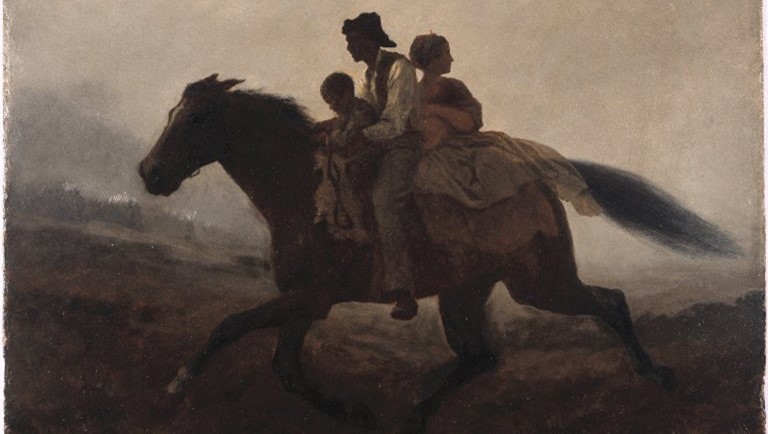
It’s unsurprising that the details of the life of a spy and ex-slave would be hard to pin down. Its various narratives and pseudonyms shift and merge like shadows cast by a roving flashlight, so that historians today have as much difficulty tracking the elusive Mary Jane Richards as her enemies did during her lifetime. But through the work of scholars like Lois Leveen and Elizabeth Varon, we can sketch a fairly accurate outline of the life of this Civil War spy.
Mary Jane Richards was sometimes called Mary Elizabeth Bowser or Mary Richards Denman. Her story leads from slavery to spycraft. She gathered intelligence at the highest levels of the Confederacy and passing it along to the Union.
A Humble Start
Mary Jane Richards was likely born around 1840 near Richmond, Virginia. Her exact parentage is unknown, and Richards herself gave varying accounts of it. But we do know that from a young age, probably from birth, Richards was enslaved by John and Eliza Van Lew, wealthy natives of Richmond. A May 17, 1846 baptismal record for a “Mary Jane” “belonging to Mrs. Van Lew” appears at Saint John’s Church in Richmond.
Evidence suggests that Mary was an unusually bright child. Eliza Van Lew’s daughter, the famous Elizabeth Van Lew, sent Mary Richards to be educated in the North, possibly Philadelphia. A July 27, 1900 article in the Richmond and Manchester Evening Leader on Elizabeth Van Lew, refers to Richards as Van Lew’s “maid, of more than usual intelligence.”
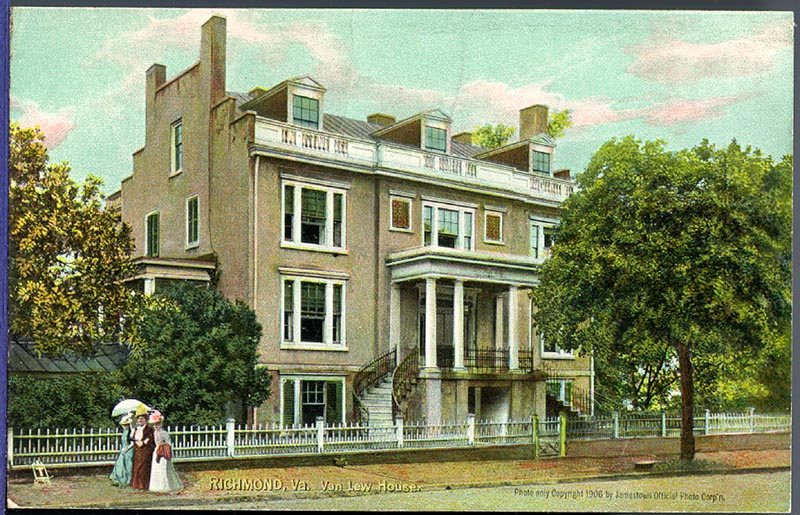 A postcard from 1906 that depicts the Elizabeth Van Lew mansion. While enslaved, a young Mary Jane Richards likely lived in this house. (Public Domain)
The fact that Richards was baptized in the Van Lews’ family church and sent North for formal education suggests that she received special favor from her mistresses from the very beginning of her life. After completing her education, Richards was sent by Van Lew to Liberia in 1855. Liberia was a project of the American Colonization Society, which sought to provide African Americans with their own land in Africa.
Some accounts hold that Richards was intended for missionary work there, but Lois Leveen—an expert on Richards—has questioned the accuracy of this claim. Either way, her stay in Liberia proved ephemeral: Richards was unhappy in the African country and convinced Elizabeth Van Lew to bring her back to America in 1860.
Her return to America didn’t unfold smoothly, however. Virginia law prohibited any black person who left Virginia seeking an education from returning, and Richards was arrested in Richmond for “perambulating the streets claiming to be a free woman of color.” Richards gave her jailers a few false names before finally admitting to being Mary Richards. She was released into the custody of Eliza Van Lew.
Van Lew told the courts that Mary was enslaved—which meant she could be released to the Van Lews—even though she had been living de facto as a free woman. As Leveen notes, this early episode reveals “that even before the war, Richards was adept at disguising her identity when she felt it would be useful to shield herself from official scrutiny”—a clear portent of what was to come.
In April of 1861, Richards married fellow slave Wilson Bowser—although he hardly appears in the record of her life after this time, indicating that the marriage was short-lived. It did provide her with the alias of “Bowser”—many records show her with that surname. Moreover, the wedding was overshadowed by the storm clouds of war. The Virginia Convention voted to secede from the Union the next day, with Richmond soon established as the capital of the infant Confederacy.
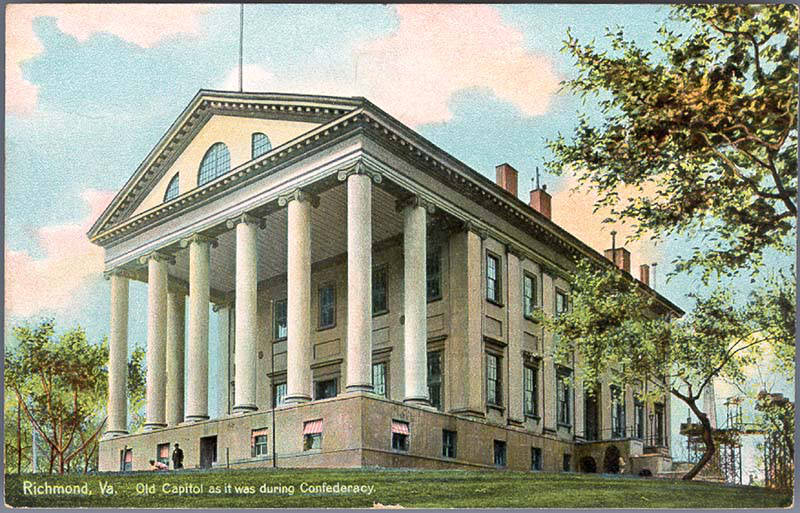 An illustration of the Confederacy’s Old Capitol in Richmond, Va., during the Civil War. (Public Domain)
The Van Lews found themselves in the wrong capital—or so it must have seemed—because their sympathies lay with the North. Elizabeth Van Lew and Mary Richards began offering care and comfort to captured Union soldiers held prisoner in the city. These efforts evolved into a spy ring that included both free and enslaved African Americans. Van Lew was at its center.
“From the earliest months of the war, this interracial network aided U.S. soldiers held prisoner in the city by bringing them food and medicine, exchanging information, and abetting their escapes to federally held territory,” Leveen wrote in Journal of the Civil War Era. She continued, “By 1864, the underground was smuggling military and political intelligence to the US army.”
We know that Richards was involved in these espionage activities, although the precise details of her service are hard to confirm. Wild embellishments have been added to Richards’s story and been repeated in books and articles. Tales of Richards sewing messages into Varina Davis’s garments or fleeing the Confederates in a manure cart are likely apocryphal.
However, there is good evidence that Van Lew had Richards placed as a servant in the Confederate White House, where she gathered intelligence by eavesdropping on conversations and reading documents. According to the Central Intelligence Agency’s (CIA’s) Center for the Study of Intelligence, Richards’ photographic memory allowed her to repeat word for word the contents of documents she read.
Van Lew hinted at Mary Richards’ information-gathering operations in a diary entry from May 14, 1864:
“When I open my eyes in the morning, I say to the servant, ‘What news, Mary?’ and my caterer never fails!” She added that blacks usually gathered “most reliable news” and “they certainly show wisdom, discretion and prudence which is wonderful.”
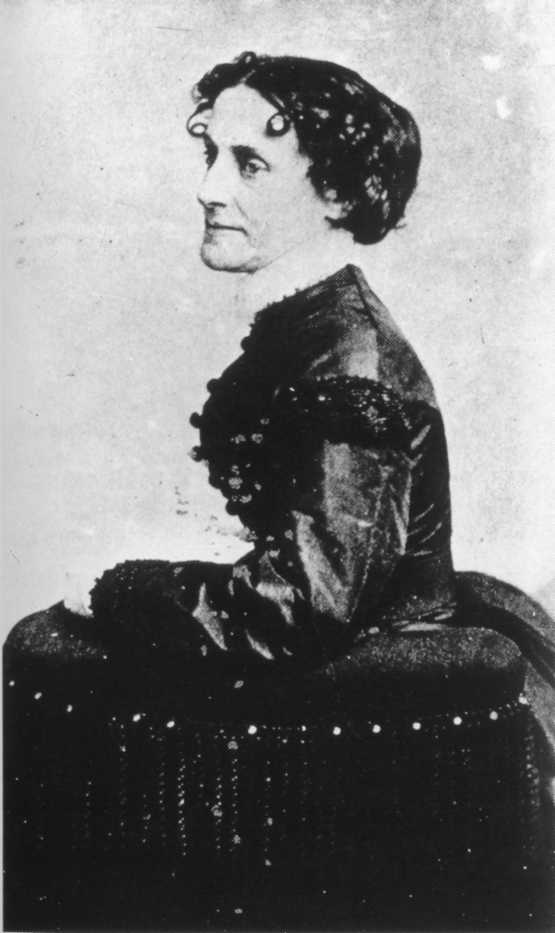 Elizabeth Van Lew was an abolition advocate and Union sympathizer, who worked to defeat the Confederacy. (Public Domain)
Post-War Activities
Although it appears that the Van Lews were unable to legally free Richards prior to the war, Richards undoubtedly obtained freedom when the Confederacy fell. Although she briefly left Richmond in 1864, Richards returned after the U.S. Army took the city in April of 1865. Her status as an educated black woman put her in high demand following the war, especially with the establishment of schools to instruct former slaves. She spent some time teaching for such schools.
In 1865, she left Richmond and headed north to give lectures (under assumed names) on her experiences before and during the war. One publication, the Anglo African, described the young lecturer as “Very sarcastic and at times quite humorous.” Another newspaper, the Eagly, reported that Richards argued that African Americans should have the right to vote and receive equal treatment.
In 1867, Richards established a school of her own for freed slaves in Georgia. There, she was the only teacher for over 200 students. Around this time, she also met the famous abolitionist and novelist Harriet Beecher Stowe, author of “Uncle Tom’s Cabin.”
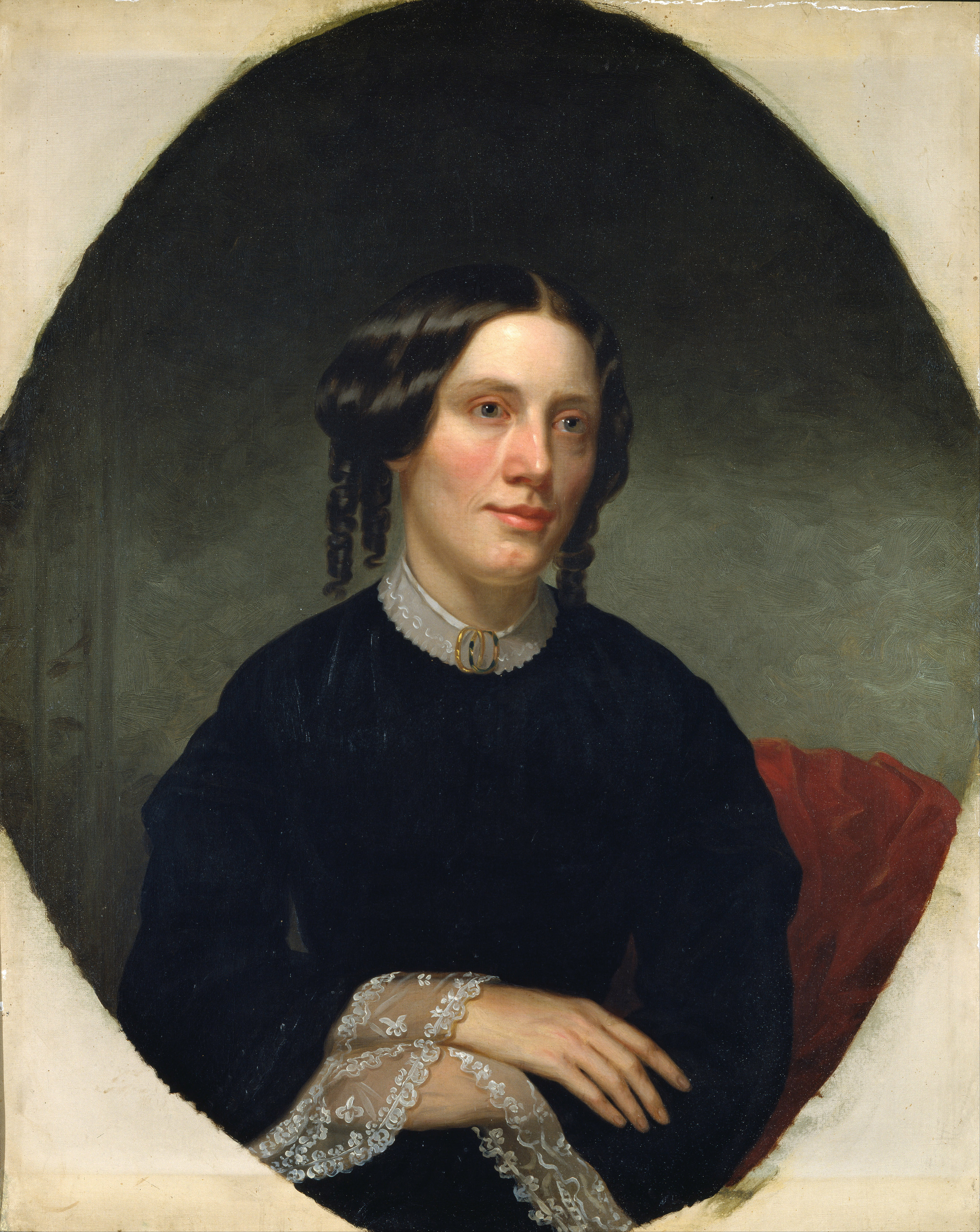 “Harriet Beecher Stowe,” 1853, by Alanson Fisher. Oil on canvas. National Portrait Gallery, Washington, D.C. (Public Domain)
In a June 27, 1867 letter to Gilbert L. Eberhart, the superintendent of education for Georgia Freedmen’s Bureau, Richards asserted that she had married again, this time to a man with the last name Garvin. According to the letter, her husband had traveled to Havana, Cuba, and she intended to follow him there.
Whatever happened to Garvin and the plan to join him in Cuba remains a mystery, because Richards’s last known letter doesn’t mention Garvin at all. In a message to Elizabeth Van Lew from 1870, Richards, now signing her name M.J. Denman, requests that Van Lew send no more money as Richards was attempting to make a living as a teacher and seamstress in New York City.
From there, Richards disappears from the historical record. It’s fitting that a spy would suddenly flicker onto the screen of history only to fade mysteriously into the background. What she did with the remainder of her years can only be guessed at.
But wherever the thread of fate led her, she left behind a significant contribution to the Union cause during the Civil War and the efforts to assist freed slaves during the Reconstruction-era. This woman of many names always held to this core piece of her identity: to work for the good of her fellow African Americans, regardless of personal risk and cost.
What arts and culture topics would you like us to cover? Please email ideas or feedback to features@epochtimes.nyc