



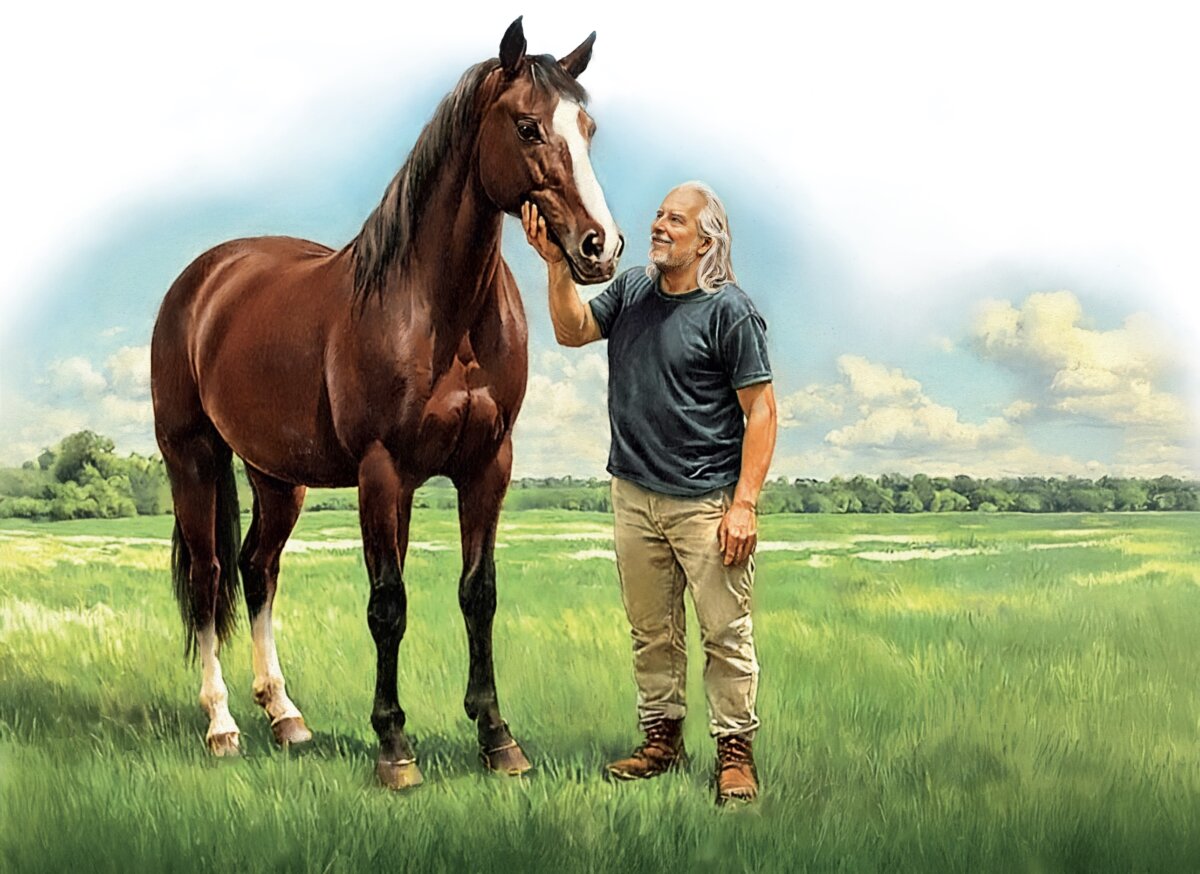
It’s easy to converse with your horse. Watch his ears; listen to his nickers, grumbles, and sighs; pay attention to how he tosses his head; notice the side glances when he’s not looking at you. Stroke his neck, brush his mane, and see what happens.
People and horses have had this ongoing conversation for millennia, right here in the equine homeland of North America. Talking with our horses—we have two—is a coffee-and-doughnuts episode in a day on our farm. Bring a couple biscuits and it’s paradise all around. Cue hugs, kisses, and mutual compliments: “You’re such a big handsome boy!” “It’s all that great hay you bring me.”
But this morning, Cereus and I are having a more serious discussion. He’s grazing the fresh green grass that grows beside our house in winter, pretending to be oblivious, but his ears are cocked my way.
“What, exactly, are you doing here?”
The front of the house is not Horse Land. Horse Land is his large, 5-acre meadow down below, an appropriate size for a 17-hand, 1,400-pound Polish Warmblood. If you’re not privy to horse lingo, that’s the size of a tall rhino, minus horns.
“What?” he answers. “I don’t get your point.” He raises his head briefly to look at me. “It’s a really nice morning, isn’t it?” Head back down. Extra lush green orchard grass.
“Yeah, lovely. How about we go back to your stall now?”
“Nah. Uh-uh.” He wriggles his ears like fuzzy fingers. He doesn’t look up. Sweet, juicy, sun-warmed, high-sugar grass.
I cross my arms and frown. I hold out a cookie.
He rolls his eyes. Seriously? Insulting.
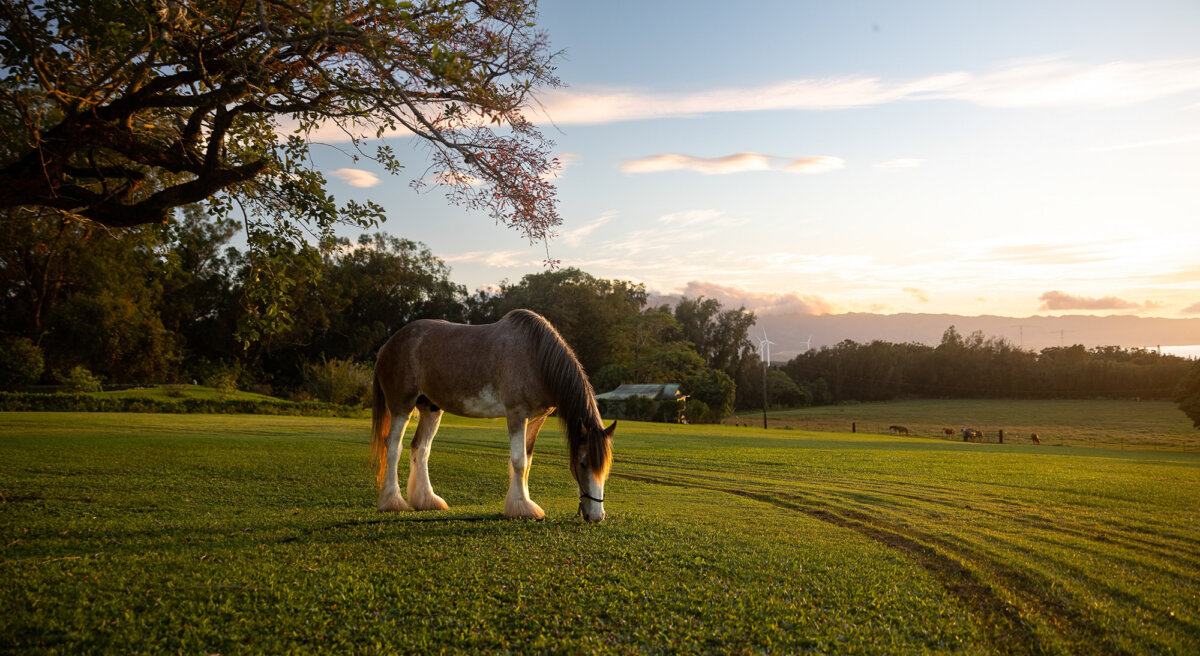
You think all this is silly, you horse-free people out there? There are many of us—approximately 2.5 million horse “owners,” a term I’ll get to in a minute, and 8 million horses in the United States and Canada. We millions are having these conversations constantly, for various reasons.
The chief one being: You can’t grab your horse, hoist him up, and put him to rights like Sissy the Siamese or Polly the parrot.
Cereus knows this. He’s gentle, kind, cooperative—and occasionally obstreperous. If you believe, as many indigenous peoples do, that everything has a spirit, then free will is the most powerful force in the universe. Cereus’s free will is sometimes the most powerful force at Owl Feather Farm. No doubt the original equine conversationalists of North America discovered this.
Let’s pause for a moment to reflect.
There are supposedly more horses in North America now than ever before. The equine lifestyle isn’t old news, EVs and AI notwithstanding. This is why a farrier can make up to $200,000 a year, no degree needed. Set your own schedule, go where you want, cash big checks from customers who are exceptionally grateful you’re in this business and more reliable than a plumber. The gratitude derives from the fact that shoeing a horse can be as arduous as bear wrestling.
Ours are barefoot now, but the farrier-ing continues in the form of the young lady who comes by every month to trim their hooves.
Anthropologists believe people and equines have been together for over 10,000 years. No one is completely sure when we first enrolled them in the Human Assistance Project; many anthropologists believe they started out as, well, supper, a problematic fact still true in some parts of the world. Equine entrecote.
I mention this to Cereus. His eyes widen, aghast.
“That’s really rude, Dad!”
“Facts are facts.”
Equine ears dance toward me like hornets.
Dads are a big factor in Horse Land. In the long history of humankind, at least 2 billion 10-year-old girls have asked their father, “Can we get a horse?” It’s possible even Og the Caveman had to give this due consideration.
Years ago, I took part in an archeological dig in the mountains of Eastern Oregon, on a Forest Service crew joined by an observer from the local Paiute band. That evening, around the aromatic pine fire, I wondered aloud how long it took for horses to reach the High Desert of Oregon after the Spanish brought them to the Western Hemisphere 500 years ago.
“You mean,” our patient Paiute patron declared, “after the Spanish brought horses back.”
Her people’s oral histories, she explained, include long-ago tales about the time they shared the intermountain West with horses. The horses disappeared 10,000 years ago, the Paiutes stayed, and the horses returned 400 years ago. Now, there are millions of domestic equines in the West, plus tens of thousands of wild horses.
What’s the best way for a billionaire to become a millionaire? Buy a bunch of horses, goes the old joke. I tell Cereus perhaps he could start paying rent; he mentions the mountains of manure I use to fertilize my quarter-acre garden and orchard.
“Provided by yours truly,” he points out. “In fact, I am making more right now. You use it to grow apples, I enjoy the apple cores; it’s a closed-loop sustainable miracle.”
I can’t argue with that.
There’s no point arguing with Mr. Big. We don’t “own” Cereus in the fashion we own a wheelbarrow. So I head inside to work with the Pollyanna belief he will voluntarily head back to the barn, from where he freed himself an hour ago by felling a bungie strap. Remember: At 1,400 pounds, all he did was lean against it and the anchor screw popped out of the post like toast.
I look up an hour later. No progress toward the barn.
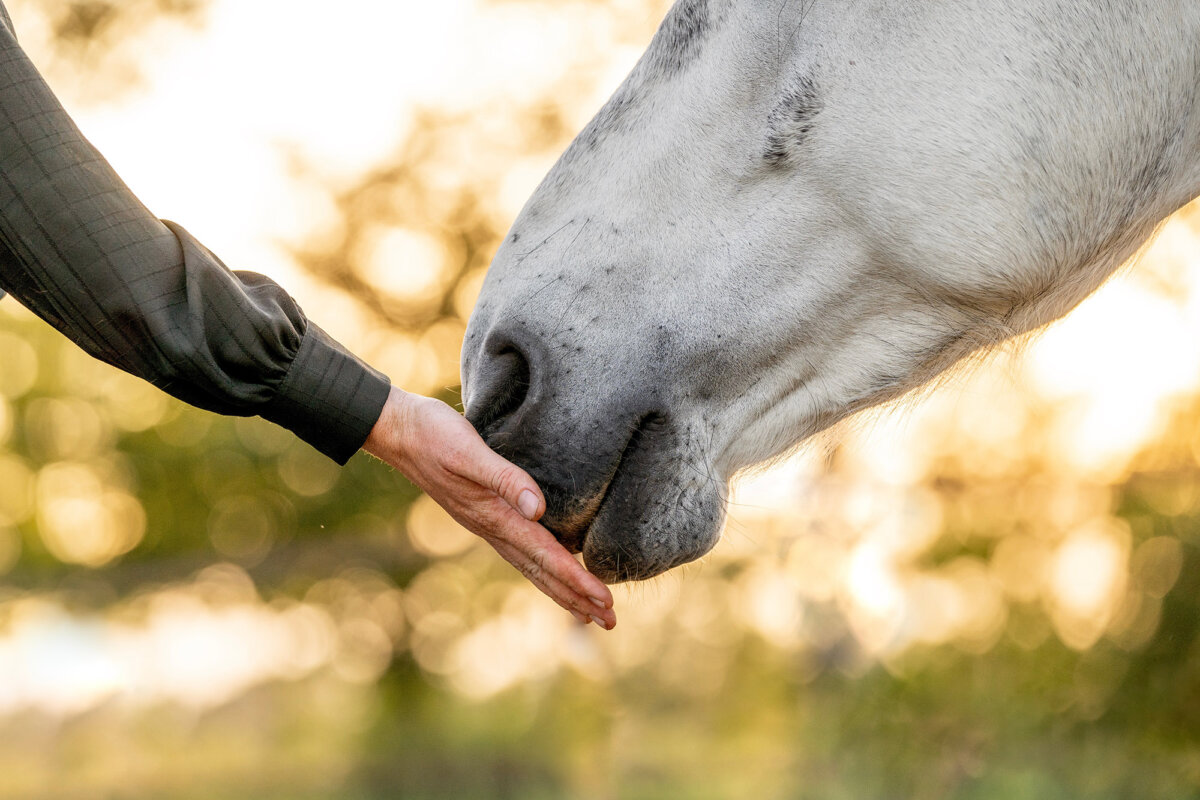
Cereus isn’t actually going to go anywhere. He’s a retired eventing horse, a very fancy European-born gelding who spent his first 12 years in shiny million-dollar barns and arenas in Poland and Florida. Sounds swell, but he spent over half his time cooped up in a small stall. When we brought him to our farm, we told him this is his forever home, and he galloped around the meadow five times in delirious glee.
When his little brother, Cocoa the Shetland pony, came to keep him company, his happiness was total. He likes to roll every day in the big sand pit my wife Nicole made for him—an indescribable spectacle.
It’s wonderful to be the caretaker of a being whose every cell tells him he belongs with our farm family. I came late in life to horses, and it constantly amazes me that I can soothe Cereus’s rare meltdowns just by spreading my arms wide and asking him to calm down. If the universe ever offers you the opportunity at such a bond with another being, take it. As with our two dogs, our horses offer us love and protection just as we do for them. We six have a spiritual bargain that will help keep us whole until we’re called to another world—where we hope to meet again.
Now though, enough is enough. Inspiration strikes and I mix up a quart of the oat and alfalfa mash that Cereus loves, in the old white bucket he recognizes a half-mile away. Off we go back to his stall. It’s such a dandy plan that Mr. Big trots ahead and blocks me to grab the bucket on the way. I duck, he dances ahead, I dodge, he trots beside nudging me, and in mere seconds, we’re all back where we belong. After he snarfs up the mash, he leans his head down, nuzzles my hand, and gives me a kiss.
“Just another lovely morning, Dad. I can’t wait to play this game again!”
