



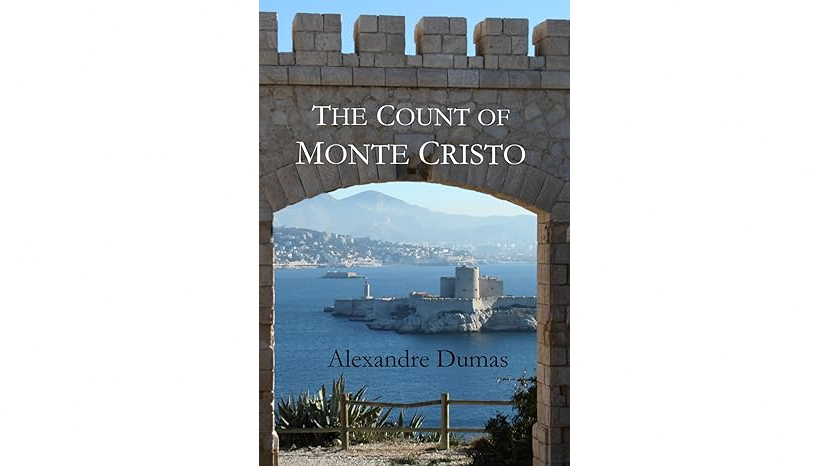
These days, books with exciting plots tend to be badly written. Award-winning books, on the other hand, are almost always boring, involving lots of character development and no interesting outward events.
Alexandre Dumas’s classic adventure novel, “The Count of Monte Cristo,” is neither of these things—unless one happens to pick up one of the countless abridged versions of the book. Most of these, to suit the modern proclivity for dumbing things down, sacrifice its literary merits on the altar of plot. Fortunately, a new abridgement, the Classical Poets Student Edition, has appeared to remedy this problem.
A Very Long Novel
Many people today are familiar with the story of “The Count of Monte Cristo,” although most have never read the novel. Dumas tells the story of Edmond Dantès, a young sailor whose promising future is destroyed when he is falsely accused of treason by jealous rivals. Imprisoned for 14 years in the Château d’If, Dantès learns of a hidden treasure on the Isle of Monte Cristo from a fellow inmate.
After a daring escape, he retrieves the treasure and reinvents himself as the mysterious and wealthy Count of Monte Cristo. Returning to Paris in disguise, he begins to weave himself into the lives of those who betrayed him, carefully laying the groundwork for an elaborate revenge. It’s a timeless epic of endurance, moral reckoning, and the search for redemption.
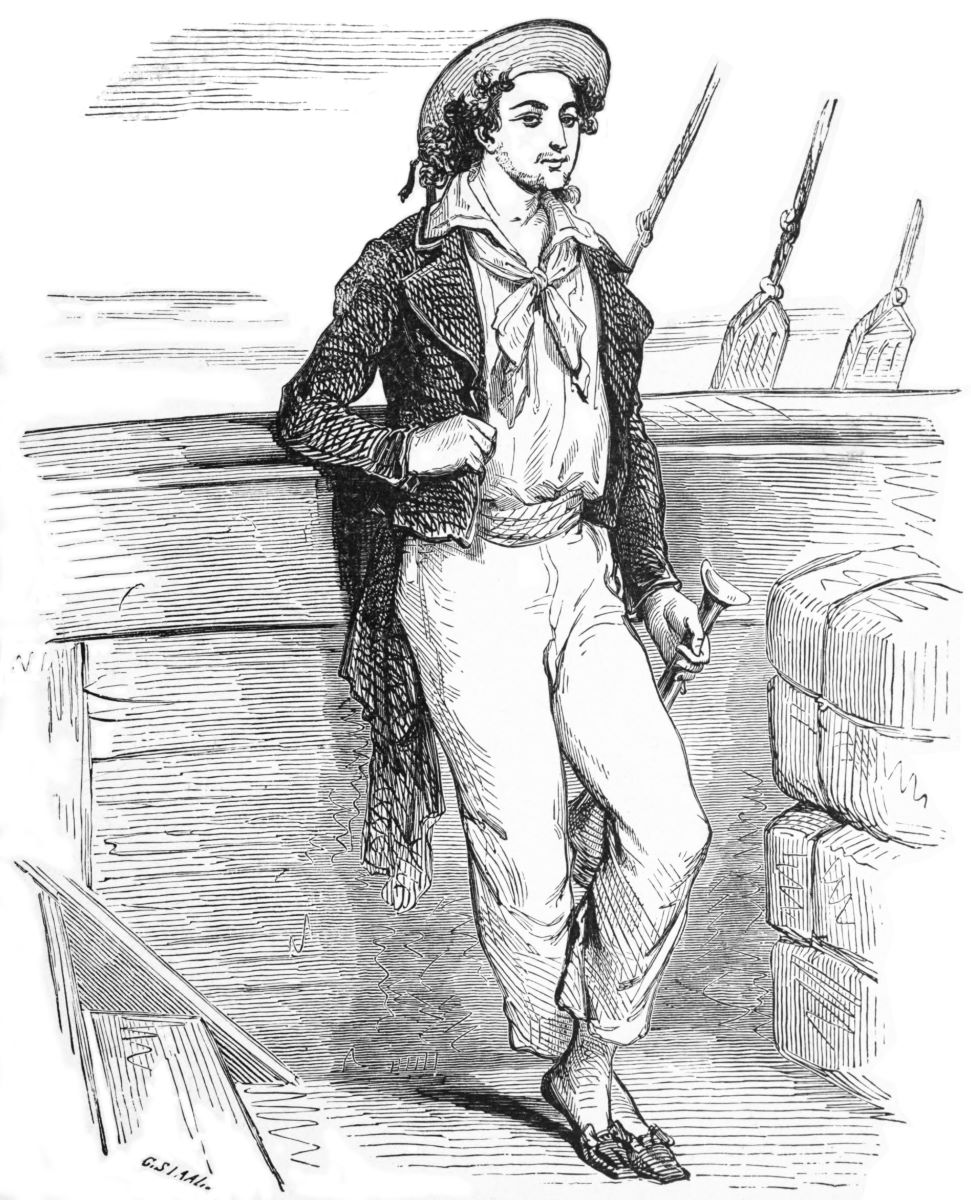
Those who come to the book after watching one of the many film adaptations are often surprised, as I once was, at the lopsidedness of the novel’s plot. Only about a fifth of the sprawling book deals with Dantès’s imprisonment, escape, and treasure-hunting. For the remainder of the story, Dumas spends nearly 1,000 pages detailing the Count’s intricate revenge, meandering through subplots connected to his enemies.
Why so long? Well, the novel was originally serialized in a French newspaper, published one chapter at a time over a two-year period from 1844 to 1846. The upside of this is that each chapter is punchy and relatively short. The downside is that, because Dumas and his uncredited co-writer, Auguste Maquet, were paid for each installment, this incentivized them to milk the story concept for all it was worth.
As a result, the book does not make the reading lists of most students and adults today because of its prohibitive length. To remedy this, numerous abridged versions have appeared that make the story digestible for busy people. The problem with most abridged versions is that, in addition to shortening the work, they often simplify the language as well.
A Brilliant Partnership
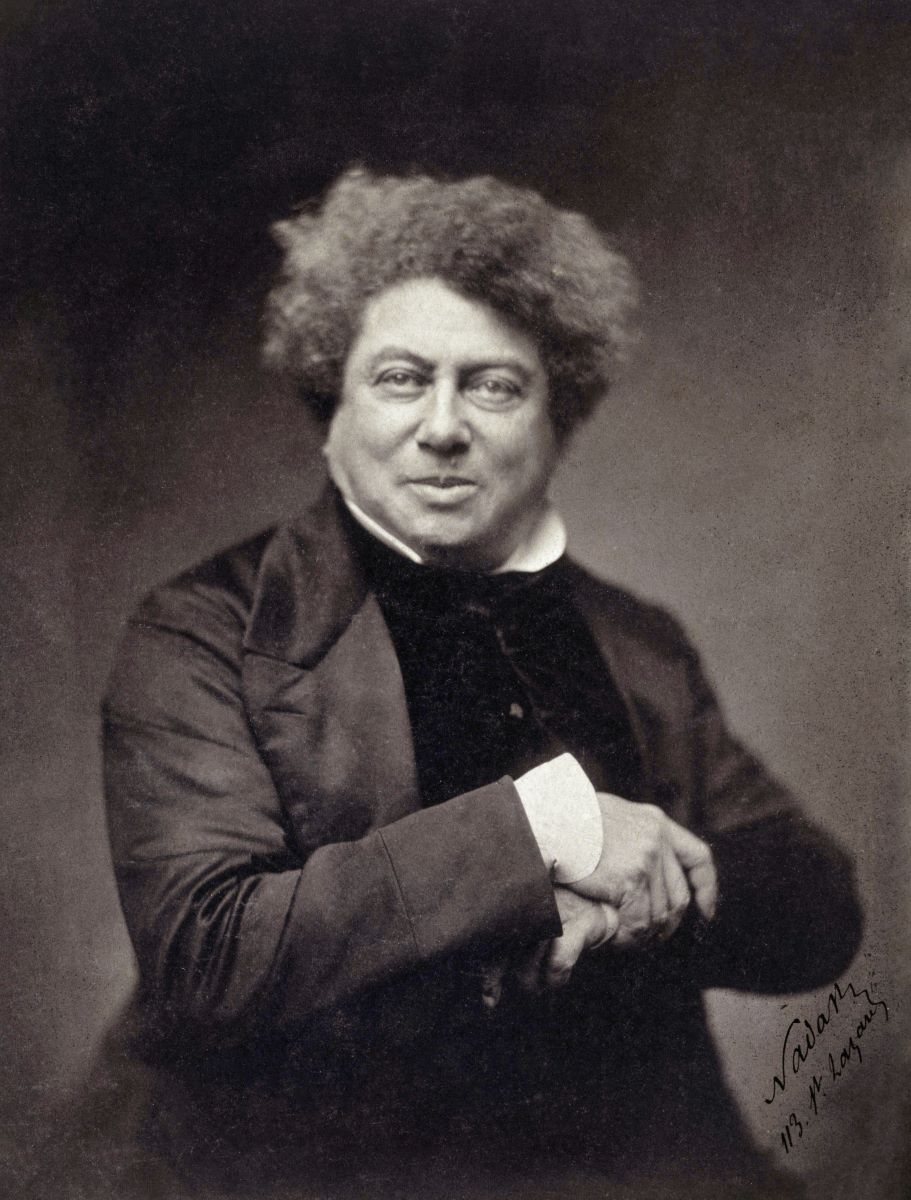
Ironically, the abridgements usually remove Dumas’s contribution to the story. It was his ghostwriter Maquet who was responsible for developing the novel’s plot and characters. Dumas then rewrote the initial drafts, enriching the narrative with expressive details and lively dialogue. In this, he was a bit like James Patterson today, who has become something of a cottage industry in the thriller genre by lending his famous name to the cover of numerous coauthored books.
Unlike with Patterson and other writers of genre fiction, though, the coauthorship of Dumas and Maquet resulted in something rare in modern publishing. They produced a thrilling adventure novel that was, at the same time, great literature.
Everywhere in the story, Dumas adds poetic flourishes that deepen our insight into the characters. Of Danglars, one of the conspirators against Dantès, readers are told that he “was one of those men born with a pen behind the ear, and an inkstand in place of a heart.” Another conspirator, Fernand, fearing the return of a vengeful Dantès, contemplates shooting his rival and then himself. But readers are then told “a man of his personality never kills himself, for he constantly hopes” (Classical Poets Student edition). Later, after discovering the treasure on the island of Monte Cristo, Dantès “closed his eyes as children do in order that they may see in the resplendent night of their own imagination more stars than are visible in the firmament.”
By removing the literary nuances of the original published novel, the dumbed-down adaptations are closer to Maquet’s drafts than Dumas’s polished work, erasing everything that has given the story the deserved status of a classic.
A Literary Restoration
In a passage from the beginning of Chapter 3 in the 1998 abridged Tor Classics edition, the reader is introduced to Dantès’s love interest, Mercédès:
“A young and beautiful girl, with hair as black as jet and eyes of the velvety softness of the gazelle, was standing leaning against the wall.”
That is all we are told before moving on with the plot. The problem is that a lot has been cut out. In the Classical Poets Student Edition, editor Evan Mantyk has restored the imaginative language of the original:
“A young and beautiful girl with hair as black as jet, her eyes as velvety as the gazelle’s, was leaning with her back against a partition, rubbing in her slender delicately molded fingers a bunch of heath blossoms, the flowers of which she was picking off and strewing on the floor. Her arms, bare to the elbow, brown, and as if modeled like those of the Venus of Arles, moved with a kind of restless impatience, and she tapped the earth with her arched and supple foot, displaying the pure and full shape of her well-turned leg, imprisoned in its stocking of red cotton with a gray and blue lozenge pattern.”
Mantyk based his edition on Joseph Blamire’s 1887 translation, making a large number of edits throughout and often retranslating directly from the French. What was a “wall” in the Tor Classics edition is now restored to “partition,” as well as all the poetic details from the source text.
The purpose of the above description isn’t just to revel in elaborate description. Mercédès’s delicate, absent-minded destruction of flowers reveals something about her character. We learn that she is outwardly composed but inwardly unsettled, awaiting the return of her fiancé Edmund. She herself is like the flowers she is strewing on the floor.
Dumas references the great artifacts and events of Western civilization throughout his work, and here, he compares Mercédès’s beauty to the Venus of Arles. Readers in Dumas’s time would have been familiar with this and other classical allusions. For readers today who are uncertain of this name-dropping, Mantyk has added footnotes. In this case, he helpfully tells us that this is an “ancient statue discovered in Rome at the Theater of Arles. It depicts Venus, the Roman goddess of love and beauty.” This volume also contains illustrations that portray cultural references in addition to scenes within the story.
By modern standards, Dumas’s style is verbose, full of long and sinuous sentences. In Chapter 9, one of Dantès’s conspirators, Gérard de Villefort, has a moment of doubt after convicting Dantès of a crime that he knows the man did not commit:
“Then, deep in this sick heart, the first germs of a deadly ulcer were born. The man he sacrificed to his ambition, that innocent victim immolated on the altar of his father’s faults, appeared to him pale and threatening, leading his bride by the hand and bringing with him remorse, not such as the ancients figured, furious and terrible, but that slow and consuming agony whose pains are intensified from hour to hour up to the very moment of death” (Classical Poets Student edition).
In the 2004 abridged version published by Barnes & Noble Classics, this paragraph is cut out entirely. This is a shame, since this magnificent 80-word paragraph describes the exact moment of the public servant’s turn toward inner corruption. People simply do not write like this anymore.
At just under 400 pages, the Classical Poets Student Edition is about one-third the length of Dumas’s original novel. The first part of the story involving Dantès’s imprisonment and escape is left in place. After that, chapters and sections that advance the main plotline at key points are included, while subplots that have no bearing on the central story are summarized. There is also a highly necessary historical note at the beginning that places the novel in its proper context.
As the name suggests, this Student Edition is ideal for introducing Dumas to high-schoolers in the classroom or casual first-time readers. It makes the original novel digestible while sacrificing none of the qualities that make it great literature.
‘The Count of Monte Cristo‘
By Alexandre Dumas, translated by Evan Mantyk
Classical Poets Edition, May 7, 2025
Paperback: 391 pages
What arts and culture topics would you like us to cover? Please email ideas or feedback to features@epochtimes.nyc
