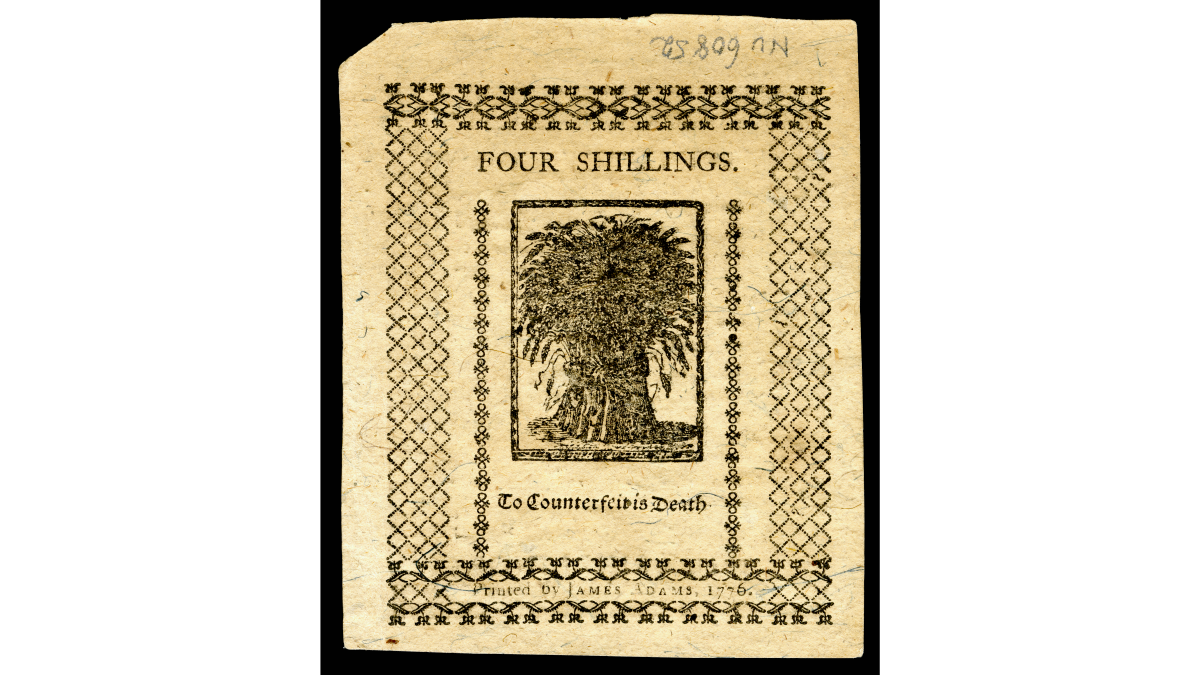
The history of counterfeiting is nearly as long as the history of currency. Just as counterfeits have remained on the heels of the originals, legal systems have remained on the heels of the counterfeiters.
Well before the discovery of the New World, the legal systems of European nations worked feverishly to keep ahead of counterfeiting rings. Therefore, when Europeans arrived in America to establish colonies, the counterfeit problem was soon to follow.
With a lack of available specie, colonies permitted colonists to use tobacco as a form of payment. In 1645, Virginia passed a law to create denominations of two, three, six, and nine pence coins out of 10,000 pounds of copper. Additionally, counterfeiters of this new coinage would suffer the death penalty if caught. This severe punishment was not unique to the New World; it had been a common practice in the Old. In the age of monarchy, to counterfeit the king’s or queen’s currency was to commit treason.
Counterfeiting the Continentals
The Americans throughout the 13 colonies during the mid- to late-18th century abided by this understanding. In 1775, before declaring independence, the Second Continental Congress began issuing Continental Currency, commonly referred to as Continentals. The issuance of these paper notes was to help finance the Revolutionary War. The British countered these Continentals starting in January 1776 by creating counterfeits, even going so far as to advertise their availability in New York’s Tory newspapers. The phrase “not worth a Continental” soon became a common refrain. Even an exasperated Gen. George Washington stated in a letter that “a wagon-load of money will scarcely purchase a wagon-load of provisions.”
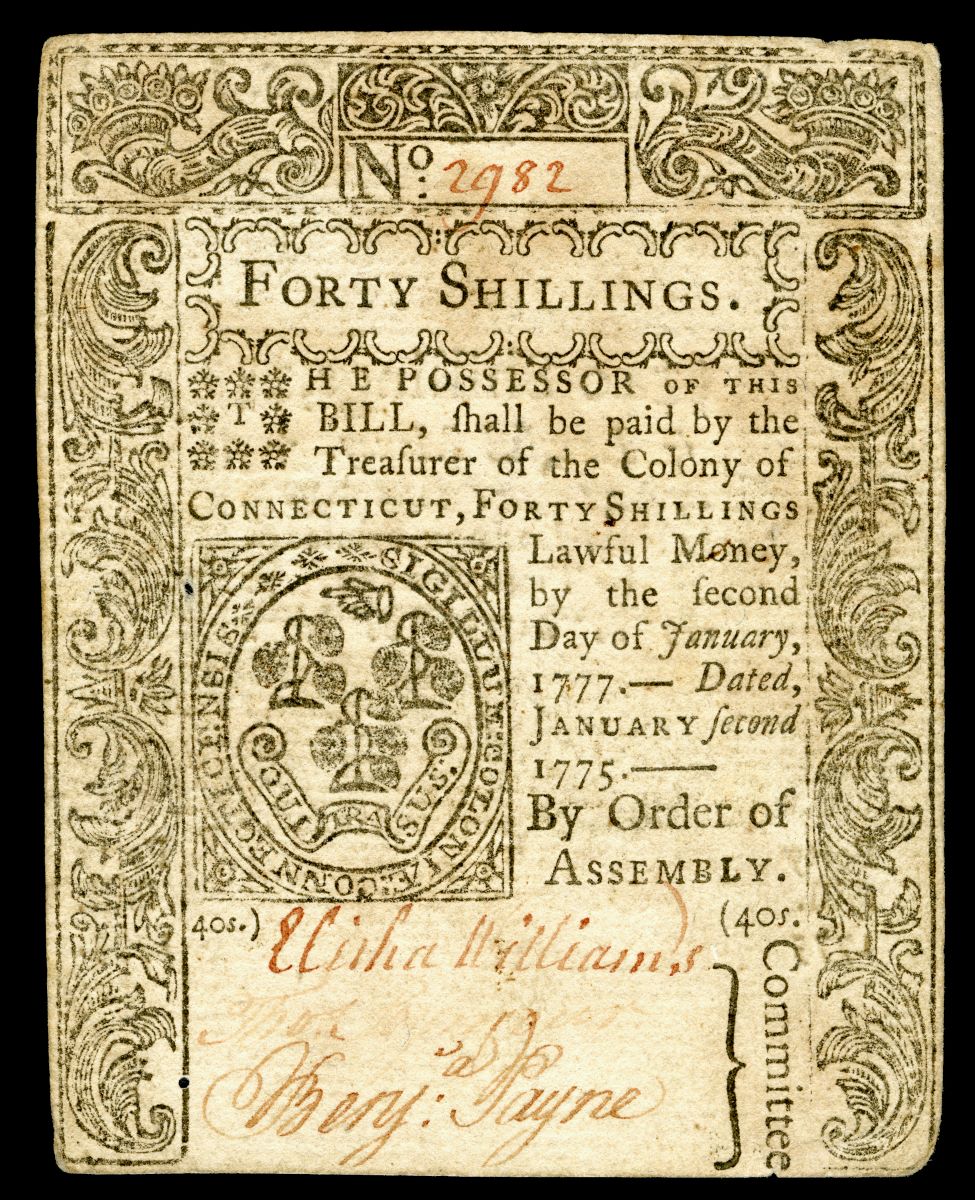
Josiah Bartlett, a member of the Continental Congress and a signer of the Declaration of Independence, called Britain’s decision to counterfeit the colonies’ currency a “most diabolical scheme.” Despite the scheme and despite the British war machine, the Americans won their independence. The understanding of how damaging counterfeiting could be to a national economy, however, remained intact. The penalty for the crime was just the same.
During its first session under the new Constitution, “Congress designated murder within federal enclaves, treason, piracy, forgery, and counterfeiting of federal certificates as capital offenses.” But just as the threat of death did not completely deter counterfeiting in Europe, it did not completely deter it in America.
Banking Perspectives and the Bank War
Two of the most famous Founding Fathers, Thomas Jefferson and Alexander Hamilton, differed in the extreme on finance, credit, and banking. Their political and economic perspectives created two factional groups called Jeffersonians and Hamiltonians—or more broadly, Democratic-Republicans and Federalists. Jefferson believed in a local and state banking system, ultimately as diverse as the groups of people that inhabited the 13 states. Hamilton believed that America’s real power was in the centralization of the banking system, establishing a national bank, and therefore creating national credit.
Each side witnessed its own victories and defeats over the following decades. In 1791, Congress was persuaded by Hamilton, much to Jefferson’s chagrin, to establish the Bank of the United States with a 20-year charter. When the bank charter was up for renewal in 1811, feverish debate ensued between the Federalists and the Democratic-Republicans. The renewal narrowly failed in both houses and for the same arguments originally posited. Conversely, by this time, local and state banks sprouted throughout the new nation.
Hamilton had died in 1804, having only witnessed the establishment of the national bank. Jefferson, however, witnessed its establishment, removal, and recharter in 1816 with the Second Bank of the United States. He also witnessed the rise of a most unusual figure: Andrew Jackson. This strong-willed and scrappy orphan rose to prominence as a courageous and successful general, and nearly won the presidential election of 1824, a moment that surprised and appalled Jefferson. Jefferson died in 1826 and did not witness Jackson win the nation’s highest seat in 1828. Although Jefferson viewed Jackson as far too crude to hold such an office, he may have been pleased when Jackson took up his anti-national banking banner.
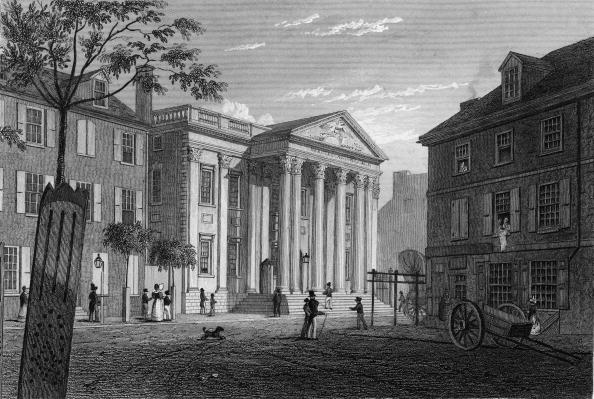
The Second Bank was due to be rechartered in 1836, but Jackson viewed the Bank’s very existence as unconstitutional, far too powerful, and a tool for the wealthy elite to empower and enrich themselves. In 1832, his political opponents chose to make the debate a political matter and put it up to a Congressional vote. The bill passed both Houses; however, it did not have enough support were Jackson to veto the bill.
The dismantling of the Bank had been high on Jackson’s list of priorities and his vetoing of the bill ensured its demise. Jackson refused any additional government funds to be issued to the Bank. Its existing funds were issued to state banks, and the Bank limped along until 1836. Jackson had won what became known as the Bank War.
A Counterfeiter’s Paradise
With the death of the Second Bank of the United States, the creation of local and state banks exploded throughout the country. Additionally, each bank printed and minted their own currency and bonds, opening wide the door for counterfeiting. With thousands of varying forms of paper and metal currency, America became a paradise for counterfeiters.
With the creation of the 1806 Enforcement of Counterfeiting Prevention Act, catching counterfeiters became a problem to be tackled by local and state authorities, along with some help from U.S. Marshals. The laws against counterfeiting compounding the problem, however. The laws only prohibited the creation of counterfeits or the actual act of inserting counterfeits into circulation. The justice system did not prohibit the selling of counterfeit monies as counterfeit, or mere possession, even if the individual intended to use them. Additionally, paying detectives and officers to track down counterfeiters was expensive. It was so cost-prohibitive that even the Treasury Department was hesitant to provide funds for such investigations.
“The law does not provide for reimbursing the officer for such expense,” noted U.S. Marshal Daniel Roberston. “This is the reason the counterfeiters of coin have been hitherto enabled, in a great measure, to defy the laws.”
A Treasury Problem
On Oct. 25, 1860, Congress transferred the authority to investigate counterfeiting from the U.S. Marshals to the secretary of the Treasury, appropriating $10,000 (about $387 million today) for the Treasury Department to “detect, arrest, and prosecute counterfeiters of the coins of the United States.” With such a limited fund, the Department used the money sparingly. Indeed the amount appropriated was far from sufficient. By 1861, more than 1,600 banks issued their own currency, leading to a third of America’s currency in circulation to be counterfeit. According to historian David Johnson, “when the Civil War erupted, perhaps as much as half of the paper notes in circulation were counterfeit.”
Since the 1830s, the banking system had remained a states issue, but when the country shifted to a war economy in April 1861, the banking system was destined to shift with it. The Union, not to mention the Confederacy, had to pay troops and the contractors that supplied their militaries. Centralizing the banking, and therefore the currency, became pivotal for both sides.
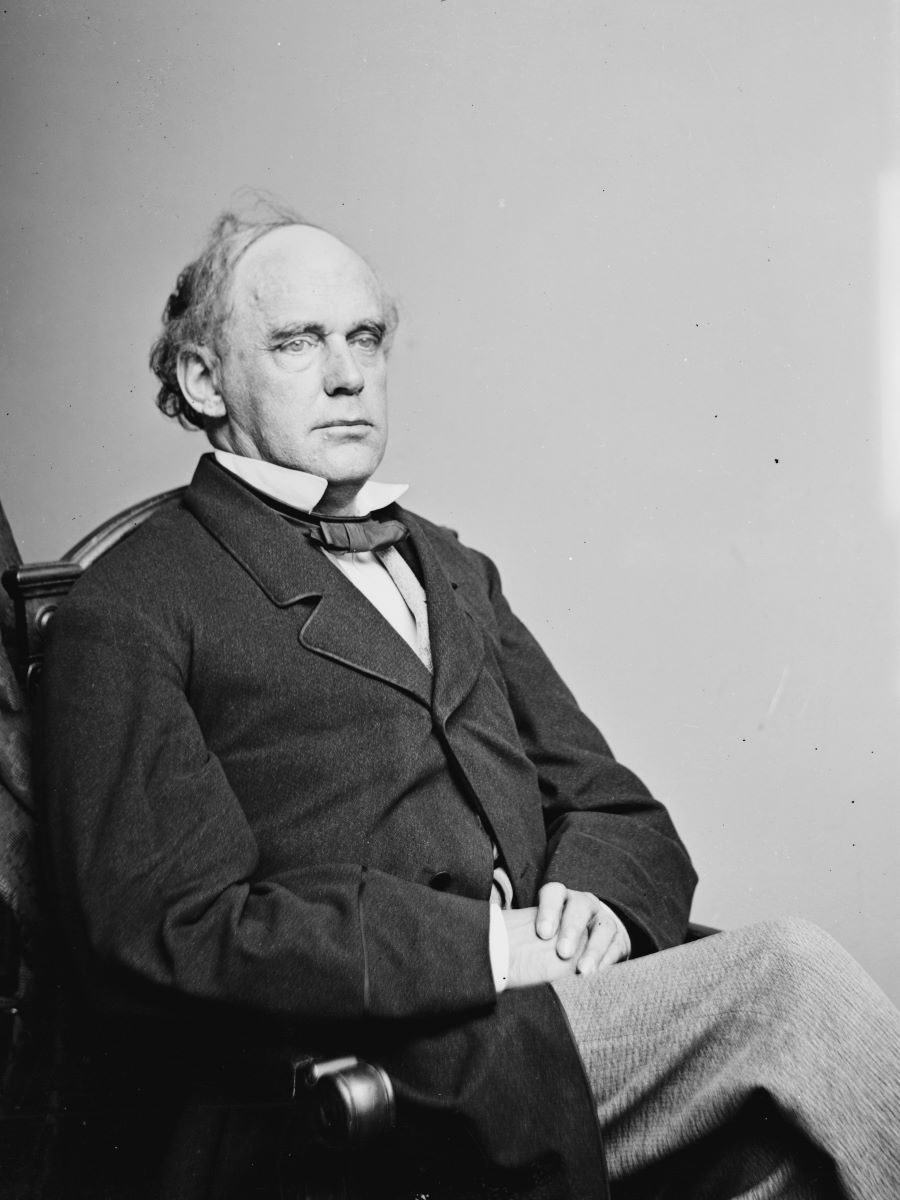
In 1861, Salmon P. Chase resigned from the Senate to become Treasury secretary. He concocted methods to help pay for the war effort, including selling bonds to bankers and citizens alike, as well as securing short-term bank loans. Additionally, in August 1861, Congress passed the first federal income tax. Nonetheless, by the end of the year, the Treasury funds were depleted. Chase knew a national currency was required, and it would be backed, not by specie, but by the “full faith and credit” of the federal government.
‘Greenbacks’ and National Banking
The Legal Tender Act of 1862 was passed, enabling the Treasury Department to print $150 million in new federal currency called “greenbacks.” Following this act, Congress began discussing another Chase brainchild, the National Currency Act. According to the U.S. Senate, “the act had three objectives: to create a market for war bonds, to reestablish the central banking system destroyed during President Andrew Jackson’s administration, and to develop a stable bank-note currency.”
On Feb. 25, 1863, Lincoln signed the National Currency Act. Before its passage, Hugh McCulloch had arrived in Washington to lobby against it. McCulloch was the president of the State Bank of Indiana, and, in Jacksonian form, believed such a bill was a threat to local and state banks. His arrival brought him into contact with Chase. The Treasury secretary believed that if he could convince McCulloch of the propriety of the act, it would prove beneficial in convincing more bankers. It appears McCulloch was convinced.
The National Currency Act had created a new Treasury position “charged with responsibility for organizing and administering a system of nationally chartered banks and a uniform national currency” called the Comptroller of the Currency. McCulloch, the former foe of such a system, accepted the new position in May. Over the course of 22 months in this position, he chartered 868 national banks, none of which failed. His recommended alterations to the National Currency Act were accepted, resulting in the National Banking Act of 1864.
This revised act enabled five or more banks, each possessing at least $30,000 in capital, to form a national association in order to purchase federal bonds, and issue new federal banknotes along with “greenbacks.”
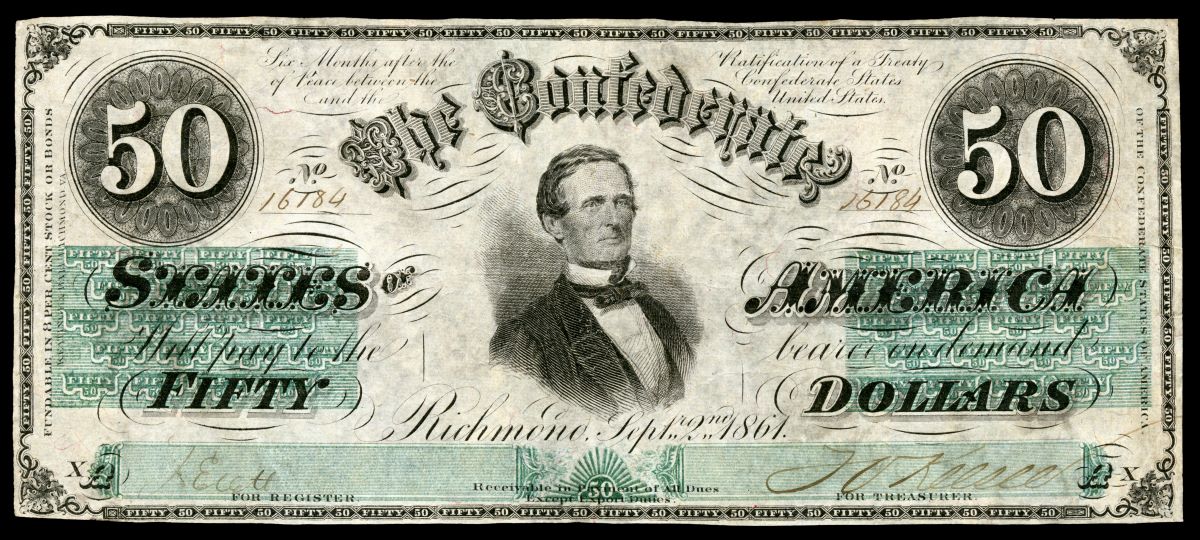
The issuance of the singular and uniform national currencies directly impacted the counterfeit problem, though it did not extinguish it, despite it being a capital offense. The Confederacy, in its fight against counterfeiting, also made the crime a capital offense.
Creating the Secret Service
In June 1864, Chase resigned his position as secretary of the Treasury. Lincoln then nominated him to Chief Justice of the Supreme Court, which the Senate confirmed. He was replaced by William Fessenden, who served until March 1865. With the war winding down, McCulloch was then appointed as secretary, a position he held until the end of the Andrew Johnson Administration in 1869. He also returned to the position for the final four months of Chester A. Arthur’s presidency.
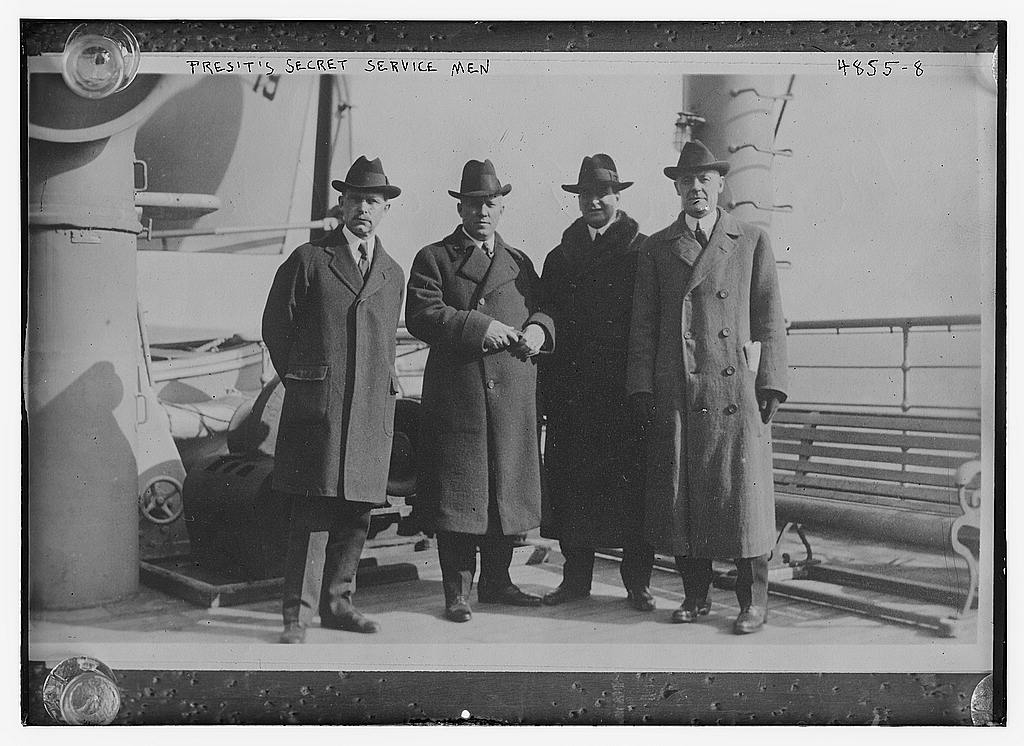
With the end of the war a mere month away, the new secretary recommended to President Lincoln that a new commission be created within the Treasury Department. The objective would be to investigate, discover, and root out counterfeiting rings in order to better protect the country’s currency and economy. Lincoln agreed, and on April 14, 1865, he signed an executive order to create the United States Secret Service. It was actually during this week in history, on July 5, 1865, almost three months after the executive order was signed, that the Secret Service went into operation, making it the country’s first investigative agency.
Although the Secret Service has long been known for protecting the president and now resides within the Department of Homeland Security, it still investigates counterfeiting. For the division known for protecting presidents, Lincoln signed the order, ironically, on the very day he was assassinated. It was not until William McKinley was assassinated in 1901 (the third president to be assassinated) that the Secret Service began its presidential security detail.
Never miss a This Week in History story! Sign up for the American History newsletter here.
What arts and culture topics would you like us to cover? Please email ideas or feedback to features@epochtimes.nyc