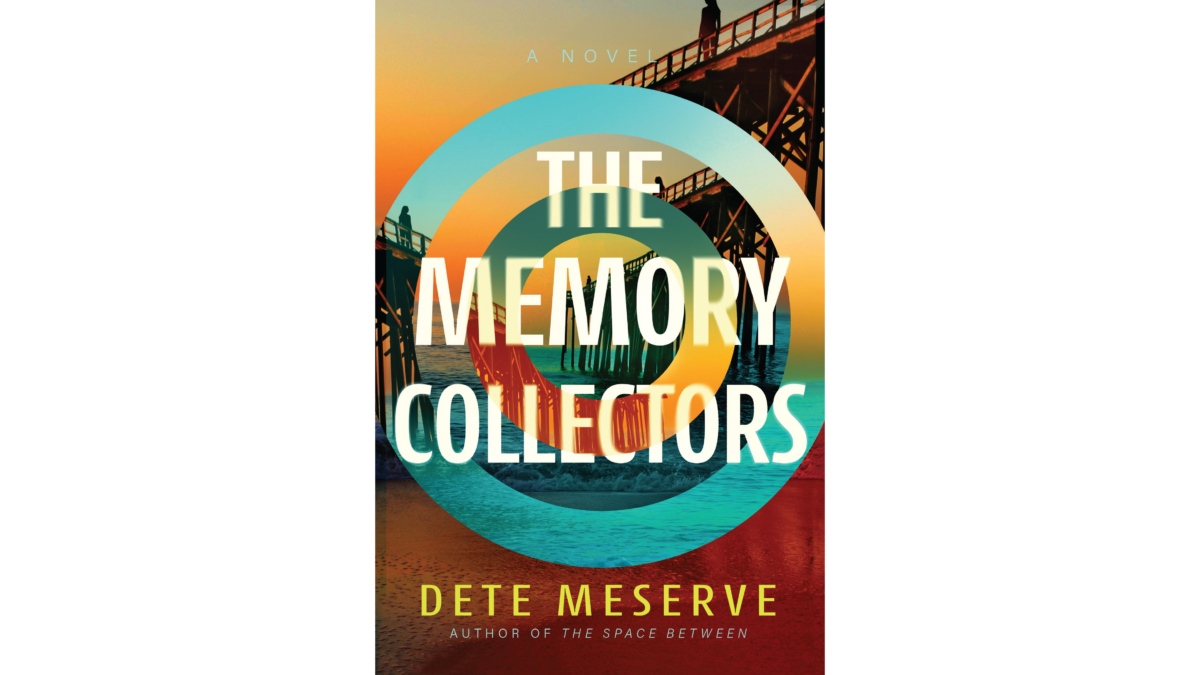
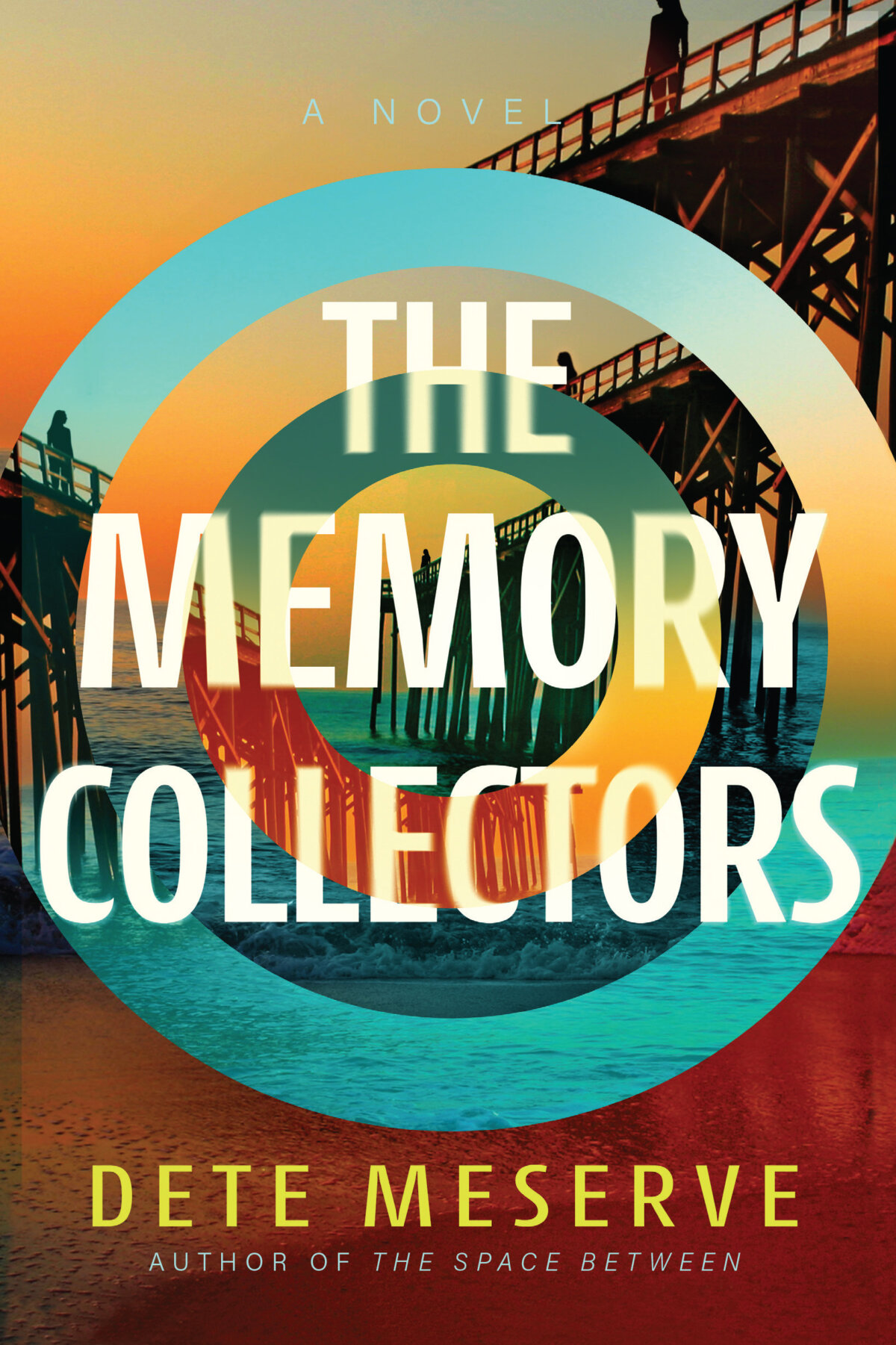
Dete Meserve’s “The Memory Collectors” is a slow-reveal story about four characters who have an unique opportunity to visit their own past and relive it for an hour. What unfolds is a compelling blend of emotional immediacy and speculative intrigue. Readers are drawn into a place where the past is explored and, perhaps, altered.
Set three years from now, in 2028 Ventura, California, the novel shifts points of view among four strangers: Logan, Andy, Brooke, and Elizabeth. Each has deep emotional wounds, unresolved guilt, or haunting loss from a past event that they can’t let go of. One company might help.
Aeon Expeditions has announced a breakthrough technology. The company enables people to jump into their past and stay there for exactly 60 minutes.
There are conditions. Participants can’t alter the present through their actions, bring anything back, or choose the date.

Regardless of the unknowns, all four are desperate to be accepted, each hoping to resolve their tragedies or find a measure of relief. What begins as a “speculative package tour” gradually transforms into a time-bending journey of emotional reckonings and second chances.
Can’t Let Go
Logan is a former athlete whose life took a violent and costly turn when he was paralyzed in a car accident. His motivation for time traveling is simple: to experience being fully mobile again, even if it’s only for an hour.
An author by profession, Andy is desperate to find a woman named Kate Montano. They dated for a few days before Kate “ghosted” him, never returning his calls and essentially disappearing. Years later, Andy cannot stop thinking about her. He desperately wants to find out if she was just not interested, or if something might have happened to her.
For the death of a pedestrian in a driving accident, Brooke was convicted and sentenced to 900-days in prison. Her criminal record should disqualify her for a jump; she’s shocked to be approved. The accident destroyed her life, shattering her marriage and her relationship with her children. Three years later, Brooke is still unable to cope with the guilt. She hopes to reexperience a time before the accident that will remind her what it feels like to be whole again.
Elizabeth still grieves the death of her adult son, Sam. Their last words were harsh, and she still doesn’t understand what happened to him on the night he died. Unable to move forward with her life, Elizabeth wants to spend a final moment with Sam and have a chance to properly say goodbye.
Her situation is also a bit unique. Elizabeth gets two jumps. It helps that her husband, Mark, is the founder of Aeon Expeditions.
Jumping Off
The first chapters explore the beginning of each person’s jump—the strangeness of what they experience and the heavy emotions that come with it. As each story progresses, all of them begin to notice things occurring that, according to what the guides have told them, shouldn’t happen.
For example, all “jumpers” are supposed to keep within a short radius of their “landing zone.” But when Logan breaks this rule accidentally, there aren’t any of the negative consequences he was cautioned about.
Like the others who come across similar inconsistencies, he isn’t sure what’s going on here, but he isn’t going to complain about getting a greater experience. Then, even more supposedly unbreakable rules are mysteriously overlooked or ignored by the system—assuming it’s even still working.
The characters must accept that something has gone very wrong with their jumps. They also begin to suspect that there are other jumpers with them as well, and that there might even be a connection between them that points to the reason they’re in this situation.
Time-Travel Tourism?
Time-travel elements in science fiction can be problematic. Fans of the genre can point to a dozen examples where the logic of time travel gets so convoluted that nothing makes sense anymore (the “Terminator” franchise). But they can also point to many stories where the author was able to weave a plausible scenario that is both fascinating and reasonably believable (H.G. Wells’s “The Time Machine” or Isaac Asimov’s “The End of Eternity”).
Meserve bypasses both options by largely ignoring most science fiction elements and focusing almost entirely on the emotional journey of the characters. That choice simplifies the storytelling and ultimately works well enough. However, readers may hope for a more challenging or thought-provoking exploration of the intricacies of time travel.
“The Memory Collectors” takes readers on an emotional journey that is well crafted and packs a nice punch. For those who are more into catharsis than quantum mechanics, this could easily be the book to enjoy.
‘The Memory Collectors’
By Dete Meserve
Crooked Lane Books, May 20, 2025
Paperback: 336 pages
What arts and culture topics would you like us to cover? Please email ideas or feedback to features@epochtimes.nyc