



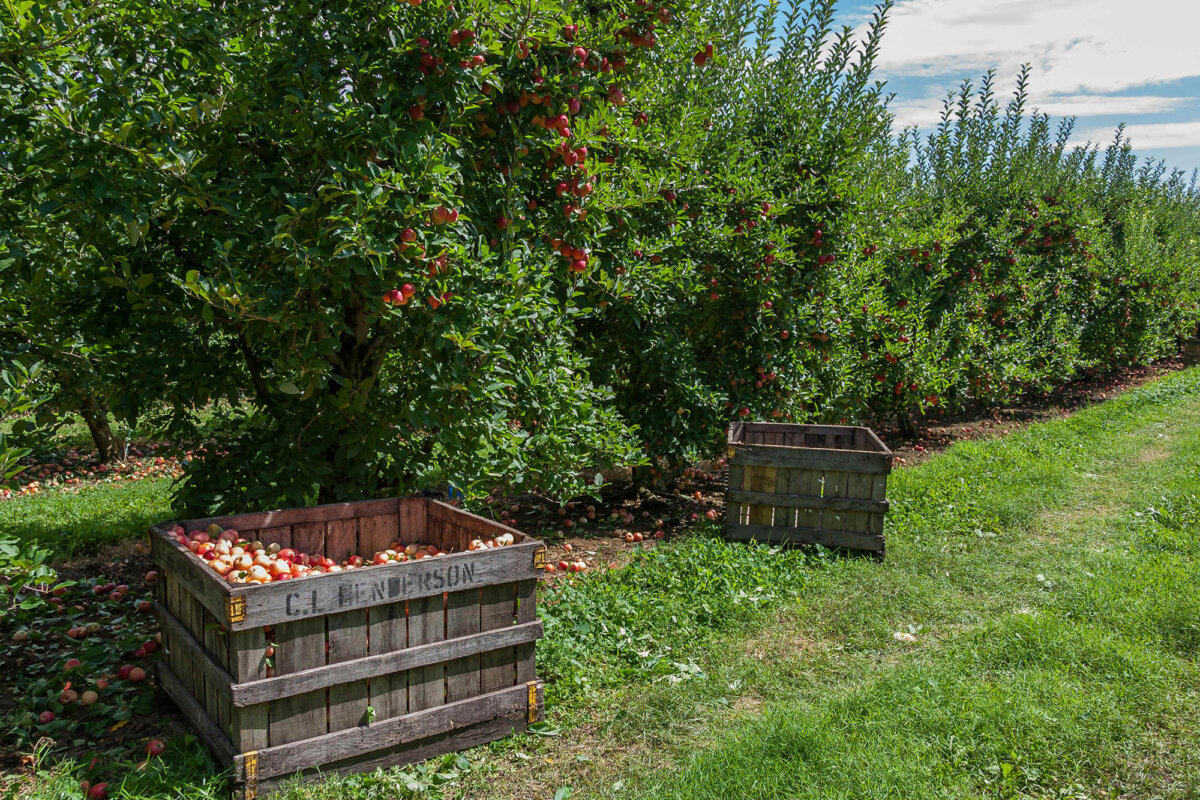
It’s supposed to be the little engine that could, my dwarf Arkansas black apple tree, a wonderful fruit cultivar grafted to a rootstock selected and engineered to grow Lilliputian trees.
But after six years in the ground, it’s not yet 4 feet tall. That’s not a tree. I shouldn’t have bought it.
But wait: Don’t the “experts” say dwarf trees are best for the home gardener, if not everyone? Yes, they do.
“The fruits of these smaller trees can often be larger, and of better quality, plus the ease of harvest [no ladders required] as well as general upkeep and it quickly becomes a no-brainer,” a major British nursery company declared. “Oh, and dwarfing trees are also quicker to come into fruit!”
I also consulted ChatGPT, which said, “Dwarf apple trees can definitely be the best option, especially if you’re limited on space or want easy care.”
In other words, I’ll be able to water, fertilize, tend, prune, and harvest my poor Arkansas black while sitting in a chaise lounge in the orchard playing SimCity on the iPhone grafted to my belly button.
Balderdash.
Dwarf trees are but one hoax in the long list of home orchard myths, which continues to grow as “experts” pioneer new ways to translate the ease and convenience of Waymo to the American yard. Murdering these myths is among my favorite pastimes when I am not out there planting, watering, and tending actual live trees. In other words, the list below is based on what military strategists call ground-truthing.
Feel free to report me to the global society of horticultural authorities. I will not repent.
Dwarves Are for Middle Earth
In J.R.R. Tolkien’s universe, hobbits and dwarves were diminutive native beings of that special place. But we live on actual Earth, where nature created trees to grow tall and strong and bear fruit, among other things.
For example, take the amazing Gravenstein on non-dwarf rootstock that I put in the ground a year after the dwarf tree. The Gravenstein is now 25 feet tall, will bear about 200 apples this year, and is a sterling example of arborial magnificence. Meanwhile, the Arkansas black has about 15 apples on its 3.5-foot frame.
I’ll have fruit 20 feet high on the Gravenstein, but humanity invented a solution for that: ladders. Get one at your local hardware store.
So I put hobbit-dwarf trees atop my list of garden myths. They are an insult to nature’s plan for trees—they are marginally easier to manage, but they don’t produce fruit sooner; they don’t make bigger fruit; they save meaningful space only if you have a yard that fits in a VW Bug.
Easy harvest? You have to hunch over like you’re picking cotton. Fruit sooner? Almost all the 42 trees in my orchard produced fruit in their first two years … except a half dozen dwarf-stock apples. Two are 4 years old, and nothing yet. Pruning? Heavy pruning is another garden hoax that deserves banishment to the Land of Oz (see below). Bigger fruit? On a smaller tree? Howdy Doody could think his way through that one. Total horsefeathers, all of it.
Completely overlooked in this arena is that old-fashioned issue of right and wrong: Isn’t it arrogant to award ourselves the liberty to mutilate, mutate, mangle, and otherwise massacre other living beings for no reason but convenience and instant gratification?
Myth: Plant Three-in-One Trees
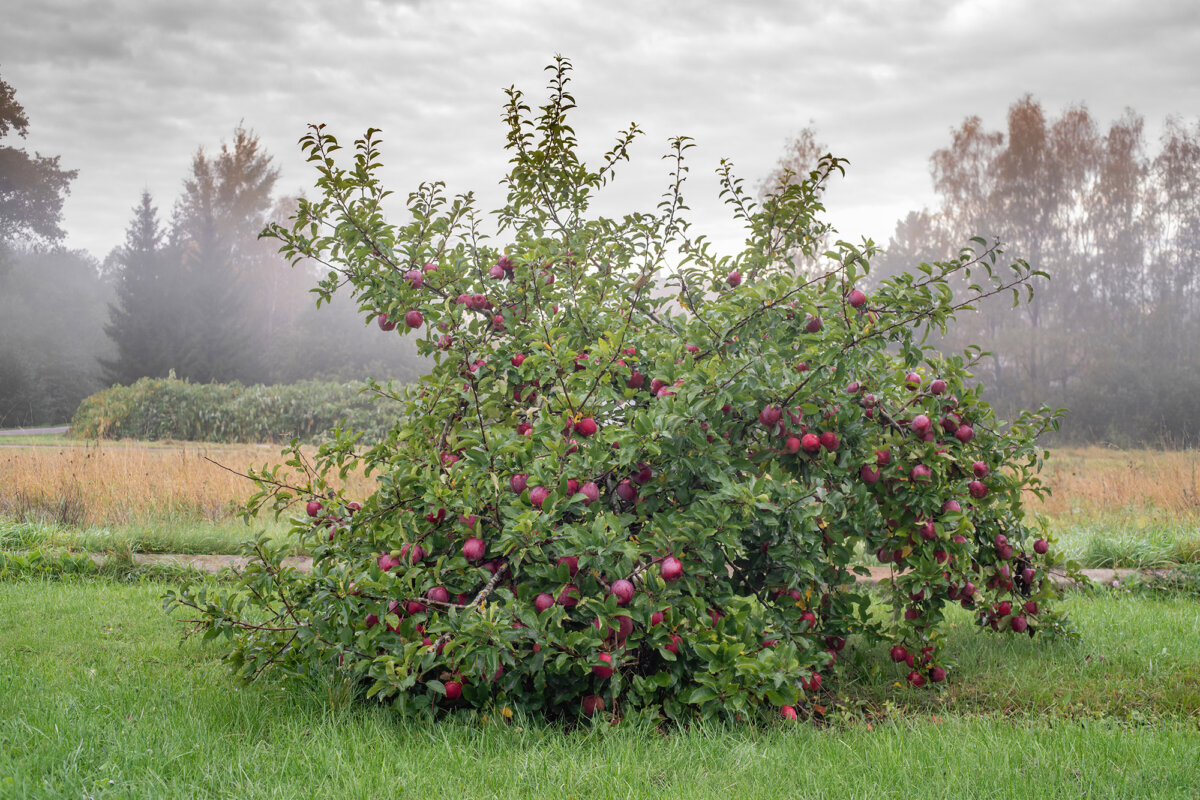
Sure, you can grow Cosmic Crisp apples, Cara Cara oranges, and fresh bananas all on one tree trunk. Dietitians recommend a wide variety of fruit daily, and it sounds wonderfully appealing, a backyard analog of the all-in-one car/plane/helicopter we’ll enjoy in our future Jetsons world, complete with no more traffic jams.
In reality, it’s like grafting a Watusi warrior onto an Inuit hunter, hoping to get a point guard/center who will bring you an NBA title. I’ve lived with a couple of these multi-trees, and one side usually outgrows the others, creating a poorly balanced hybrid whose actual production is paltry.
The average American yard can easily accommodate a half-dozen traditional single-type fruit trees—semi-dwarf or regular, grown up, not out. I lived for years on a standard urban lot in a Seattle neighborhood, and there was room for a dozen or more regular fruit trees. You can even keep your precious green lawn beneath the trees; that’s fine for the trees and the fruit that falls in autumn.
Myth: Prune Severely for Best Results
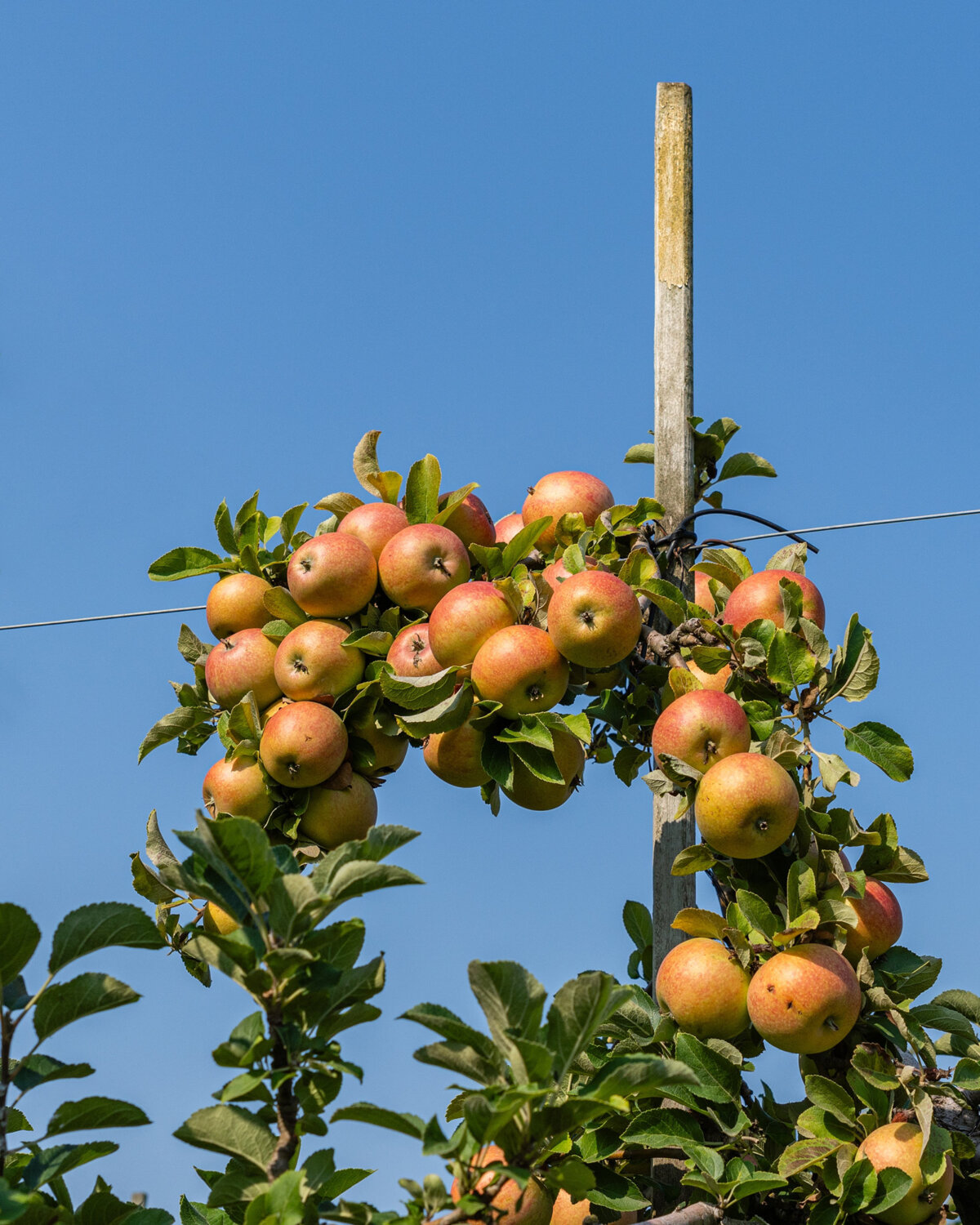
All over America, you see the mutilated, dispirited, shaggy results of this brutal practice. Chia pets, nine feet tall. In commercial orchards, massive Sherman tanks prowl up and down the rows, shearing off the tops of the trees like a Paul Bunyan-bot. Home orchardists scammed by “experts” haul out their hedge trimmers, scalp their trees annually as if they were boot camp conscripts, and create mutilated, misshapen mutants that look like 1970s hair-rock stars.
My wife Nicole and I got a couple dozen well-grown five-foot-tall heirloom semi-dwarf apple trees from growers in industrial fruit country. They advised us to take them home and immediately whack them off knee-high. I ignored that advice and all are doing well except one that was accidentally mowed and is only now, four years later, reaching three feet tall. It finally has one apple. Its un-whacked neighbor will bear 40 apples this fall.
Many people are shocked that I don’t shear off my trees each spring. But I do prune a bit—judicious pruning, only when necessary, such as removing internal crossing branches or diseased limbs.
Most important: Never cut a growing tip (aka “leader”). Chop the leader, and that branch will try to replace it with a dozen side shoots. Always go back to the bigger branch to make a cut. Fruit trees aren’t meant to be shrubs. Tree topping is an unnatural and unkind human folly.
Myth: You Can Grow the Grocery Store Types You Like
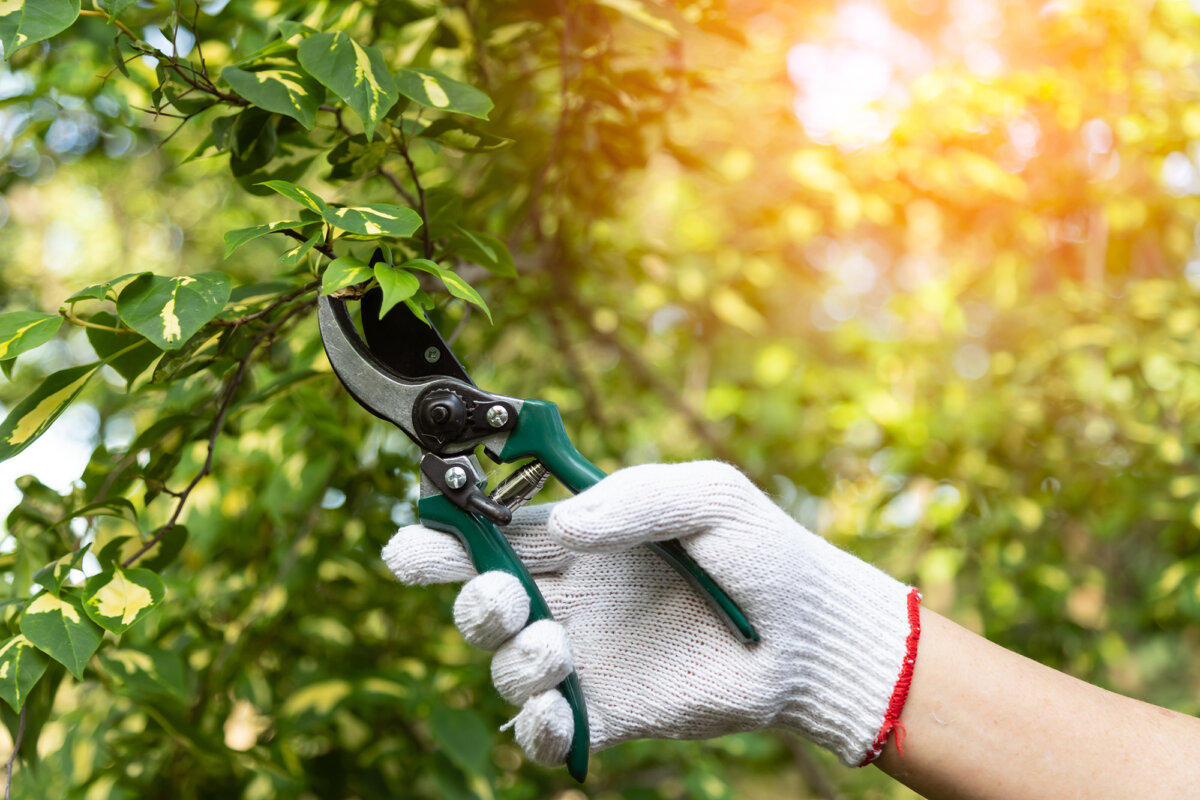
Plant a Cosmic Crisp in your yard and amaze your neighbors! Please your fussy 5-year-old! No need to pay $5 per pound at Whole Foods!
Actually, you can’t do this. The spiffy, shiny, patented, and trademarked fruits lined up in the produce section like bracelet charms at Walmart have been bred and engineered by the orchard industry for industrial production in apple country, such as Washington state’s Columbia Basin. Unless your backyard is desert ground with 100-degree days and 58-degree nights, unlimited direct sun, and four months of cold winter weather, the industry trees won’t grow. Many home gardeners found this out 20 years ago trying to grow Fujis and before that, Red Delicious (which are notoriously not delicious at all).
Many varieties are suitable for home orchards, most of them older types that have been grown in backyards for decades, if not centuries. Most are regional; on the West Coast, Gravenstein and Tompkins King stand out. In the Midwest, Wolf River, Northern Spy, and Liberty. In the East, Macintosh, Spitzenberg, and Winesap. Homeowners in very mild southerly climates such as Georgia and California must look for low-chill varieties that will produce without extended winter dormancy.
These tried-and-true varieties grow well without intense management. They produce apples that are all-purpose: good for fresh eating, baking, cooking, and juicing.
These principles apply to other fruits as well: Bing and Rainier cherries, Bartlett pears, white donut peaches, pluots, and apricots. The ones you see in the store are bred for industrial production, require intense (usually chemical) management, and have highly rigorous climatic and cultural requirements.
And my poor little Arkansas black apple? Its character is not its fault; it’s a stunted gnome manufactured by Dr. Frankensteins who believe that “convenience” is the highest value for consumers. I don’t, but I will tend and grow my little tree as best I can. I brought it to our farm because I wanted that particular variety, and at the time super-dwarf rootstock was all I could find.
It deserves as much care and respect as any of my 42 other trees. A tree isn’t a parking-lot shopping cart. It’s a living being.
