Those who know their history will recall how American women helped sustain the war effort in World War II by working in factories and shipyards. It may surprise some people to know that a similar societal shift occurred during the Civil War.
Women played such a vital role in the war between the states that Abraham Lincoln commented on March 18, 1864: “I have never studied the art of paying compliments to women; but I must say, that if all that has been said by orators and poets since the creation of the world in praise of women were applied to the women of America, it would not do them justice for their conduct during this war. I will close by saying, God bless the women of America.”
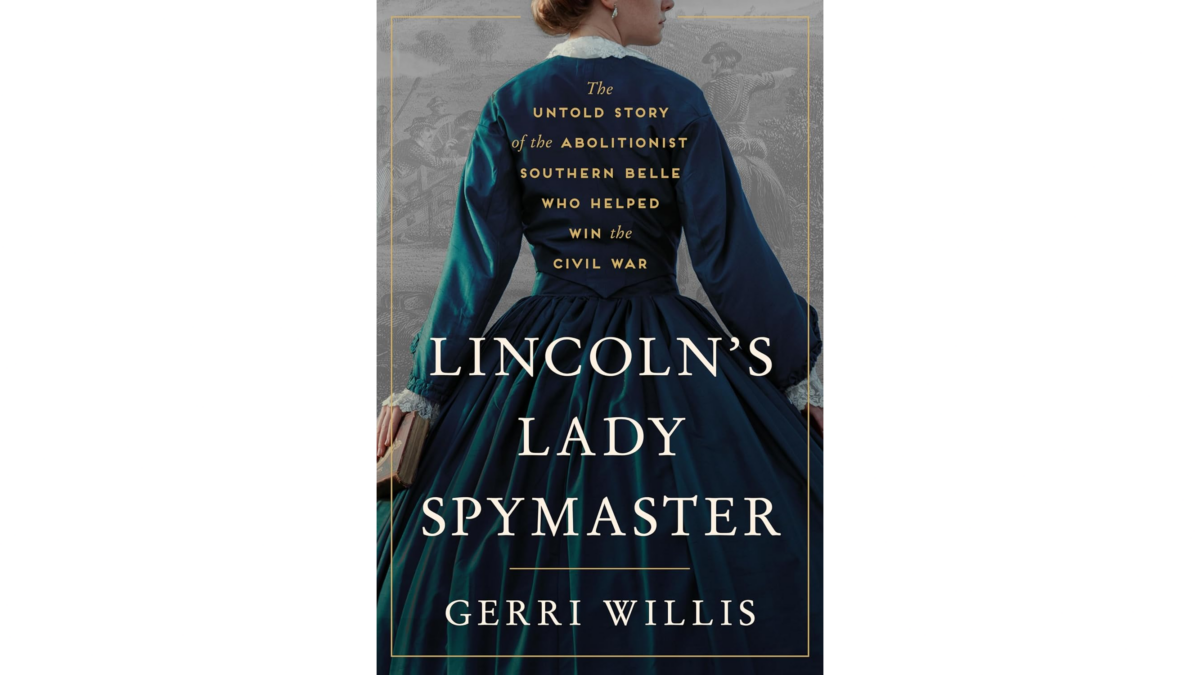
This is one of the anecdotal gems Fox Business correspondent and anchor Gerri Willis shared in her new book, “Lincoln’s Lady Spymaster: The Untold Story of the Abolitionist Southern Belle Who Helped Win the Civil War.”
Willis’s book provides readers a detailed look at an important but little-known woman who played a significant role in the Civil War. Elizabeth Van Lew, a fervent Unionist who detested slavery, organized and led a spy ring from her home in Richmond, Virginia, the heart of the Confederacy and home to the country’s second-largest slave market.
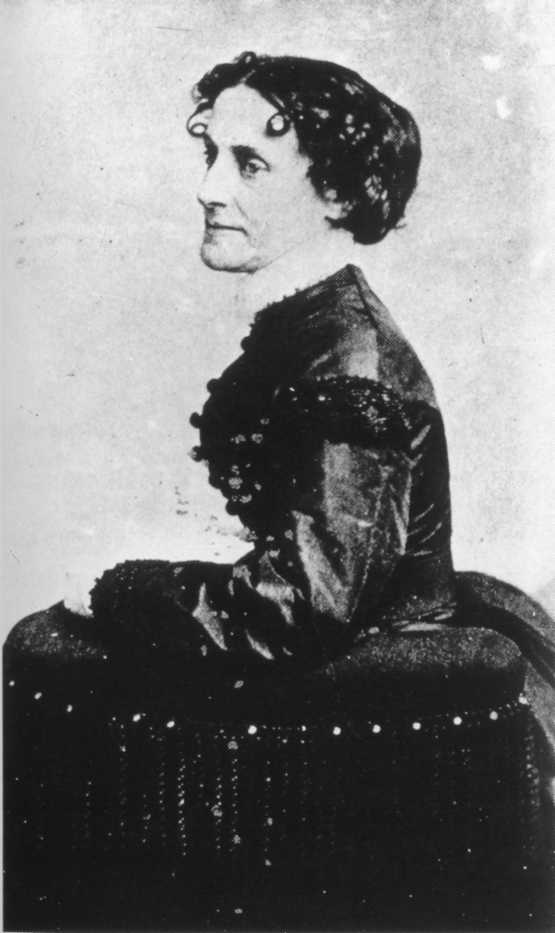
Willis reveals one of the reasons that Van Lew isn’t better known. It wasn’t until 1959, 94 years after the Civil War ended, that a roomful of documents were discovered in the National Archives by Edwin C. Fishel, a WWII spy and former National Security Agency employee. The documents contained the records of the Army of the Potomac’s Bureau of Military Information, also known as the Union’s spy operations. According to Fishel, the documents cited Richmond’s Unionist underground as “the most productive espionage operation of the Civil War, on either side.”
The Richmond spy ring was organized and managed by a principled and courageous woman who sacrificed her family’s fortune to support Union prisoners of war, slaves seeking freedom, and even Confederate neighbors desperate for food and sustenance.
A Fervent Abolitionist
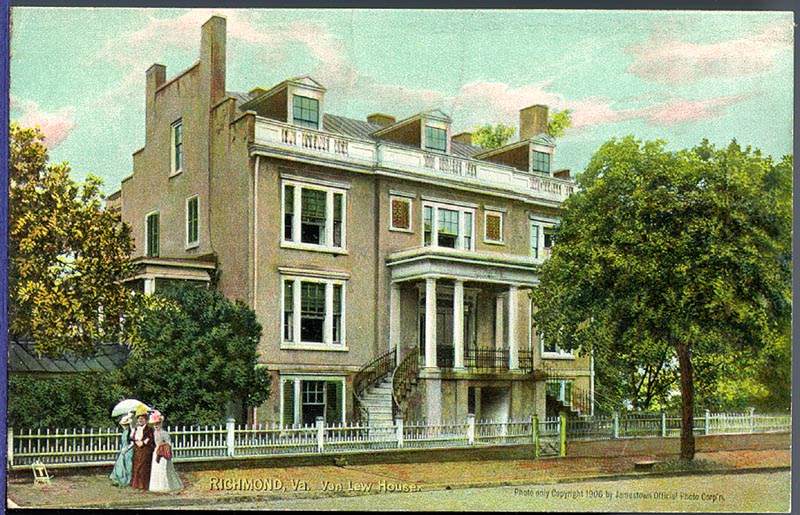
Born into a wealthy family in Richmond, Van Lew’s parents were both Northerners. Her father, John, was a New Yorker and her mother, Eliza, was raised in Philadelphia. John Van Lew made his fortune in a hardware business at the same time Richmond was growing into one of the South’s most industrialized cities. The Van Lews lived in one of the largest mansions in Richmond’s Church Hill neighborhood.
John Van Lew owned several slaves, but Van Lew and her mother were abolitionists as both were educated in Philadelphia’s Quaker schools. After his passing in 1843, they were active in aiding slaves escaping to the North. The domestic help they retained after John’s passing were slaves in name only. Van Lew and Eliza paid them for their work, while others they set free.
Mother and daughter were so fond of one slave, Mary Jane Richards, that they supported her baptism in the family’s Episcopalian church and paid for her schooling in the North. Richards later became a valuable member of Van Lew’s Richmond spy ring.
When John Van Lew died, he left his only daughter $10,000, or around $434,000 in today’s currency. There was no stipulation on how the money could be spent, and, over the decades, Van Lew, compassionate and big-hearted, gave generously to blacks, whites, and various pro-Union causes. During the Civil War, she also took in her niece, also named Eliza, during the Civil War. Her niece remained her lifelong companion at the Church Hill mansion.
Willis wrote that Van Lew loved Virginia and referred to locals as “our people,” but she detested that her state was run by plantation owners and proslavery forces.
“Elizabeth was also generous to a fault and felt things deeply. Even as a young woman, she visited the slums in Richmond, bringing food and other necessities to those who lived there. Over the course of her life, she would give away most of her fortune to those she deemed needy,” Willis noted. “It’s difficult to reconcile her big heart with her quarrelsome nature, but both qualities could be found in Elizabeth Van Lew and both were necessary for the work she would do during the war.”
Van Lew’s Escapades
That work started with Van Lew and her mother providing food and comfort to Union prisoners at two Richmond facilities, Ligon’s Prison and Libby Prison. This was no small sacrifice because Richmond women tended to injured Rebels, but the Van Lew women were virtually alone in aiding the wounded Union soldiers. Initially, they brought simple food items but, within days, had added books, bedding, and clothing while also covertly taking prisoners’ letters to mail home.
The author notes that the charitable deeds served a clandestine purpose: Van Lew was learning how to obtain and smuggle information and building trust with Union officers—“just the men to explain to her the ins and outs of martial intelligence,” Willis wrote. Those lessons soon paid off as the Union prisoners of war would overhear talk of Rebel troop movements by Confederate guards and pass that information on to Van Lew. The books she lent out would be returned with secret encoded messages.
As Willis notes, Van Lew was collecting valuable information but she had no practical way to pass it on. The unsolicited reports she mailed to Washington went unanswered. Meanwhile, she continued to build her network of spies, often using enslaved blacks, freemen, and servants of her household.
It was a Unionist whom Van Lew helped escape who led to her connection to Maj. Gen. Benjamin Franklin Butler. Butler was leading the Departments of Virginia and North Carolina in late 1863 when he first heard about Van Lew and her willingness to aid the Union cause. He had been looking for someone who could supply his office with reliable information on the Rebel capital, and Van Lew came highly recommended.
Butler’s recruitment letter, dispatched to Van Lew in invisible ink, read, “I cannot refrain from saying to you, although personally unknown, how much I am rejoiced to hear of the strong feelings for the Union which exists in your own breast and among some of the ladies of Richmond.”
Butler provided Van Lew a cipher that allowed her to encode her future messages. Soon, her reports to Union forces doubled and she gained additional contacts, including a clerk in the Confederate adjutant general’s office, who stole details on Rebel regiments and their movements, and an agent in the Confederate engineering department, who sent her information on Rebel defenses around Richmond and Petersburg.
Eventually, she was communicating with Union Gen. Ulysses S. Grant through his spy chief, Col. George H. Sharpe. She sometimes sent morning flowers for Grant’s breakfast table and a copy of the Richmond paper along with encrypted information on Richmond’s Rebel forces. Willis wrote that Van Lew’s reports to Grant were instrumental in the future president establishing the Union blockade that eventually forced Richmond to fall and Confederate general Robert E. Lee to surrender.
Post-Civil War
After Union forces took over the city, Van Lew’s Church Hill mansion was the first residence to hoist a Union flag. Willis also puts readers at the celebratory dinner where Lincoln’s lady spymaster met an appreciative Grant and his wife, Julia, face-to-face; the couple also stayed overnight at Van Lew’s home.
The author notes that Van Lew’s neighbors considered her actions a betrayal and never forgave her. Nevertheless, she remained in Richmond serving as Richmond’s postmaster for eight years after being appointed by then-President Grant. During her tenure she modernized the post office and hired a number of black employees. As the years wound down and her mother died, Van Lew found herself with fewer and fewer friends and visitors. Her niece Eliza and a few loyal servants virtually were her only companions.
Van Lew’s neighbors and their children referred to her as “Crazy Bet” because of her political leanings and her penchant for always wearing a black silk dress. Willis quotes her writing to a former Union soldier who sent her money, “No one will walk with us on the street. No one will go with us anywhere—and it becomes worse and worse, as those friends I had go. … We are held so utterly as outcasts here.”
Van Lew’s exploits, as shared by Willis, offers readers edge-of-your seat drama, behind-the-scenes military adventure, and cloak-and-dagger scheming.
Readers expecting a comprehensive biography on Van Lew may be somewhat disappointed. Much of the book features details on better-known historical figures like John Wilkes Booth, Grant, Abraham Lincoln, and Jefferson Davis. Willis also elaborates on lesser-known historical figures like Hugh Judson Kilpatrick, Ulric Dahlgren, John Brown, and Rose Greenhow. On the other hand, those who enjoy books on the Civil War will be delighted to learn about the incredible life and courage of the little-known Southern belle who became one of America’s most successful spymasters.
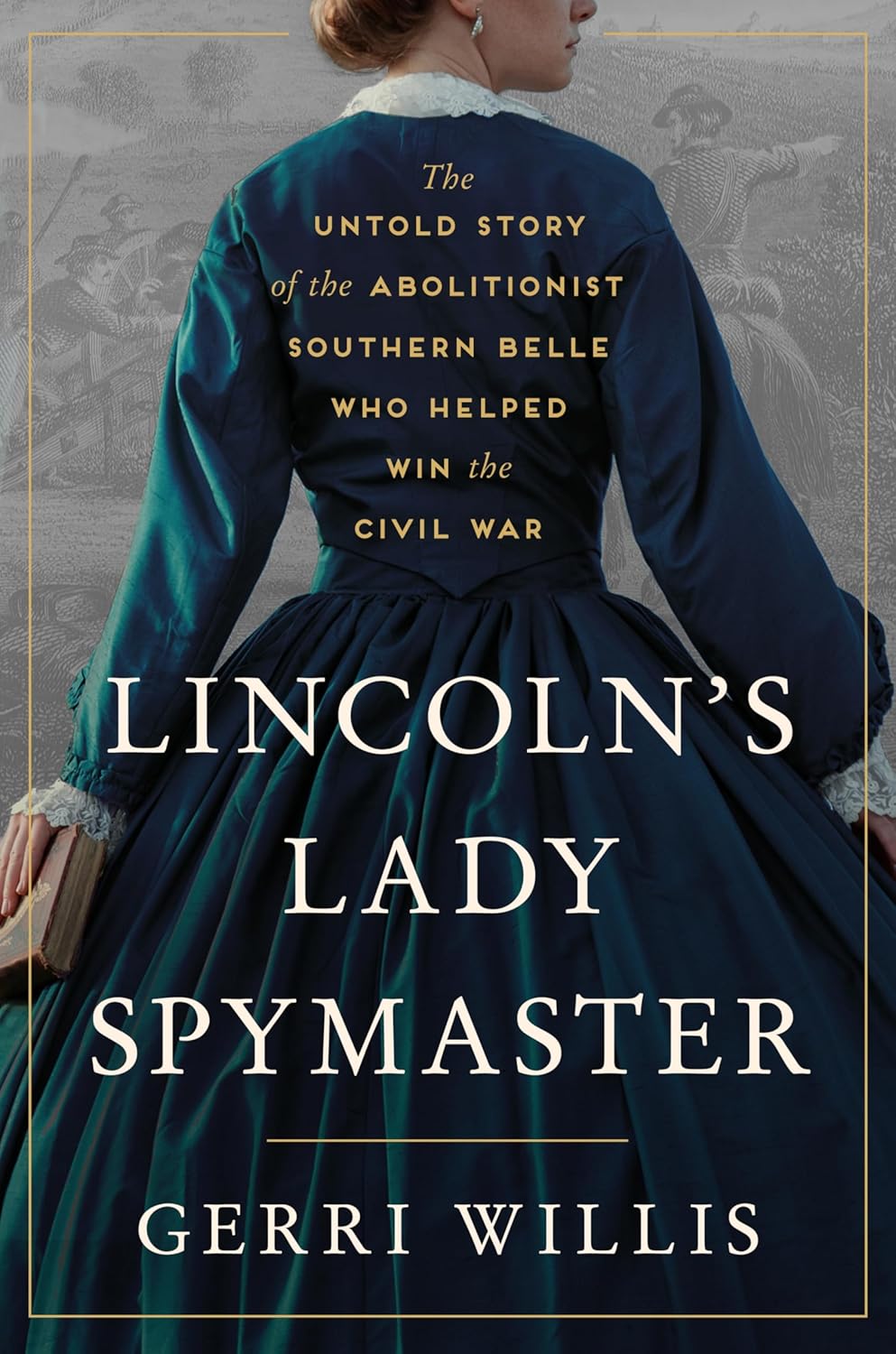
‘Lincoln’s Lady Spymaster: The Untold Story of the Abolition Southern Belle Who Helped Win the Civil War‘
By Gerri Willis
Harper, June 3, 2025
Hardcover: 288 pages
What arts and culture topics would you like us to cover? Please email ideas or feedback to features@epochtimes.nyc