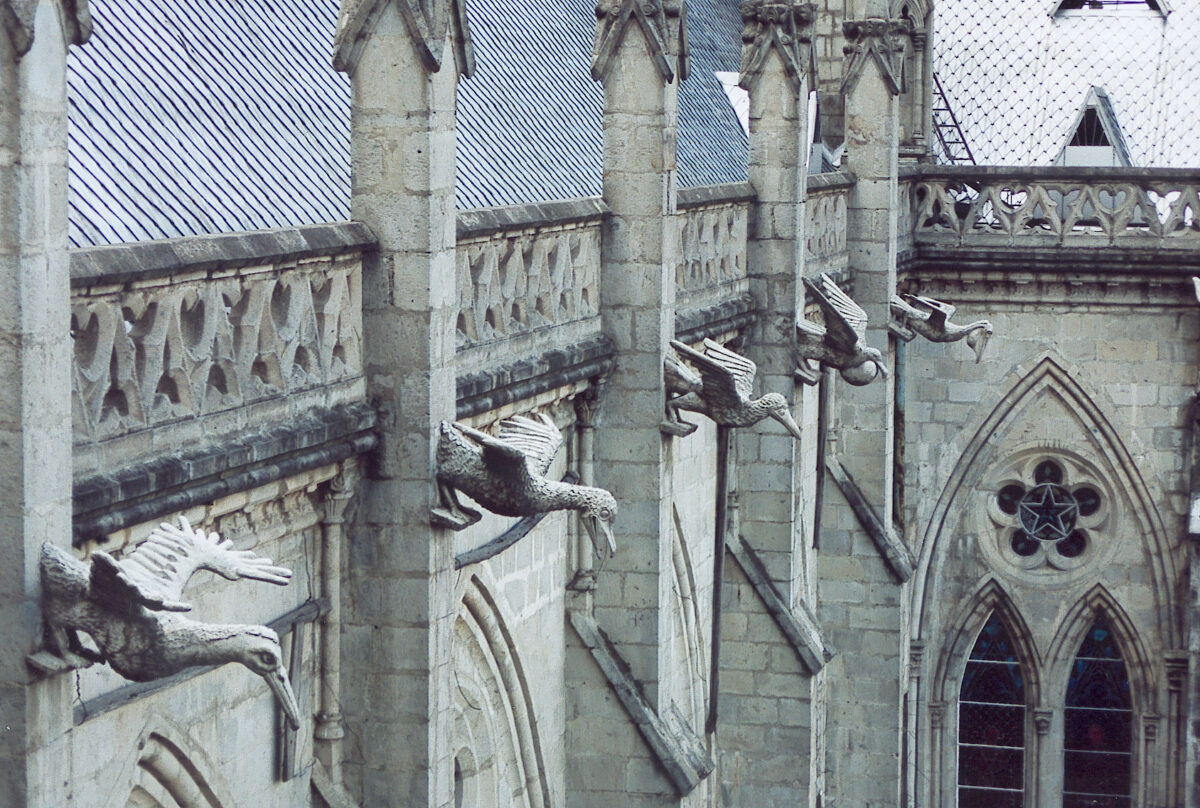
Gargoyles are the most misunderstood misfits of medieval architecture.
The word “gargoyle” comes from Old French gargouille, meaning “throat,” which is entirely appropriate when you consider that their main gig was hurling rainwater off buildings via their stone gullets.
So while these bug-eyed stone drama queens clinging to cathedrals are often mistaken for leftover Halloween décor, they had a purpose. As mentioned, they were actually sacred plumbing while also flinging moral warnings at sinners.
Been Around for Some Time
One of the oldest known gargoyles?
A 13,000-year-old crocodile carving in Turkey, proving that humans have long enjoyed weaponising reptiles in the name of hydrology.
And lest you think this was a strictly medieval European trend, lion-headed waterspouts lined the Acropolis in 4th century BC Athens, combining symbolic power with basic guttering.
Lions, being the apex PR agents of antiquity, symbolised strength, vigilance, and the protection of the sacred.

Not All Monsters are Plumbing
How to tell a real gargoyle. If the stone creature spits water, it’s a gargoyle.
If not, it’s a “grotesque” i.e. a decorative feature with no functional purpose beyond triggering your nightmares. Grotesques serve no plumbing function. They’re all fright, no flow.
Then you have chimeras, the architectural equivalent of a biology error message. These hybrids: monkey-faced lions, goat-bodied eagles, and other nightmares, weren’t just design flair.
They were used to warn against spiritual confusion and carnal temptation.
Gargoyles Had Pagan Pasts and Mixed Motives
Before they were holy, they were heathen.
Gargoyles, like much of the Catholic Church’s architecture, were a repurposing of pre-Christian imagery.
Pope Gregory himself gave the green light to keep the old gods on the outside, so long as Jesus was on the inside.
“Destroy the idol, purify the temple, and let the people continue to gather there just change the guest list,” he instructed missionaries like St Augustine.
That’s how you end up with churches featuring dragons, Green Men, horned beasts, and bare-breasted fertility figures.
Sermons in Stone
Most people in the Middle Ages couldn’t read. But they could certainly interpret a lizard-faced beast vomiting rainwater as a cautionary tale.
Gargoyles were, quite literally, sermons in stone. They illustrated everything from the temptation of Eve to the perils of gluttony, pride.
And some were a bit strange.
Why? Because medieval sculptors were allowed creative freedom.
No two gargoyles are exactly alike. Some were even carved at ground level before being hoisted onto rooftops, like a sort of medieval Ikea flat-pack beast, insert tongue into mouth, attach wings, lift onto buttress.
They Weren’t Just for Churches
Notre-Dame didn’t always look like a haunted rock opera. Its famous chimeras, including the now-iconic Le Stryge (the Spitting Gargoyle), were part of a 19th-century Gothic revival by architect Viollet-le-Duc, who decided the medieval wasn’t quite medieval enough and added extra angst. Goth by design, not accident.
Everyone wanted a piece of the gargoyle action, even if it came with a slap on the wrist.
In 1277, Rikier Amion decided to jazz up his house in Arras with his own stony monster collection. The bishop was not amused.
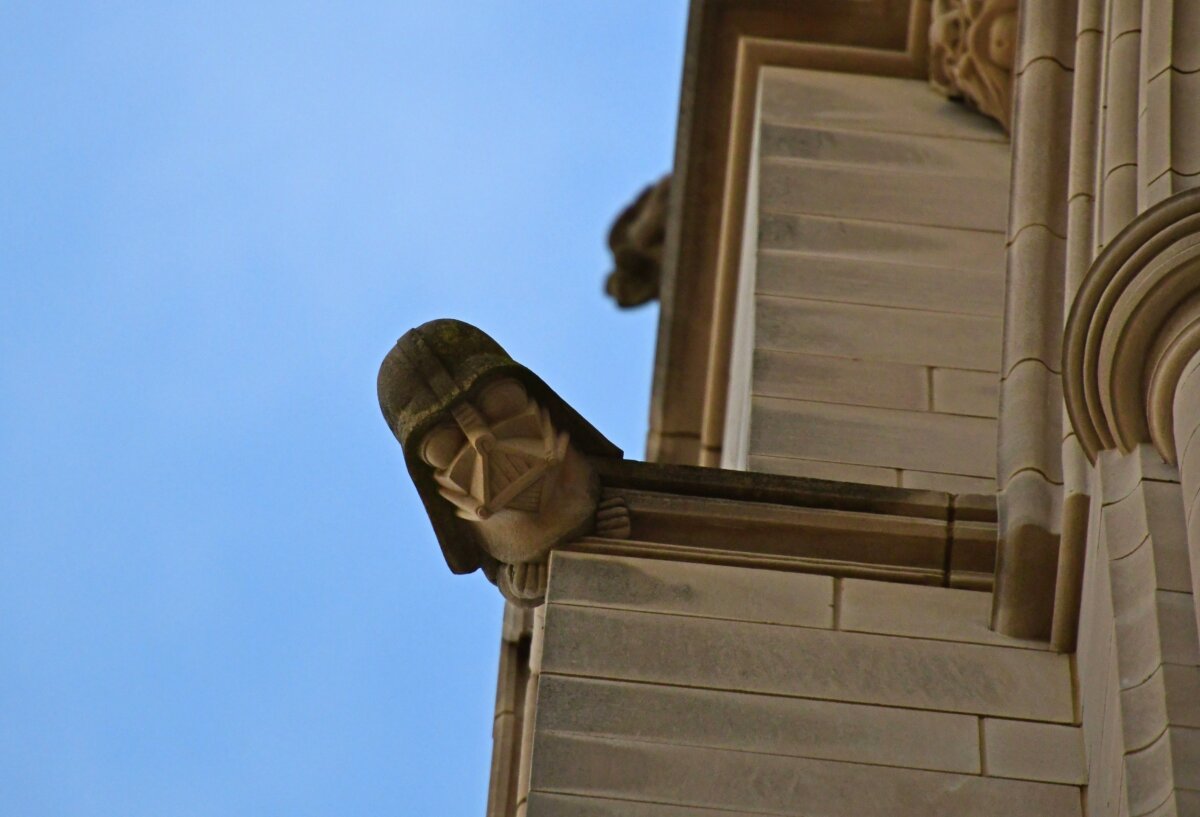
But the trend caught on, with gargoyles appearing on secular buildings as stylish indicators of moral superiority or medieval chic. Even universities today continue the tradition, carving new gargoyles on buildings.
The Church Wasn’t Always a Fan
St Bernard of Clairvaux famously hated gargoyles. To him, they were an indulgent distraction, a waste of church funds, and possibly a sneaky form of heresy.
“What are these unclean monkeys, strange savage lions and monsters?” he raged, as if attending a particularly avant-garde puppet show.
But the broader clergy disagreed. To most, gargoyles were sacred scarecrows, proof that evil could be mocked, neutralised, and used to keep the church safe.
Gargoyles Were Surprisingly Colourful
Contrary to our grey, lichen-covered image of them, many gargoyles were once painted and gilded. They were colour-coded warnings, like traffic lights with horns.
Unfortunately, the Victorians, in their zest for restoration and beige, scrubbed most of the pigment off.
The result? A generation of art historians assuming the Middle Ages were colourless, when in fact, their gargoyles were possibly more garish than a midlife crisis Ferrari.
Stone Cold Survivors
So next time you spot a gargoyle on a rooftop, frozen mid-scream, clearly having a worse day than you, spare it a little respect.
It’s not just a creepy ornament or an architectural jump scare. It’s a survivor. A grotesque overachiever. A rain-splattering theologian in limestone.
These creatures have outlived empires, reformations, acid rain, and art critics, and they still hang on literally.
Because in a world obsessed with polish and perfection, it’s oddly comforting to know that something ancient and howling at the sky can still have a place. And a purpose.