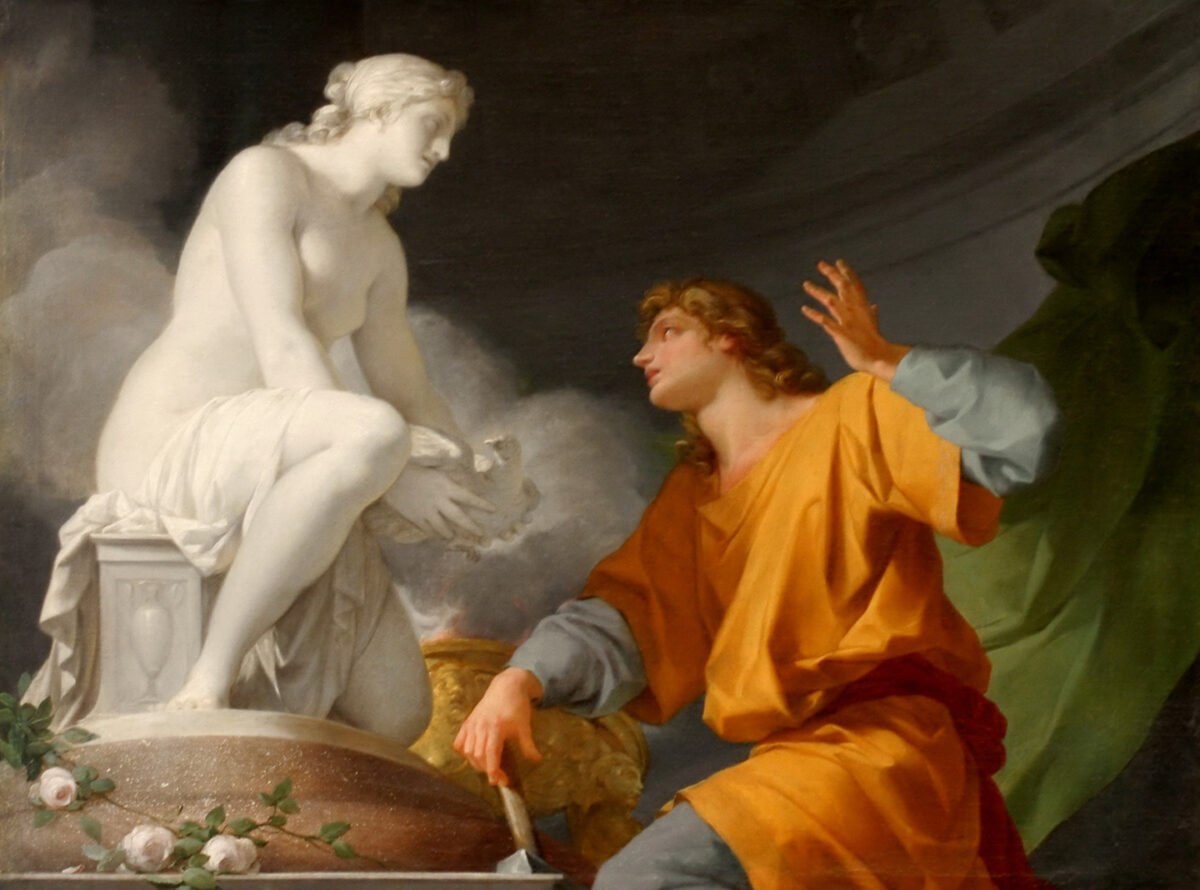
One of the most extraordinary and powerful myths of the Greek ancient world is that of Pygmalion.
Unlike the “Midas touch,” “Pandora’s box,” or the “Oedipus complex,” it’s not one of those myth-related names that rolls off the tongue or that we readily know. But there have been many references to it in past and contemporary Western culture. George Bernard Shaw made a great play out of the story (though subverting the ending) in 1913; and this became the basis for the musical adaptation, “My Fair Lady”; and this, in its turn, became a sort of model for “Pretty Woman” in 1990.
But the myth has inspired music and art, too. Jean-Philippe Rameau’s opera “Pygmalion” (1748) was an early operatic treatment. Various Pre-Raphaelite painters like Edward Burne-Jones created several Pygmalion-themed works. The myth, then, has been a potent muse, but what exactly does the story mean?
The Myth of Pygmalion
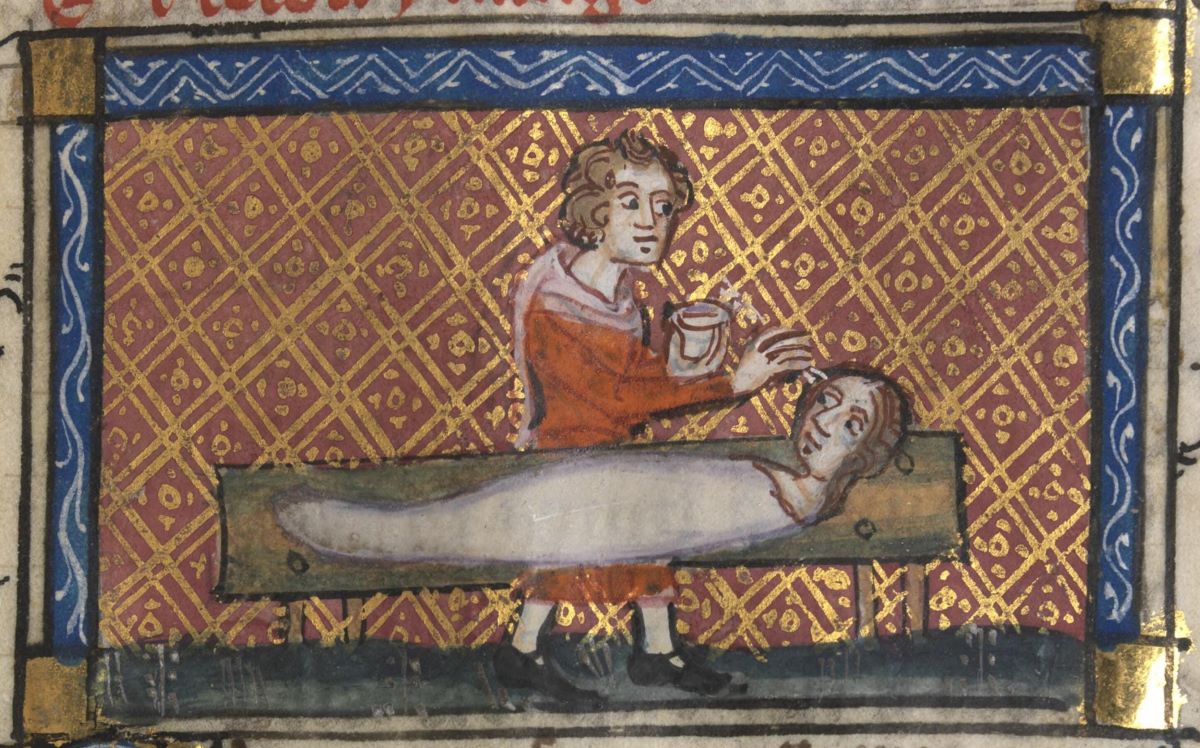
The story primarily came from Ovid’s “Metamorphoses” (Book X), written around A.D. 8.
In the narrative, Pygmalion is a sculptor from Cyprus who, disgusted with the flaws of mortal women, decides to remain celibate. He creates a beautiful ivory statue of a woman, so lifelike and perfect that he falls in love with his own creation. He names her Galatea (though this name appears in later versions, not Ovid’s original).
Pygmalion treats the statue as if it were alive, bringing it gifts, dressing it, and speaking to it. During the festival of Aphrodite, the goddess of love, he prays to the goddess to give him a wife like his statue. Aphrodite, moved by his devotion, brings the statue to life, and Pygmalion marries his creation.
Finally, they have a son, Paphos, who gives his name to a city in Cyprus. Today, this is a UNESCO World Heritage Site, recognized for its rich archaeological remains, including mosaics, the remains of a sanctuary, and other monuments. This city was the most famous center of Aphrodite’s worship in the ancient world, and Aphrodite herself was, according to legend, born from sea foam and came ashore near Paphos.
Meanings of the Myth
Traditionally, the myth is said to explore the tension between fantasy and reality—how desire can reshape the world. Given its major source, Ovid’s “Metamorphosis,” it explores one central theme of that book: transformations— both literal, as in ivory transforming to flesh, and symbolic, as in loneliness to companionship.
It also expresses the power of art on the receiver.
For feminists, it might express the male desire for an idealized, perfectly controllable feminine figure. This raises questions about “objectification”—loving not a real person but an image of perfection.
However, as valid as all these points may be, a deeper and more important meaning is inherent in this myth. To uncover it, we need to go back to the origins of the divine Aphrodite.
The Root of Creativity
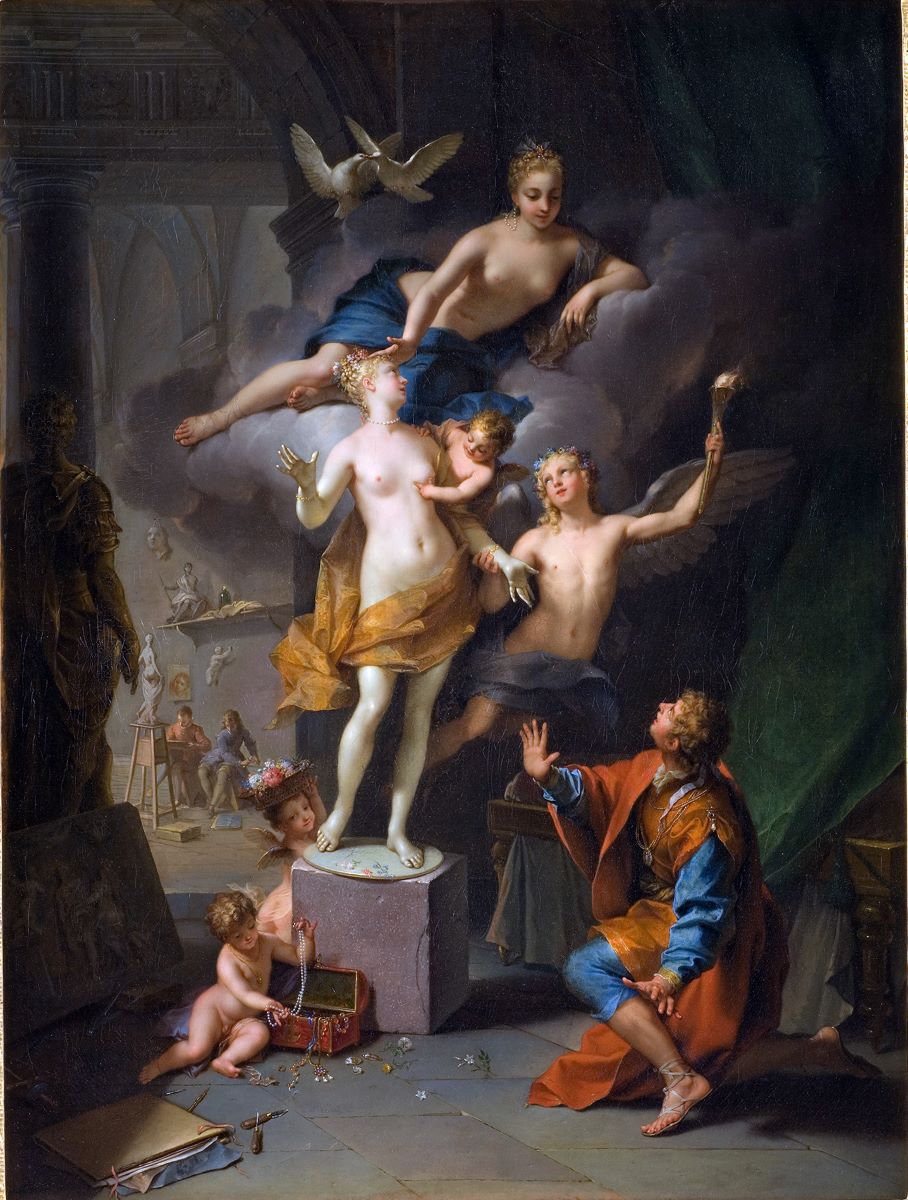
Aphrodite was born from sea foam and came ashore near Paphos. Although she is referred to by Homer as the daughter of Zeus, Hesiod gives her correct lineage. She was, in a sense, older than Zeus: for when Kronos, Zeus’s father, castrated his own father, Ouranos, he threw the severed genitals into the sea, and it’s around these severed genitals that the sea foam gathered.
In short, Aphrodite was generated by the combination of sea water and the still active sexual organs of the mutilated sky god. Sexual love energy was inherent in her very being from the first moment. In fact, she was so potent that only three living beings were immune to her influence: the three Greek goddesses, Athene, Artemis, and Hestia. Note that no male was immune to her (though to tempt Zeus was to do so at her own peril!)
With this in mind, author Jonathan Black’s comment in his book “The Secret History of the World” is especially resonant. “The imagination—and particularly the sexually-fired imagination—is therefore seen to be the root principle of creativity.”
In the myth, Pygmalion is an artist, an artist of exquisite and precise technique. His imagination is fired; it’s sexually-fired because it’s a woman he is seeing and creating in that eye of the inner mind. But the statue cannot come to life without Aphrodite’s divine blessing.
But why does the divine blessing arise? It arises because Pygmalion loves the creation he has created.
The Love of Creating
Only what we love can come alive, can become charged with that exuberant joy, liveliness, and attraction that characterizes the goddess herself. Put another way, if artists create for fame, money, prestige, influence, or any other reason, then their work, while it may be technically accomplished, will be dead; it cannot live because it has not been loved or derived from love. This applies, of course, to poets, musicians, dramatists, filmmakers, and all creative types everywhere.
The British theologian H.A. Williams noted: “There can be no Joy where there is no creativity because the absence of creativity is a denial of Joy at its source, that is, a denial of God the Creator. That means that we must all be poets if we are to be what God intends us to be—not, of course, poets as we now understand the word (very few of us can be that), but in its original sense of makers.”
We are all called to be in the image of God—to be makers. It may be in the garden, the kitchen, in relationships, in all things and hobbies and sports under the sun. But be creators, we must be, and that can only happen when we love what we create.
Indeed, haven’t we observed this phenomenon in every walk of life? The Nobel Prize-winning physicist, Richard Feynman, commented on education, saying, “Anytime you try to teach the subjects without teachers who love the subject, it is doomed to failure and is a foolish thing to do.” The students at school respond to teachers who love their subjects, and the teachers’ love enables students to love the subject, too.
At the other end of the spectrum, the Japanese sage, Masaru Emoto, in his “The Hidden Messages in Water,” observes that “People who continue to do superior work well into old age are almost inevitably in love.”
And one of the important corollaries about this sexuality-creativity-love axis is that truly creative people tend to be prolific, that is to say, fecund: Truly creative people go on producing—re-producing as it were—more and more works.
Think Shakespeare: For 20 years or so, he was writing nearly two plays a year on average, plus sonnets and other works! An astonishing output. Contrast that with, say, Thomas Gray, who wrote one major poem, or Walter Savage Landor, who created beautiful fragments, but no vast output. Or think of Bach: Over 1,100 pieces are known to exist and some 100 to 300 others are thought to be lost; an astonishing output! Again, contrast that with Gustav Holst or Samuel Barber, who are only really known for one, or a small handful of works.
What this suggests to me is that the internal critic—that censoring voice we all carry—is too strong in the more niggardly creators. It blocks the love of the work that might otherwise have propelled them into a more abundant creativity. Interestingly, in the case of Shakespeare, his early editors and contemporaries remarked that he “never blotted a line.” They took this as evidence of his effortless fluency and deep affection—his love—for his creations. His friend and rival, Ben Jonson, famously observed that he wished Shakespeare had “blotted a thousand,” implying that such unrestrained productivity could sometimes have benefited from a stricter critical eye. Yet the anecdote illustrates a striking contrast: Shakespeare’s readiness to pour out ideas without excessive self-censorship may have been precisely what enabled his astonishing, living output.
The myth of Pygmalion, then, is telling us to be creative and to love what we create. If we do that, we will create what is living—as Shakespeare’s characters are living, as Bach’s music is living, as that meal a chef loved to cook is living, or that garden a hobbyist loved to tend is living.
Falling in love with what we create may sound a little corny or clichéd. But as British philosopher and neuroscientist Iain McGilchrist noted: “No one ever decided not to fall in love because it’s been done before or because its expressions are banal. They are both as old as the hills and completely fresh in every case of genuine love.”
As Pygmalion found, when you truly love your creation, she-he-it becomes entirely fresh, entirely original and one of a kind.
What arts and culture topics would you like us to cover? Please email ideas or feedback to features@epochtimes.nyc