



On Sept. 2, 1901, President Theodore Roosevelt gave a speech at the Minnesota State Fair. Addressing a large crowd about national duties, he said, “Speak softly and carry a big stick—you will go far.”
These famous words summed up Roosevelt’s approach to foreign policy. Above all other things, the most central aspect of this “big stick diplomacy” was his advocacy of naval power.
A Defining Book
“The history of sea power is largely, though by no means solely, a narrative of contests between nations, of mutual rivalries, of violence frequently culminating in war.” This is the wordy opening sentence to Alfred Thayer Mahan’s “The Influence of Sea Power Upon History.” The book, published in 1890, examined how the rise of the British Empire was made possible by naval supremacy.
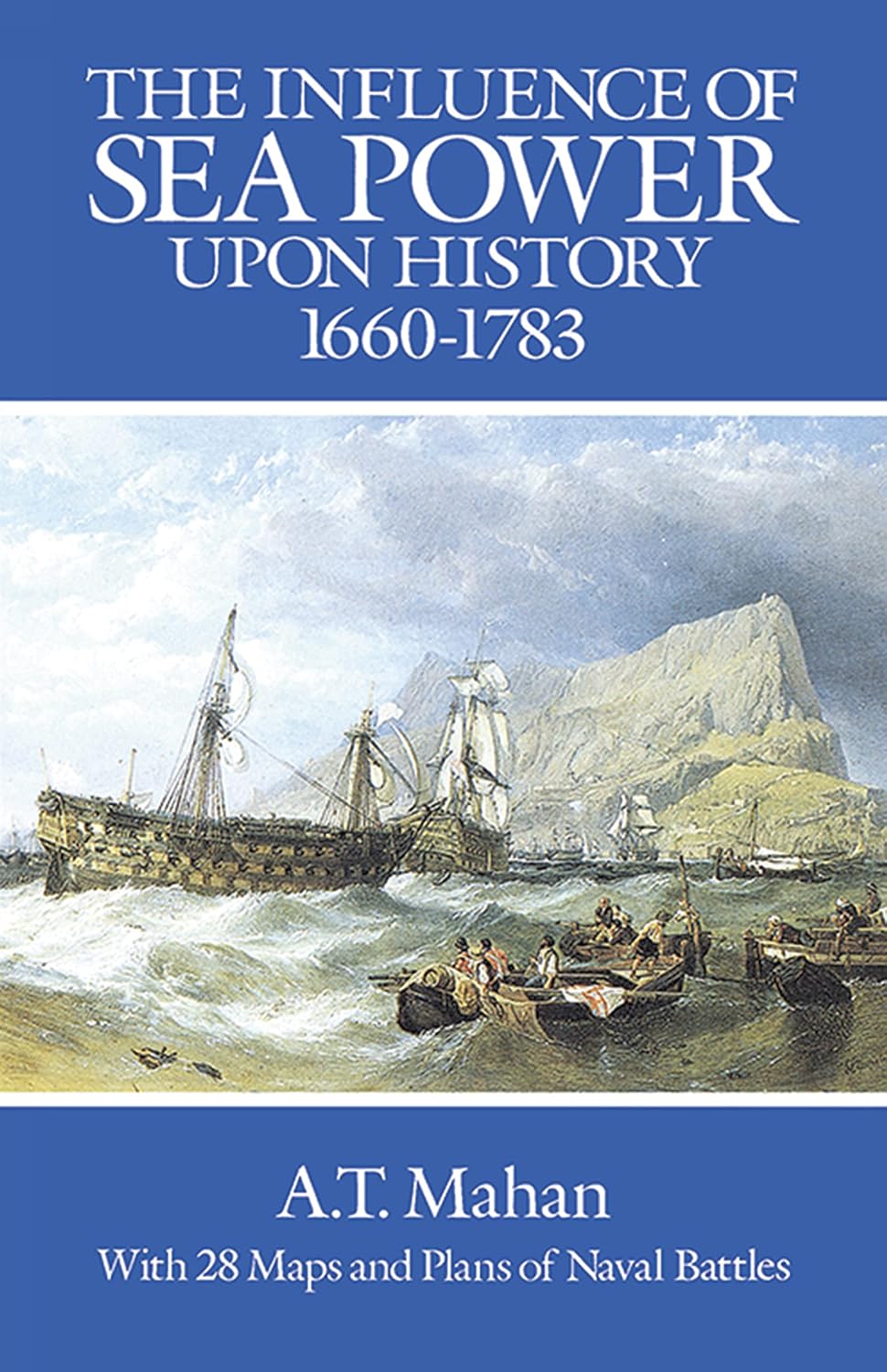
In May of that year, a young Theodore Roosevelt read the book cover to cover in two days. It was “one of the most important weekends of his life,” according to biographer Edmund Morris.
Roosevelt wasn’t the only one reading it. British and Japanese naval officers were also paying attention. “It’s no coincidence that there is a global arms race” during this time, Michael Cullinane, co-director of the Theodore Roosevelt Center in Dickinson, North Dakota told American Essence. “Mahan’s book came out when the policy around shipbuilding was changing, and as the foreign policy was shifting to a more imperial mindset.”
In Germany, Kaiser Wilhelm II tried memorizing it. As historian John Keegan described it, “Mahan’s thinking worked on the Kaiser chiefly as means to enrich his naval fantasies.” Wilhelm created the rank of “Grossadmiral” (great admiral) for himself, dressed his children as sailors, cruised around the sea on a deluxe steamboat, and drew battleship designs on envelopes.
Mahan’s influence on Roosevelt could not have been more different. Eight years before, Roosevelt had published his first book, “The Naval War of 1812.” While he was considered an expert on the topic, he still thought of naval strategy in terms of coastal defense.
As Cullinane explains it, Mahan’s writings shaped Roosevelt’s thinking—and 20th-century warfare—in two ways. First, “the need for a navy became paramount to exude military power in geopolitics.” Second, “a navy would allow countries to manage the networks of trade.” Roosevelt realized America’s fleet had to be expanded, with more and bigger ships deployed around the world.
Preparing for War
Roosevelt began taking steps to implement this vision as assistant secretary of the Navy.
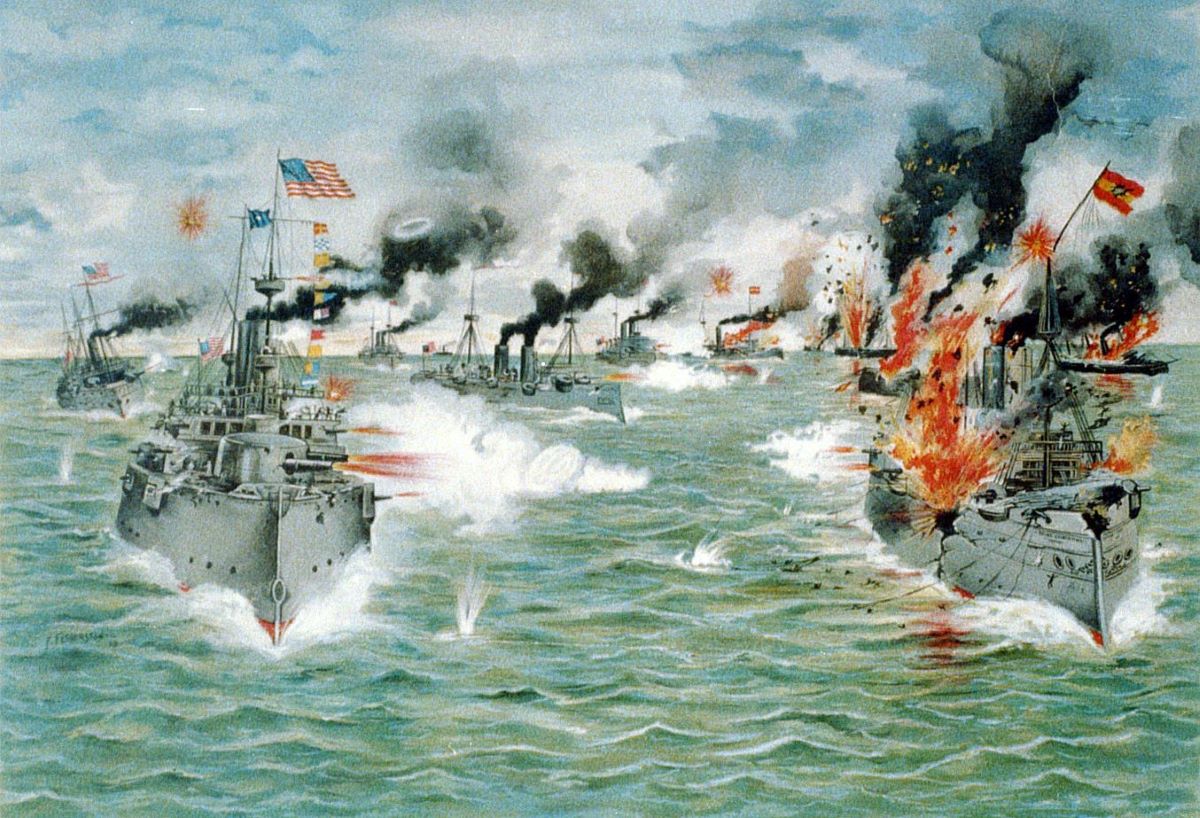
In early 1898, war was brewing with Spain over the movement for Cuba’s independence. On Feb. 25, while secretary of the Navy, John D. Long, was still on vacation, Roosevelt, as acting secretary, exercised a decisive influence on world events. He sent a secret cable to Commodore George Dewey, commander of the U.S. Asiatic Squadron, ordering the ships to go to Hong Kong and take on coal. “In the event of declaration of war [with] Spain, it will be your duty to see that the Spanish squadron does not leave [the] Asiatic coast.”
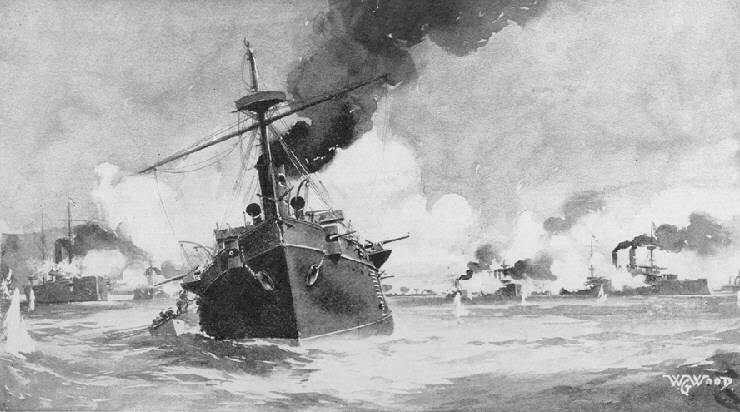
When the United States declared war two months later, Dewey acted on these instructions. He launched offensive operations in the Philippines and destroyed the Spanish fleet in Manila Bay. Roosevelt himself went off to Cuba to fight, leading his daring charge up San Juan Hill that earned him the Medal of Honor posthumously.
The United States’s victory in the Spanish-American war led to a huge windfall of territory, with the United States acquiring the Philippines, Guam, and Puerto Rico. How could all these regions be efficiently managed?
The Great White Fleet
In Roosevelt’s First Annual Message to Congress after becoming president in 1901, he set his plans in motion. He increased the Navy’s budget, implemented the construction of a fleet of modern battleships, and built shipyards and coaling stations. He increased service personnel as well, replacing the old system of promotion by seniority with one based on merit.
In 1903, he sent naval vessels to Panama to support that country’s secession from Columbia, then advocated for the building of the Panama Canal connecting the Atlantic and Pacific oceans. Two years later, he mediated the end of the Russo-Japanese War, for which he won the Nobel Peace Prize.
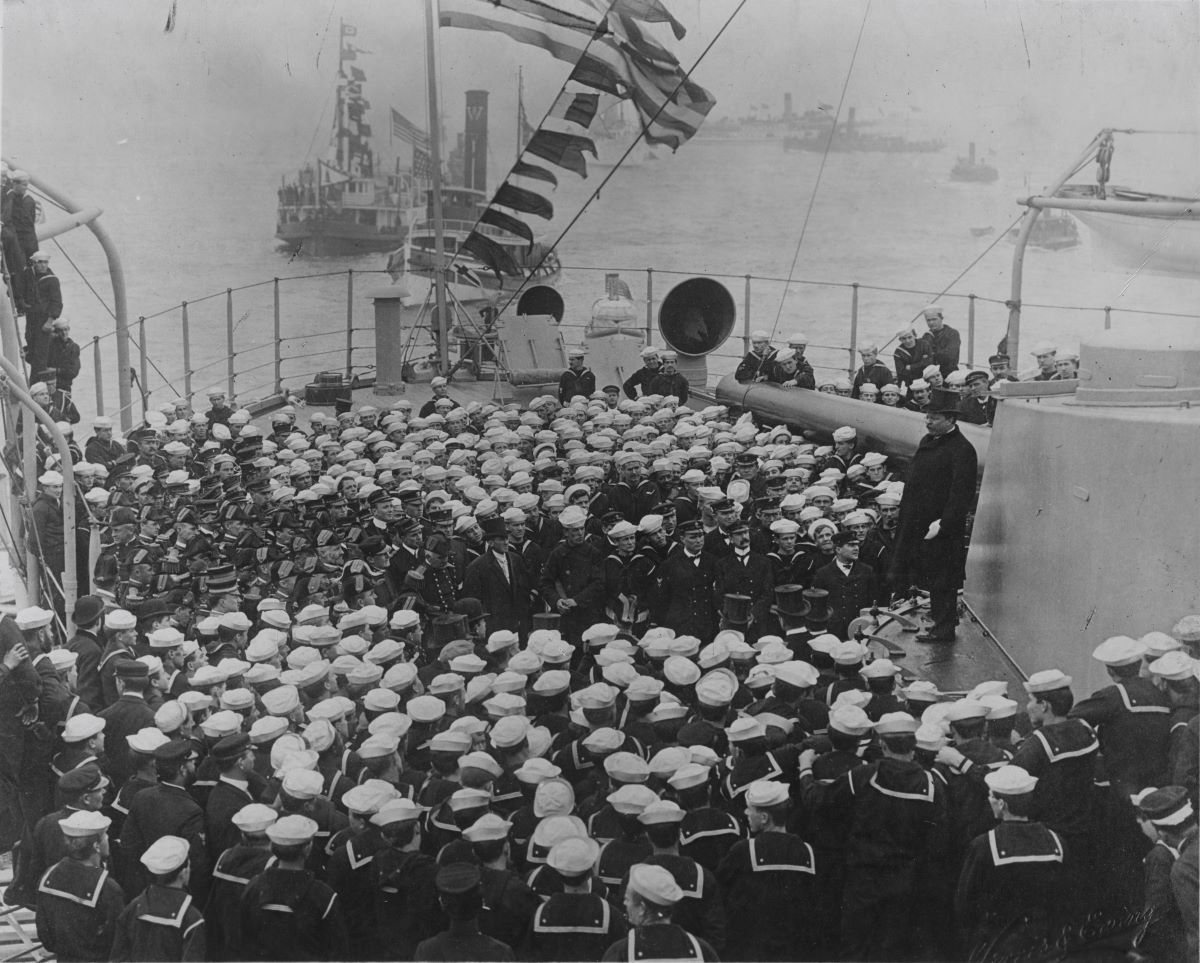
Roosevelt’s most memorable act as president, however, was commissioning the Great White Fleet. To showcase the United States’s growing naval might, he had 16 battleships painted entirely white and sent them out to circumnavigate the globe.
Watching the fleet depart from his yacht, the Mayflower, Roosevelt exclaimed, “Did you ever see such a fleet? Isn’t it magnificent? Oughtn’t we all feel proud?”
Over 14 months from 1907 to 1909, the fleet visited 20 ports on six continents, fostering international goodwill. The sailors even embarked on a humanitarian rescue mission when an earthquake struck Messina, Sicily, in December 1908.
A Truly Global Navy
When Roosevelt took office, the United States had the world’s fifth-largest Navy. By the time he’d left, he had almost achieved his goal of making it the second largest, behind Great Britain’s. His distant cousin, Franklin Delano Roosevelt, would see this vision through, surpassing the British Royal Navy by the end of World War II.
Our 26th president “steered the development of a truly global navy,” retired Vice Adm. David Architzel told American Essence. As the sixth commanding officer of the USS Theodore Roosevelt aircraft carrier, it was second nature for Architzel “to call upon the ship’s namesake” when he was addressing the crew or meeting with distinguished visitors during a port of call. The ship “has the tactical call sign of ‘Big Stick’ for a reason,” he said.
Also speaking to American Essence, retired Adm. Steve Abbot, commander of the same carrier during the First Gulf War, put it best: “I believe that ‘TR’ serves as an inspiration for all Americans to serve their country in as many ways as they can.”
What arts and culture topics would you like us to cover? Please email ideas or feedback to features@epochtimes.nyc
