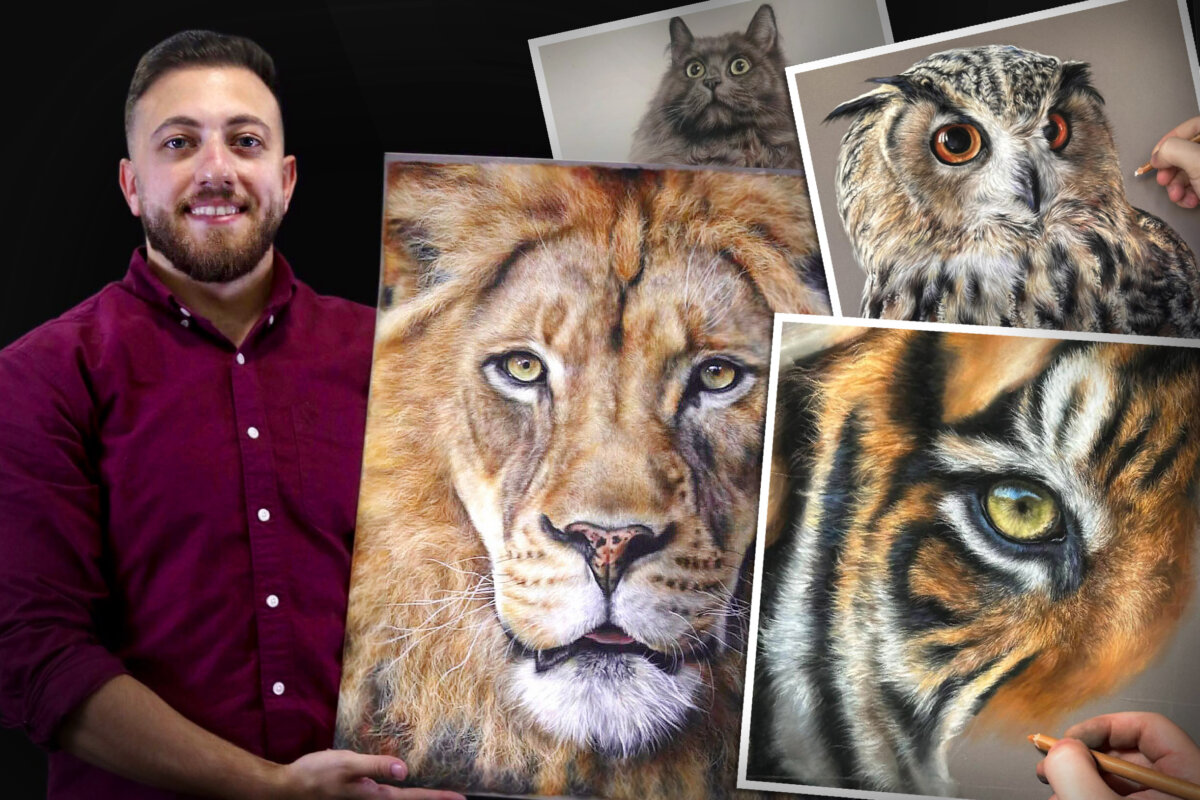
The after-work ritual of Hanna Asfour, a 32-year-old architect in Jordan, has begun to look like artistic meditation: Slipping in earbuds, he breaks out his pastel pencils and, in the zone, creates feline textures and tiger stripes.
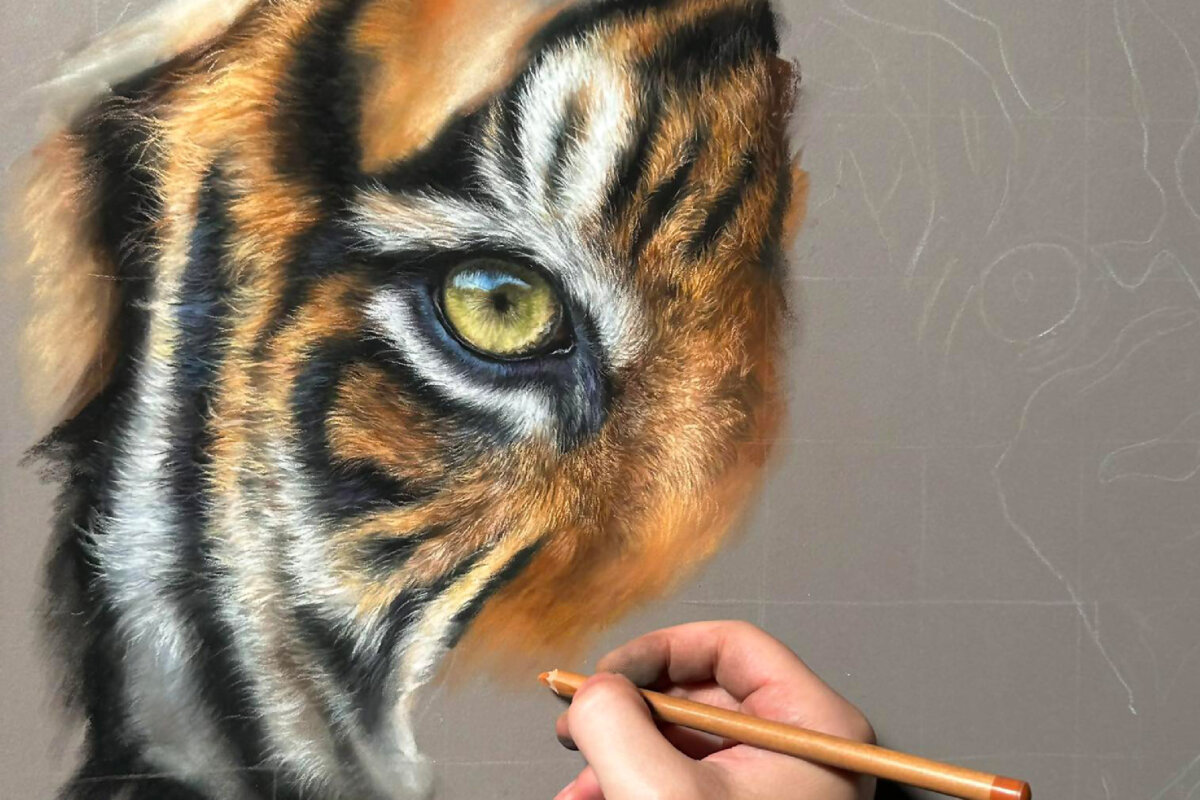
His newest creation—a tiger’s head, drawn in colored soft pastel—is still in the early stages of work. Still half-finished, many layers of the cat visibly show the array of techniques he uses to create illusionistic bouncy fur and eyes that feel wildly alive.
“Tigers are such powerful and expressive animals,” Asfour told The Epoch Times. “I’m excited to see how this one will come together as the details start to build.”
In his cozy home studio in Amman, where he was born and educated, the wildlife portrait artist prefers the quiet of the after hours for his drawing sessions. He’s a night person, he says. He finds it “deeply personal” and “grounding” to hear the soft scratches of pencil marks on paper and smell the wood and pigment while entering his flow state.
“It feels like I’m stepping into another universe,” Asfour said, adding that there’s “no better therapy than losing yourself in your own creation.”
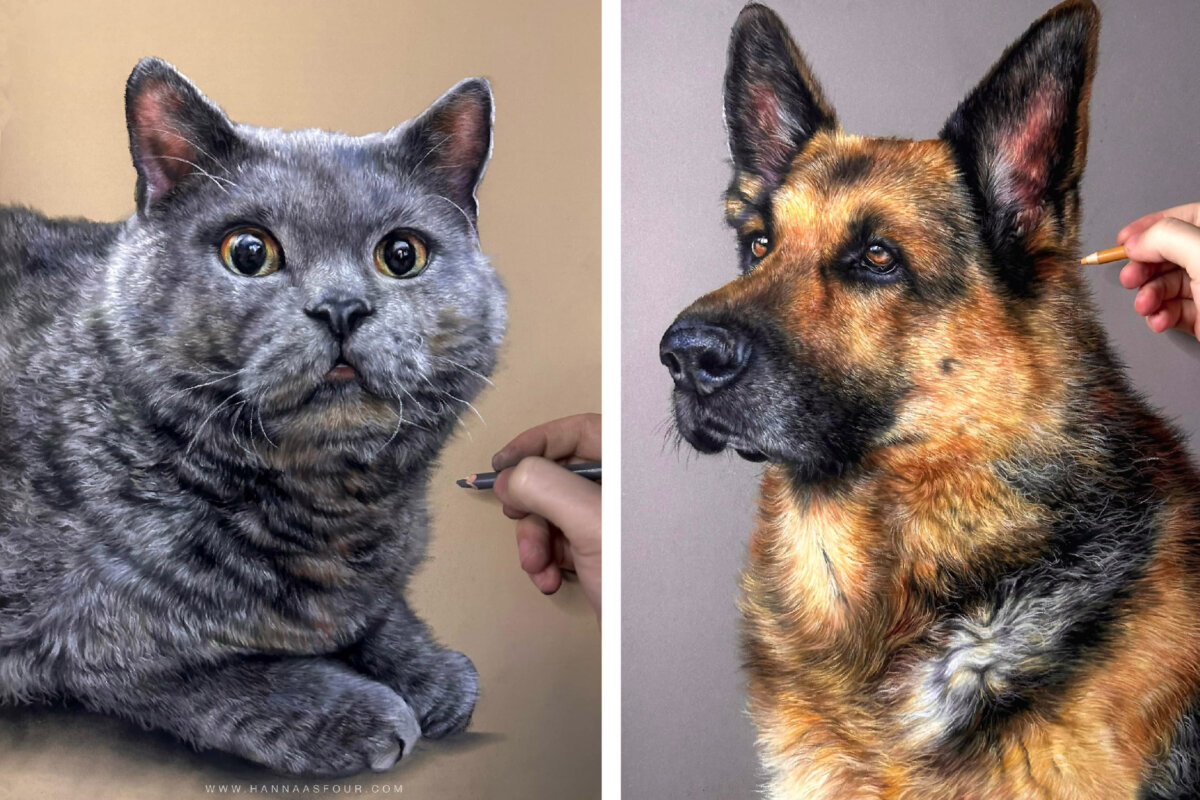
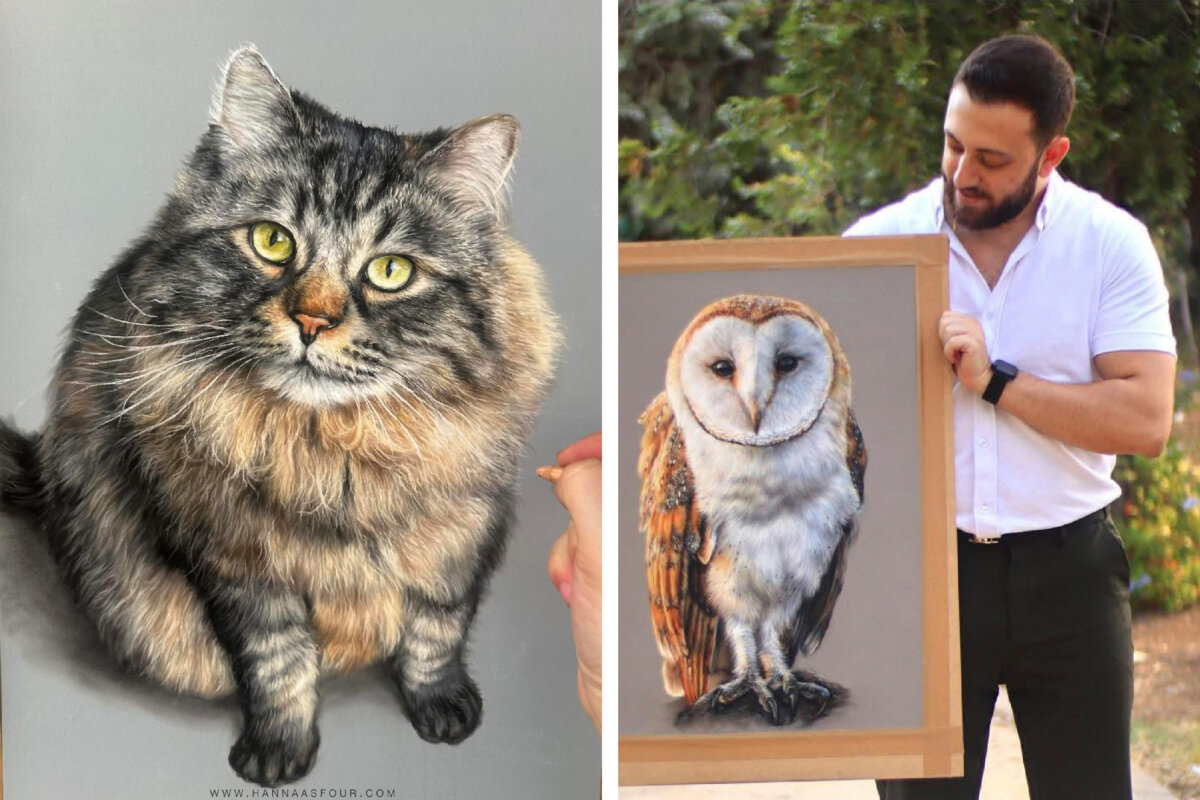
Designing buildings by day, Asfour says his artistic ability helps him create aesthetically pleasing architecture. That ability stemmed from childhood, when he drew lifelike drawings of celebrities in blue ballpoint pen. Later, through YouTube tutorials, he learned soft pastels and became increasingly enamored with the “beauty and complexity of animals.”
“I found a deeper emotional connection and creative fulfillment,” Asfour said, speaking of the animal personalities he finds joy in recreating at his easel.
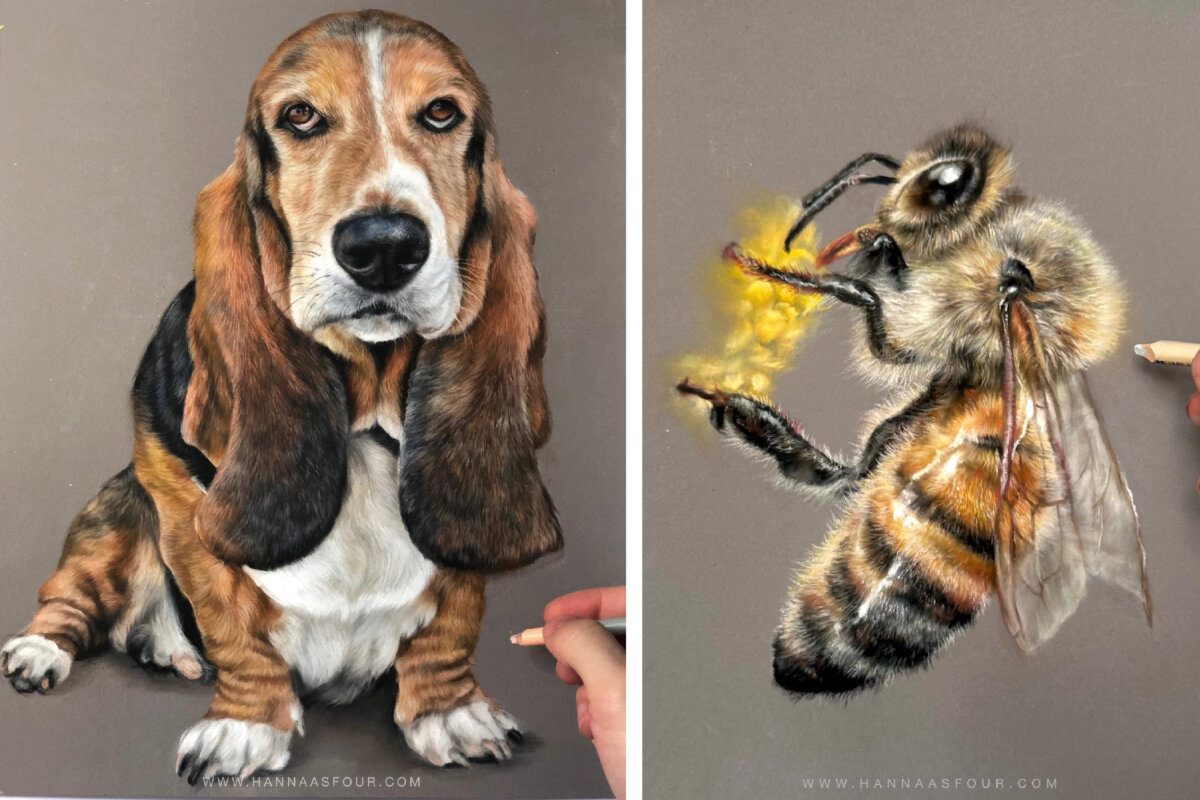
So, throwing his hat into the professional arena in 2012, he started selling pet portraits, though wildlife remained a powerful subject in his work. Referring to his “absolute favorite” drawing of a lion, Asfour said, “This lion represents strength, power, and a calm confidence I was trying to tap into while drawing it.”
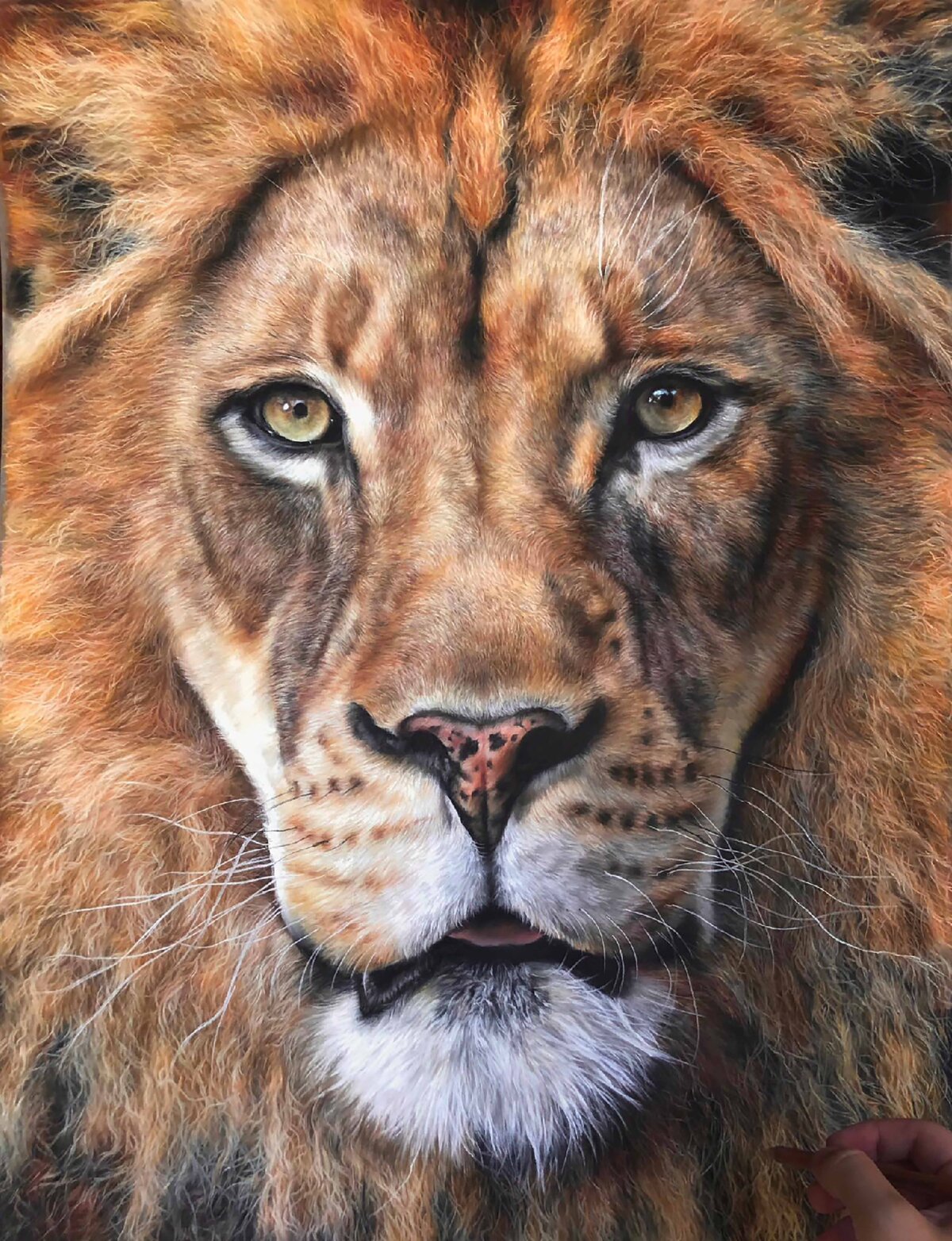
The lion head, drawn larger than life, features a mane made of thousands of wiry hairs. Its fiery yellow eyes stare directly at the viewer, not aggressively but with presence and intense feeling.
“I remember working on the eyes for hours until they felt alive, and once they were, the rest of the face followed naturally,” Asfour said. “This piece took around 120 hours to finish.”
Asfour manages all those details methodically. Drawing over a chalk grid helps turn the vast pastel mat into many small drawings to be finished one by one.
“I make it a priority to draw each individual hair, texture, and feature as precisely as I can,” he said. “The more attention I give to fine details, the more realistic the result becomes.”
Another tip for handling detail is layering. “I begin with soft pastel sticks and pan pastels to lay down the base layers,” he said, demonstrating a technique of blending large areas of color using a rubbing sponge. “At this stage, my main focus is on establishing the tonal values defining where the light hits and where the shadows fall to create depth.”
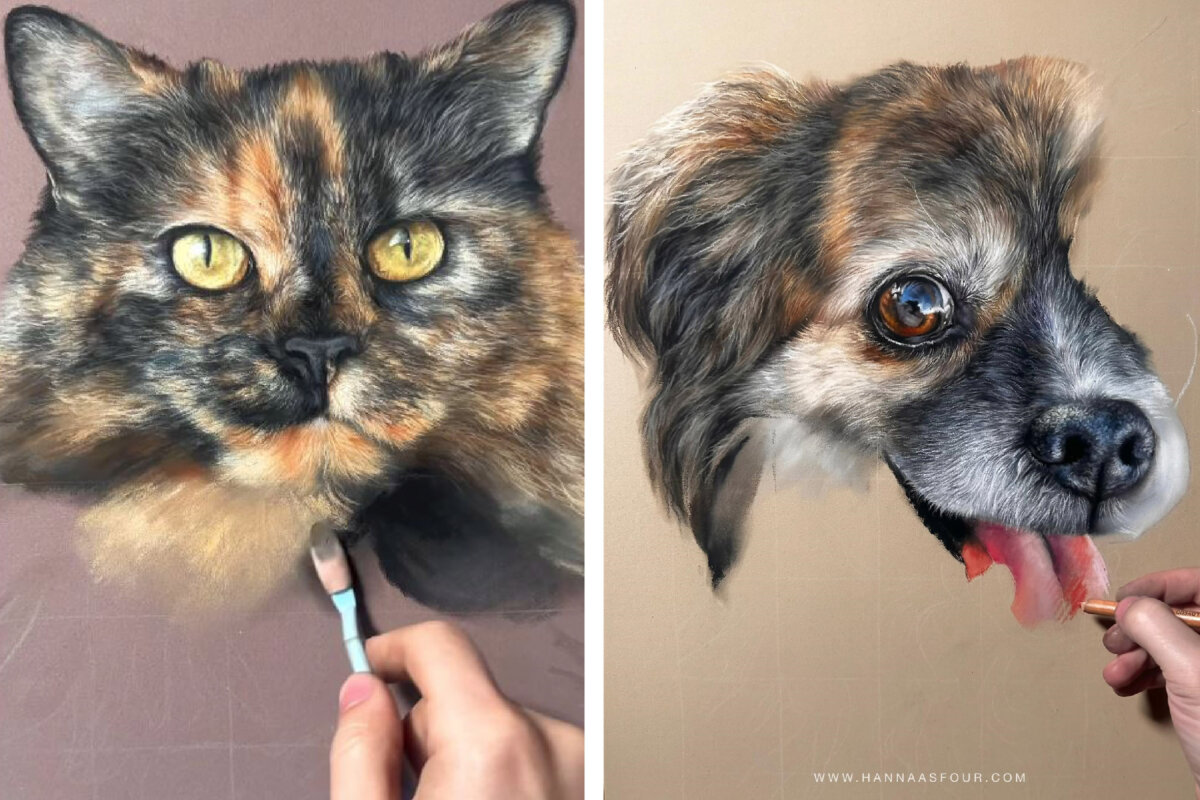
Next, he uses pastel pencils. At this stage, Asfour slows down and applies finer and finer textures, all while staying true to the overall form. The details are deceiving; he doesn’t draw every hair in the fur from his photo reference, but countless strokes give that illusion.
“My background in architecture trained my eye to be extremely detail-oriented and precise, which naturally carried over into my artwork,” Asfour said, adding that the media are surprisingly similar. “Architecture taught me to observe carefully to notice how light hits a surface, how shapes relate to each other, and that level of observation is crucial in realistic portraiture.”
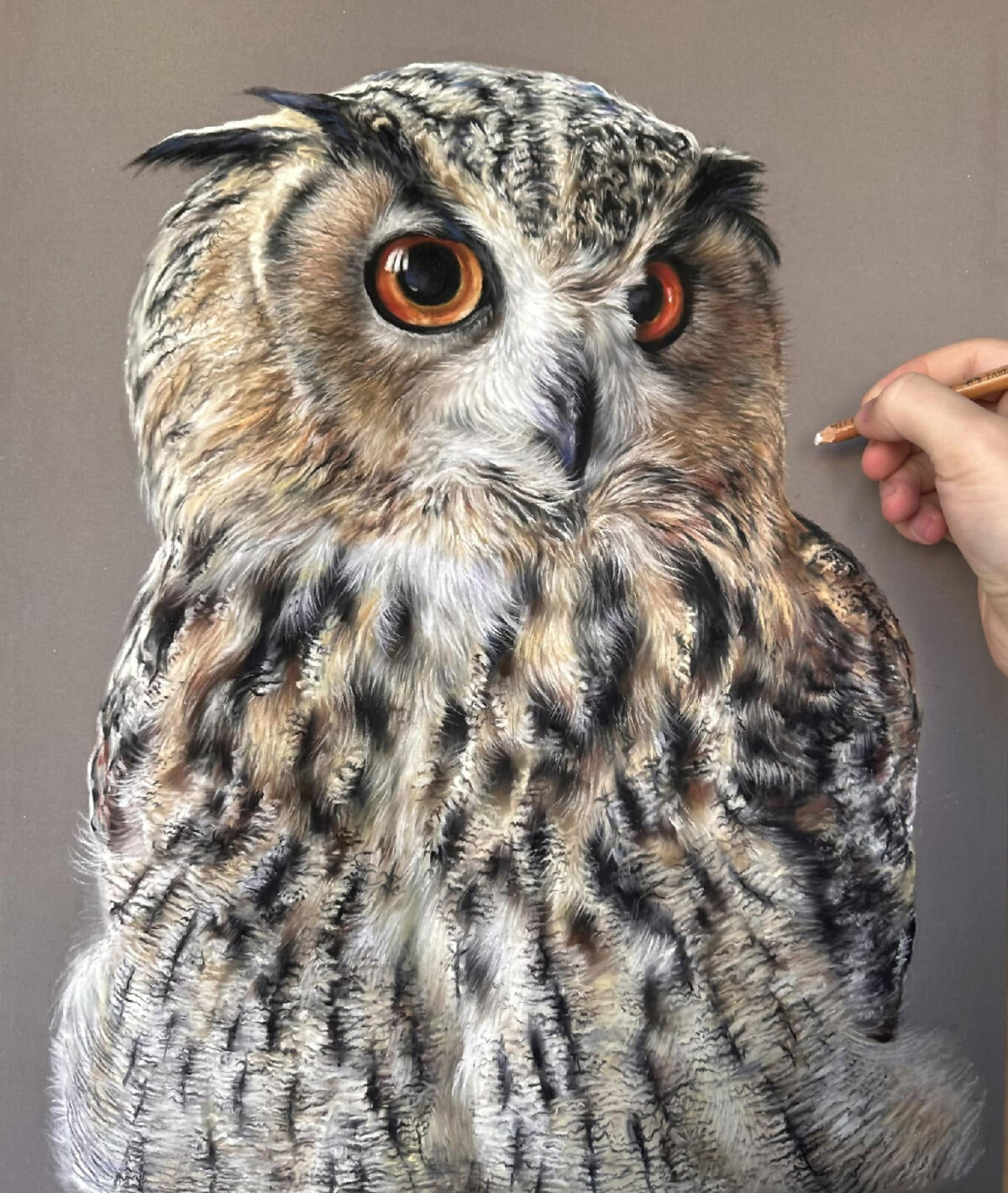
He says his process can be as meditative as it is meticulous. One work that brought him closest to mental stillness was his larger-than-life owl, which he drew at a time when he was seeking wisdom in life.
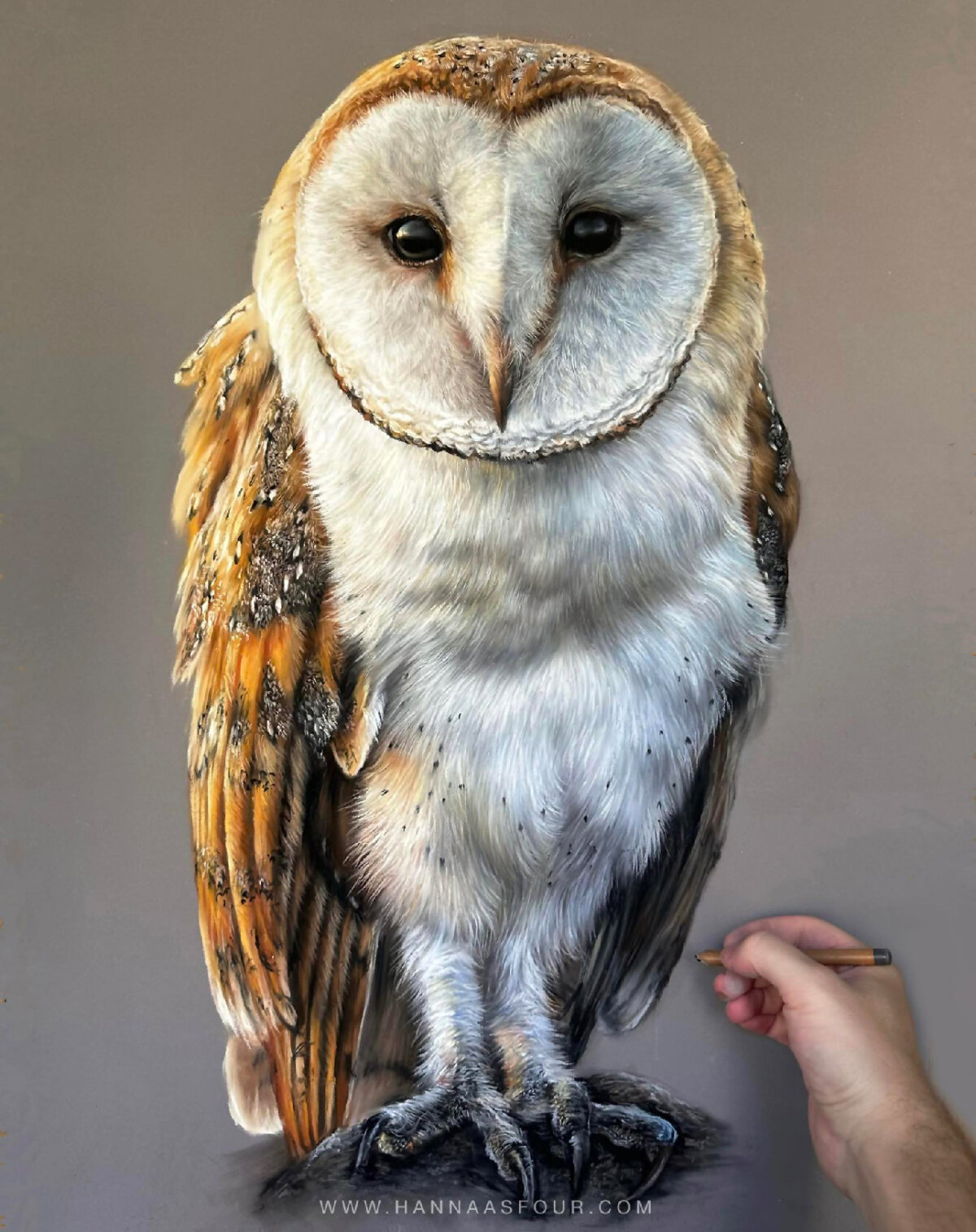
“I worked in silence at times, just listening to the soft movement of the pencil and the quiet outside my window,” he said. “Every feather was layered individually, almost like stitching, slow and repetitive. It was so satisfying and a reminder to be patient with the process and with myself, too.”
Not long into Asfour’s journey as a professional artist, people on social media began to notice his honed pieces. Although he was featured on Jordanian television as a teenager, this was his first global exposure. Now he accepts commissions internationally. His highly expressive pet portraits often attract the most likes on Instagram.
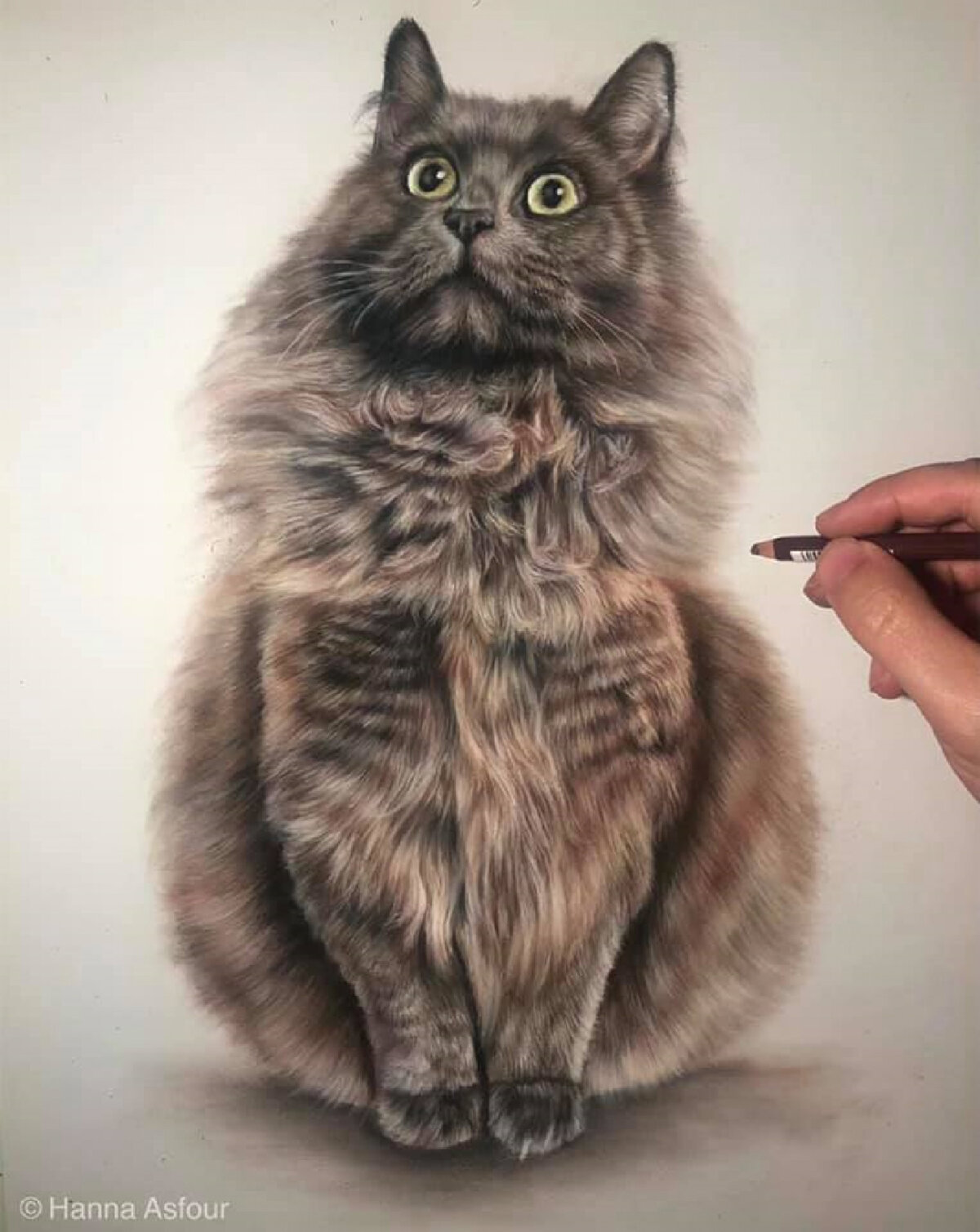
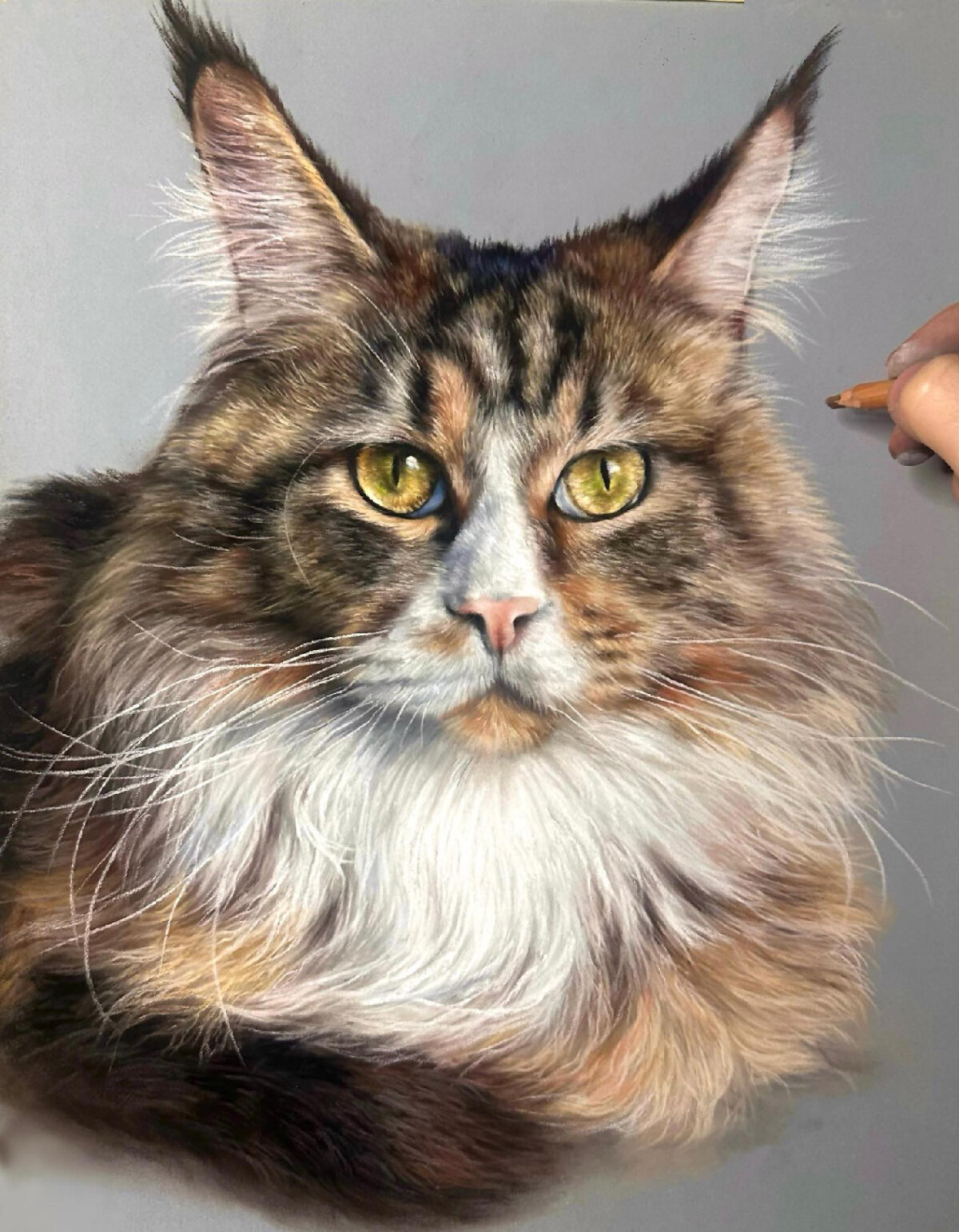
“One of my most viral pieces was a commissioned portrait of a Maine coon cat,” he said. “It resonated with so many people because of the expression; it really captured the cat’s personality.”
With commissions flowing in steadily, Asfour says he plans to leave his day job in architecture soon.
“I started drawing simply out of passion,” he said. “The transition from amateur to professional happened organically: The more I shared, the more trust and recognition I built.”
More Drawings By Hanna Asfour