NR | 1h 45m | Documentary | 2025
“Folktales”—the superb new documentary about teenagers escaping cellphone addiction and discovering their destiny—opens with a folktale from Norse Mythology. Deeply familiar to me, it’s one of the first stories I heard in fourth grade, after switching from public school to a Waldorf school.
It tells the tale of when the All-father, the one-eyed Odin, journeyed on his eight-legged steed Sleipnir, to the Tree of Life, and asked the three goddesses who weave the threads of human fate, the Norns—Uror, Verdandi, and Skuld—how to have a happy life. They tell him that this particular answer is not so easily come by. One must encounter tribulations and bear some hardship to gain access to such a thing.
On the Precipice of Adulthood
Documentaries are a fabulous and convenient way to become a world traveler from the comfort of one’s couch, for the mere price of a streaming subscription. In “Folktales, we soon find ourselves with a bevy of teens, converging at traditional Pasvik Folk High School (known as a “folkehogskole”), 200 miles north of the Arctic Circle, in the gorgeous Norwegian wilderness.
Hundreds of similar schools exist all over Scandinavia. These folk schools provide a service similar to the Amish “rumspringa,” a time when Amish youth are cut loose from the community to go explore the world and decide if their upbringing is really what they want.

Scandinavian folk schools are unique institutions that provide the opportunity for young students straddling the gap between juvenile education and university, to choose an unconventional “gap year.” These are ultimately hands-on, visceral, get-your-hands-dirty, wilderness-survival-oriented approaches that are deeply grounded in reality.
The polar opposite of book-learning, it’s a form of therapy involving solo self-reliance and doing service. Dropped off collectively by their parents at the edge of the world, the students meet and are soon taught how to take care of themselves in deep forests, in sub-zero temperatures. The service portion is learning to help each other, and this includes feeding and caring for the loyal canines that haul their dog-sleds. It’s adulthood-initiation through dog-mushing in the Arctic wilderness, and hands-down the most brilliant method of ameliorating modern teenage woes I’ve encountered to date.
Hege, Bjorn, and Romain
Mirroring the three Norns, “Folktales” focuses on three students and documents their coming-of-age journeys. The audience is very much inspired as these students encounter unique difficulties, gain confidence through facing hardship, and experience the joy of successfully tackling challenges like frozen-lake cold-plunges. What’s most important is the bonding between the students; the film depicts how the EQ (emotional intelligence) development cultivated here is more valuable than anything they’d have learned sitting at a university desk.
The typical troubles of teens who are not particularly gregarious and struggle with knowing how to fit in, make friends, keep friends, and so on, resonate strongly with audiences. We realize we all have more in common than we think. The struggles and hesitations teens think are their exclusive loser problems are shared by just about everyone.

All three students are markedly different from one another. Hege Wik, arguably the film’s heart, is introduced via her mother suggesting that maybe her daughter doesn’t need to bring seven types of mascara to the wilderness. Struggling with image and weight issues, she’s nevertheless the group’s most resourceful and determined member, which makes her a bit of a heroic figure for this little motley crew. The film also concludes by depicting Hege’s post-Pasvik High career-choice.
Bjorn Tore, whose talkative energy is reminiscent of actor Chris Pratt, brings to mind what Pratt might have been like had he been an overweight adolescent. He’s a lovably awkward boy. He speaks openly about being a nerd who has trouble making and keeping friends.
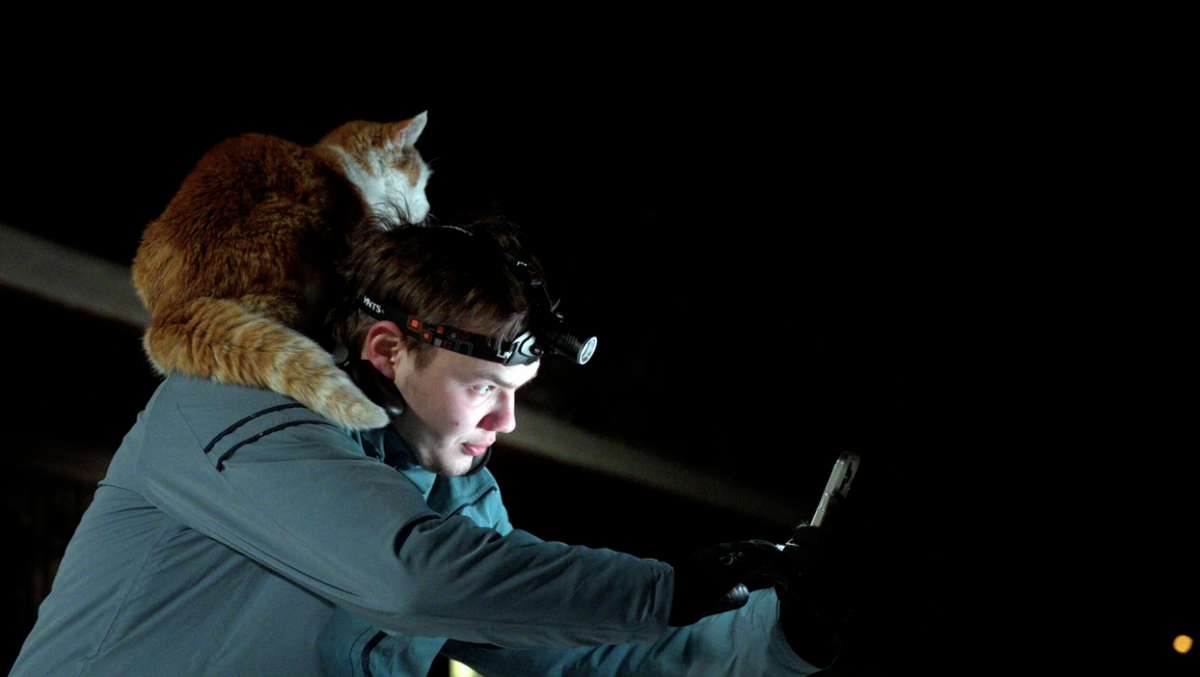
The film captures some of his valiant but cringe attempts at casual conversation. Everyone can relate to having endured some form of that, however brief, and we root for him to learn the survival skills that will help him gain confidence. His tears of gratitude and deep sadness at the end at having to take leave of his newfound friends had the whole press-screening audience sniffling and nose-blowing.
Romain, also socially challenged, relates: “I feel like if I talk, I’m annoying, and if I don’t talk—I’m boring.” Romain is the most cerebral and struggles painfully with the primitive-skills portion: the camp-organizing, wood-chopping, kindling-gathering, fire-making, and snow-melting.
At one point Romain painfully attempts to whine his way into being taken care of by the male and female counselors, Thor-Atle Svortevik and Iselin Breivold, overseeing a night of solo camping with particularly heavy snowfall, in the woods. They gently explain why they can’t do that. They break it down for him: He has to put in the work; he’s going to get sweaty—if they coddle him, he won’t learn a thing. It’s a foreign concept for today’s screen-addicted kids.
My favorite part was when they later go check up on him. The kids are all out there in the dark with their dogs. They’re not exactly sure where Romain is located, so Svortevik howls a casual “a-woo.” Nothing. But as we all know, there’s no such thing as a dog who can resist a good a-woo. “A-wooooo!!” Soon, a distant doggy response “a-wooo!” is heard. The counselors chuckle, head in that direction, and soon stumble upon Romain and his dog, doing just fine, with a cozy fire going. That’s a major win, and we can all feel the soul-expansion in Romain’s happy grin.
A-woo!
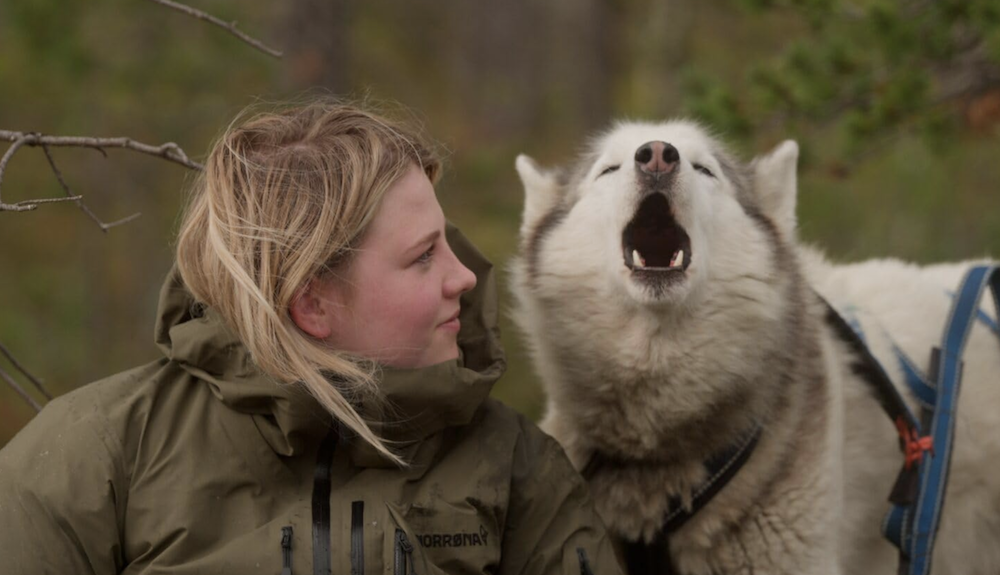
“Folktales” also focuses on the heartwarming, exceptionally cute doggos who live and work at the school as sled dogs, personal student companions, and occasionally furry handkerchiefs. A good third of the film is all about the dogs. There needs to be a new Oscar category for best doggie P.O.V. (point of view) shots.
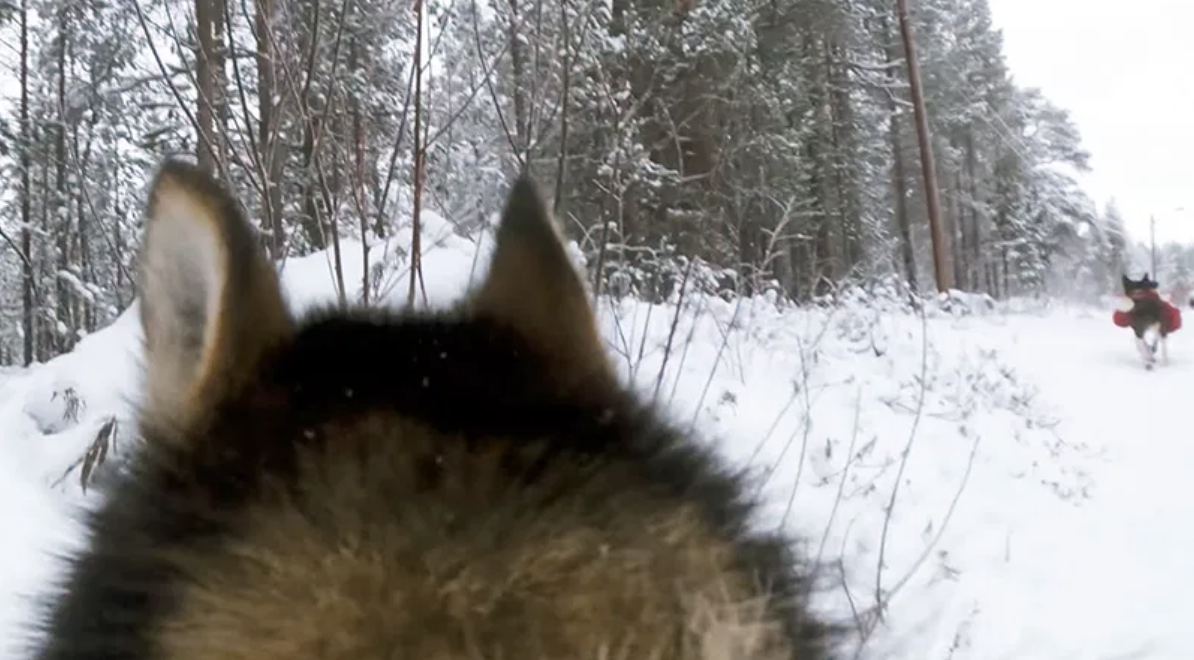
It’s possible there will be vegan protests about those “poor dogs doing slave-labor pulling those heavy sleds.” But for those in the actual know, there’s nothing a dog loves more than pulling a dang sled. Ohh they love it. They live for it. The sheer canine joy; the supernormal cardio; the happy tongue-flapping; the focusing-on-your-teammate’s-fuzzy-flanks; the deliriously-delighted, doggone dog-packness of it all.
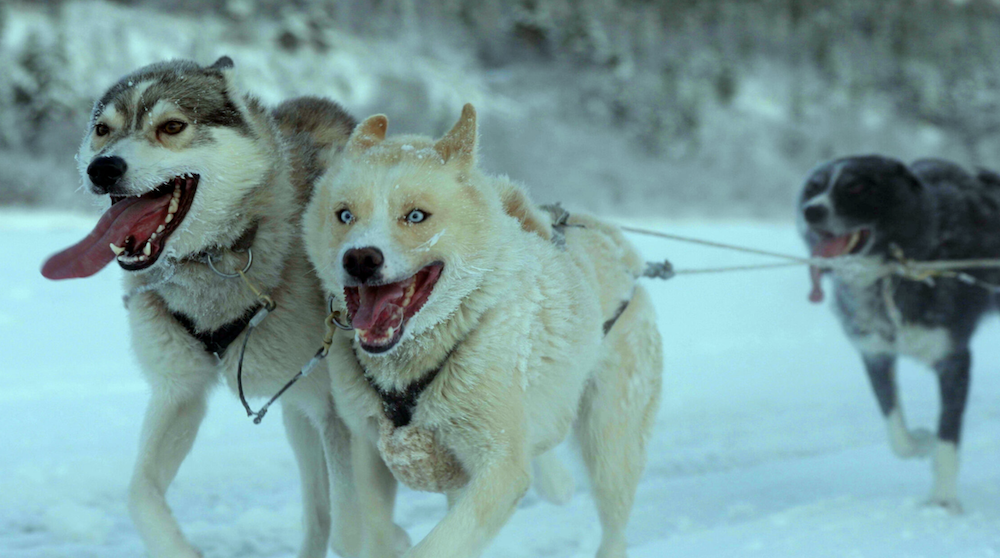
Similar to rowing crew, there are different dog-sled positions for different dog-talents: The highly intelligent trail-navigating Lead dogs guide the team and set the pace. Positioned behind them are the Swing dogs, who facilitate turning, by swinging the rest of the team around corners. Next are the Team dogs, who contribute to the overall pulling power of the team, and lastly, located closest to the sled, the Wheel dogs are the team’s powerhouse pullers. They’re extremely strong, even-tempered, and able to handle the weight and control the movement of the sled.
Dog sledding really ought to be a new Winter Olympic sport.
Cinematography
In a word, the cinematography is fantastic. The Norwegian tundra and northern lights are unmatchable in their Nordic visual magic. It would be easy to rely on painterly images of God’s northern-wilderness tableaux, but they function here simply as a beautiful setting wrapped around a modern coming-of-age tale that all teens (and phone-addicted adults) need to see. The dogs, the often hilarious teenage embarrassments, and the sympathetic emotional breakthroughs all combine to make “Folktales” a powerful lesson in humanitarian insights.
The film is also a deeply moving reminder of the power of top-flight educators. “Folktales” features talented, open, sensitive, and understanding teachers with the strength to hold the line of being alternately soft and firm with the students, as need dictates. They guide these faltering young people in the overcoming of their greatest fears. America currently lags behind in the ability to recognize and acknowledge the priceless contributions of rare and talented teachers.
Speaking of which, a super-talented Waldorf teacher friend of mine just quit her decades-long passionate commitment to teaching children. Helicopter parenting and gone-woke Waldorf have deep-sixed that self-same story of the Norns, told at the outset of this review. It can’t be taught now due to Norse mythology being deemed “racist.” It seems nobody in A.D. 790 Norway was able to locate any people from Haiti, Ecuador, Bangladesh, or Japan, living in Scandinavia at that time, and this doesn’t fit the profile of a sweet, DEI Norse mythology. Actual history be damned; it’s just too uniformly and, therefore, you know, shamefully Caucasian. And so the blue and purple-haired Waldorf Mythology Police have outlawed Thor, Odin, Freya, the Midgard Serpent, and Fenris Wolf because they are obviously very dangerous to children.
“Folktales” is an instant all-time favorite documentary, and a film that can and will change lives, once it emerges from the documentary dog-pack.
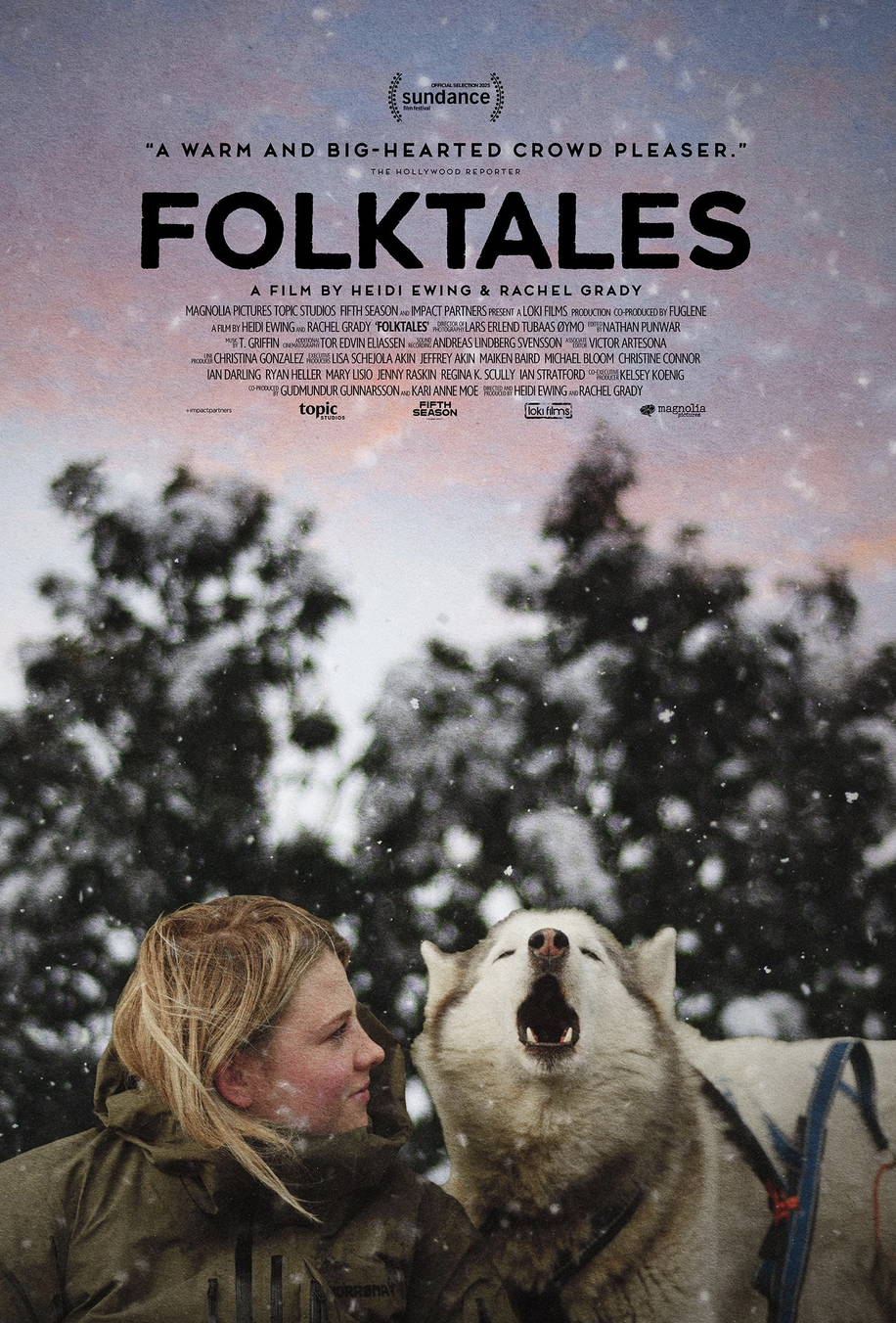
‘Folktales
Documentary
Directors: Heidi Ewing, Rachel Grady
Running Time: 1 hour, 45 minutes
Release Date: July 25, 2025
Rating: 5 stars out of 5
Would you like to see other kinds of arts and culture articles? Please email us your story ideas or feedback at features@epochtimes.nyc