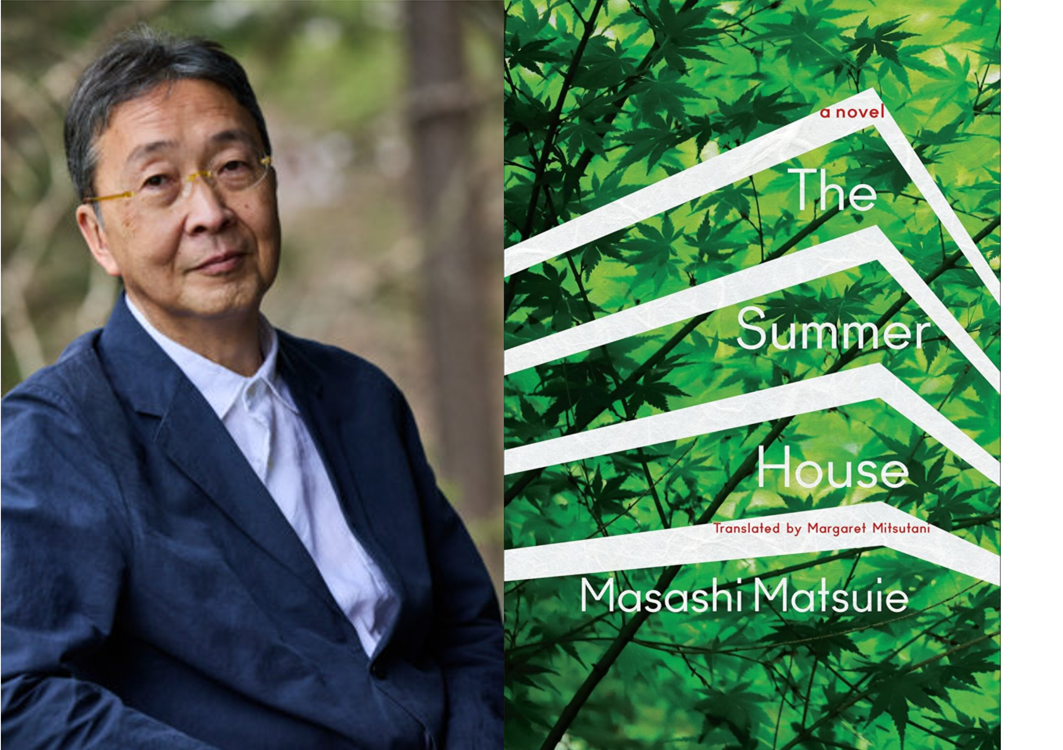
True greatness in building design is something to be cherished and, hopefully, experienced firsthand. This can be seen in the Gothic cathedral in Köln, Germany, for example, or a frieze from the Parthenon, or the simplicity of a well-placed window with a stellar view. “The Summer House” is the next best thing.
The book is a chance to indulge in a thousand vignettes of quiet, poetic brilliance woven through the story of a young designer’s experiences at a company retreat one summer. Each page exemplifies the simple joys to be found in the best of man-made structures.
An Annual Pilgrimage
Every year, from late July to mid-September, the staff at Murai Office of Architectural Design in Tokyo relocate to a place known as the Summer House located in the forested mountains of Aoguri. Set in the mid-1980s, the story revolves around designer Shunsuke Murai (referred to as Murai Sensei, or just Sensei). He’s now in his 70s; for the last several years, there’s been an unspoken understanding that his work effort is slowing down, and an eventual stop will be coming sooner rather than later.
Murai is a respected architect who avoids publicity and selects clients carefully. Though he’s never gained the sort of notoriety that a Frank Lloyd Wright would, those in the related industries have great respect for him.
“The Summer House” is narrated by Toru Sakanishi, who is looking back on his early professional years at the Murai Office as a budding architect. He initially wrote a letter to the Murai Office on a whim and was unexpectedly invited for an interview.
During the interview, Sensei attentively questions Toru about his graduation project, a small house design plan that accommodates one family member in a wheelchair. Murai asks: “Does someone in your family use a wheelchair?” Toru responds “no.” He explains he was merely curious about how a wheelchair might affect the proportions of the entire house. Later, he’s shocked to be hired as a provisional employee.
Gentle Nostalgia, Exquisitely Crafted
That year was Toru’s first time at the summer house. The team’s main task during this time was to prepare for an upcoming bid for the design of the new National Library of Modern Literature. Murai Sensei dislikes competitions, but decided to vie for this particular project against the company’s main rival, Kei’ichi Funayama.
Funayama’s approach is much more dramatic as compared to Murai’s understated style. The former’s work is exemplified by a giant stainless-steel Catholic cathedral. Designed to resemble Noah’s Ark, it’s the type of building that always seems to garner significant attention and media coverage.
One of Toru’s supervisors, Uchida, describes how their boss’s work is a stark contrast to their rival’s. “You don’t want to talk loudly in one of Sensei’s houses,” he explains. “There’s something relaxing about the textures, the way the light enters, delicate touches people don’t even notice till they’ve lived there for a while.” It’s as if these touches of Murai Sensei are speaking to them softly, with “low voices.”
Nature and Form
Nature’s presence makes itself known throughout the story. This is not surprising since the forces of earth are always a factor in Japan. The region’s most notable mountain, Mt. Asama, erupts for the first time since 1973, sending smoke, ash, and cinders the size of peas into the surrounding area. A typhoon is also on its way to the region.
But the summer house weathers all of these. Volcanic ash dusts the windows but the house is otherwise left unharmed. The typhoon knocks out the power to the house. Candles had already been set aside for this eventuality, and the backup generator enables the group to enjoy their evening meal while the storm rages outside.
The blackout interrupts Beethoven’s Eighth Symphony, which had been playing on the turntable. Someone calmly repositions the needle back to the beginning of the track when power is restored. It’s a poignant image showing how grace, excellence, and technology work together to shelter a civilized community working toward a shared goal.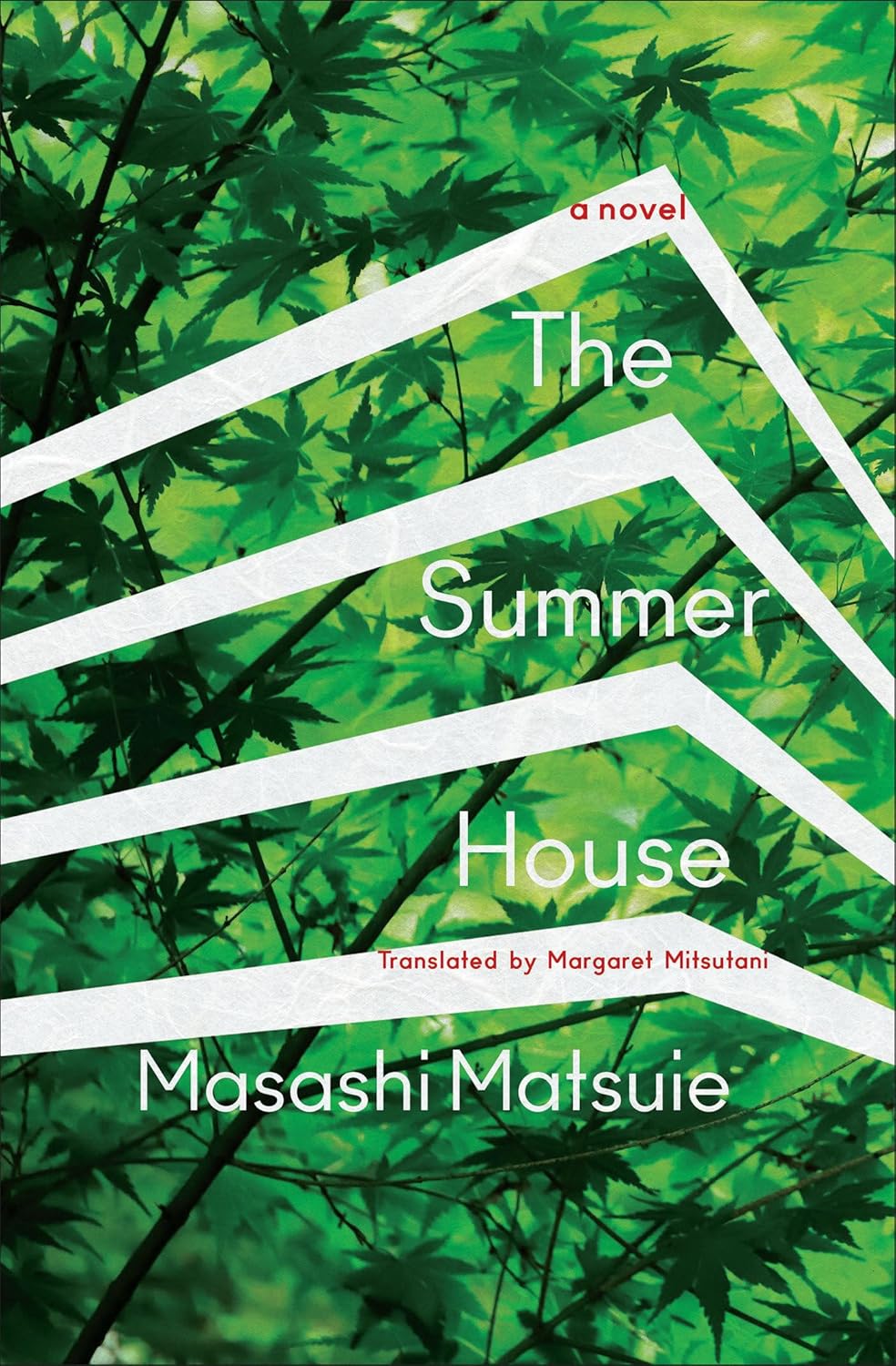
Throughout the work, colleagues share fond memories of old structures. An old train nicknamed the “Horned Beetle” used to be the way they’d wind around the mountain to reach the summer house, unreliable but “generally lovable.” A supervisor named Iguchi relates how he once lost his newspaper in a breeze, hopped off the moving train to retrieve it, then hopped back on. During one snowstorm, the passengers were enlisted to lift the carriage and reset it back on the tracks.
“Architecture always has a life expectancy,” Toru explains. “Unlike art that’s there to be looked at, buildings are inhabited, used, and gradually suffer damage. Hands and feet soil them, wear them down, exhaust them.” So, too, everyone knows their time at the firm is fleeting. The beauty of impermanence is evident in many moments throughout the story, as well as in the characters themselves.
“The Summer House” earned Matsuie the Yomiuri Prize for Literature, an honor typically awarded to established writers with long-standing careers. Given the monumental accomplishment of this book, it’s hardly surprising. I hope there are many more to come.
‘The Summer House’
By Masashi Matsuie
Other Press: June 17, 2025
Paperback, 400 pages
What arts and culture topics would you like us to cover? Please email ideas or feedback to features@epochtimes.nyc