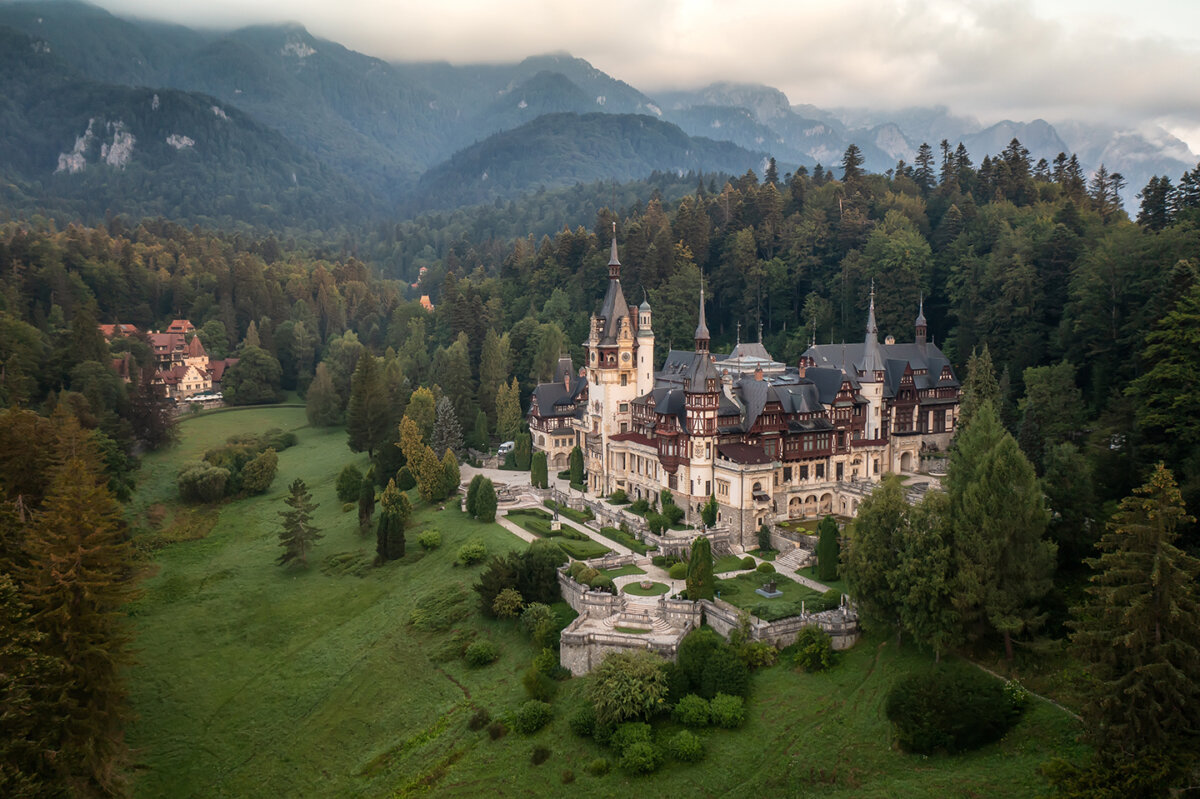
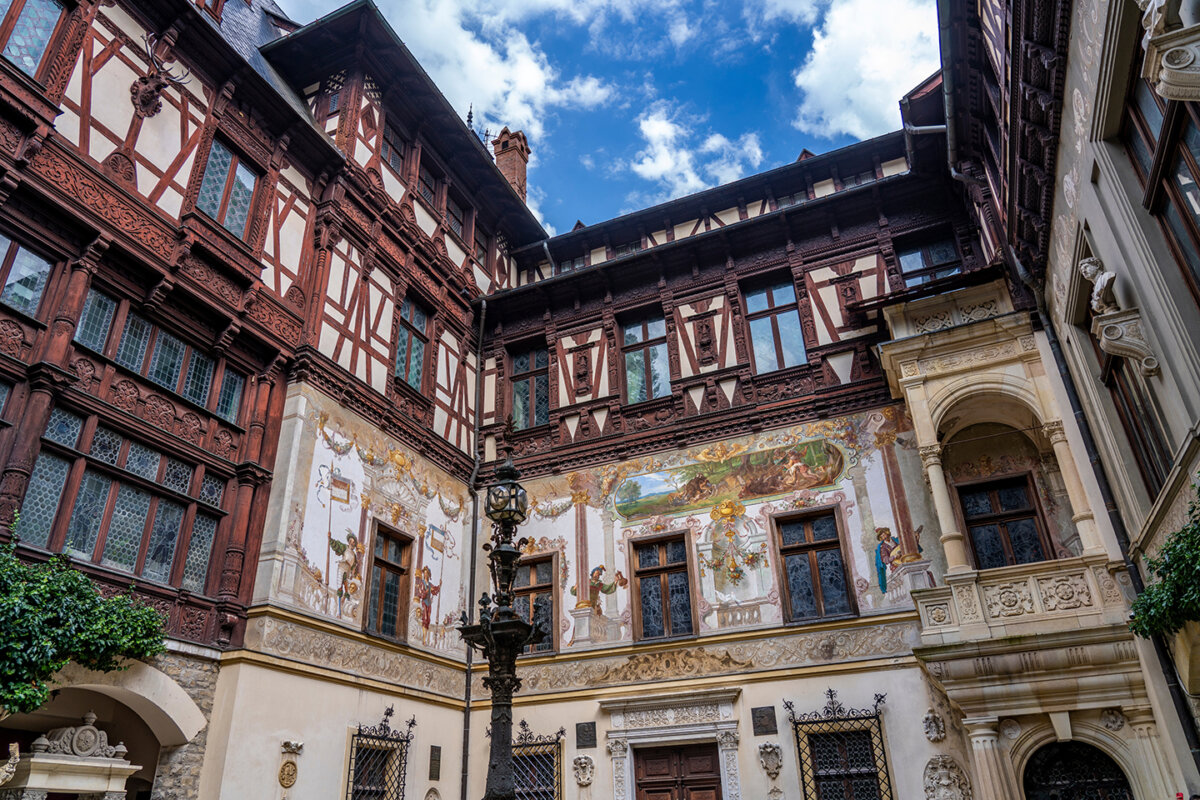
With the appearance of a Swiss chalet and decorated in the German Fachwerk style (half-timbered), the two-story neo-Renaissance palace was a perfect match for its dense forest setting. Peles Castle, with its white walls, tall spire, and wooden beams, is separated from the dense forest by classical landscaped gardens and terraces. (Jasmine_K/Shutterstock)
Perched near the southern edge of the Carpathian Mountains, Peles Castle in Sinaia, Romania, exemplifies the best of Romania’s architectural heritage. Originally the country residence of King Carol I, the castle’s construction (1873–1883) coincided with the nation’s founding.
For centuries, the lands inhabited by ethnic Romanians were divided between the Austrian, Ottoman, and Russian empires. In 1862, the semi-independent territories of Moldavia and Wallachia unified as Romania and gained independence 12 years later.
King Carol I of Romania (1839–1914) embraced the new country’s heritage and built Peles Castle to showcase its eclectic style. The grand alpine castle, designed by German architect Johannes Schultz, combines iconic features of different European styles: Northern and Italian Renaissance, Gothic, and regional. The neo-Renaissance palace’s roofs, towers, and colors were inspired by Romania’s Gothic and vernacular traditions, while the castle’s overall layout incorporates the Renaissance era’s ideals of proportion and symmetry.
The 34,000-square-foot castle features more than 170 rooms that display themes from world cultures. Some of the lavishly decorated rooms show baroque influences, while others are designed in the Florentine, Turkish, Moorish, French, or Imperial styles.
For more than two decades, from 1953 to 1975, the palace was a national museum. After the Romanian Revolution of 1989, Peles Castle was renovated and reopened to the public in 1993.
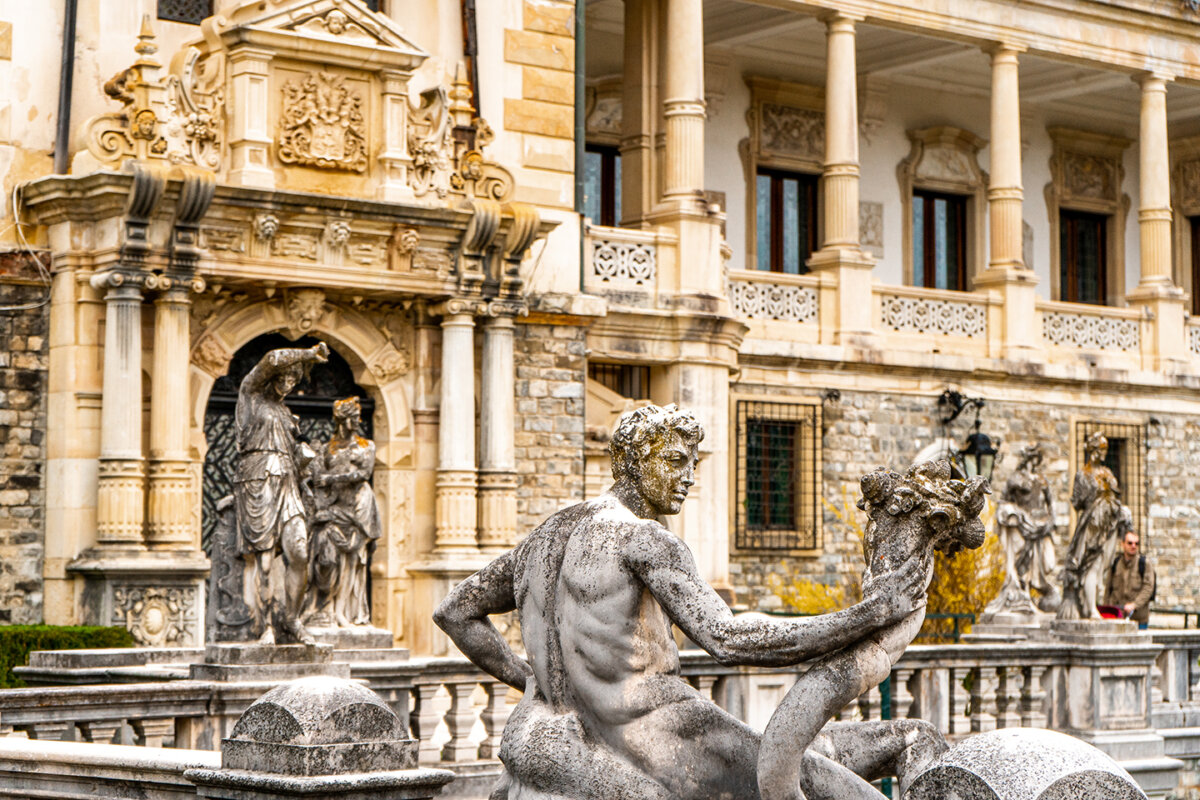
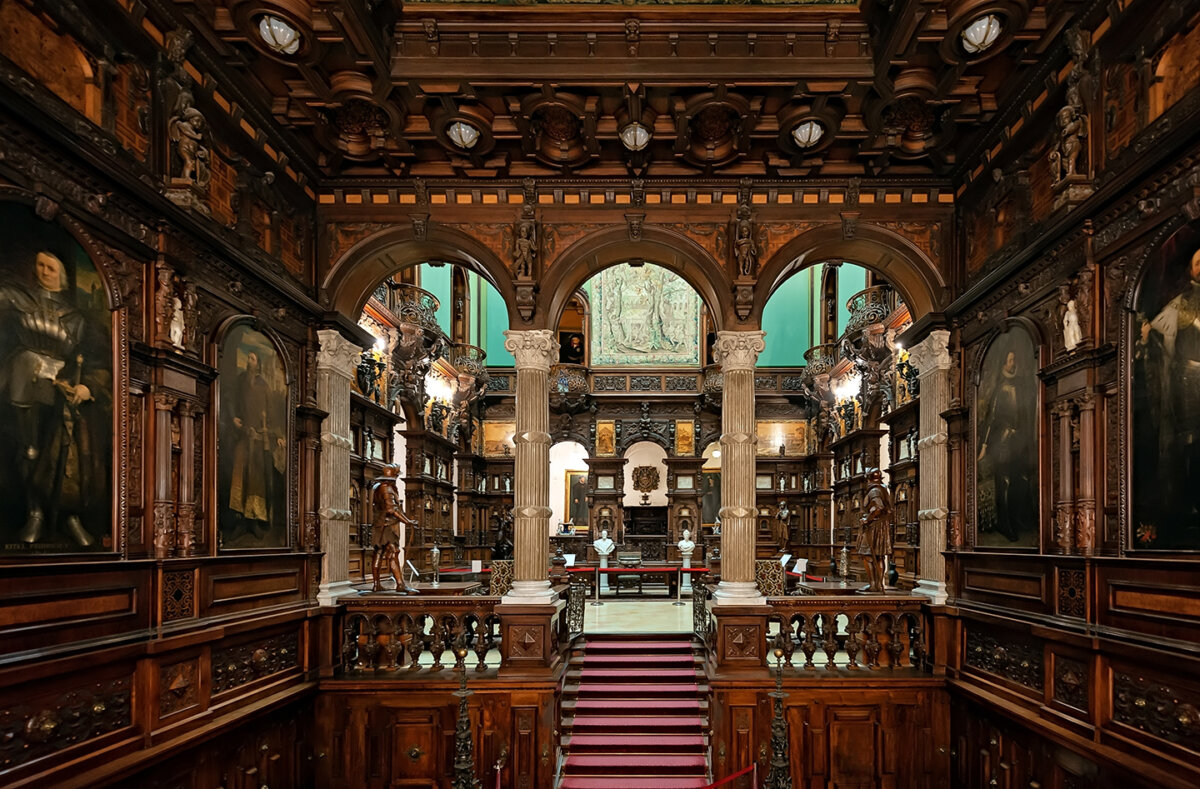
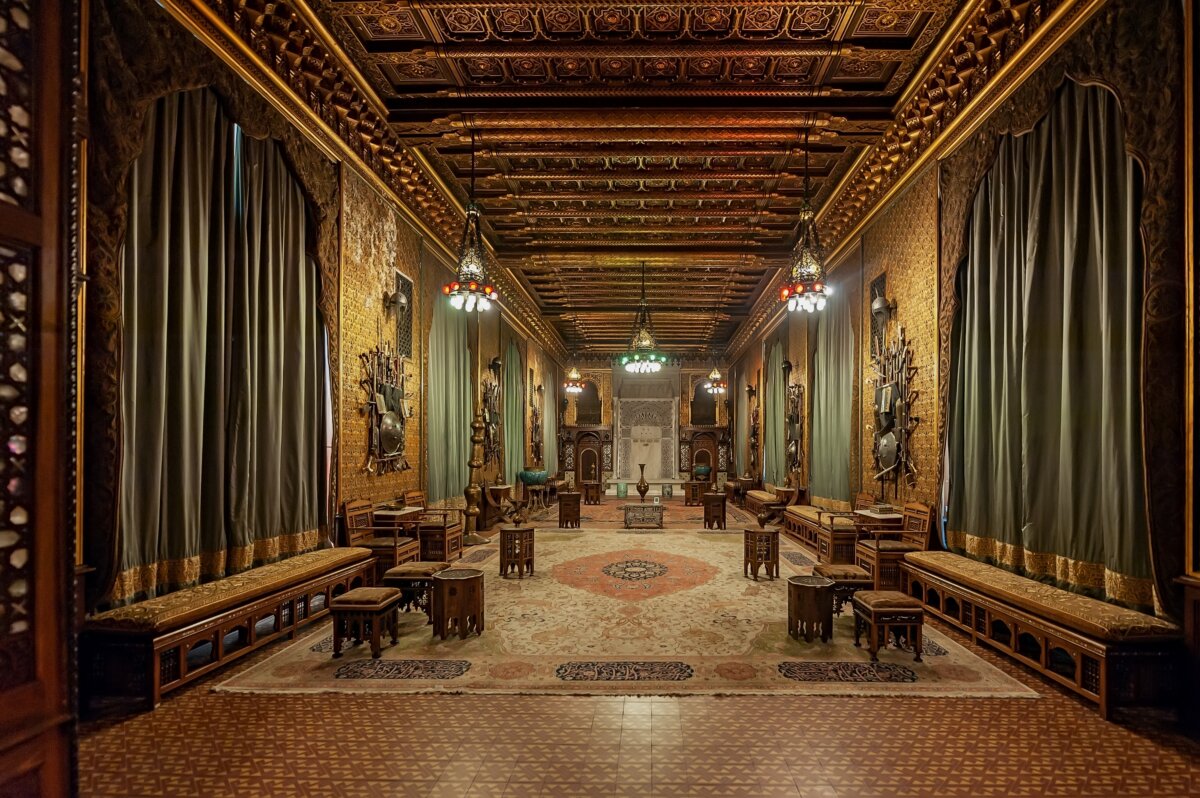
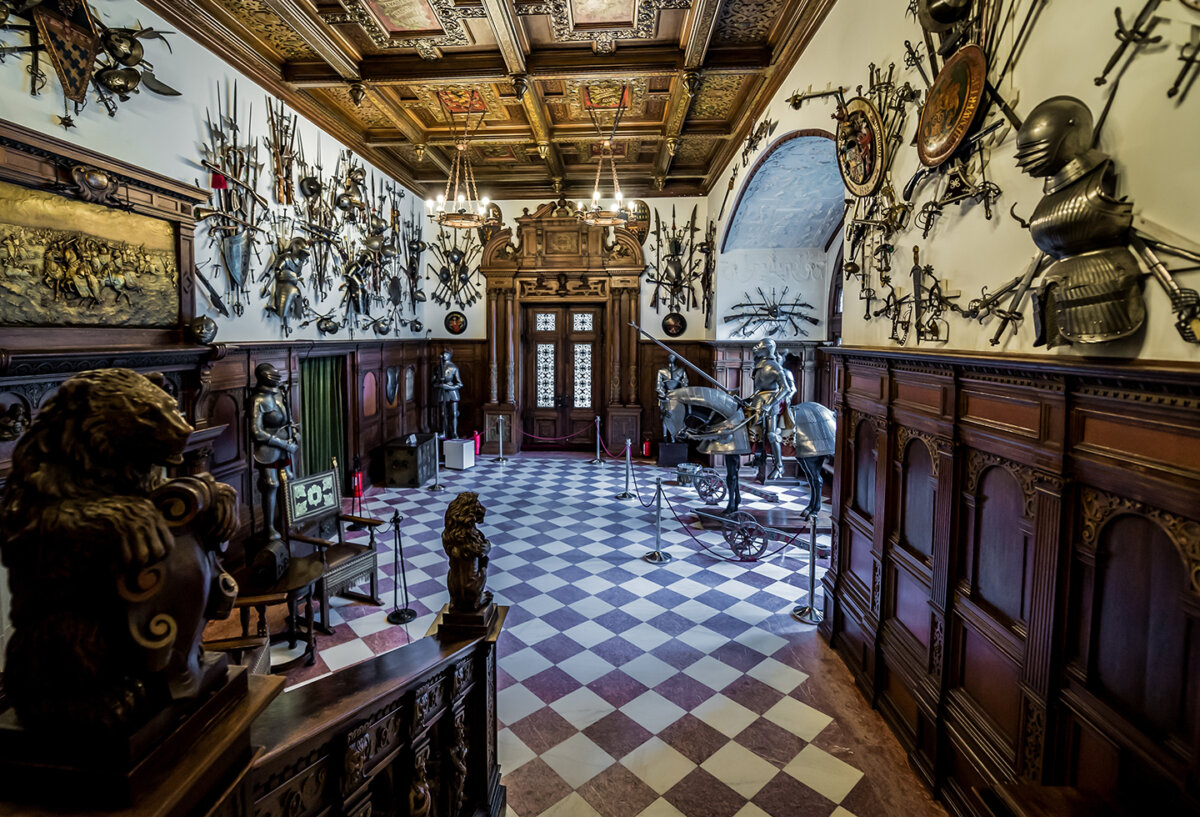
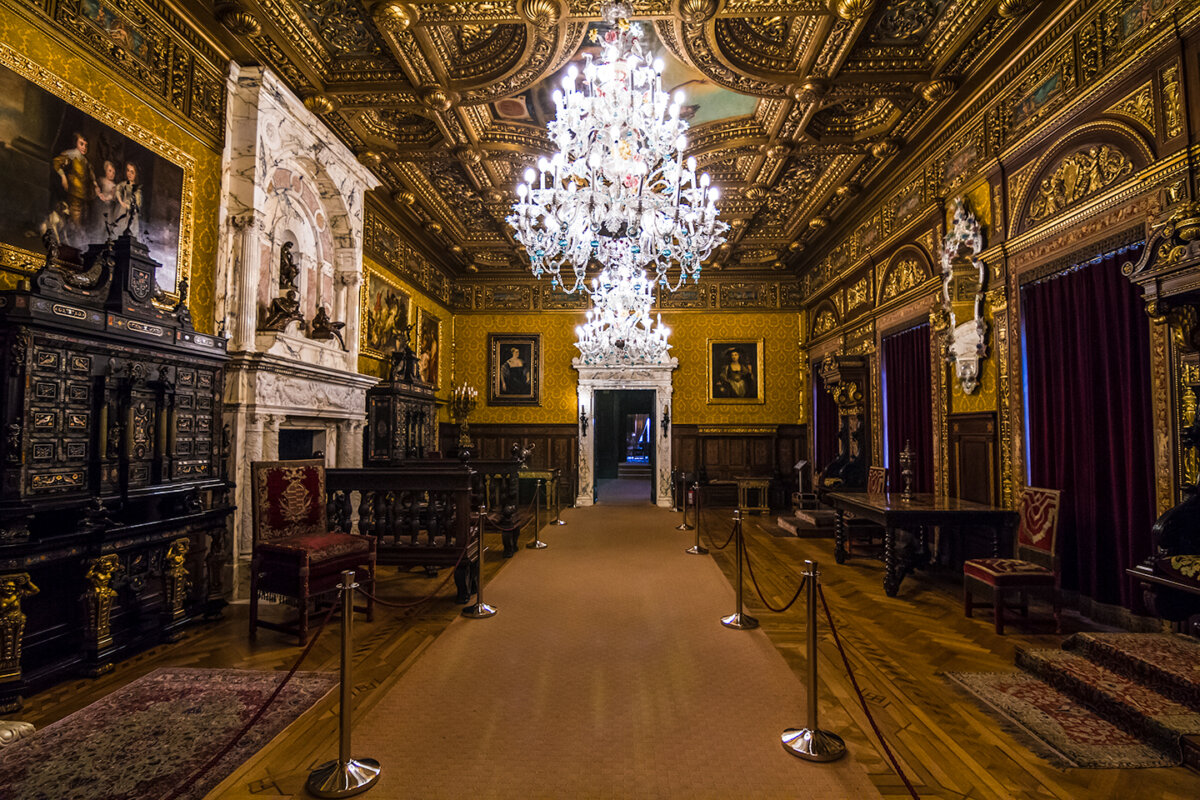
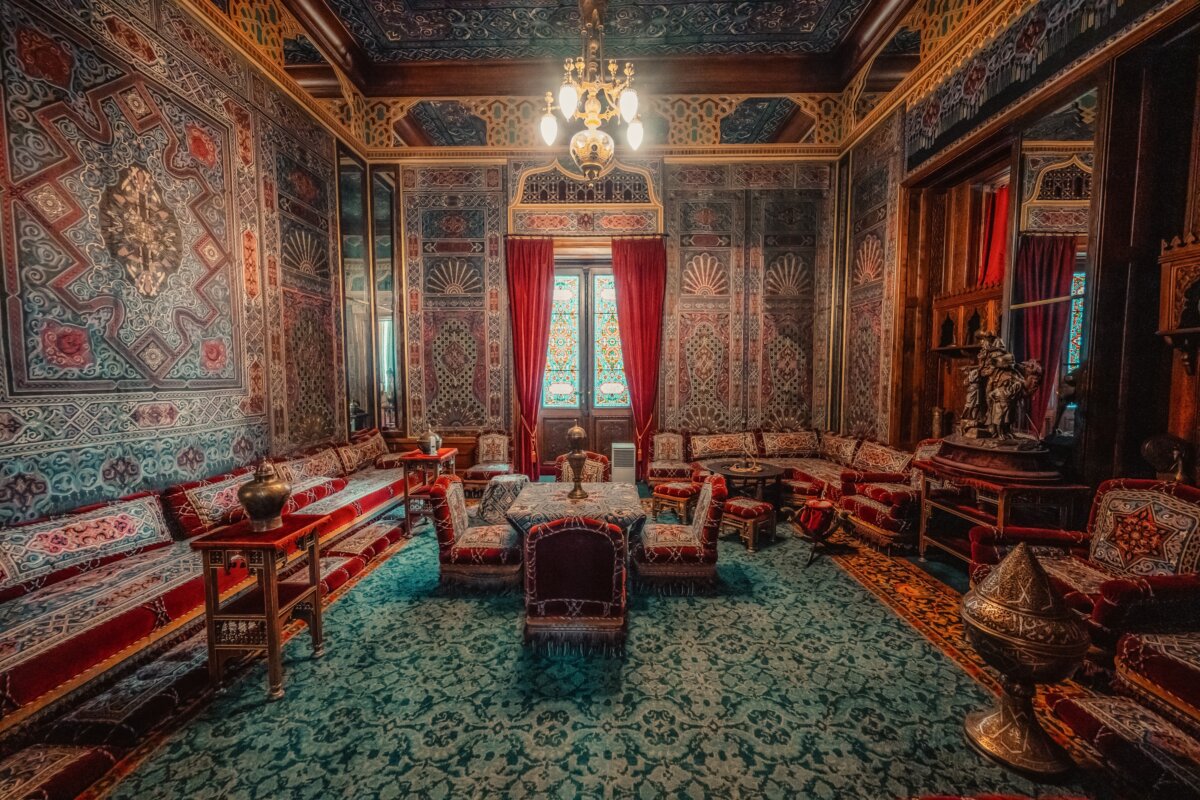
The seven terrace gardens are decorated with dozens of sculptures (mostly of Carrara marble) by Raffaello Romanelli (1856–1928). The Italian sculptor was trained at the Florence Academy—where Michelangelo was a founding member—and preserved the traditions of the Renaissance into the early 20th century. (fukez84/Shutterstock) Completed in 1911, the Hall of Honor spreads over three floors and is decorated in the German Renaissance style, with subtle baroque accents. The grand hall features Ionic columns, carved walnut paneling, bas-reliefs, alabaster sculptures, and a collection of paintings, known as the Ancestors Gallery, which portrays the imperial German dynasty’s House of Hohenzollern lineage. (Havoc/Shutterstock) The inspiration for the Moorish Salon came from North African and Spanish-style Moorish art and architecture. The salon features Persian and Ottoman rugs and upholstery, Arab and Berber decorative tiling, furniture inlaid with mother-of-pearl, an indoor marble fountain, and Ottoman weaponry. (Havoc/Shutterstock) The castle’s upper-level, half-timbered style (Fachwerk) was a common design element in Northern European alpine architecture. Traditional Romanian handpainted murals of allegorical figures decorate the inner courtyard’s second-floor facade. (Andrea Chiozzi/Shutterstock) The Grand Armory, which emphasizes Gothic and Northern Renaissance aesthetics, houses 1,600 pieces of weaponry and armor, including relics from the king’s victory during the Romanian War of Independence. The grand arsenal also includes polearms (glaives, halberds, lances), 14th- to 19th-century hunting weapons, firearms, axes, crossbows, and swords. (Fotokon/Shutterstock) Inspired by Tuscan Renaissance architecture, the Florentine Hall lives up to its name. The grand hall features carved and gilded walls, bronze doors made in Rome, and a marble fireplace that features Michelangelo motifs. (maggee/Shutterstock) The Turkish Parlor was used as a gentlemen’s smoking room and is a model of the Ottoman Empire’s aesthetics. The parlor is finely decorated with a Turkish Holbein carpet and Persian copperware. Handmade, Viennese silk textiles cover the walls. (zedspider/Shutterstock)
What arts and culture topics would you like us to cover? Please email ideas or feedback to features@epochtimes.nyc.
James Baresel is a freelance writer who has contributed to periodicals as varied as Fine Art Connoisseur, Military History, Claremont Review of Books, and New Eastern Europe.