Herbert Hoover stood before a crowd of Republicans at Stanford University to accept the party’s presidential nomination. It was Aug. 11, 1928, and America stood at the crescendo of the Roaring ’20s. After the post-World War I depression, the country had dramatically rebounded under the Republican administrations of Warren G. Harding and Calvin Coolidge. America was the beacon of economic prosperity.
“We in America today are nearer to the final triumph over poverty than ever before in the history of any land,” Hoover announced. “The poor-house is vanishing from among us. We have not yet reached the goal, but given a chance to go forward with the policies of the last eight years, and we shall soon with the help of God be in sight of the day when poverty will be banished from this nation.”
Three months later on Nov. 6, Hoover won the 1928 presidential election in a landslide, defeating New York Gov. Al Smith, 444 to 87.
As Hoover took the oath of office on March 4, 1929, prosperity remained on the rise. Dark economic times, however, were fast approaching as speculation in the stock market increased and borrowing by hopeful investors peaked.
Perkins’s Political Rise
The home of the United States stock exchange, New York, had elected a new governor on the same day that Hoover won the presidency. It was the Democrat with the famous last name: Franklin Delano Roosevelt. On Jan. 1, 1929, Roosevelt took the place of the outgoing Smith.
America may have been in the midst of economic improvement, but New York, home of the world’s largest city at the time, had long been the site of labor disputes. These disputes had not vanished even while the 1920s roared.
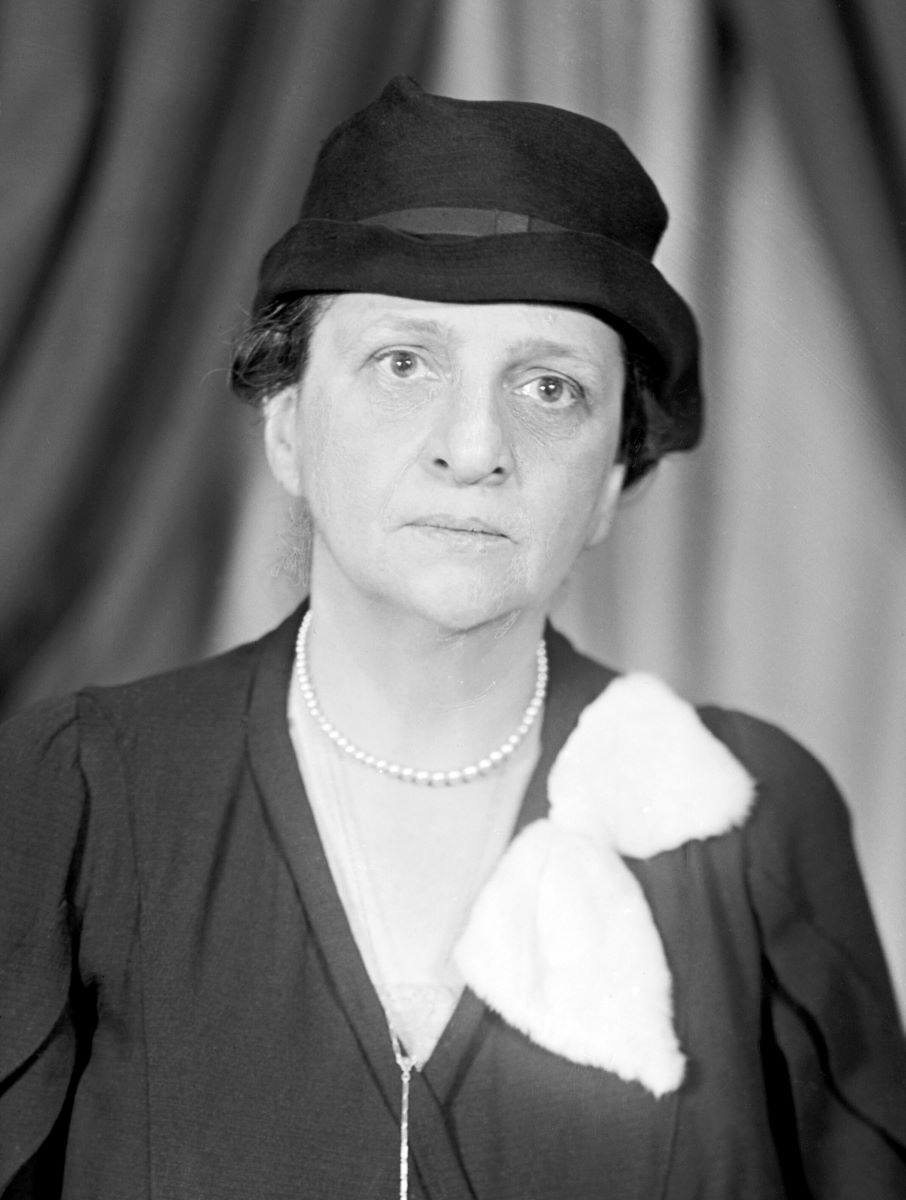
Roosevelt knew exactly who he would choose to oversee New York’s labor relations: Frances Perkins. A familiar face in New York’s political and business circles, Perkins had first entered the labor industrial fray after the famous Triangle Shirtwaist Factory fire on March 25, 1911. It resulted in the death of 146—nearly a quarter of the workers. When New Yorkers established the Committee on Safety, it was Roosevelt’s distant cousin, Theodore Roosevelt, who recommended the committee hire Perkins. She was the committee’s executive secretary until Gov. Smith appointed her to the New York State Industrial Commission in 1919.
From there, she rose through the ranks, becoming a commissioner on the New York State Industrial Board in 1922 and its chairman in 1926. Three years later, Franklin Roosevelt appointed her as the New York State industrial commissioner. The working relationship would result in some of the most historic labor decisions in the country.
Dark Days Arrive
On Oct. 28, 1929, the Dow Jones industrial average dropped approximately 13 percent, followed the next day by the stock market dropping nearly 12 percent. “Black Monday” and “Black Tuesday” were ominous signs that the near decade-long boom was coming to a cataclysmic end.
Hoover tried to emit optimism about the future of the economy, but no amount of optimism or government intervention seemed to do the trick. For Perkins, Hoover’s predictions seemed, at best, wishful thinking and, at worst, outright fabrications.
“It is cruel and irresponsible to issue misleading statements of improvement in unemployment, at a time when the unemployed are reaching the end of their resources,” Perkins stated in early 1930.
While overseeing the New York labor department, Perkins worked to make employment agencies more accessible to New Yorkers. She also began looking into the idea of unemployment insurance. With Roosevelt’s permission, she went to England to study its unemployment insurance program.
She returned in October with ideas for an American version of unemployment insurance. The following month, Roosevelt won reelection. It would be far from his last election to win.
Roosevelt’s New Deal Promise

Hoover’s popularity, much like the stock market, had plummeted. As the 1932 election neared, the Democrat Party chose Roosevelt to be their candidate. On July 2, 1932, at the Democratic National Convention in Chicago, he accepted the nomination, pledging “a new deal for the American people.”
“What do the people of America want more than anything else?” Roosevelt rhetorically asked the convention. “To my mind, they want two things: work, with all the moral and spiritual values that go with it; and with work, a reasonable measure of security—security for themselves and for their wives and children. Work and security.”
On Nov. 8, 1932, Roosevelt defeated Hoover in a landslide, 472–59. He had won the presidency, but inherited a colossal economic disaster, including an unemployment rate at nearly 25 percent. He took the oath of office on March 4, 1933. The month prior, Roosevelt took the unprecedented step of adding Perkins to his cabinet as the secretary of labor. It was an unprecedented step because a woman had never held a position on a presidential cabinet.
Perkins accepted the position and arrived with a number of ideas for labor policies. Recalling her time in the administration, she once famously stated, “I came to Washington to work for God, FDR, and the millions of forgotten, plain, common working men.”
Ideas for a Safety Net
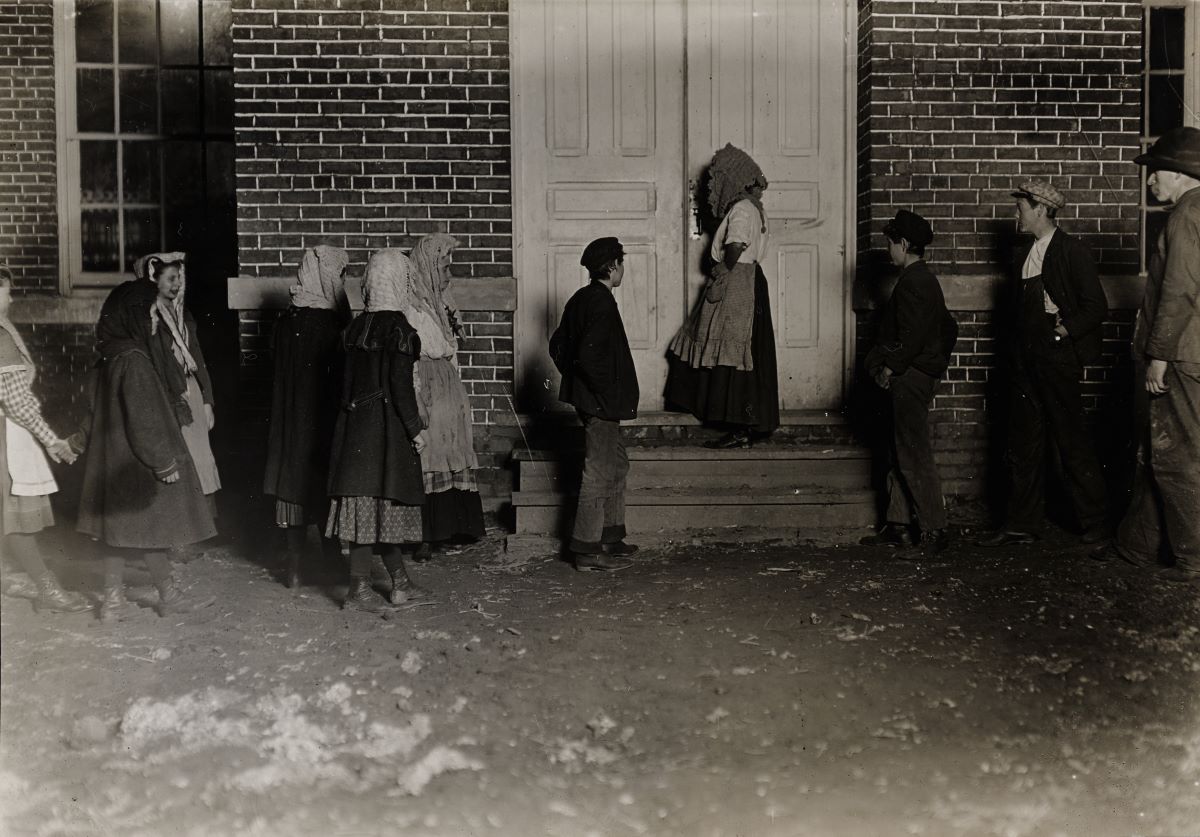
Among her ideas were implementing a federal 40-hour work week, worker’s compensation, minimum wage, unemployment compensation, the abolition of child labor, and an unemployment insurance program. Over the previous 30 years, America had witnessed a 10-year increase in life expectancy—the greatest increase ever recorded in history. This made the need to provide some type of financial safety net for the elderly all the more prominent.
By the time of Roosevelt’s election, only 17 states had pension laws for the elderly, with nearly 90 percent of that total monies being expended in the states of California, Massachusetts, and New York. Before the Great Depression, such pension programs were practically nonexistent. Five years into the Depression, the lack of a safety net became pronounced as more than half of elderly Americans lacked enough funds to provide for themselves.
Roosevelt and Perkins, among others within the administration, began formulating ideas to not only try to stimulate the economy but provide long-term financial safety provisions for Americans.
New Deal Legislation and the Courts
One of the first pieces of New Deal legislation, signed into law on May 12, 1933, was the Agricultural Adjustment Act (AAA). The bill was primed to assist farmers in promoting their purchasing power and create demand for their products by decreasing supply. The methods, led by the newly established Agricultural Adjustment Administration, were seemingly counterproductive during a time of want, as they included eliminating agricultural surpluses, reducing production, incentivizing farmers to use less of their land for production, and taxing food processors. The bill was met with understandable criticism, especially when word spread that millions of pigs and millions of acres of cotton were destroyed.
Another early attempt to stimulate the economy was the National Industrial Recovery Act (NIRA), signed on June 16, 1933. The Act forced industries to work together, fixed prices and wages, established quotas on production, and, by restricting competition and suspending antitrust laws, ultimately opened the door to monopolies. The NIRA led to the creation of the National Recovery Administration (NRA) by executive order, which allowed for establishing work hours and wage rates, and price-fixing.
On May 27, 1935, in the case Schechter Poultry Corp. v. United States, the Supreme Court unanimously struck down the NIRA, and therefore the NRA, as unconstitutional. Next up was Roosevelt’s AAA. The Supreme Court identified several aspects of this legislation as unconstitutional on Jan. 6, 1936, specifically the tax portion, which was allowing the executive to levy the tax, rather than Congress.
Six Months for an Idea
Before these pieces of legislation were passed by Congress or ever came before the Supreme Court, Perkins convinced Roosevelt to request Congress to allocate $3.3 billion for a public works program that would provide unemployed Americans jobs building schools, roads, post offices, and other projects. The Public Works Administration would become a highlight of Roosevelt’s administration.
In 1934, Roosevelt looked to create a new program that would establish a sense of financial security for Americans. He established the Committee on Economic Security (CES) and placed Perkins as its chairman. Along with Perkins was Secretary of the Treasury Henry Morgenthau Jr., Attorney General Homer Cummings, Secretary of Agriculture Henry Wallace, Federal Emergency Relief Administrator Harry Hopkins, and Edwin Witte, who was the committee’s executive director. The CES also had a 23-member Advisory Council and a 21-member Technical Board.
Over the course of the short time allotted by Roosevelt—six months, the group worked to formulate legislation that would provide a social insurance program for the unemployed and the elderly, as well as medical care, similar to what was available in some European countries. The CES presented their suggestions to the president, who approved of their ideas. He then requested Perkins do something similar to what he had been doing since becoming president—going on the radio and explaining the legislation.
Perkins’s ‘Fireside Chat’
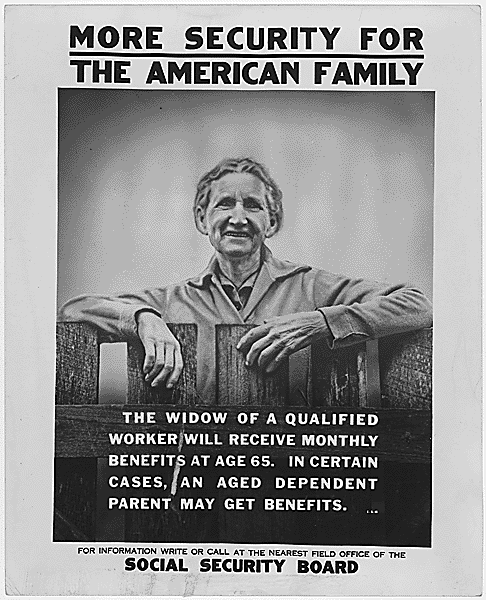
On Feb. 25, 1935, she sat behind a microphone to discuss what she entitled “Social Insurance for U.S.” In her quasi-fireside chat, she explained that Roosevelt, with this new legislation, “now pending in Congress,” hoped to provide “safeguards against ‘misfortunes which cannot be wholly eliminated in this man-made world of ours.’”
“The measures we propose do not by any means provide a complete and permanent solution of our difficulties,” she said. “If put into effect, however, they will provide a greater degree of security for the American citizen and his family than he has heretofore known. The bill is, I believe, a sound beginning on which we can build by degrees to our ultimate goal.
“We have come to learn that the large majority of our citizens must have protection against the loss of income due to unemployment, old age, death of the breadwinners and disabling accident and illness, not only on humanitarian grounds, but in the interest of our National welfare. If we are to maintain a healthy economy and thriving production, we need to maintain the standard of living of the lower income groups in our population who constitute 90 percent of our purchasing power.”
The Birth of Social Security
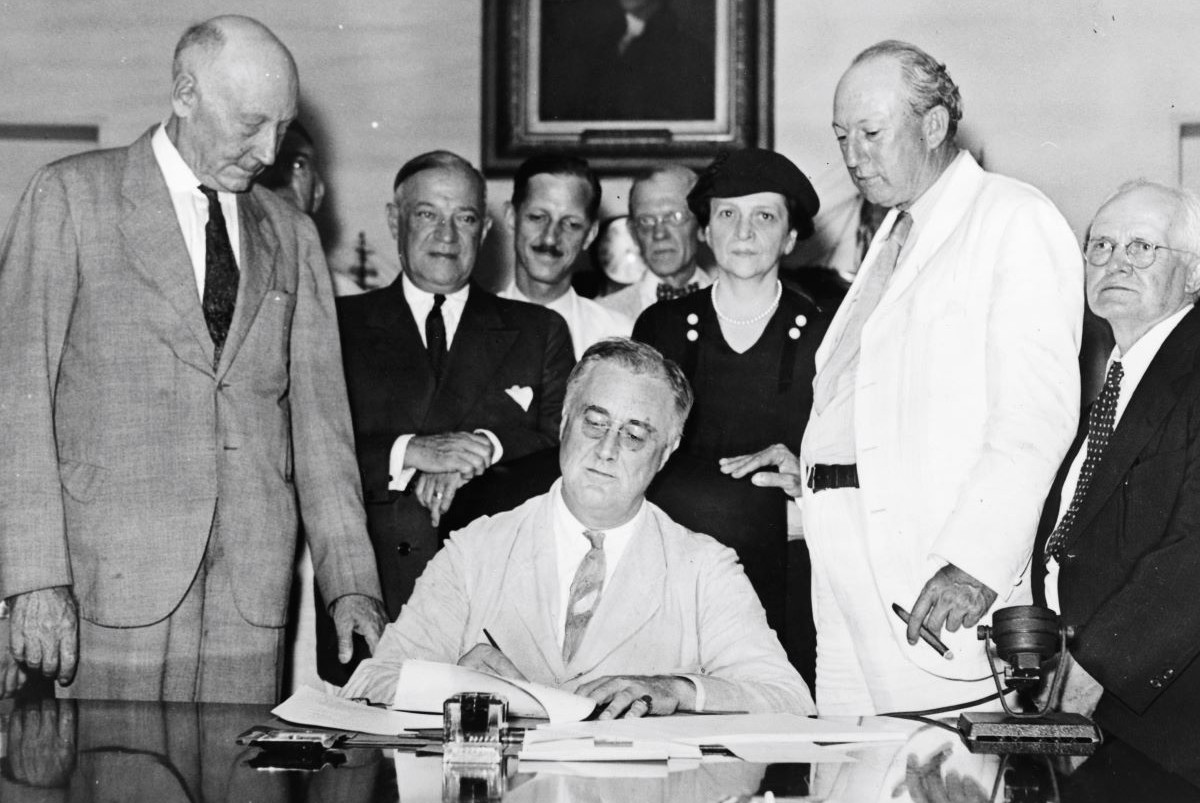
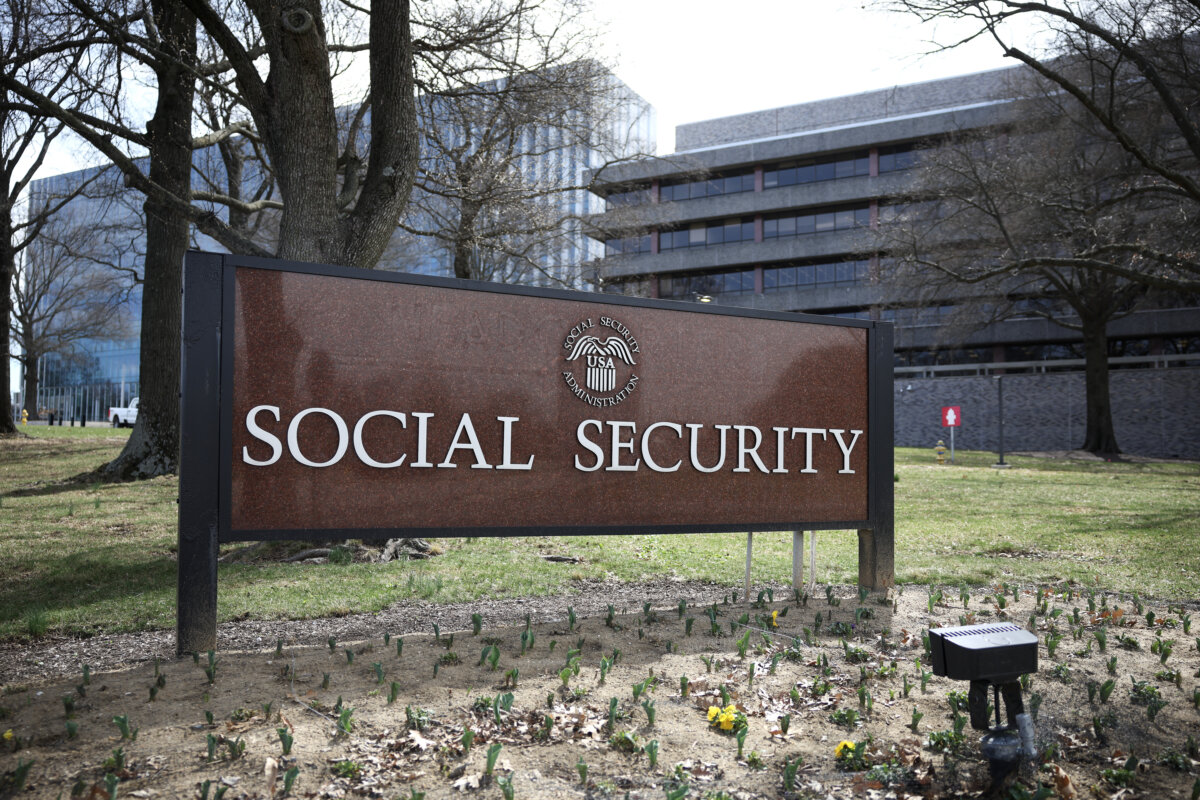
On Aug. 9, 1935, Congress passed this new piece of New Deal legislation. Five days later on Aug. 14, and during this week in history, Roosevelt signed the bill, known as the Social Security Act, into law. Over the past 90 years, unlike many of Roosevelt’s many New Deal programs, Social Security remains.
Reflecting on its passage later in life, Perkins wrote, “I’ve always said, and I still think we have to admit, that no matter how much fine reasoning there was about the old-age insurance system and the unemployment insurance prospects—no matter how many people were studying it, or how many committees had ideas on the subject, or how many college professors had written theses on the subject—and there were an awful lot of them—the real roots of the Social Security Act were in the great depression of 1929. Nothing else would have bumped the American people into a social security system except something so shocking, so terrifying, as that depression.”
According to Wilbur Cohen, who played a significant role on the CES as part of the Advisory Council and is often considered the Father of Social Security and Medicare, the Social Security Act of 1935 did something that a number of the other New Deal pieces of legislation had not done—directly affect the poor in a positive way.
“Poor families not only received income and services through the legislation, but for the first time they received conscious recognition by the federal government of their existence and plight,” he noted.
Furthermore, Cohen indicated that Social Security was able to stake a piece of political middleground, something it maintains to this day.
“Although the Act was viewed as a radical program by some conservatives and viewed as a conservative one by some liberals,” he wrote, “many political figures looked upon it as a middle-of-the-road program designed to preserve the social and economic structure of the nation, struggling in the midst of the most severe economic depression the republic had ever encountered. Thus, some individuals vigorously opposed the program, most others welcomed it, and others, while critical of some aspects, acknowledged that it was probably the best compromise available at the time within the structure of a capitalistic, free market economy and a democratic, representative legislative system.”
Never miss a This Week in History story! Sign up for the American History newsletter here.
What arts and culture topics would you like us to cover? Please email ideas or feedback to features@epochtimes.nyc