



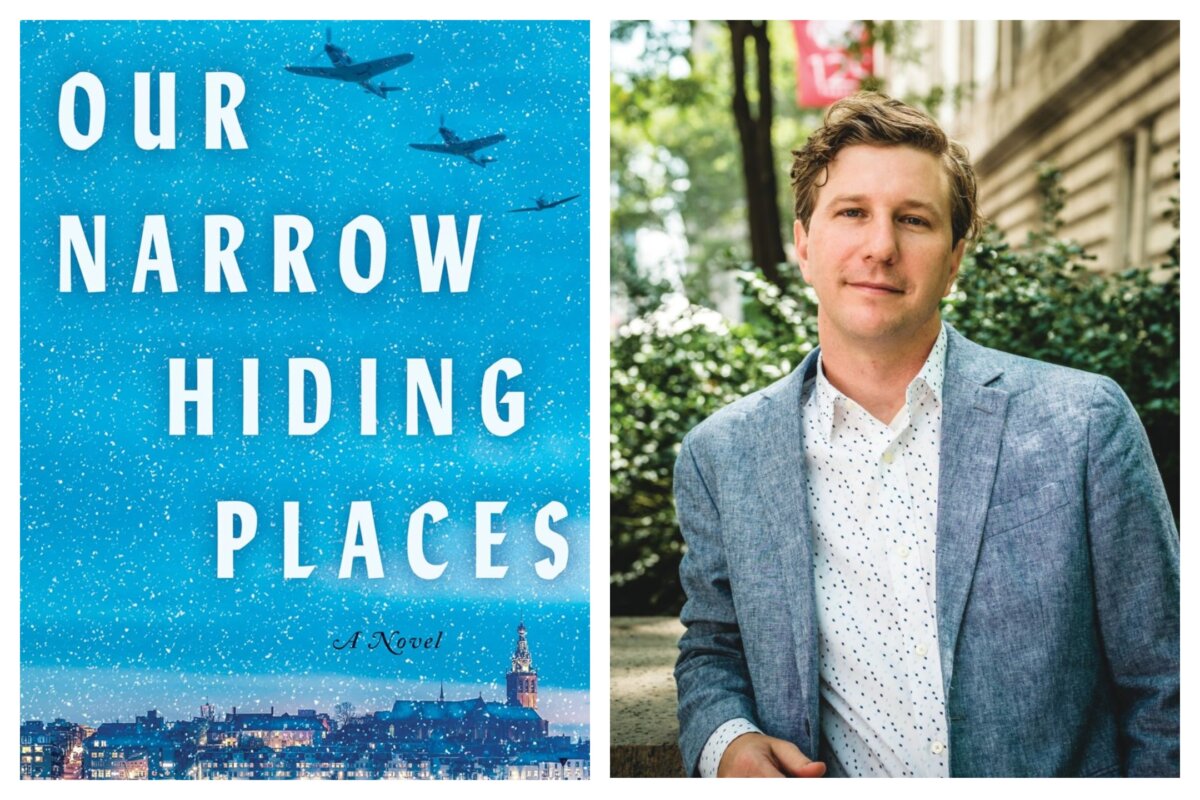
With a book title like “Our Narrow Hiding Places” and a setting in Netherlands during World War II, the first thing that comes to mind is probably the story of Anne Frank, who hid in a very narrow house. Her story is the most popular one from the Low Countries, but it’s certainly not the only one. Kristopher Jansma’s novel, loosely based on his own grandmother’s story, is set during the Hunger Winter of 1944 to 1945 and presents the war from a Dutch civilian’s point of view.
We meet 8-year-old Mieke van Menke. Her country is at war, and her hometown along the Atlantic coast of the Netherlands becomes the Germans’ air field, where it’s a straight shot to England.
We also meet a much-older Mieke (now Geborn), nicely settled along the Jersey Shore, widowed, and getting a pleasant visit from her grandson. The pair find they have similar questions. As 80-year-old Mieke wants answers to what happened to her late husband’s father during the Hunger Winter, her grandson, Dr. Will Geborn, asks the same questions about his own father—Mieke’s son—who disappeared from his life when he was just a child.
A Childhood Interrupted
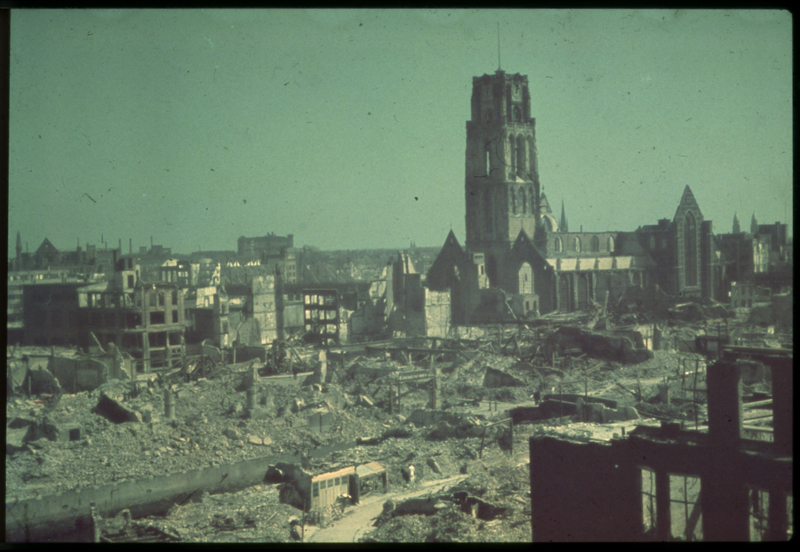
In 1941, in an apartment in The Hague, little Mieke would have been oblivious to the war if not for her friend, Rob, and his family—the Naaktgeborens. They seek refuge with her family after their place in Rotterdam was razed by the “black birds,” as Mieke calls the German planes. The only thing they bring with them is a mysterious black trunk carved with Japanese scenes, the handiwork of Rob’s grandfather, which somehow escaped damage; it hasn’t a single burn or scratch mark.
Mieke and Rob couldn’t be more different. On one hand, Rob indulges in the fantasy world of fairies and dwarves from the books his father read to him. On the other hand, Mieke is a realist and curious about the natural world around her.
Rob’s father, a Latin professor at a boys’ academy, offers to teach her how to catch, clean, and prepare an eel for cooking. The eels, according to the professor, “are mysterious creatures. They live in the water, but can cross the land among the grasses, completely hidden. … In ancient times, people believed they appeared by magic.” Though Mieke doesn’t believe in magic, she never makes fun of Rob or the professor.
One day, three years after the Naaktgeborens arrived, Rob’s father disappears, just as German soldiers pound on their door, looking for him. Mieke is mystified. When conscription is enforced, Mieke’s father and other neighbors go into hiding as well.
As the war continues, life becomes harder for Mieke’s household. With most stores closed, they rely on the food rations. Root crops like parsnips and sugar beets become their staple. The task of scrounging for more food becomes Mieke and Rob’s main task.
When what is now known as the Hunger Winter started in October 1944, finding sustenance became even harder. Food supply lines were cut, and after food rations were discontinued in January 1945, that’s when it really became every man, woman, and child for themselves.
Mieke and Rob devise systems and means to find whatever scraps of food (or anything remotely edible) that they can find: potato peels, tulip bulbs—and eels. They also have to deal with the cold. Anything they can find to burn for heat is scarce—even doors have been removed for this purpose. Though they are never placed in a concentration camp—emaciated as they have become—it seems as if they had been.
Lingering Questions
In a timeline jump to the present, Will and his wife, Teru, visit Mieke. Will and his wife are going through a difficult patch in their marriage, and, when Teru prepares to fly out to Japan to be part of a fellowship program, he is afraid that that will be the last he sees of her.
Will is also searching for answers. When he was 10, his father abruptly left him and his mother. Though he has kept in touch with his paternal grandmother, he had never had the courage to ask her what happened, until now. Will he also get the courage to finally open a mysterious trunk that had played with his imagination for years?
Coincidentally, Mieke is also handed a Dutch book by her neighbor Shoshana, a professor, who has asked her to translate it. The book reveals a once-familiar name: Naaktgeboren. Intrigued, she wonders if the book will reveal answers she once sought. She is even more fascinated when the story begins: “In the days when the rivers and streams of the Low Countries often flooded with seawater, we eels flourished.” Who is V.S., narrating in the voice of an eel?
Present-Day Problems
Despite the 20,000 who perished during the Hunger Winter, “Our Narrow Hiding Places” presents a story of resilience and survival. However, it isn’t only about WWII history. It also deals with the psychological and possible hereditary effects of trauma passed down generations.
Through Will’s character, readers are introduced to terms like medical sociology and epigenetics. This involves the study of how environmental factors and trauma may affect DNA. Though Will and Teru debate whether mental illness has “genetic factors,” they don’t make excuses or consider themselves victims of past events or their genes.
The author’s introduction of these terms seems to be exploratory. While the physical effects are obvious—Mieke was diagnosed with acute anemia at age 16, and her son and grandson suffered from this as well—the emotional and psychological repercussions are speculative. Does the trauma experienced by Mieke during the Hunger Winter somehow carry over to the following generations?
For Today’s Audiences
The author cleverly weaves together the timelines of Mieke’s childhood and her present life, as well as including Will’s viewpoint as the voice of the next generation. Excerpts from the book Mieke is reading are presented intermittently, adding a level of mystery (who wrote it?) and fantasy (Dutch folklore). The addition of these elements are rarely found in historical fiction.
A few more pages on the history of the Hunger Winter would have given additional context, but the story does open doors for amateur history enthusiasts to dive further into the other aspects of the Dutch war experience. Some of these mentioned include Operations Market Garden and Manna, and the Atlantikwall.
For readers who are interested in the topic, two actual medical studies are mentioned in the book on the effects of the Hunger Winter on DNA. Book club members will have plenty to talk about as they look at symbols, themes, and character development in the story.
Though the book is listed under the historical fiction genre, its crossover to the present time makes it relevant to the descendants of those who experienced wars, famines, and traumatic events of long ago.
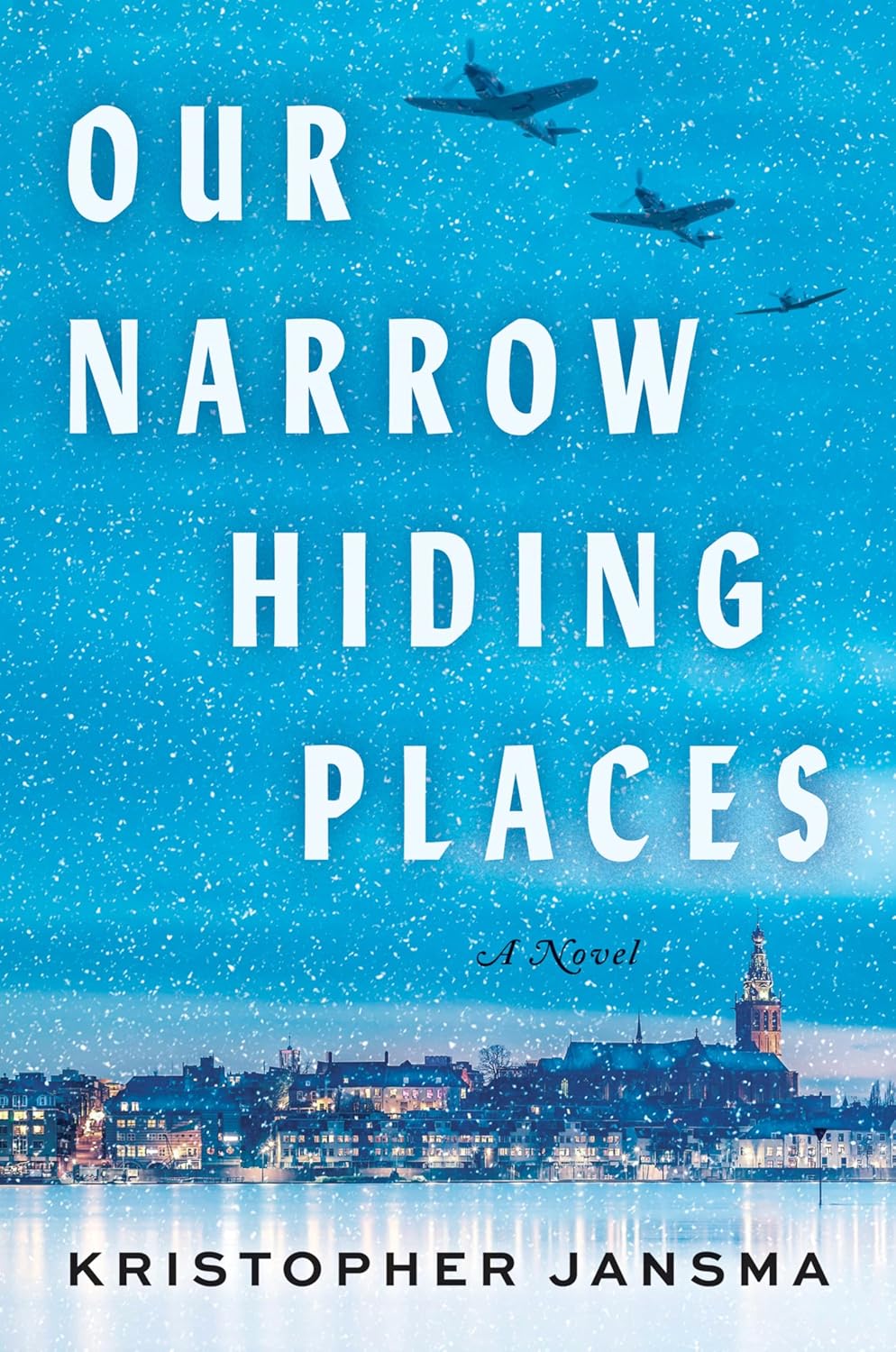
‘Our Narrow Hiding Places: A Novel’
By Kristopher Jansma
Ecco, Aug. 26, 2025
Paperback: 272 pages
What arts and culture topics would you like us to cover? Please email ideas or feedback to features@epochtimes.nyc
