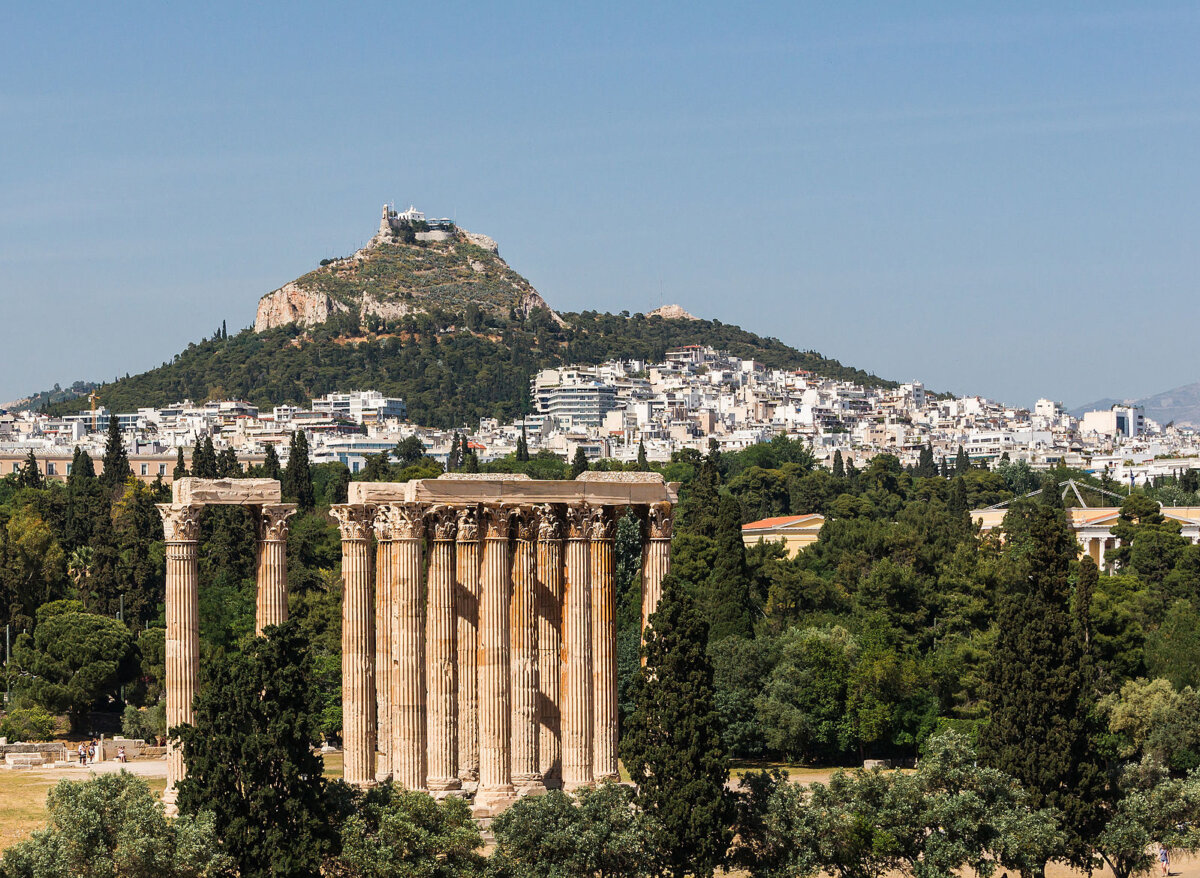
When a massive army threatened to annihilate their city, Athenians were told that only a “bulwark of wood” would save them. Confusion ensued until a creative leader shocked the world with a series of decisions that illustrate the value of bold leadership in times of need.
On the Brink of War
In 480 B.C., the Persian Empire prepared to invade mainland Greece with hundreds of thousands of troops. The Persian king Xerxes had been pillaging and destroying cities around the Greek peninsula, fomenting fear among his enemies. His goal was simple: Divide and conquer. Greece wasn’t a unified country, but Xerxes’s menace prompted the first large-scale alliance of its independent city states. Thanks to its strategic location and economic eminence, Athens became a leader of the alliance as well as the stronghold of the Hellenic world.
As was custom before and during war, Athenian authorities sought advice from the Oracle of Delphi, a virgin girl whose utterances were interpreted by an order of priests. The oracle delivered cryptic messages that, once deciphered, would help chart the best course of action for any given problem.
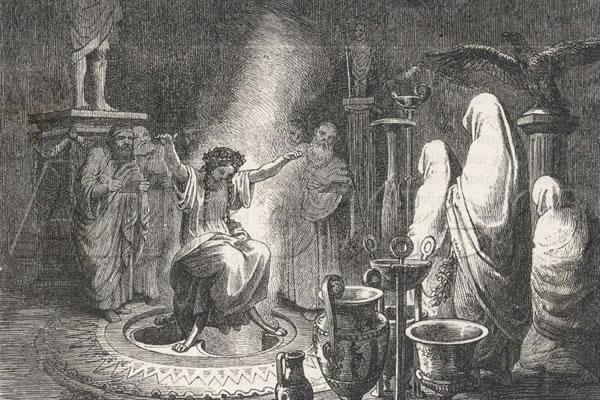 “The Oracle of Delphi Entranced” by Heinrich Leutemann. (Public Domain)
There was great uncertainty about the meaning of the oracle’s prophecy: “A bulwark of wood at the last Zeus grants to the Trito-born goddess/ Sole to remain unwasted, which you and your children shall profit.” The Trito-born goddess was Athens’s protectress Athena, who, according to some legends, was the daughter of the sea god Triton. But what about the “bulwark of wood”?
Athenians split into two camps as to the meaning of this puzzling phrase. Some offered a literal interpretation. For them, it referred to the old wooden palisades of Athens’s acropolis, which should be strengthened to withstand a possible siege. Others in this camp called for new defensive technologies, including additional physical barriers around the city.
The second, smaller group opted for a less obvious conclusion. Instead of reinforcing fortifications on land, they believed Athenians should invest in a bigger, better fleet of triremes: sturdy, three-layered ships that later became the signature vessel of Athens’s navy. The fleet should be large enough to form a moving “wall,” great for defense but also useful for offensive maneuvers against the approaching Persians.
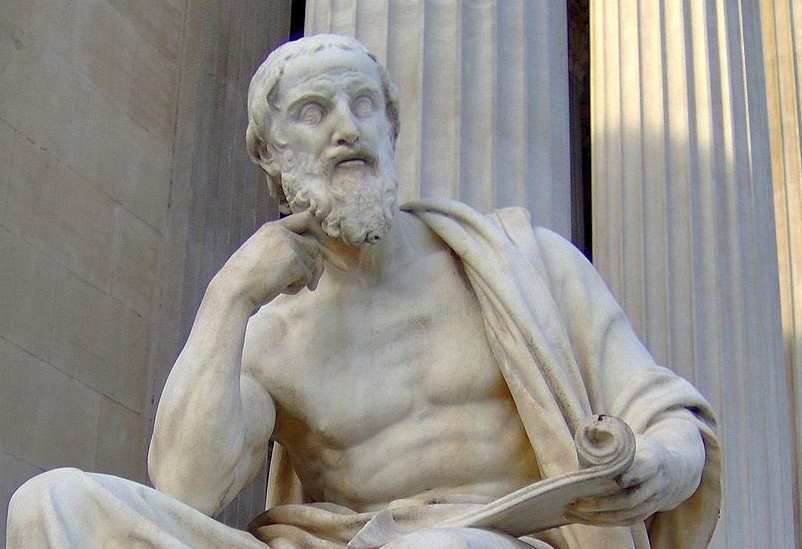 The title “Father of History” usually goes to the Greek writer Herodotus. (Public Domain)
Hesitation remained. Herodotus, the Greek historian who narrated this episode, reminds readers that uncertainty stemmed from the oracle’s final sentence: “Salamis, you the divine, you shall cause sons of women to perish/ Or when the grain is scattered or when it is gathered together.” If the wooden bulwark really referred to Athens’s navy, and if that navy was meant to fight the Persian fleet at the neighboring island of Salamis, why would the oracle prophesize death? Could that mean Athens was doomed to lose?
No interpretation inspired a decisive plan. The threat of war loomed closer and closer. Xerxes’s land troops marched steadily from northern Greece to Athens, while his navy sailed through the Aegean sea, eager to face his enemies once and for all. The Athenians wavered in fear, until one of their most skilled commanders stepped forward with a simple but crucial alternative.
A Creative Way Out
A man of modest background, Themistocles had built a large political following in the early years of Athens’s democracy, at the beginning of the 6th century B.C. His humble beginnings enabled him to sympathize with the lower class, which provided him vital support to climb the political ladder. When he was elected to the highest government office in 493 B.C., the 31-year-old devoted most of his energy to boosting his city’s sea-power. Under Themistocles’s guidance, the Athenians enlarged their fleet by hundreds of ships and built a port at Piraeus, a nearby coastal town that offered essential commercial and military advantages. The port remains one of the largest and busiest in the Mediterranean.
In keeping with his interest in Athens’s naval supremacy, Themistocles sided with those who argued that the bulwark referred to a greater Athenian naval presence. He managed to convince a majority of voting citizens that the oracle’s controversial mention of Salamis actually referred to the Persian army’s defeat, assuaging their concerns about a potential catastrophic loss. Persuaded by the commander’s rhetorical prowess, and unwilling to accept a pessimistic prophecy, Athenians accepted this interpretation.
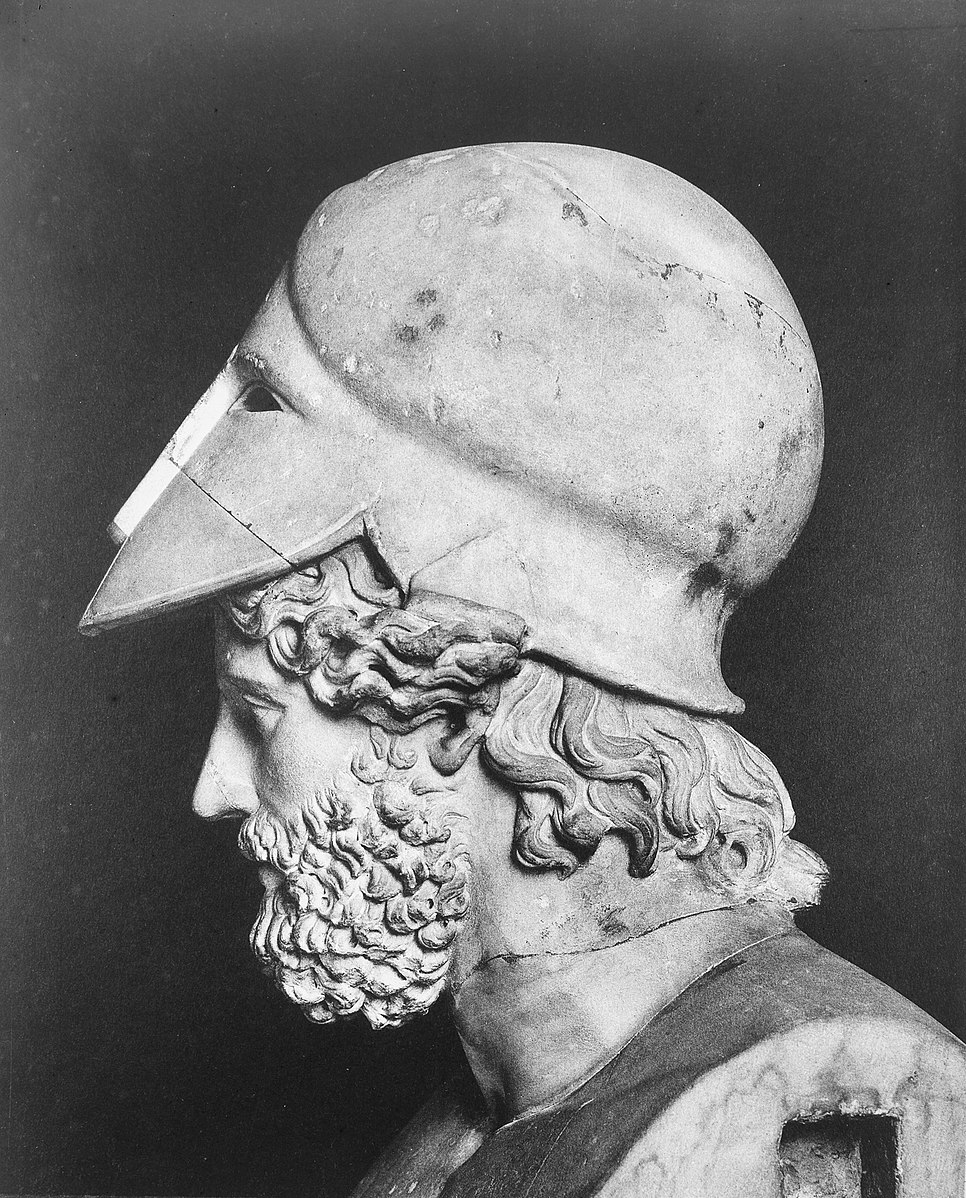 A 1926 photograph of a bust of Themistocles. (Rijksdienst voor het Cultureel Erfgoed/CC BY-SA 4.0)
A City at Sea
Part of Themistocles’s plan demanded that non-combatants abandon Athens and find refuge in the neighboring islands of Aegina and Salamis. To many, evacuating home felt like surrender. Yes, the navy promised protection. But why should they expose themselves so openly while the Persians marched steadfastly towards them?
Convinced of his and his people’s ability to endure the circumstances, Themistocles stuck to the plan. The navy escorted the city’s civilian population to safety, leaving Athens nearly empty. Once they completed this dangerous relocation, over 200 new Athenian fighting vessels joined their Greek allies to block the Persian fleet, which had learned about Themistocles’s escape plan and was on its way to Salamis. The time had come to discover what the oracle really meant.
A Crushing Defeat
Xerxes’s troops had occupied the now empty Athens, but the Athenians were safe and hopeful that they might see home again. After a series of protests by allied city states, Themistocles was able to secure executive control of the entire Greek navy. Although the Persians had more vessels, the Greek alliance now stood a chance. There were two options: retreat or face the invader.
To turn the tide in his favor, Themistocles took advantage of Xerxes’s lust for power. He sent a messenger, who told the Persian king that the dismayed Greeks wanted to surrender and invited him to sail into the strait of Salamis and claim an easy victory. Duped and overexcited, Xerxes took the bait. He sent most of his ships forth, expecting no resistance. Instead, he met a well-equipped navy ready to defend its homeland.
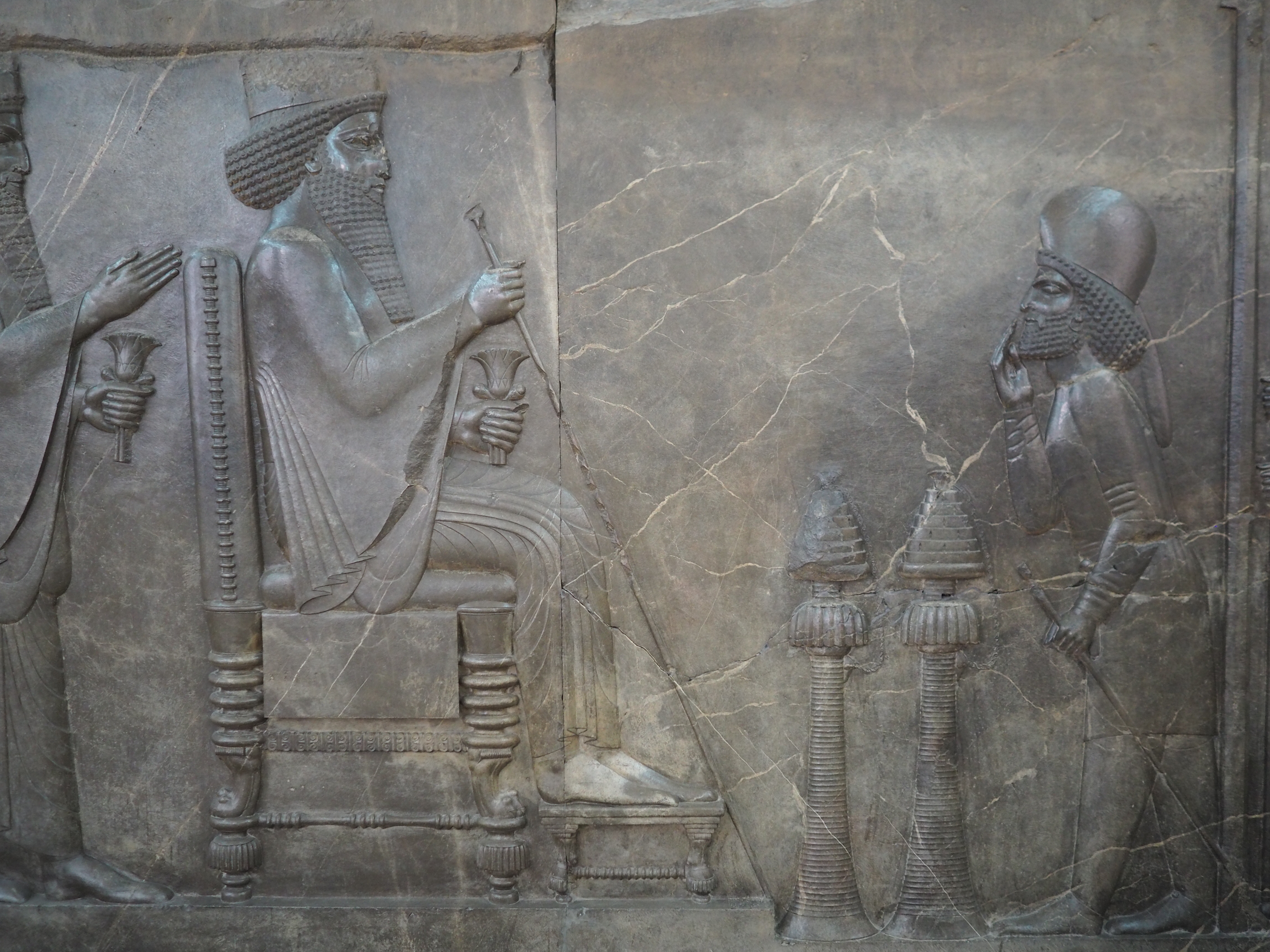 Bas-relief of King Xerxes I who served as the fourth King of Kings of the Achaemenid Empire, reigning from 486 B.C. until his assassination in 465 B.C. (Hironaka/Shutterstock)
After many deaths and exceptional efforts, the Greeks routed the Persians. Xerxes witnessed the disaster from the safety of his golden throne. He eventually ordered a desperate retreat. Themistocles had understood the oracle. That is, he did everything in his power to make sure his interpretation of the prophecy came to life. The Greek tragedian Aeschylus, who participated in the battle, later commemorated the epic victory with a play about the Persian king’s self-destructive arrogance, a reminder to the Greeks that Themistocles was a far more virtuous role model.
Risks Rewarded
By choosing to risk everything with an unconventional strategy, Themistocles saved Athens, which soon became the cultural and political beacon of the ancient world. The Athenian general thought creatively when everyone else was at an impasse. He demonstrated unwavering commitment to a carefully crafted plan, inspiring confidence in doubtful Athenians and leading soldiers through adversity with exemplary charisma. His leadership reminds us that dire times demand courage and creativity. In front of existential threats, hope should be the last to die.
What arts and culture topics would you like us to cover? Please email ideas or feedback to features@epochtimes.nyc