



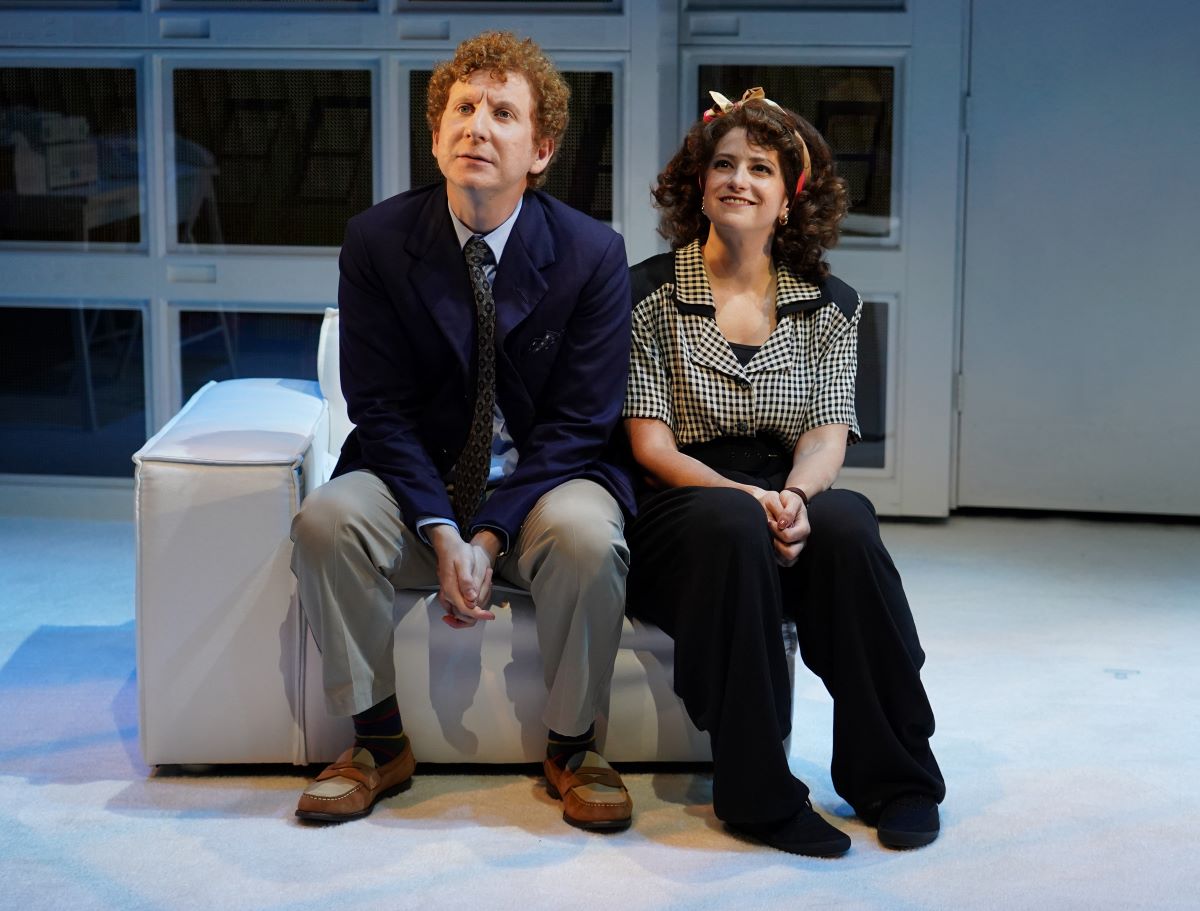
NEW YORK—The struggle to balance one’s own needs with those of a significant other can involve compromise, patience, understanding, and more than a few emotional outbursts along the way. Making this point is “Gene & Gilda,” Cary Gitter’s funny, touching, and somewhat uneven work, which examines the relationship between actors Gene Wilder (1933–2016) and Gilda Radner (1946–1989).
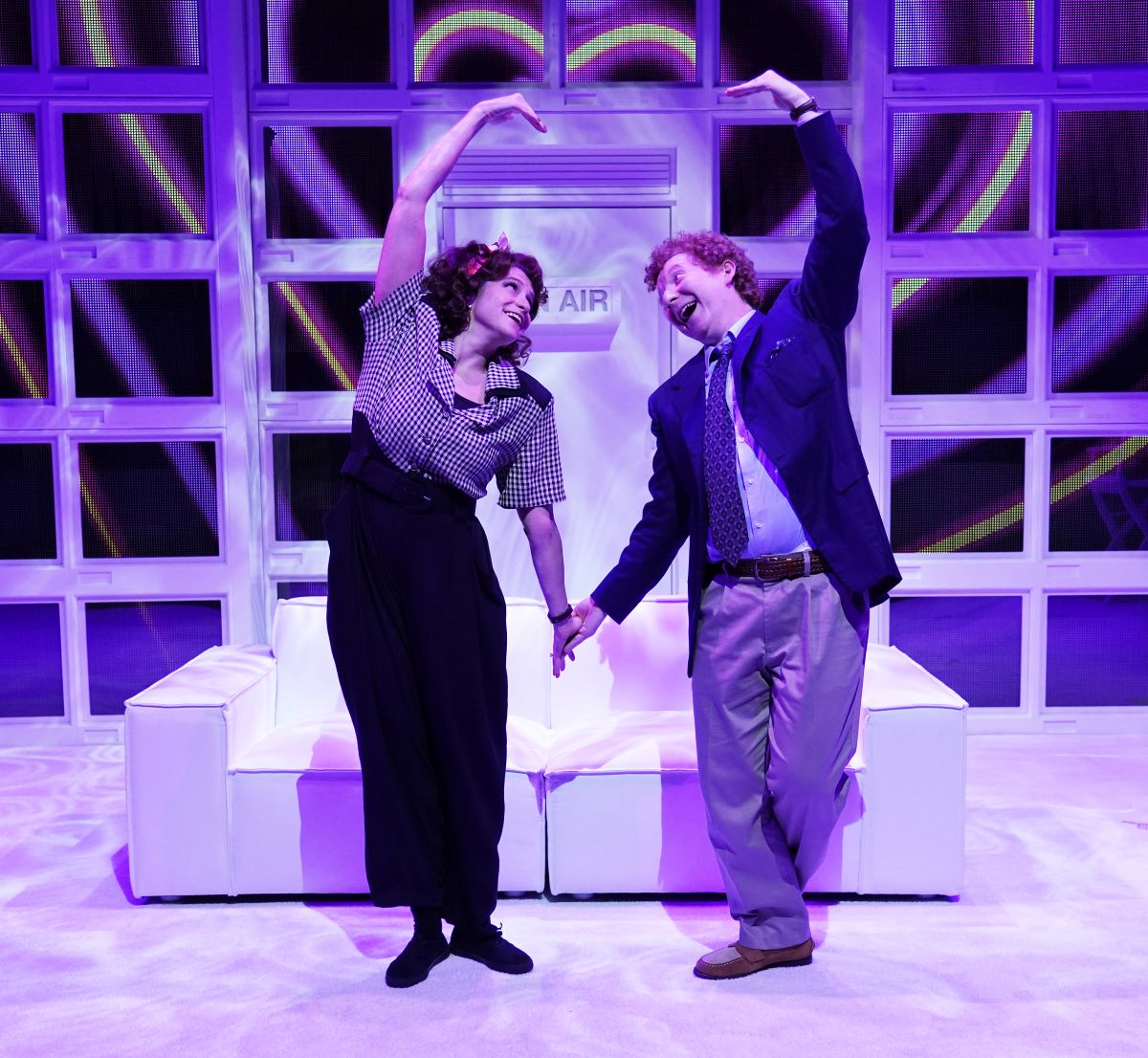
Directed smartly by Joe Brancato and punctuated with some enjoyable musical and dancing interludes, the show can now be seen at 59E59 Theaters.
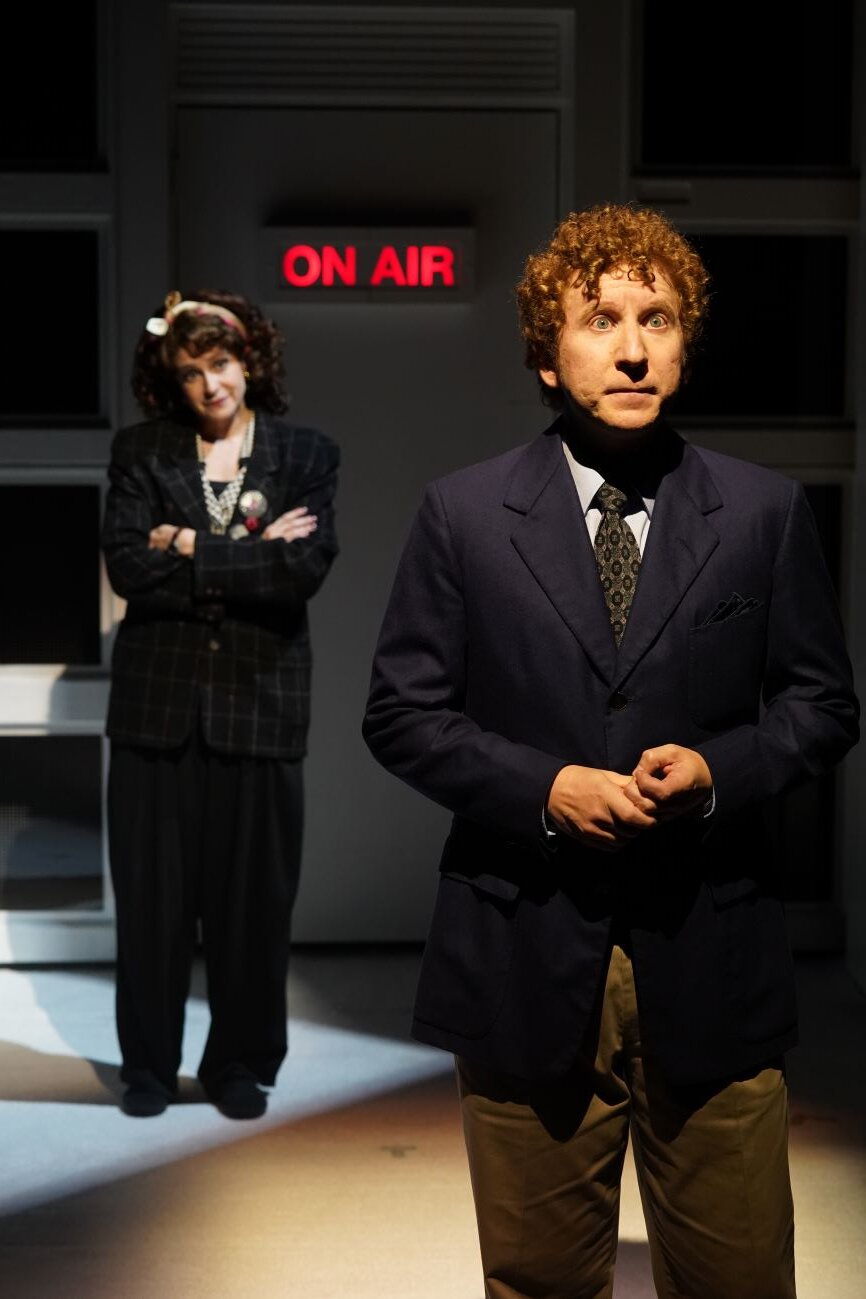
The story begins at the end, as it were, when Wilder (Jonathan Randell Silver) sits down for a live television interview with host Dick Cavett. Initially reluctant to talk about his past, especially his years with Radner, Wilder is about to get up and leave when Radner’s spirit (Jordan Kai Burnett) appears and urges him to tell their story.
With her gentle prodding, Wilder recounts their time together—from an acrimonious encounter in New York regarding a scripted scene they were planning to shoot for the film “Hanky Panky”—to how their professional interactions soon morphed into something more. The sequences that depict their ever-deepening relationship, and the ups and down that went with it, are interspersed with Wilder’s comments to Cavett (the latter present in voice only) as he looks back at these events with wistful hindsight.
Both Wilder and Radner created some indelible comic performances during their careers: Wilder, in such films as “The Producers,” “Willy Wonka and the Chocolate Factory,” and “Young Frankenstein;” and Radner, with such characters as Miss Emily Litella, Roseanne Roseannadanna and Baba Wawa on “Saturday Night Live.”
Yet “Gene & Gilda” is most effective when the story moves away from any much remembered comedic elements and delves into their relationship’s emotional aspects. In particular, it’s the baggage from the past they each carry and the travails they face as they learn to make the most of what turns out to be an all-too-brief time together.
While Radner was all too eager to jump into a relationship from the get-go, Wilder, having already been through two failed marriages, is far more hesitant. The collapse of those past unions exacerbated his already significant trust issues, a good part of those stemmed from early childhood experiences and the antisemitism he faced.
It was only after the two took a break from each other that Wilder realizes just how incomplete his life was without Radner in it, leading to his decision to fully commit to her.
As for Radner—who also has a failed marriage under her belt—her issues prove to be a mix of professional and personal ones. A good example of the former is her struggle to be taken seriously in the male-dominated world of 1980s Hollywood. This point goes back to her first meeting with Wilder on a film set. Her frustration is palpable when, despite her protests, a project she is passionate about is deemed non-releasable. The anger she feels of being typecast hits closer to home when Wilder begins working on a script that he feels isn’t right for her—though he does eventually relent on this point.
The different comic sequences presented vary from being quite funny to outright hysterical. Yet their continual use takes away from the play’s emotional heart. At the same time, it puts a wall between the characters and audience, removing the latter from the action on stage.
Another nagging issue occurs whenever Gitter drops bits of trivia into his tale, but doesn’t take them to a conclusion. For example: What happened with the film “Movers & Shakers”? Added story telling could have easily been provided by Wilder in an aside to Cavett.
Burnett is excellent as Radner; her routines showcasing Radner’s various creations are spot-on and yield multiple rounds of applause. It also helps that she has a very strong chemistry with Silver. Their time together dancing or sitting quietly on a bench in a very special location particularly bring this home. Assuming the role of the story’s instigator from her first appearance, Burnett imbues her character with an infectious personality, while never once losing her dignity, no matter the situation.
Silver has the more difficult role as Wilder, whose public persona was more suited to situational comedy rather than simply saying funny lines. However, when he does get a chance at situational comedy—such as a sequence he performs with Burnett that’s straight out of “The Producers”—he’s absolutely hilarious.
Not as close physically or vocally to his character as Burnett is to hers, Silver nonetheless does a fine job in making Wilder all too human. He has more than enough vulnerability to allow the audience to identify with him and what he’s going through.
“Gene & Gilda” is a gentle love story of two talented people who were often far different from how the public saw them. It’s not always perfect, but it’s pleasantly heartwarming, funny, and, for fans of either of the actors, definitely worth a look.
‘Gene & Gilda’
59E59 Theatres
59 E. 59th St., New York City
Tickets: 646-892-7999 or 59e59.org
Running Time: 1 hour, 20 minutes (no intermission)
Closes: Sept. 7, 2025
What arts and culture topics would you like us to cover? Please email ideas or feedback to features@epochtimes.nyc
