In 2022, the Public Theater in New York City presented “Richard III” with a nontraditional casting twist: The role of the villainous king was portrayed by black female actor Danai Gurira. Speaking about the appropriateness of this choice, Gurira reasoned that great writing “transcends culture, it transcends the specificity of the color of your skin or even gender.”
“It transcends those things,” she said. “It’s about the human experience.”
This year, a revival of “Cabaret,” set in Nazi Germany, starred three black performers in traditionally white leading roles: Billy Porter as Master of Ceremonies, Marisha Wallace as Sally Bowles, and Ato Blankson-Wood as Cliff Bradshaw. This casting, Porter said, was useful for comparing “how black people are being treated today to how Jews were treated during the rise of the Nazi Party in Germany.” London’s Broadway Buzz commented that the nontraditional casting “invites audiences to reflect on their own perceptions of race and artistry.”
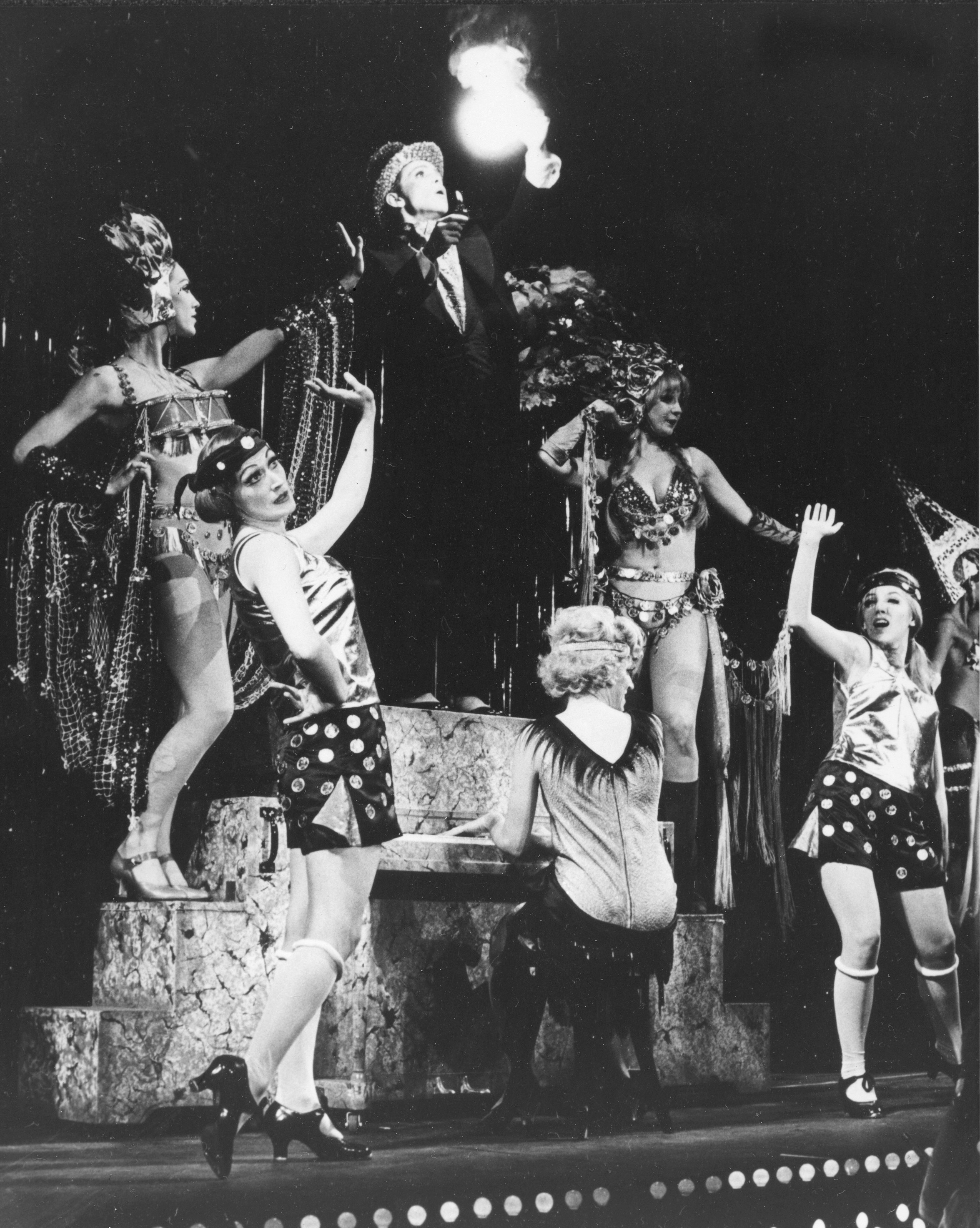 Joel Grey, in the role of Master of Ceremonies, stands on the piano during the “Money Song” at the Broadhurst Theatre in New York City in November 1966. The original Broadway musical “Cabaret” was traditionally cast. (AP)
Also this year, the Hollywood Bowl revival of “Jesus Christ Superstar” cast Cynthia Erivo, a black woman, as Jesus. This casting was seen as problematic; some labeled it blasphemous and a not-so-hidden attack on the tenets of Christianity. Yet the choice to cast Erivo as Jesus was meant to challenge traditional portrayals of Jesus as white and male, and it invited audiences to reflect on the universality of spiritual suffering and compassion. As Adam Lambert, who played Judas in the production, said, “shouldn’t the teachings of Jesus transcend gender?”
I welcome the risk-taking that defines these productions. I think it is exciting that theater producers are looking beyond traditional portrayals to make deeper points about theme, character, and theater’s potential to depict our shared humanity regardless of time and place. I think that we need to embrace and continue the trend.
However, I believe that we should consider more than just the few works mentioned above or those of Shakespeare, whose plays have been interracially cast for years. Perhaps we can consider applying the same set of standards as those employed in the aforementioned productions to an American theatrical treasure.
A Possible Piece to Reimagine
One might consider a number of excellent candidates from the American theater canon, and some have already been cast unconventionally.
Black actor Blair Underwood played Stanley Kowalski in Tennessee Williams’s “A Streetcar Named Desire” in a 2012 Broadway revival. In 2017, the Pulse Theatre in Chicago presented Edward Albee’s “Who’s Afraid of Virginia Woolf” with black actors playing George and Martha. In 2020, the WaltersWest Project and Fort Point Theatre Channel in Boston staged Eugene O’Neill’s “Long Day’s Journey into Night” with an all-black cast. And Arthur Miller’s “Death of a Salesman” sported a black Willy and Linda Loman in the 2022 Broadway revival.
There are other uniquely American classics we might consider, some of which have also featured interracial casting, such as the 2024 Broadway revival of “Our Town.” Of course, there’s also “Hamilton,” which casts actors who are black, indigenous, and people of color in the roles of historically white characters in order to make a salient point about race and Alexander Hamilton’s standing as an American immigrant.
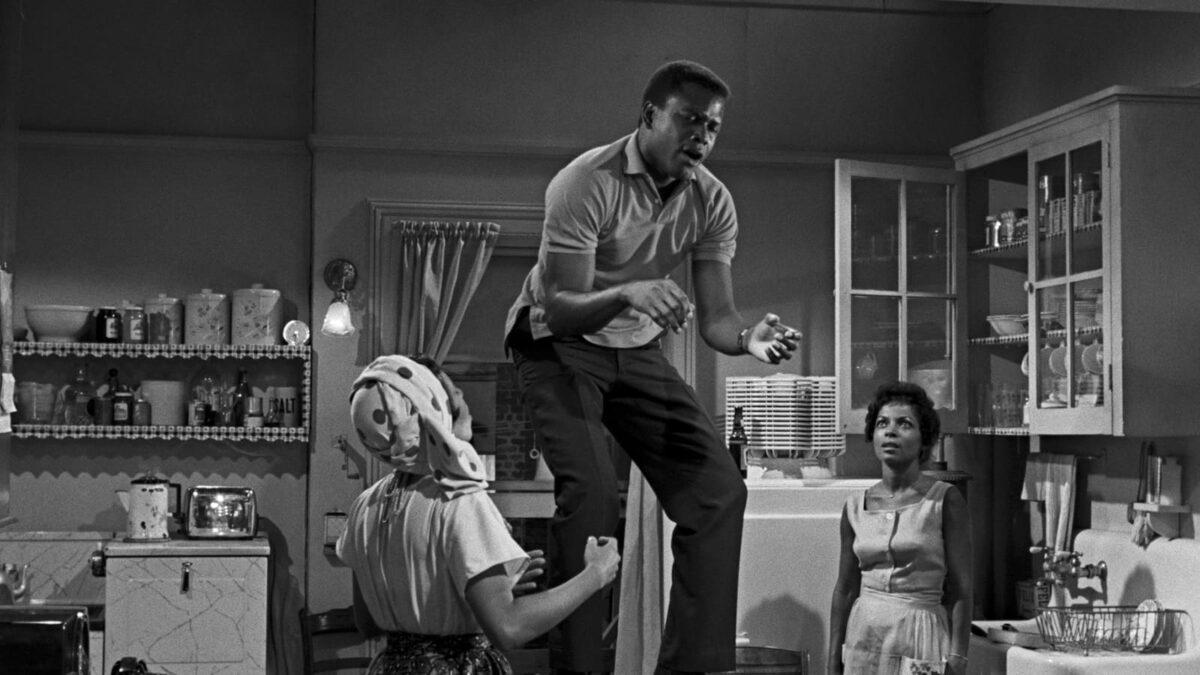
I would like to propose Lorraine Hansberry’s masterpiece, “A Raisin in the Sun,” as a leading candidate for this kind of theatrical experiment, a play that has never been interracially cast in a major production. The play’s conflict centers on the Younger family, working-class black residents of Chicago’s South Side, as they await the arrival of a $10,000 life insurance check after the death of the family patriarch.
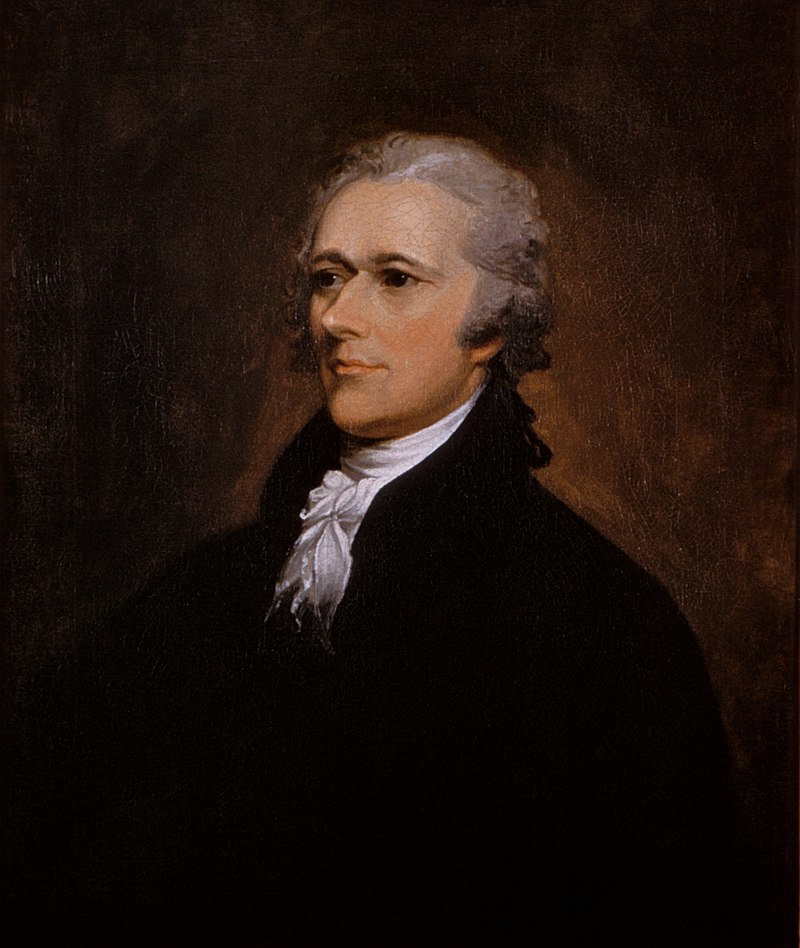 A portrait of Alexander Hamilton, 1806, by John Trumbull. (Public Domain)
The family matriarch, Lena, wants to use the money to buy a house in a better neighborhood, while her son, Walter Lee, wants to invest the money in a liquor store to secure a better future for his wife, Ruth, and their young son, Travis. Lena’s daughter, Beneatha, wants to use the money to further her education and become a doctor.
Ultimately, Lena’s choice is to put a down payment on a house in a predominantly white neighborhood, greatly disappointing Walter Lee (who loses some of the inheritance in a business deal gone wrong). The family’s sense of unity and dignity is tested when Mr. Lindner, a white representative of the neighborhood to which Lena wants to move, comes to offer the Youngers a substantial sum of money to not relocate. Lena refuses and the family looks forward to their new house and new life away from the South Side.
I believe that we can extend the reach and power of Hansberry’s famous play as a transcendent work and universalize its themes of deferred dreams, family obligations, and the fight against bigotry. “A Raisin in the Sun” premiered on Broadway in 1959, a time of heightened racial tensions in the United States, and was immediately hailed as a critical and popular success. Theater critics at the time recognized the universality of the play regardless of race. Hansberry agreed, saying, “I don’t think there is anything more universal in the world than man’s oppression to man.”
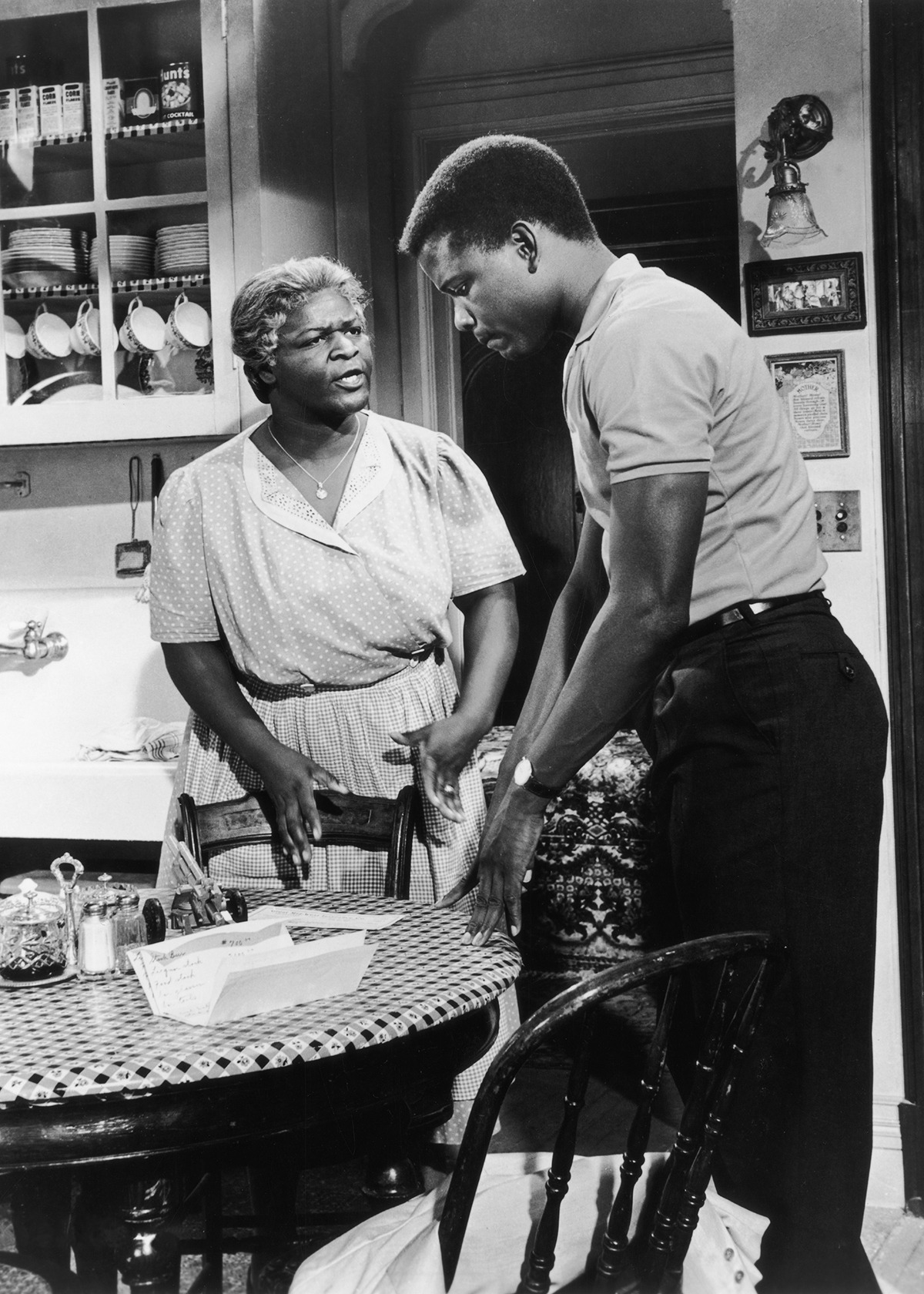 (L–R) Lena (Claudia McNeil) talks with her son, Walter Lee (Sidney Poitier), in the film version of “A Raisin in the Sun.” (MovieStillsDB)
She further qualified her general agreement by saying, “One of the most sound ideas in dramatic writing is that, in order to create the universal, you must pay very great attention to the specific.” She was, of course, referring to the precise location of the play, its milieu, and its inhabitants: Chicago’s South Side.
Sixty-six years ago, “A Raisin in the Sun” won the New York Drama Critics’ Circle Award for Best Play of the Year. It has stood the test of time as an American theatrical and literary gem and is performed regularly at colleges and regional theaters.
The greatest obstacle to considering “A Raisin in the Sun” for multiracial casting is, of course, the issue of race itself. There’s no escaping the fact that the play tackles the shameful way blacks were treated in this country at the time of its premiere and for many decades before that. But the specific conditions that gave birth to the play do not overshadow the universal messages it espouses.
Just as Mary Tyrone’s longing to fade from the reality of lost opportunities in O’Neill’s “Long Day’s Journey into Night” and Willy Loman’s feelings of displacement in a modern world that has no place for his old-fashioned ideas in Miller’s “Death of a Salesman” transcend their historical contexts, so, too, do Walter Lee and Lena Younger’s yearning to better their lives.
Just as “A Streetcar Named Desire” can be situated someplace other than New Orleans—some productions have set the play’s action in different urban environments—Hansberry’s Chicago could perhaps be Appalachia or one of the small rural communities dotting the U.S. landscape. And just as the Jesus Christ of Andrew Lloyd Webber’s musical can be depicted in a way we are not all familiar with, Hansberry’s Youngers could be a family of whites, Hispanics, Asians, or even a multicultural group.
To be sure, some lines would need to be tweaked, as they reflect the shared experiences of mid-20th-century U.S. blacks but may not resonate in quite the same way in the 21st-century United States.
Consider Walter Lee’s lines chastising his wife: “That is just what is wrong with the colored woman in this world. Don’t understand about building their men up and making ’em feel like they somebody. Like they can do something.”
Might not a contemporary audience feel that his words can speak for men of any race, in any place? The line is easily changed—by removal of the antiquated word “colored”—to be more inclusive.
Indeed, racially tinged remarks seem almost incidental to the play’s more common, poignant declarations about identity, family, and the conflicts between generations (“Once upon a time freedom used to be life—now it’s money,” as Lena says to Walter Lee). Better for the play to take on new layers of meaning for contemporary audiences than simply remain stuck in its specific time period.
Regardless of how it is cast, the play’s message and themes remain intact. The speaker’s skin color is insignificant in the light of such powerful lines. Consider Walter’s line “I am a giant surrounded by ants!” Or consider this line from Lena: “There is always something left to love. And if you ain’t learned that, you ain’t learned nothing.”
Rather than complain about contemporary adaptations of well-known plays, we must embrace the trend to re-establish these works as timeless literary masterpieces. If they are to speak to future generations, it will have to be through the transmission of the realities of our shared humanity throughout time and space and not the temporary conditions (no matter how horrifying) that gave master playwrights such as Hansberry the impetus to put pen to paper.
What arts and culture topics would you like us to cover? Please email ideas or feedback to features@epochtimes.nyc.