



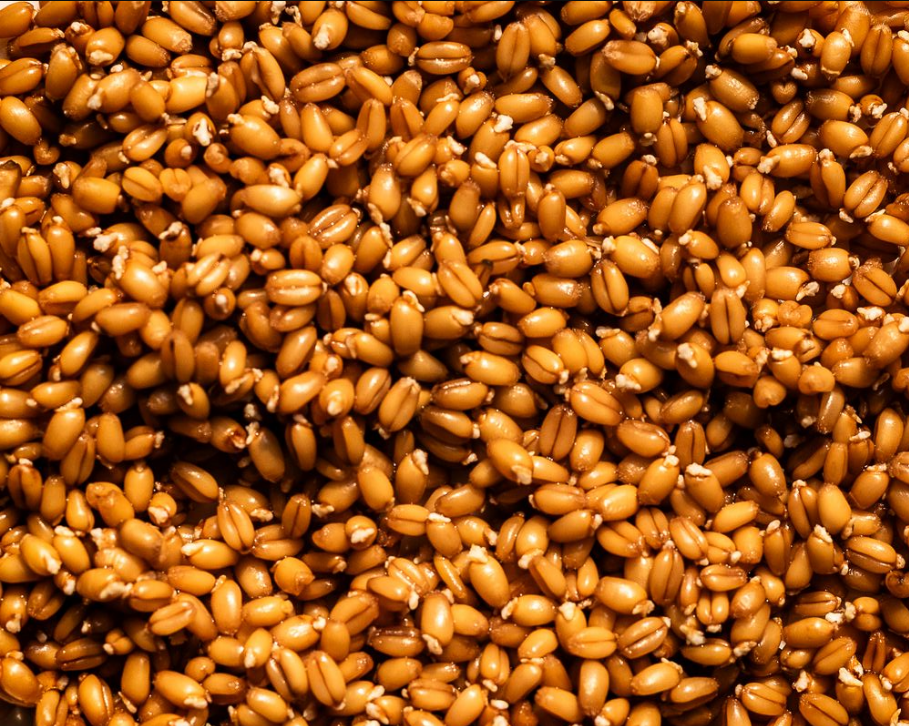
Every seed holds the promise of new life, lying dormant until the right conditions allow it to grow. Consider a jar of wheat berries sitting on the counter. At first they seem unremarkable, but with fresh water and a little care, those kernels swell before splitting ever so slightly to reveal the tiniest of white shoots. It’s an ordinary sort of miracle—the transformation from seed to sprout. Sprouting grains does more than awaken the silent life within a kernel of grain. It also increases key nutrients in whole grains and invites us to slow down and take our time in the kitchen.
Sprouted grains are simply cereal grains, such as wheat, rye, spelt, and even rice, that have just started to germinate. Sprouted grains are harvested and prepared early when the root tip barely emerges and before the sprouts grow green and leafy. This process sets them apart from ordinary whole grains, which remain dormant, although they’re similar to malted grains used in brewing and artisan baking, which are allowed to germinate a little longer before they’re dried, roasted, and ground.
Cereal grains such as wheat, rye, einkorn, spelt, and rice sprout easily, as do many pseudocereals such as buckwheat and quinoa. You can use sprouted grains in breads and some pastries, where they lend a chewy texture and subtle, sweet flavor. They’re also excellent in porridges and breakfast bowls. While sprouting grains was once the domain of ardent whole foods enthusiasts, you can now find many sprouted grain breakfast cereals, crackers, and breads lining grocery store shelves.
How to Sprout Grains
The process itself requires little more than grains, water, and care. Start by soaking grains overnight in warm water. Drain them the next day, and then set them in a fine-mesh sieve or a mason jar fitted with a mesh lid. Keep them moist, but not waterlogged. Then rinse and drain them twice a day for two to three days. You’ll see the beginning of a sprout—just a wisp of a creamy white root emerging from the tip of each grain. That’s your sign the grains are ready for cooking, baking, or drying and grinding into flour.
While sprouting grains is easy, it doesn’t always go perfectly. If you see a fuzzy film on your sprouts, or if they begin to smell sour, it’s wise to discard them. Sometimes, grains are too old to sprout, so make sure you’re buying them from a quality source. Still, navigating these common pitfalls is part of the learning curve. As long as you’re using quality whole grains and keeping things tidy, your grains should sprout beautifully.
What begins as a small kitchen project carries remarkable nutritional benefits. Sprouting activates enzymes that help break down starches and proteins, which may make them easier to digest for some people who struggle with whole grains. Sprouting also increases B vitamins and vitamin C and improves the bioavailability of minerals such as iron, zinc, and magnesium. Moreover, sprouted grains tend to sit low on the glycemic index and may help support better blood sugar balance than refined grains.
In the kitchen, sprouted grains offer vibrant versatility. You can enjoy them freshly prepared or dry them for longer storage. Fresh sprouts can be pulsed briefly in a food processor and simmered with milk and water for a hearty porridge, or worked into bread dough to add dimension, texture, and flavor. They can also be boiled like other grains—though they cook more quickly—and folded into grain bowls.
To make sprouted flour, dehydrate the grains at a low temperature (about 120 degrees F to 135 degrees F), then store them in tightly sealed jars before grinding them as needed. Sprouted flour performs beautifully as a one‑to‑one replacement for whole‑grain flour, and you can also swap in about a third of it for white flour in recipes for your favorite baked goods to boost nutrition without dramatically changing texture.
Sprouting may take a little time and patience, but it offers sound nutrition, delicious flavor, and hearty baked goods in return. You can visit your local natural market to buy whole grains in bulk or purchase them online, and then set them in a jar with a little water to soak. After a few days of rinsing and draining the grains, you’ll be able to watch life unfurl in real time. Then, all you need to do is cook.
Where to Find Sprouted Grain Products
One Degree Organics sells a wide variety of sprouted grain breakfast cereals, breads, granola, and oatmeal and is available in most grocery stores.
Granite Hill Farms sells sprouted grain baking mixes, flour, and dried sprouted whole grains. You can purchase directly from their website.
Second Spring Foods sells a variety of sprouted flours as well as baking and pancake mixes. You can purchase directly from their website.
