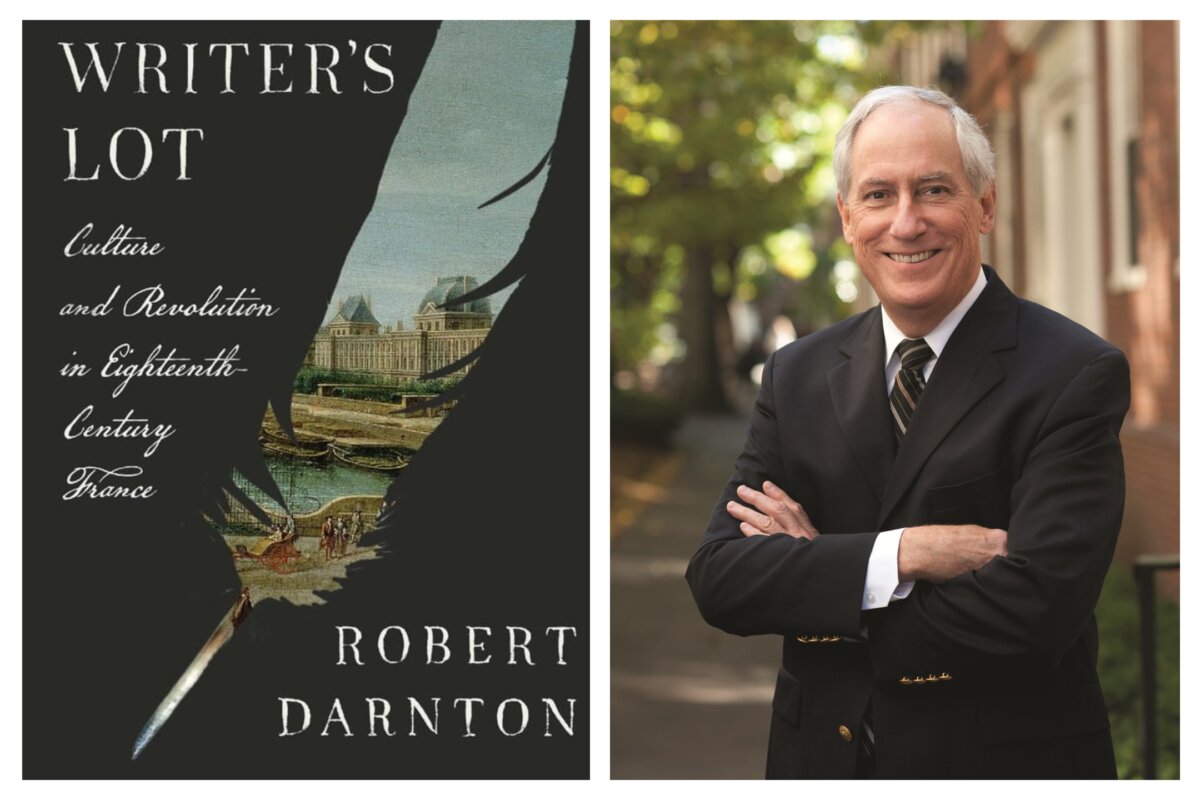
Robert Darnton has presented an intriguing and enlightening (no pun intended) work on the literati of 18th-century France. The author is also up-front about what the book is and is not, based on the parameters of its size and scope. He wrote that his book “is meant as an essay, not a treatise—that is, as an attempt to try out an argument, to interpret a familiar subject in an unfamiliar light.”
This “unfamiliar light” shines brightly in his new book, “The Writer’s Lot: Culture and Revolution in Eighteenth Century France.” The “familiar subject” is the writers of the French Revolution, but the interpretation follows the lives of three writers from pre-revolutionary and revolutionary France, how their works were viewed, accepted, and, most importantly for those individual writers, where their financial backing came from.
The idea for the book came from an assignment Darnton wrote for Paris’s Institute for Advanced Studies. The objective was to critique one of his past works. He chose his 1971 piece, “The High Enlightenment and the Low-Life of Literature in Pre-Revolutionary France.”
Darnton’s Self-Critique
Darnton is a leading light on French cultural history. He’s also the Carl H. Pforzheimer University Professor and the Director of the University Library, Emeritus, at Harvard University. His candidness about one of his early works that still “occupies a central place in histories of the origins of the French Revolution” is part of what makes reading this book enjoyable. Revisiting this 50-plus-year-old work, Darnton has no issues with pointing out his historical faux pas, and correcting them. In a sense, one sees a bit of revolution in Darnton’s evolution as a cultural historian from his youth to today.
 Robert Darnton at the Espirit magazine roundtable “Books and Magazines in the Digital Age.” (Titlutin/CC BY-SA 2.0)
From reading the introduction of “The Writer’s Lot,” which is where he cites his errors, one can almost view the chuckle (or perhaps even horror) he felt noting some of the his classic youthful oversteps. For example, the author noted:
“If I could expunge anything from my early publications, I would delete those ‘must haves.’ How can I know what (Jacques-Pierre) Brissot must have thought and felt? In speculating about Brissot’s inner life, I went beyond the bounds of the evidence and indulged in gratuitous psychologizing.”
The introduction is lengthy, but not in a bad way. It’s instructive and, thanks to Darnton’s exceptional skill as a writer, entertaining and smooth reading.
Three French Writers
The three writers he follows are André Morellet, Baculard d’Arnaud, and Pierre-Louis Manuel. Their careers begin in three separate echelons: for lack of better terms: upper, middle, and lower, and in that order.
Darnton acknowledged the shortcomings of anecdotal evidence, but, having spent his life studying the French era and its writers, suggested:
“The story of writers and writing can be followed by tracing the careers of our three authors after July 14, 1789 (Storming of the Bastille). The concrete details of their experience show how the literary world was transformed for those who lived at the heart of it.”
The author presents a rather clear pattern for success from these writers, especially in the pre-revolutionary years. The road to literary success seemed contingent upon finding a patron, writing on behalf of a political or economic platform, connecting with salons, and receiving a pension or sinecure. Interestingly, being thrown into the Bastille seemed a definite way to boost one’s credentials.
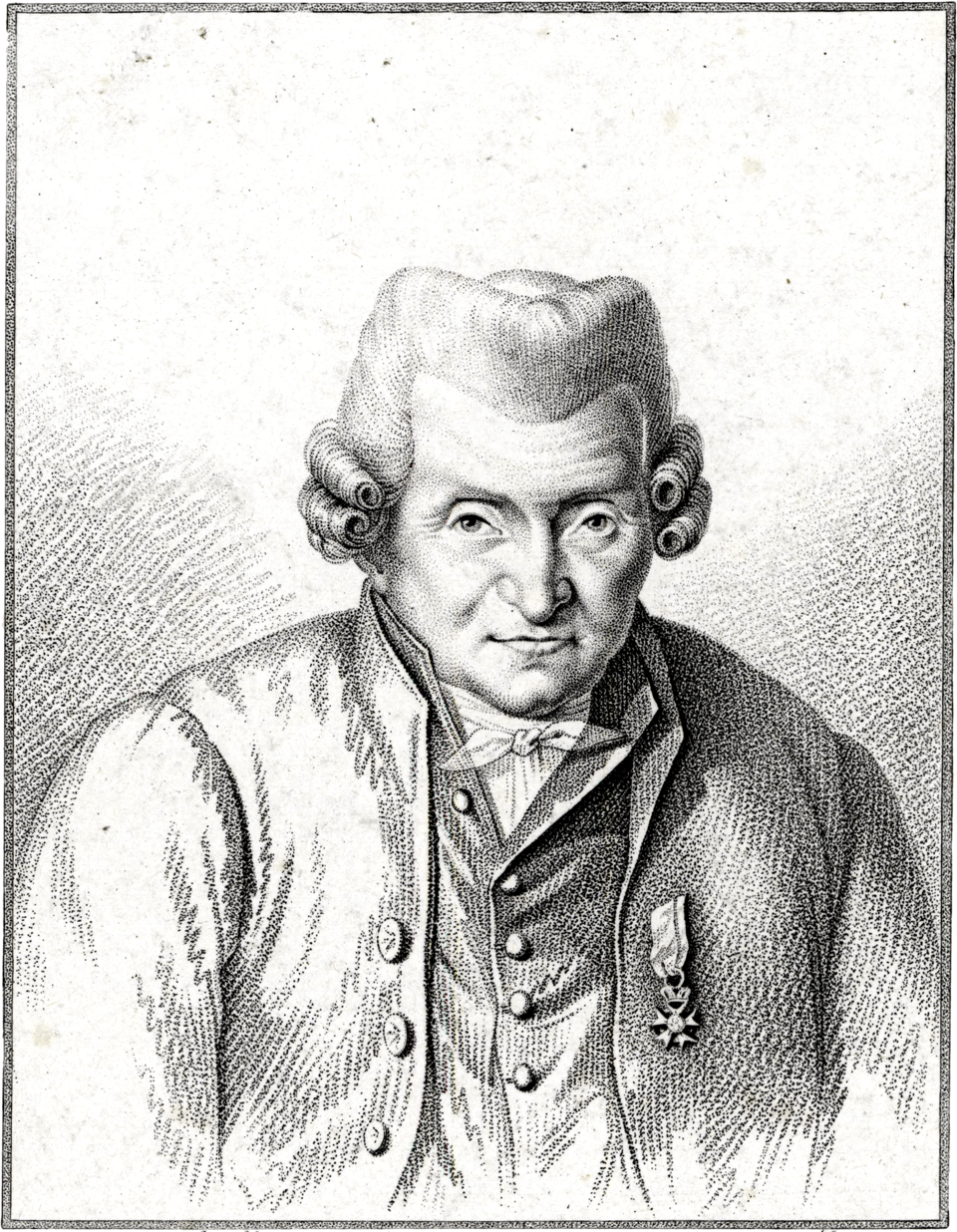 A portrait of André Morellet, 1822, by A.B. Massol. Lithograph. 8 3/5 inches by 5 11/12 inches. National Library of France, Paris. (Public Domain)
The author digs into the fortunate and unfortunate aspects of each of these three authors, all of whom joined a growing French population of writers who hoped to make a living by their pens.
Morellet, the upper-echelon writer, proved a major success as a propagandist. In Morellet’s defense, Darnton states it’s unfair to call him a propagandist since he actually believed the propaganda he was writing.
The middle-range writer d’Arnaud connected with prominent French Enlightenment philosopher and writer Voltaire—another method that could lead to literary success. He was put in a position to write for Prussia’s Frederick II. Ultimately his career took a slight tumble, but he found middling success as a writer of depressing romance novels, though he wrote so many of these works that, Darnton admitted, “his output can only be estimated.”
Then there is Manuel of the lower range, or as the book identifies him, “a hack.” During the pre-revolutionary era, d’Arnaud was merely eking by and produced nothing of note. By the start of the Revolution, Manuel is “poor and bitter.”
The Literary World Turned Upside Down
The French Revolution flipped everything upside down, including the literary world. The talented and wealthy were practically expunged, while the middling writers and “hacks” were elevated, as long as they found themselves on the right side of the Revolution. These anecdotal pieces of historical evidence are insightful and certainly ring true for those who have studied the Revolution.
These three authors’ worlds were altered completely. Morellet, the one influential and wealthy writer, had both his power and money whisked away. D’Arnaud, the middling writer, remained middling, a once and always invisible man. The polar opposite of Morellet, the “hack” Manuel found himself elevated in the power vacuum by joining the Jacobin Club, making inflammatory speeches, and buying in with the revolutionaries.
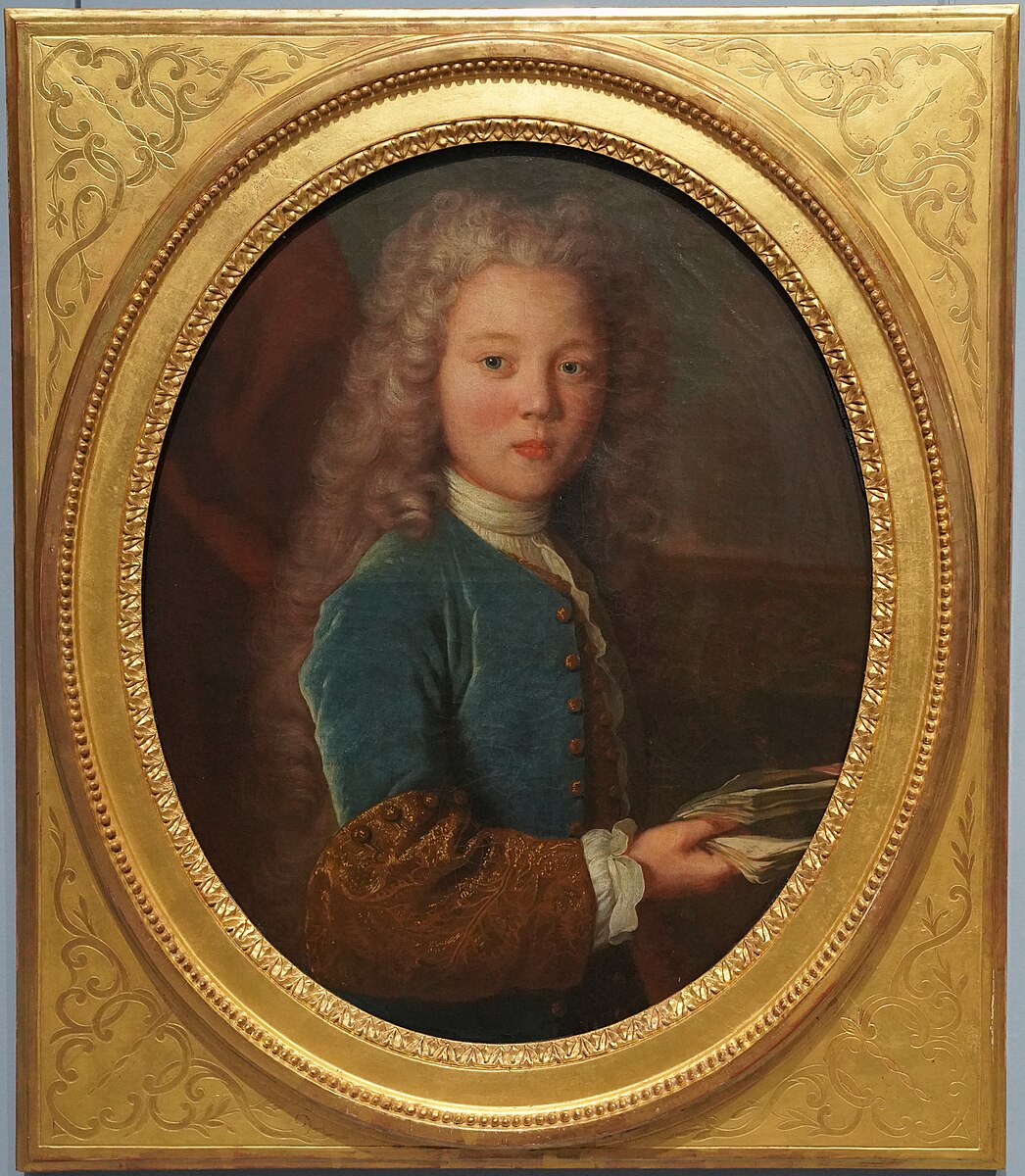 A portrait of Baculard d’Arnaud Anonymous. Saint-Loup Museum, Troyes, France. (Gérald Garitan/CC BY-SA 4.0)
To accompany these three writers, Darnton noted that the massive alterations in the French literary world were all-consuming. His literary population charts, categorized by occupation and time period, demonstrate the seismic and immediate shift in power and influence. Nonetheless, as the book indicates, writers remained a necessity.
Writers (Still) Needed
“To the people in the midst of it, the French Revolution tore apart a familiar world and left them with the need to make sense of a new order that was confusedly coming into being,” d’Arnaud wrote. “That task fell to the intellectuals—that is, to the people who had a way with words.”
Darnton noted that from 1789 to 1799, more than 1,300 newspapers were created and thousands of pamphlets poured into the public. He added that the Revolution “created an intellectual pedigree for itself by putting Voltaire and Rousseau in the Pantheon, but it produced no great writers of its own.”
Additionally, the author claimed that “the literary elite from the ancien régime was replaced by new men, who had languished in obscurity before 1789 and who seized control of the new media afterward.” These were mainly journalists and pamphleteers, among them the villainous Robespierre.
 A portrait of Pierre-Louis Manuel, between 1791-1793, by Joseph Ducreux. Palace of Versailles, Versailles, France. (Public Domain)
Impressive and Enjoyable
“The Writer’s Lot” proves an impressive and enjoyable read about what France became known for: its intellectuals, and, at least for a brief spell, those who wished to be its new intellectuals.
Perhaps brevity was an inevitable part of the French Revolution, and therefore its new intellectuals. As the Revolution convulsed and flipped societal roles and decimated institutions, it also charted the common path of consuming its own. Just as Robespierre was guillotined for going too far, Manuel was, oppositely, guillotined for not going far enough; he was against executing the king.
I thoroughly enjoyed this book for numerous reasons. Darnton’s literary skill makes for easy and clear reading. The topic—literature and the French Revolution—is intriguing on its face. And, the method of using three writers as case studies “as an attempt to try out an argument, to interpret a familiar subject in an unfamiliar light” was both brilliant and effective. For anyone interested in these subjects, or wanting a quick glimpse at the French Revolution, but from an unconventional vantage point, “The Writer’s Lot” is a wonderful choice.
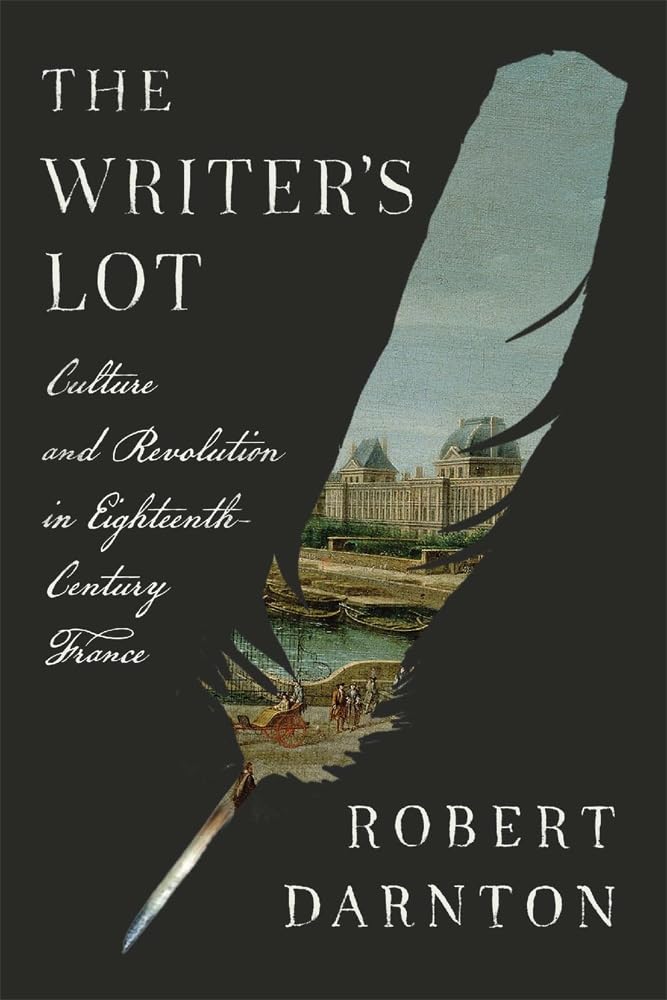
‘The Writer’s Lot: Culture and Revolution in Eighteenth-Century France‘
By Robert Darnton
Belknap Press: May 13, 2025
Hardcover, 280 pages
What arts and culture topics would you like us to cover? Please email ideas or feedback to features@epochtimes.nyc