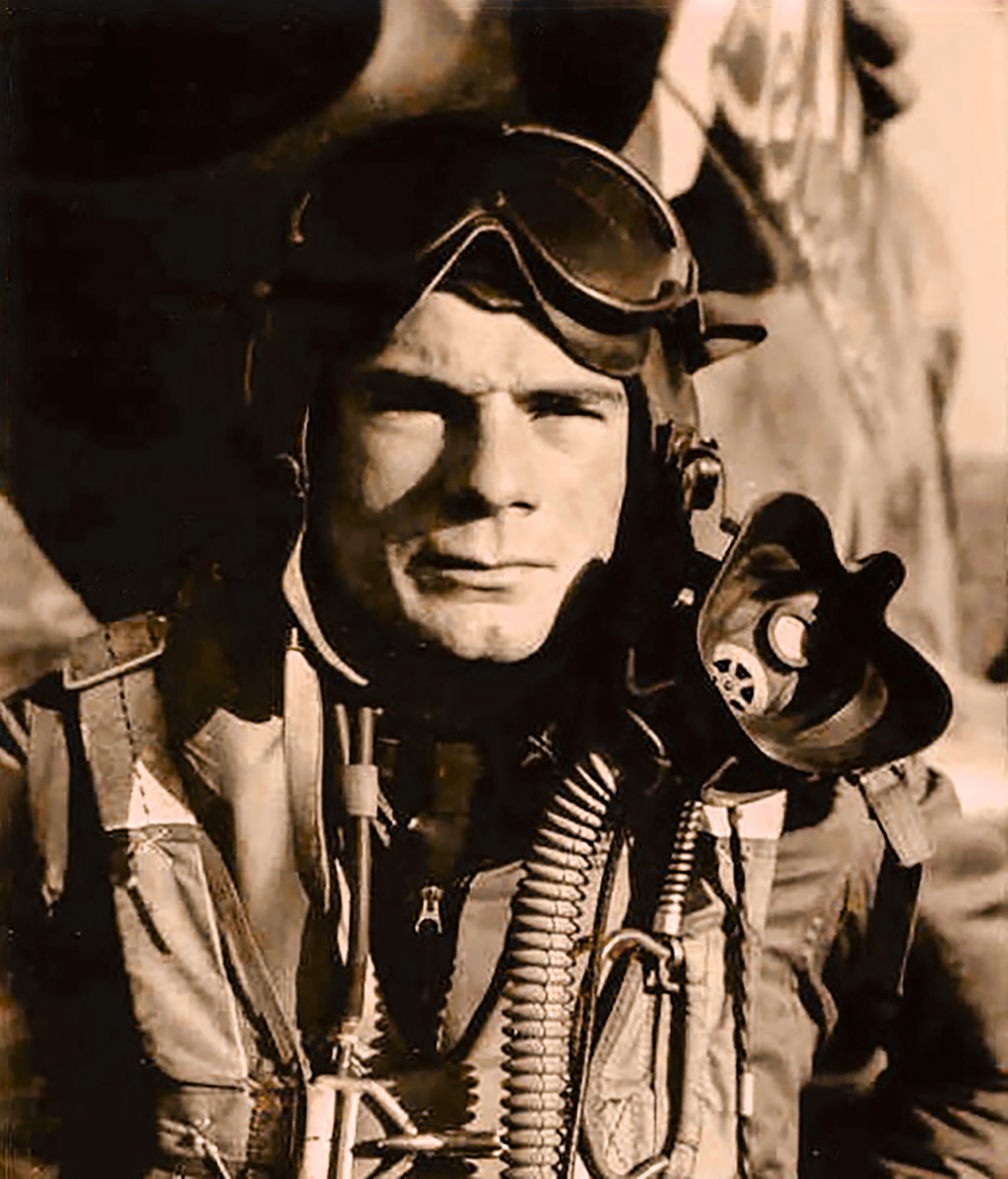
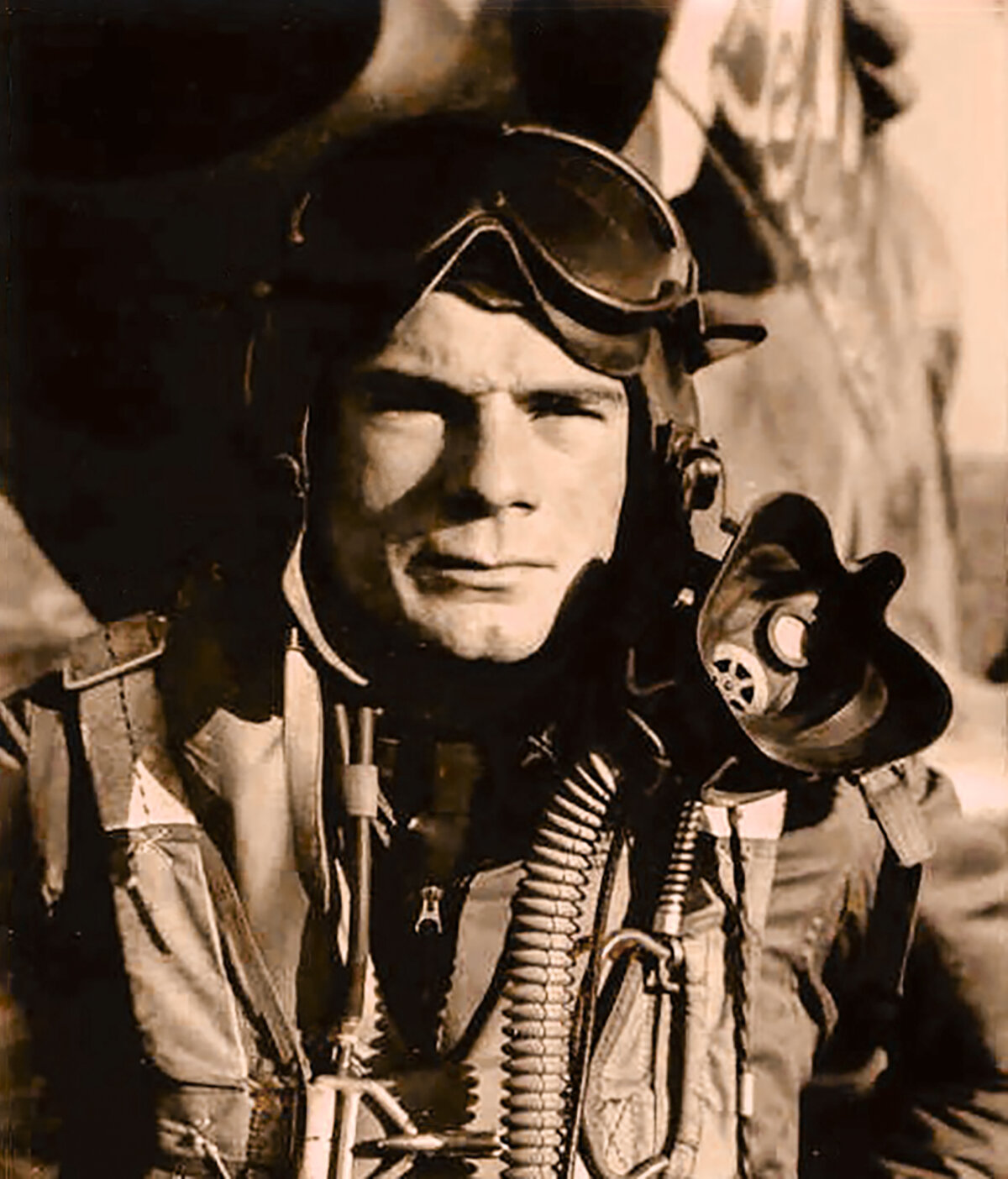
The 20-year-old fighter pilot stood in an open field. Whatever camouflage his green flight suit would have given him was negated by his flapping parachute. Even so, everyone on the ground had witnessed his harrowing ejection from his P-51 Mustang, which was now a smoldering heap in the distance. Fifty yards away, a crowd of angry civilians was rushing toward him, farming equipment in hand. It was April 10, 1945, and a downed American fighter pilot in the heart of Germany could expect little mercy. It was a miracle he had survived thus far. But from the looks of things, it may have been better had he gone down with his plane.
Retired Col. Joseph Peterburs was born in St. Paul, Minnesota, but had grown up in the neighboring state of Wisconsin in a suburb of Milwaukee. Born to loving and patriotic parents, he was one of nine children, although two had died in infancy from the Spanish flu. His father was an electrical steam engineer who took jobs as they came during the Great Depression. Finances were tight, as was the case in most U.S. households, but altogether Peterburs’s childhood was a happy one. He attended Holy Assumption Catholic School before attending Salvatorian Seminary in St. Nazianz, Wisconsin, located north of Milwaukee. At 17, he was on the path to become a priest, but one Sunday, after mass, the direction of his life would alter completely.
-

He and his friends stood silently still inside the local gymnasium as a news alert blared through the loudspeaker. Pearl Harbor had been attacked. Peterburs knew at that moment that he would be joining the service. His two older brothers were already serving. His father had enjoyed a long and successful career in the military as a member of the U.S. Cavalry from 1906 to 1922, fighting the Moros in the Philippines, seeking Pancho Villa during the Punitive Expedition, and serving as a counterintelligence officer during the Great War.
“It was a matter of patriotism,” Peterburs said.
-
Joining the Army Air Forces
He first attempted to join the U.S. Navy but failed the eye exam. He decided to join the Army Air Forces but had to wait until he was 18 to take the examination. For the time being, he returned to school and took classes on aeronautics.
“I was only interested in fighters,” he said. “I liked the old movies, like ‘The Dawn Patrol.’ It was sort of a romantic thing to become a fighter pilot.”
On Nov. 25, 1942, his 18th birthday, Peterburs took the exam and passed it. His 18-month journey to become a fighter pilot had officially begun, and it was indeed a promising start.
-
“I was sent to basic training at Miami Beach. I think we stayed at the Fontainebleau. That was our barracks,” he said with a laugh. “Compared to the seminary, it was a luxury. I got up a lot earlier at the seminary, and I had to learn nine core subjects with three languages.”
Peterburs was quick to notice the food was better, too. And he much preferred the exercise. When basic training concluded, he was transferred to Maxwell Air Force Base in Montgomery, Alabama, for flight training school to learn, among other things, the physics of flight, tactical maneuvers, and Morse code. Entering Maxwell AFB in August 1943, he was scheduled to graduate in January 1944.
Graduation Delays
He had hardly arrived on base before he received word that, on Aug. 5, the USS Plymouth, a patrol gunboat, had been torpedoed off the coast of North Carolina. His brother, Paul, a motor machinist’s mate first class, was among those killed. Peterburs was sent home on bereavement.
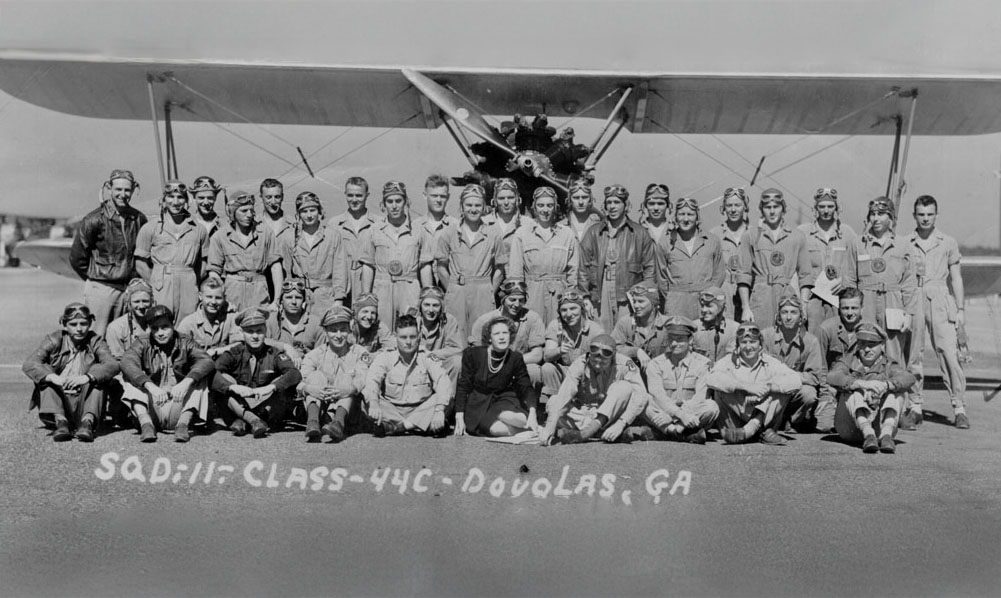
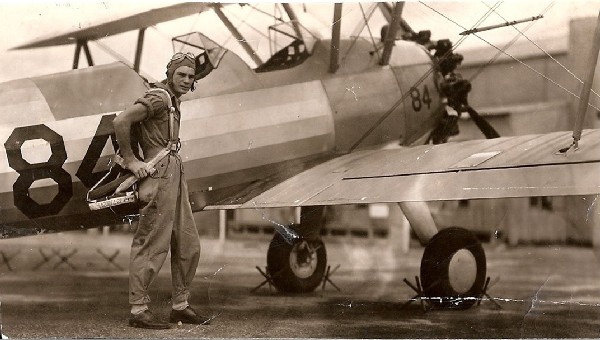
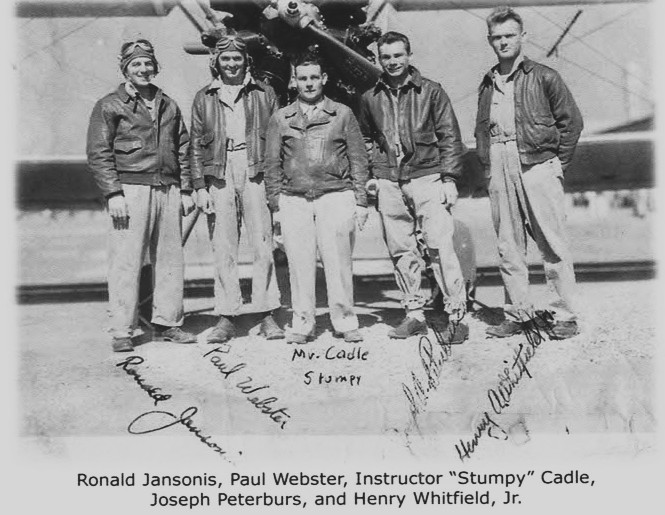
He did not return to Maxwell but instead was sent to the flight training school in Douglas, Georgia. His graduation date had been pushed back another month. At Douglas, he trained in the open-cockpit biplane PT-17 and the more advanced closed-cockpit BT-13, earning 65 hours and 80 hours of flight time, respectively. Again, his graduation was pushed back. Nonetheless, Peterburs continued training and continued learning all he could. Training in Georgia, however, came with an unexpected experience.
Peterburs witnessed life in the Jim Crow South. He recalled seeing “Whites Only” signs everywhere and seeing black people relegated to the balconies of theaters and separate water fountains, department stores, and restrooms.
“For me, it was a very shocking experience,” the Wisconsin native said. “I almost got in trouble several times for breaking the rules.”
-
England, the P-51, and Tragedy
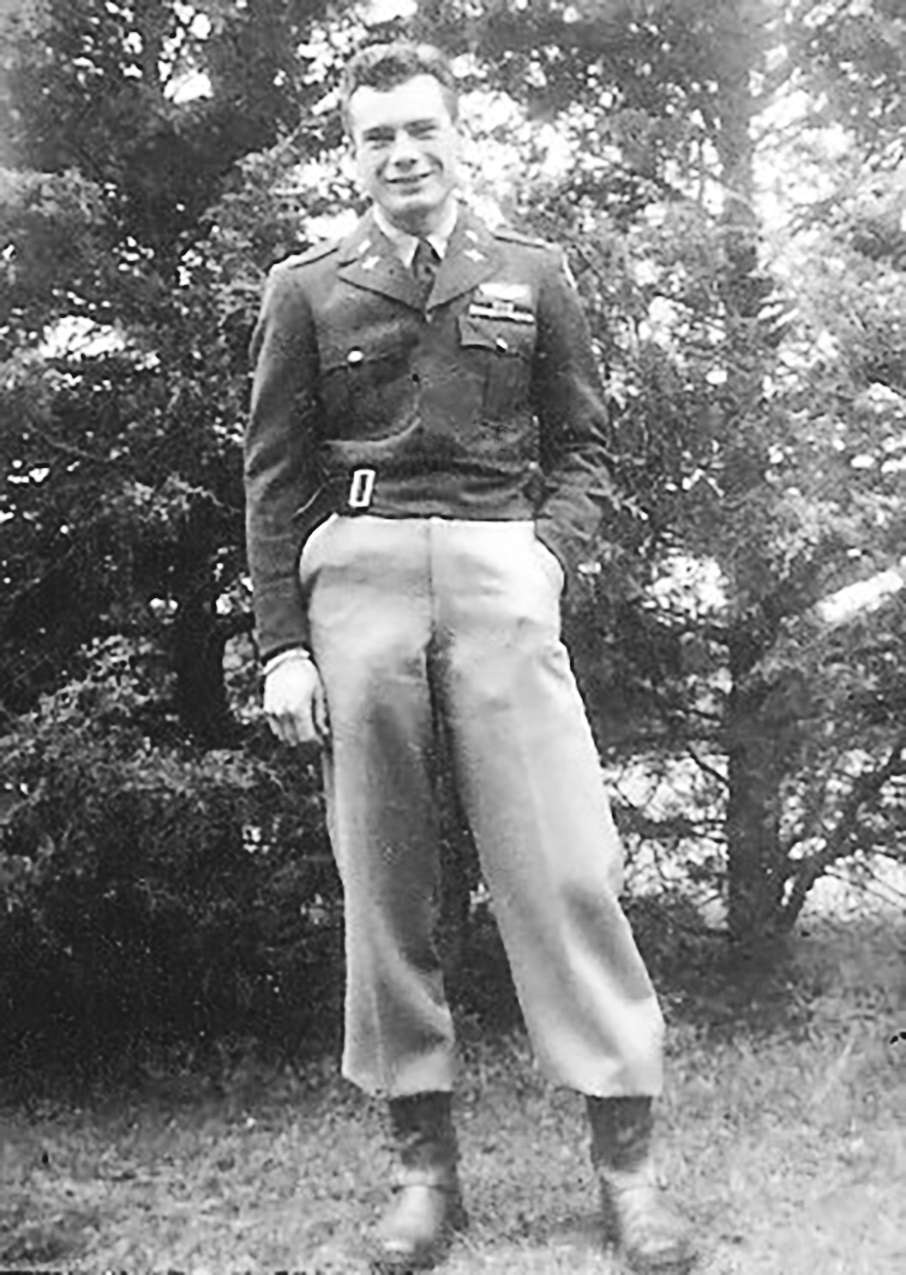
On April 15, 1944, Peterburs graduated as a second lieutenant and was scheduled to leave Georgia for Page Field in Fort Myers, Florida, where he trained for three months on P-40s and A-24s. These fighter planes were much more aligned with what he would be flying in Europe: the P-51. After 200 hours on the P-40 and 50 hours on the A-24, Europe awaited.
At 19 years old, he and his fellow pilots prepared to cross the Atlantic. The Americans boarded the luxury ocean liner SS Île de France, which, after the fall of France, had been seized and recommissioned by the British as a troop ship. With its speed, the ocean liner needed no convoy, and in less than a week, it had zigzagged its way to Scotland.
Peterburs was assigned to the 20th Fighter Group 55th Fighter Squadron stationed at Kings Cliffe, England. His unit had recently transitioned from the P-38 Lightning to the P-51 with the upgraded Rolls-Royce Merlin engine (P-51B, C, and D). This version of the Mustang, designed specifically to escort bombers, would irrevocably shift the momentum of the air war in favor of the Allies. After recording about 20 hours in the P-51, Peterburs climbed into the plane in December 1944 for the first of 49 combat missions.
In late March, Peterburs began experiencing some difficulties with his P-51. On three successive missions, he had to manipulate the throttle in order to keep control while cruising. The problem made landing more hazardous. He reported it to the crew chief, but no issues were discovered.
On March 26, after a successful mission, the P-51 became difficult to control while approaching the landing. The pilot lost control of the plane, and it crashed into the ground. The pilot was killed on impact, but it was not Peterburs; he had not been on that mission. It was his close friend and fellow fighter pilot Kenneth Pettit.
When Peterburs realized that his friend had been assigned the troublesome plane, he met with him to explain what to expect from the plane and how to regain control of it. It remains a haunting memory.
“He was 21 years old,” Peterburs said, somberly. “You gave him a toast at the bar and went on. That was your job.”
A Fateful Mission
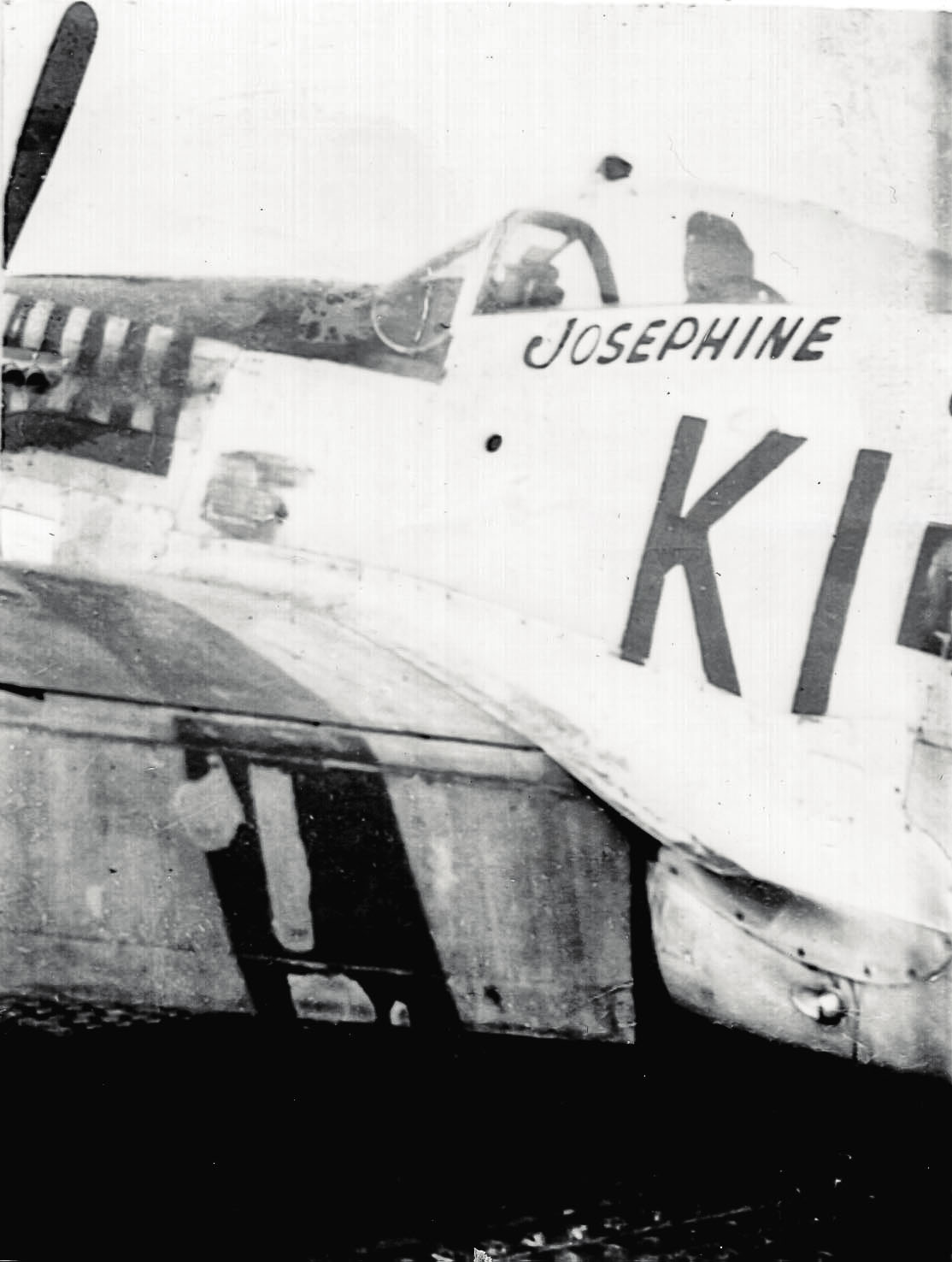
Three days later, Peterburs was issued another P-51. This one he named Josephine after his fiancée. He and his plane would enjoy a historic relationship.
On April 10, he and about 200 other fighters flew across the English Channel to rendezvous with approximately 450 B-17s. Their target was the city of Oranienburg, slightly north of Berlin. As the planes approached Oranienburg, Peterburs was flying cover 5,000 feet above the bombers.
“Everything was going along OK until we got to our target,” he said. “The bombardiers are dropping their bombs, and we get hit by a swarm of Me-262 turbo jets. I see this one jet blow up a bomber, and as soon as I saw him, I rolled over and started coming in after him. He was coming into another 17 just as I was pulling into his six o’clock. Simultaneously, he blew up the 17 and I got hits in his right wing. He started to get flames and smoke and rolled down and disappeared into the clouds. I didn’t follow him.”
-
After he shot down the Me-262, he noticed the Luftwaffe’s Schönwalde Airfield. He swooped down and strafed the airfield, destroying five aircraft and setting a hangar on fire. In order to do this, though, he had to break protocol. Protocol for strafing heavily defended areas, such as an airfield, was to make only one pass.
“I made five or six passes,” he said. “On my last kill, I was coming in on a Fw-200 Condor. This particular one was part of Hitler’s fleet. As I was coming in, I felt a thud, but then I blew the Condor, and, as I was pulling up, I felt another thump.”
A Risky Bailout
With oil pouring onto his windscreen, he pulled his plane up to 10,000 feet. Now he needed to figure out where to land. He contemplated heading east to Berlin, where the Russians were, or flying west to Magdeburg, 80 miles from his position, where the Americans were supposed to be fighting.
He chose to head west and covered approximately 50 miles but was perpetually losing altitude. Flying at 1,000 feet, he realized that he had no chance to reach Magdeburg and decided to bail out.
“As soon as I unstrap, I look at my three o’clock position and there’s an Fw-190 coming at me,” he recalled. “Just as he’s coming in and getting within firing range, I turn into him. He fires his rockets. He misses. He kept going because he knew I was gone anyways. By this time, I look down and I’m at 500 feet.”
Peterburs said he considered finding a location to “belly it in,” but having already unstrapped, he knew he wouldn’t survive the crash landing. At 350 feet, he slipped out the right side of the P-51 and pulled his ripcord. With a yank, he felt the chute open, and, seconds later, he slammed into the ground. He had miraculously survived. Standing in an open field, he surveyed his situation. It was not good. Angry German farmers, carrying pitchforks, hoes, and picks, ran toward him. It was going to be a brutally violent death.
-
Saved by a Sergeant
Suddenly, two gunshots rang out. The crowd stopped about 20 yards short of Peterburs. A sergeant of the German Luftwaffe had driven up beside him on his motorcycle just in the nick of time. Peterburs was, thankfully, a prisoner of war.
Peterburs was driven into the town of Burg for interrogation. An unruly crowd began to gather. When the local bürgermeister and the chief of police arrived, the latter pulled out his Luger, planning to shoot Peterburs directly. The sergeant, however, was adamant that he remain a prisoner of war.
“He put me back on his motorcycle. I was behind him, which was a very vulnerable position for him, but I wasn’t about to rock the boat,” Peterburs said, laughingly.
He was placed inside the jail at the local air base, where he was interrogated by the Gestapo for several hours. He remained in jail for several days. Each night, though, during the Royal Air Force bombing runs, he found himself surrounded by about 50 Germans in a bomb shelter.
On April 13, he arrived at a train depot to be transported to Stalag 11, a British POW camp. While awaiting the train, a local worker informed him that President Franklin Roosevelt had died.
“He hands me a little bottle of schnapps, and I take a swig,” he said, laughing.
“It was a good gesture on his part.”
Joining the Russians
By the time that Peterburs arrived at Stalag 11, there were only about 100 prisoners left. Most had been evacuated. The following morning, he and the “Tommies” were force-marched approximately 60 miles.
“That was chaos,” he said. “Refugees going east; refugees going west. Wehrmacht going east, retreating from the front; Wehrmacht going west to support the front. Guys running up and down. Motorcycles going up trying to get some semblance of the orders. In addition, we were strafed a couple of times by our forces. Of course, they were after the Wehrmacht.”
The following six days were spent in a Russian POW camp outside of Berlin. The security was lax. To escape, one simply had to avoid the spotlights at night and slip under the fence. This Peterburs did. His destination was Berlin.
After he had covered about five miles, a loud rumbling came up behind him. He turned to see tanks lumbering toward him. They were T-34 Russian tanks on their way to Wittenberg. He approached the officer in charge of the tank unit and communicated his willingness to join them. The Russians were apparently all too happy to have the American join. He hopped atop one of the tanks and rode into the city. For approximately 10 days, he remained with the Russians, during which time the unit held a feast.
-
“About six days into the march, we reach a farmhouse and they kill a bunch of ducks and cows,” he reminisced. “They built a big banquet table. We had hamburger and duck. There must have been a hundred people at this table. Every five minutes, there was a toast to the American—me.”
Peterburs pointed out that his first drink of alcohol was the schnapps at the German train station. By the banquet’s end, he was thoroughly drunk.
The Winding Road Home
When they arrived at Wittenberg, fate again intervened. An American unit was already there. Peterburs witnessed a heated argument over who would keep him. The Americans finally convinced the Russians to hand him over. Peterburs remained with the Americans for several days, fighting in skirmishes and rounding up weapons.
The young lieutenant decided to head west on his own. After about seven miles, he arrived at an airfield sporting a familiar aircraft. A C-47 transport plane was parked with several men standing around it. Peterburs was struck by what he saw. The men were emaciated and wore prison uniforms.
“These guys were walking dead—just bones,” he said. “I went to the pilot of the C-47 and asked what was going on. He thought they were political prisoners, and they were repatriating them to Paris. I knew nothing about the Holocaust or how people were treated in their political prison camps.”
Peterburs joined the approximately 15 starved men on the flight to Paris, where he remained for several days before reaching the French port of Le Havre. From there, he boarded a troop ship headed for the United States. On June 1, 1945, he arrived in New York harbor.
He was given 90 days of recuperation. Immediately upon arriving home, he and Josephine assembled their paperwork to get married. On June 13, the two married and spent the next 60 years together.
-
The Plane and an Ace
More than half a century after his final World War II flight and about 15 years after retiring from a successful and decorated military career, Peterburs received a letter in the mail stating that his Josephine—the P-51 version—had been found. Werner Dietrich was 13 years old when he witnessed Peterburs bail out. His love of history led him to search for lost planes and the pilots who flew them. Before he reached out to Peterburs, the Josephine discovery had already been seen on German television. Now that Peterburs was found, the German film crew and Dietrich came to his home in Colorado Springs, Colorado.
-
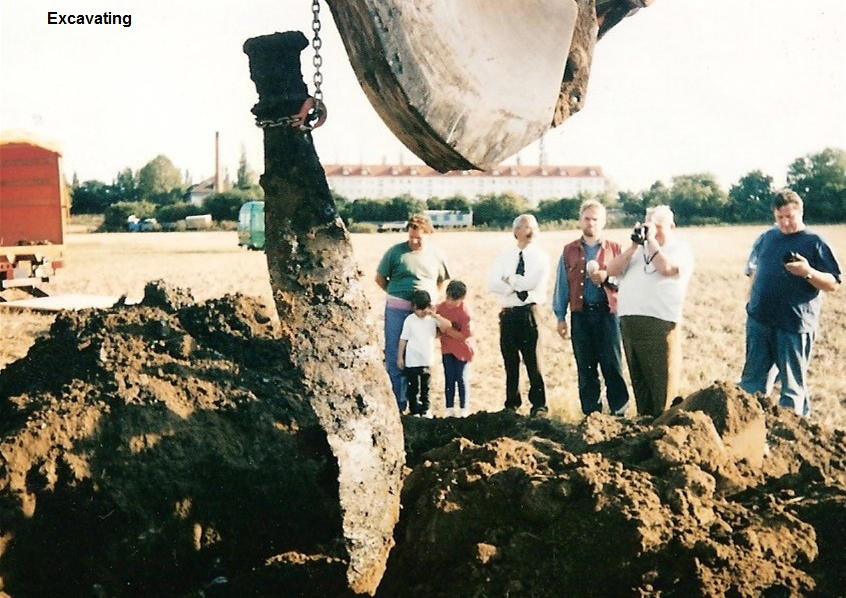
Peterburs told Dietrich the story of how he came to land in Burg. Dietrich promised that he would find out whom Peterburs had shot down.
“About a month later, I get a letter saying: ‘Eureka! I found him,’” Peterburs said. “It’s Walter Schuck, the top German ace.”
During World War II, Schuck shot down 206 enemy aircraft. His last eight kills were recorded in the Me-262.
Peterburs could hardly believe it. In fact, he only hardly believed it. It was not until he was contacted by Swedish war historian Christer Bergstrom, who was writing Schuck’s biography, that the Peterburs–Schuck connection was officially confirmed. Further, the connection was captured by artist Robert Bailey in a print called “Escort Fury.” The artwork was scheduled to be presented at a studio in Vista, California, in May 2005, and Schuck would be attending the unveiling. Peterburs, however, had just lost his wife of 60 years that February.
-
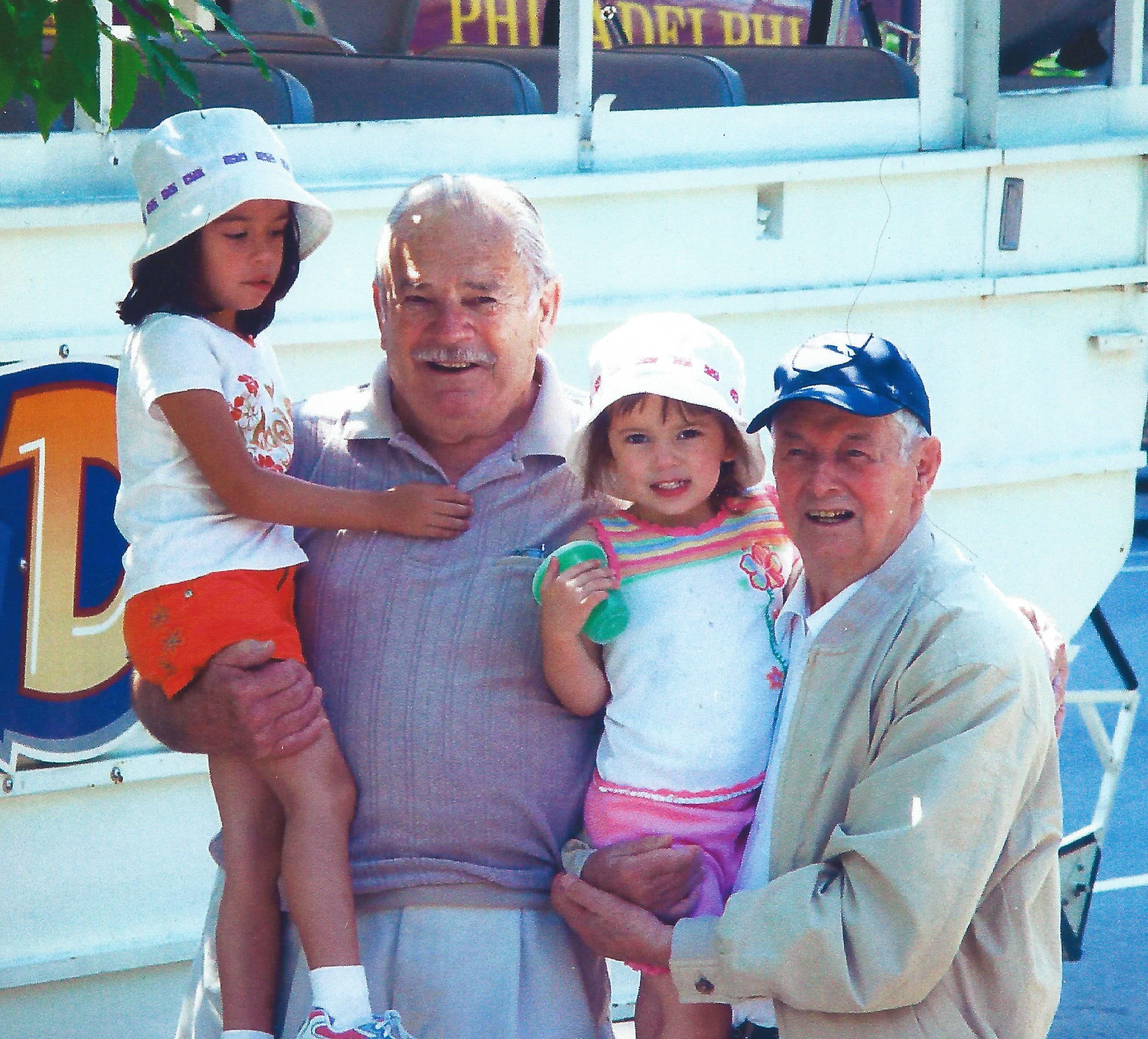
“My family wanted me to go and get my mind off the grief I was in,” he said. “I finally said yeah.”
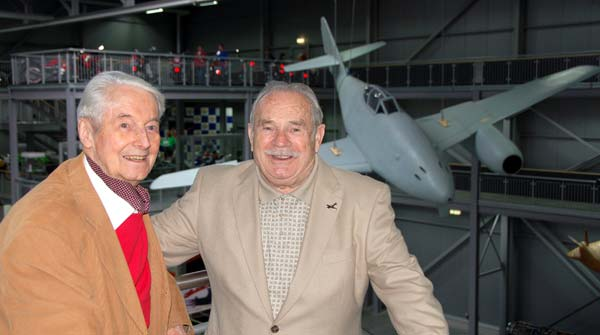
The two legendary pilots met and became fast friends—a far cry from where they had left off over the city of Oranienburg. The two remained close friends over the next decade, visiting each other’s homes and becoming part of each other’s families, until Schuck’s death in 2015. At 100 years old, Peterburs fondly looks upon the 80 years that followed that fateful day, April 10, 1945—a life of war, adventure, love, family, and friendship.