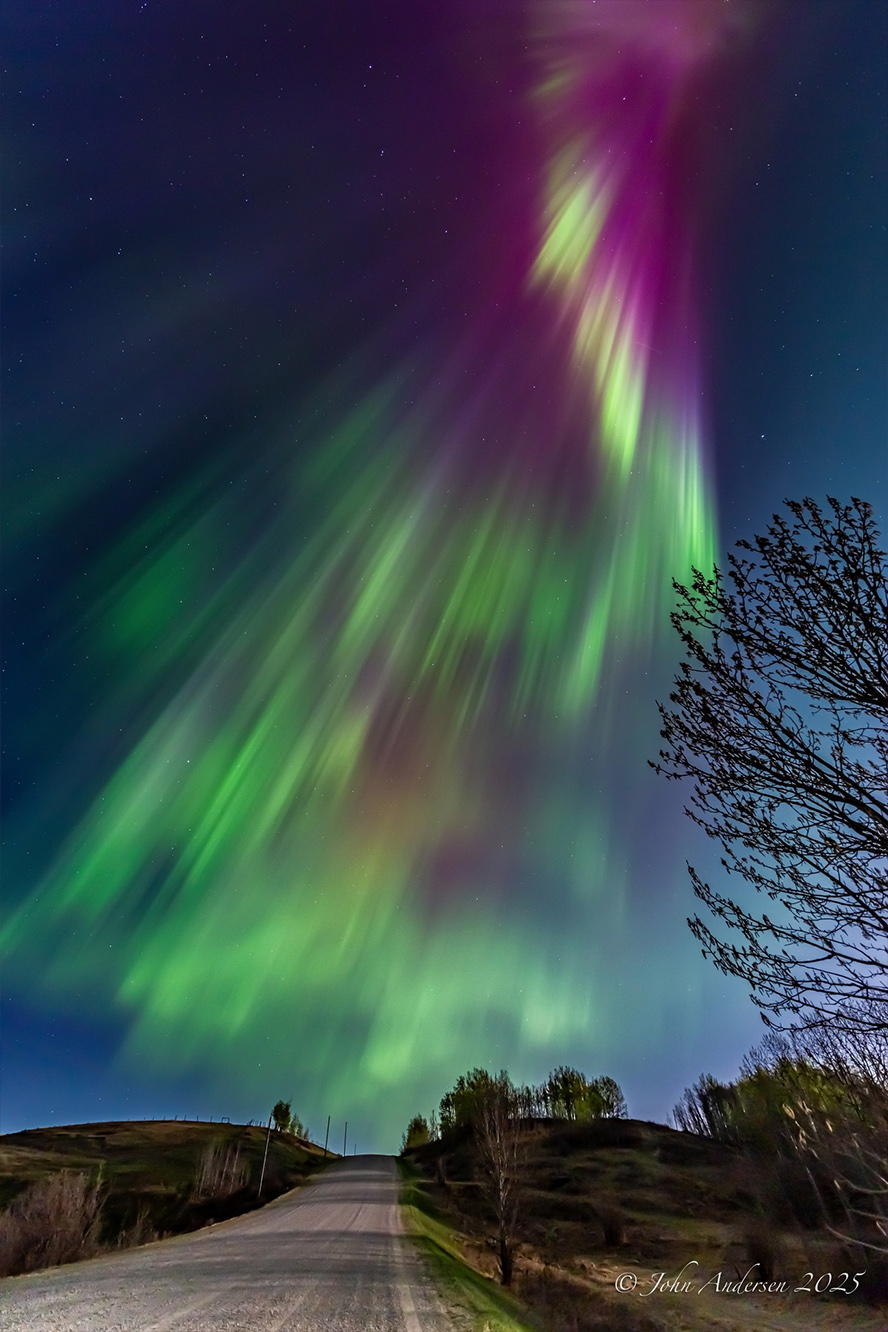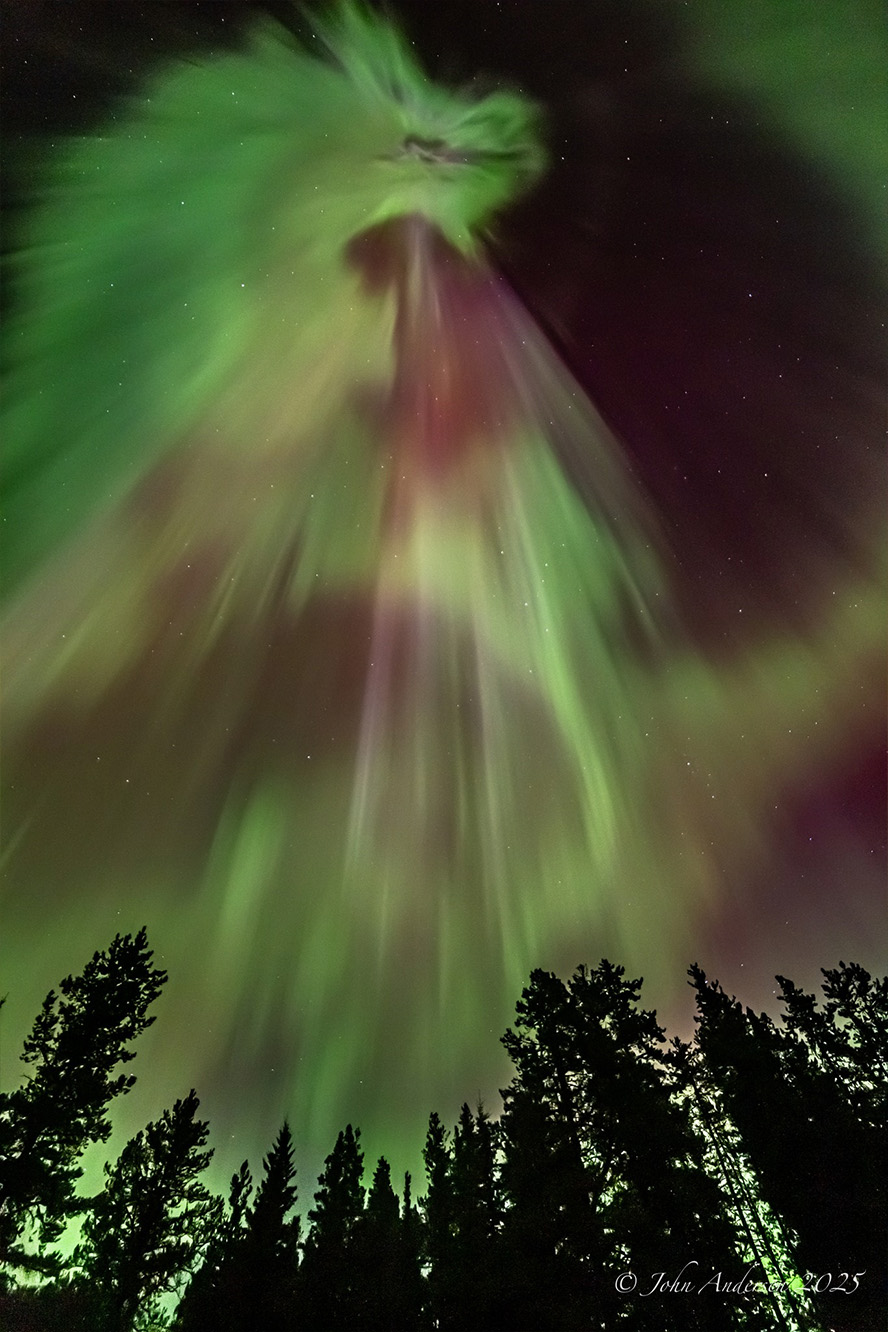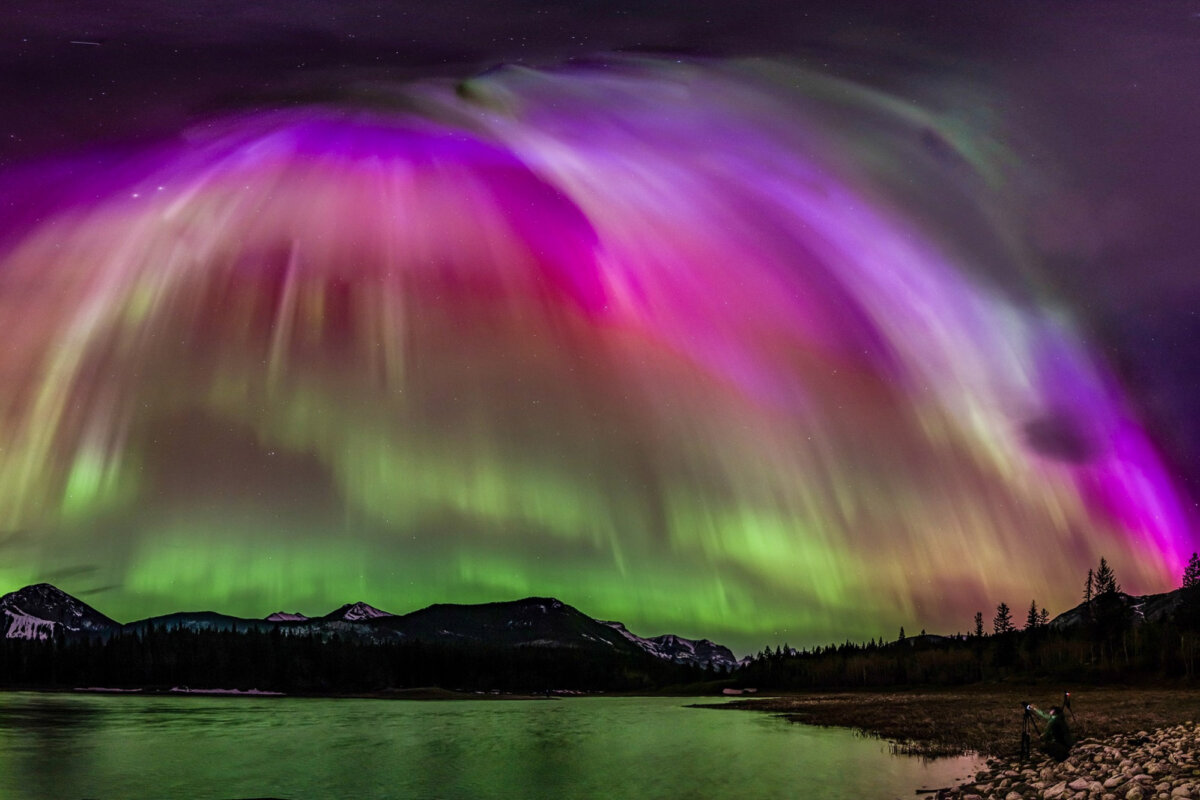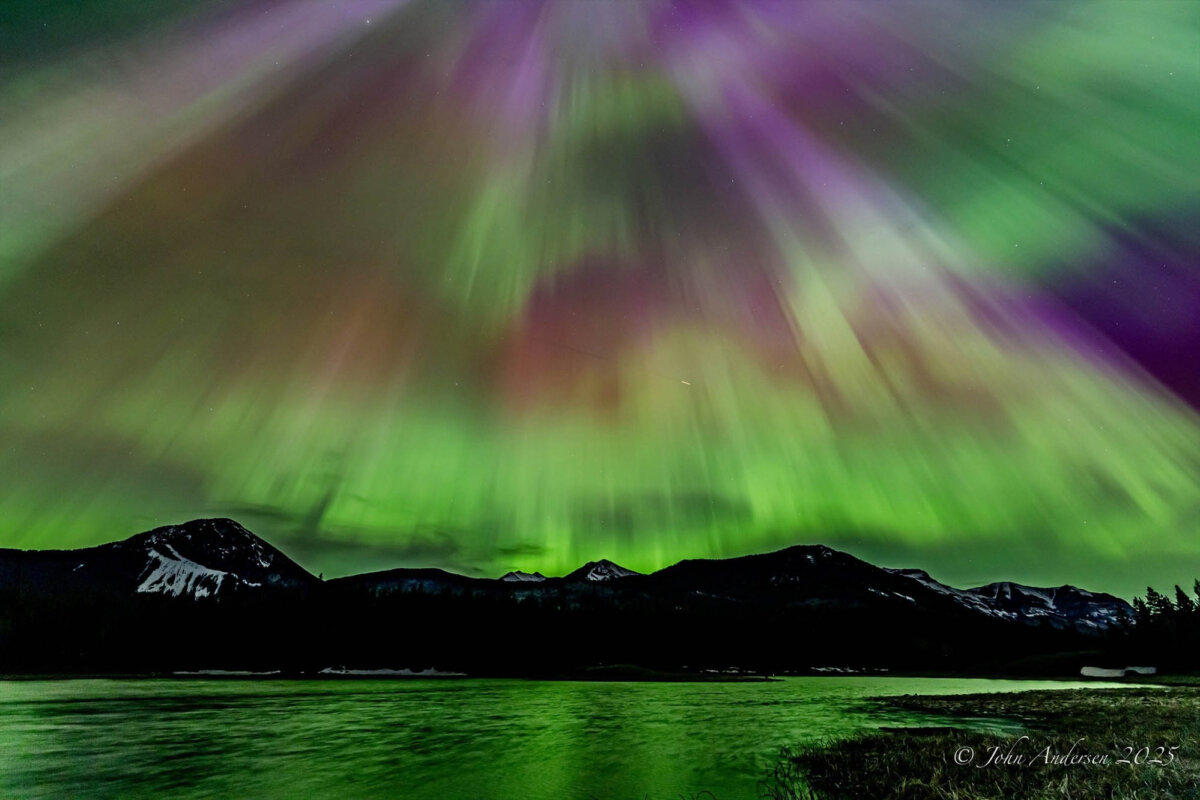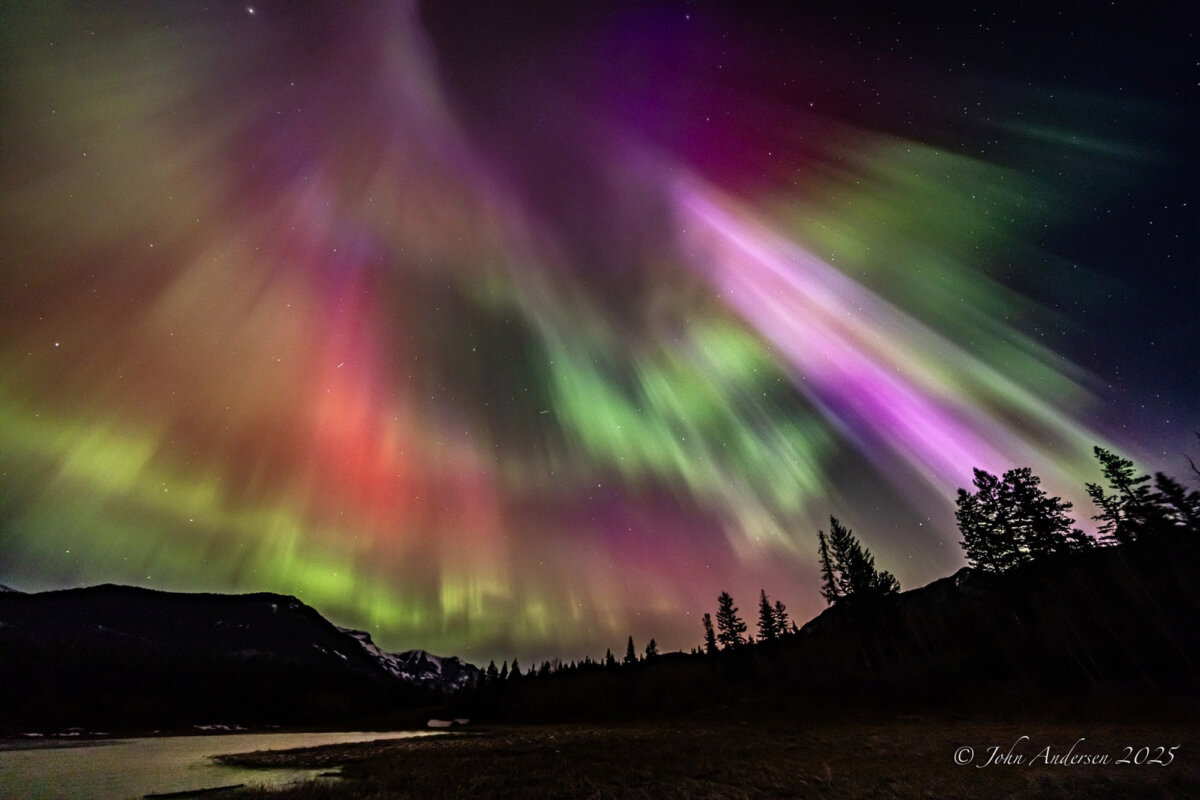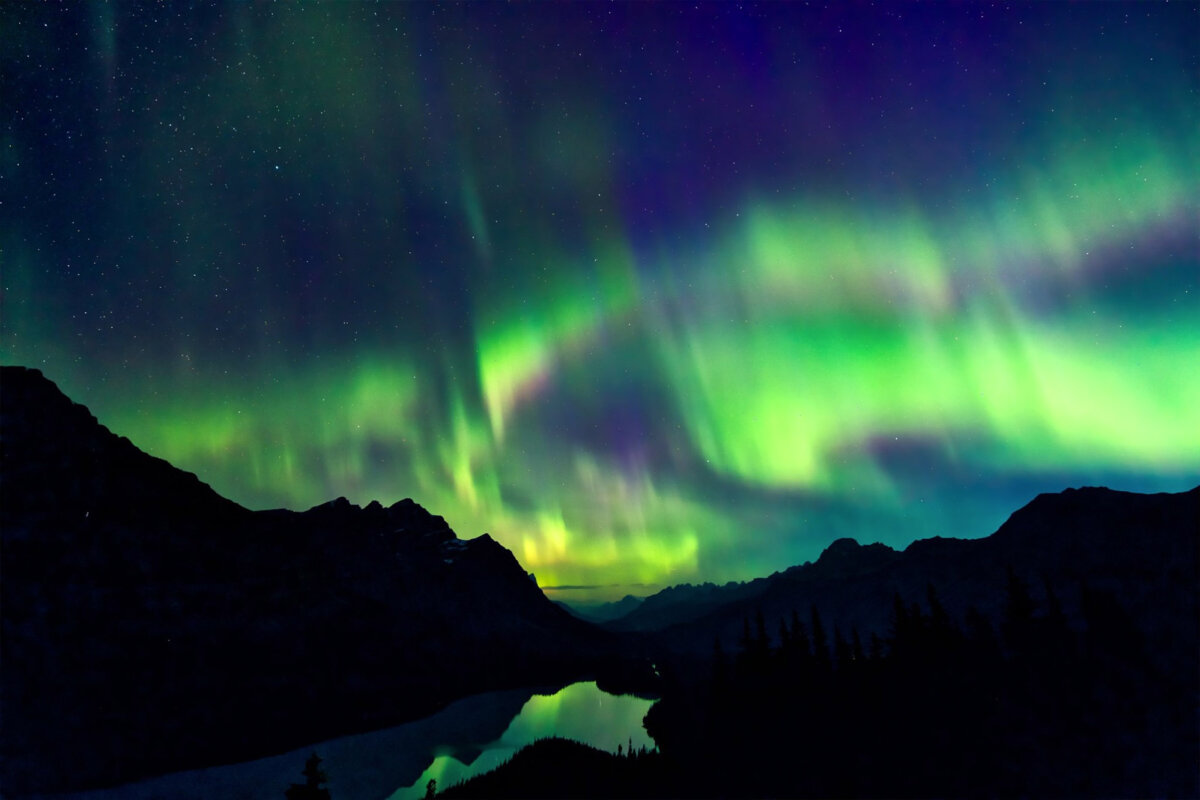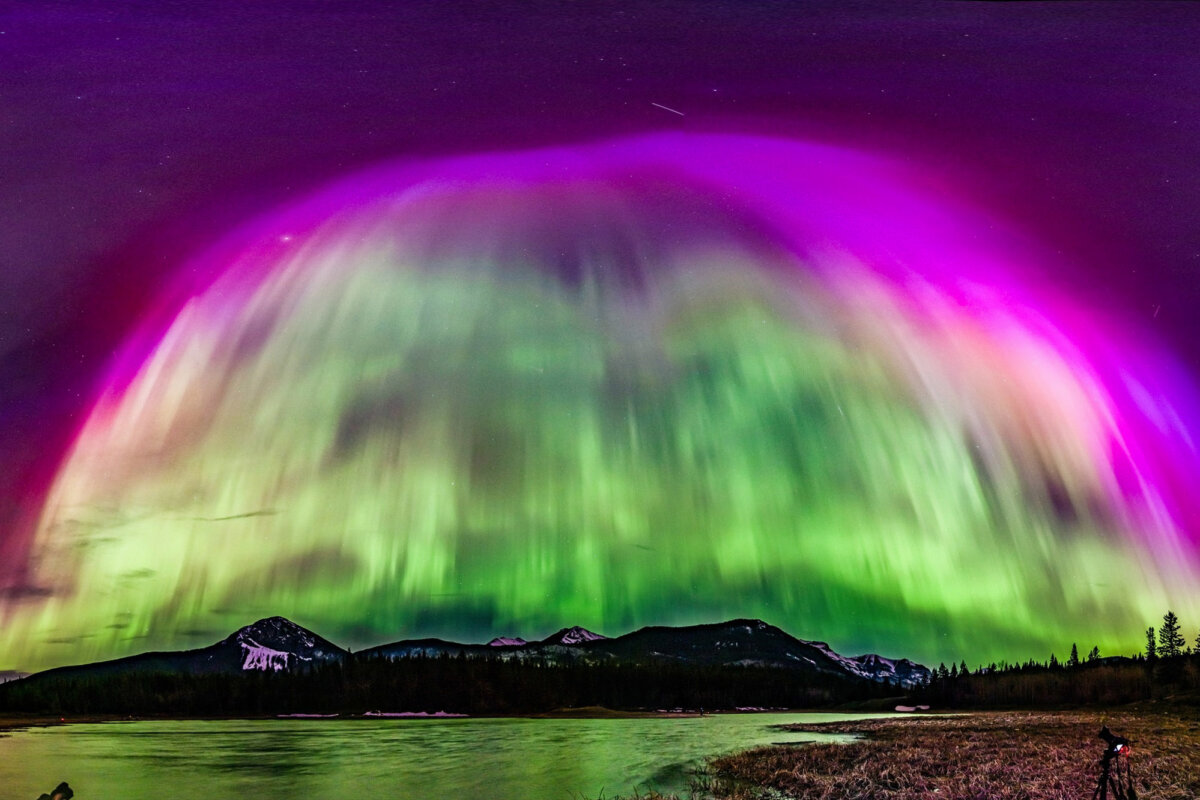
Colours jump out at John Andersen when he points his camera skyward at night, and he sees the strong hues displayed in his aurora photos as a sign of a large, looming geomagnetic event that could soon hit Earth.
While aurora borealis are normally green and hard to spot within Calgary’s city limits, where Andersen lives and works as a geologist in the oil industry, he seeks darker rural views north of town. His photography displays pinks, purples, and yellows, indicating powerful magnetic disturbances.
“We’re going into what they call a magnetic pole excursion,” Anderson, 68, tells the Epoch Times.
That means the magnetic poles of planet Earth could soon swap positions, with positive polarity replacing negative and vice versa. As this event approaches, he says, the Earth’s magnetic field tends to buckle a little.
“The magnetic field of the whole Earth has been declining dramatically, so we have a lot less defence now in our magnetic field,” Andersen says.
The constant bombardment of solar wind from the sun now hits Earth much harder, and geomagnetic storms have been known to disrupt power grids and communication equipment.
But they also cause amazing auroras.
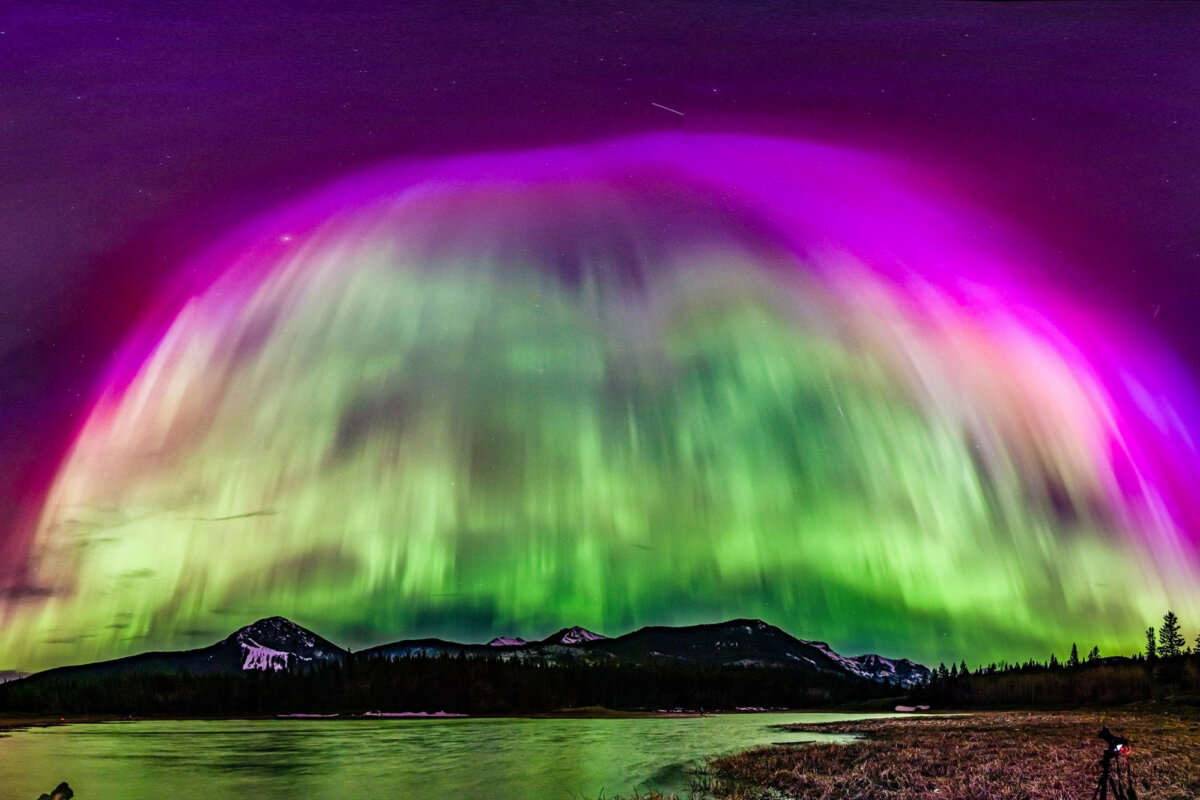
Andersen, who has been enthralled with astrophotography ever since his parents bought him a telescope as a child, is now something of an aurora hunting expert. He’s been shooting the night sky for 50 years. Last year, during the peak of the current solar cycle, he went on the chase during nights when the sky was clear—or even when it wasn’t.
One night in the spring before last, an intense purple aurora appeared so strongly it shone through smokey air conditions. Despite the haze, he drove northward to escape city lights and found the auroras blanketing the sky everywhere.
“It was 360 degrees,” he said. He’d rendezvoused there with some 30 friends from the local aurora-hunting community. They’d found many favourite spots like this for photographing auroras over the years.
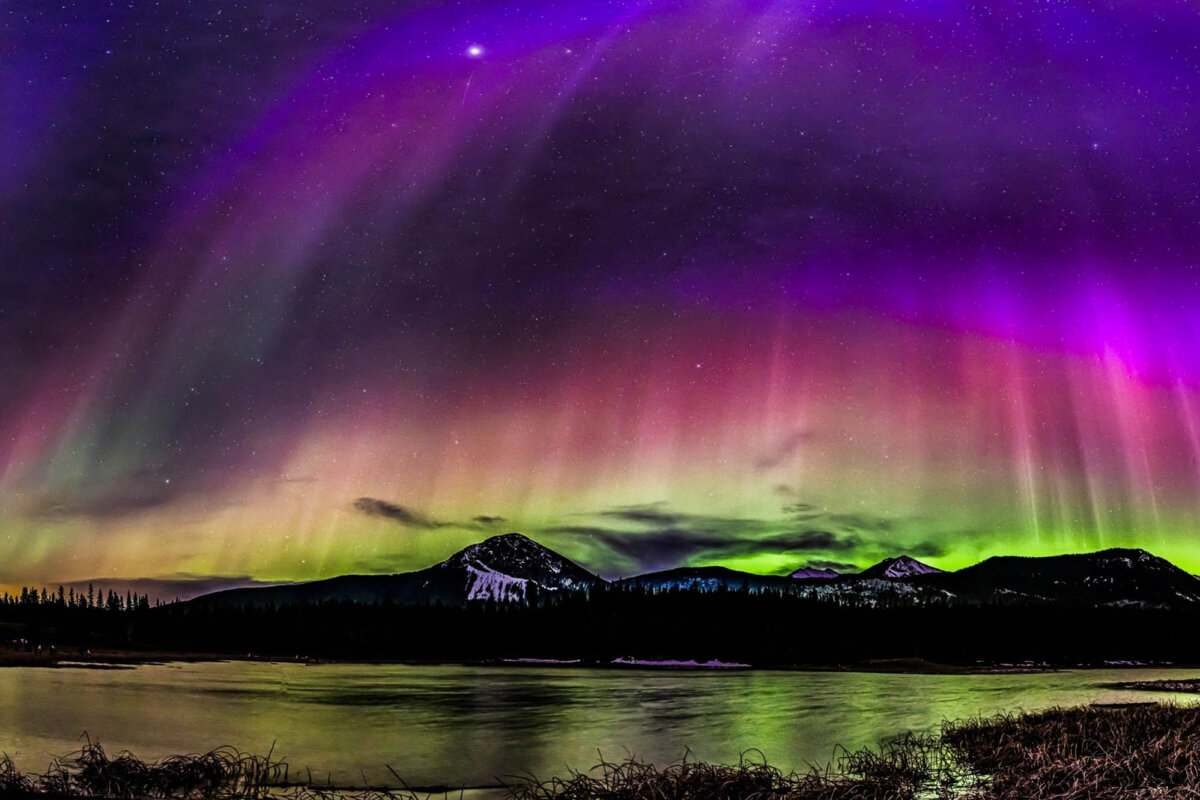
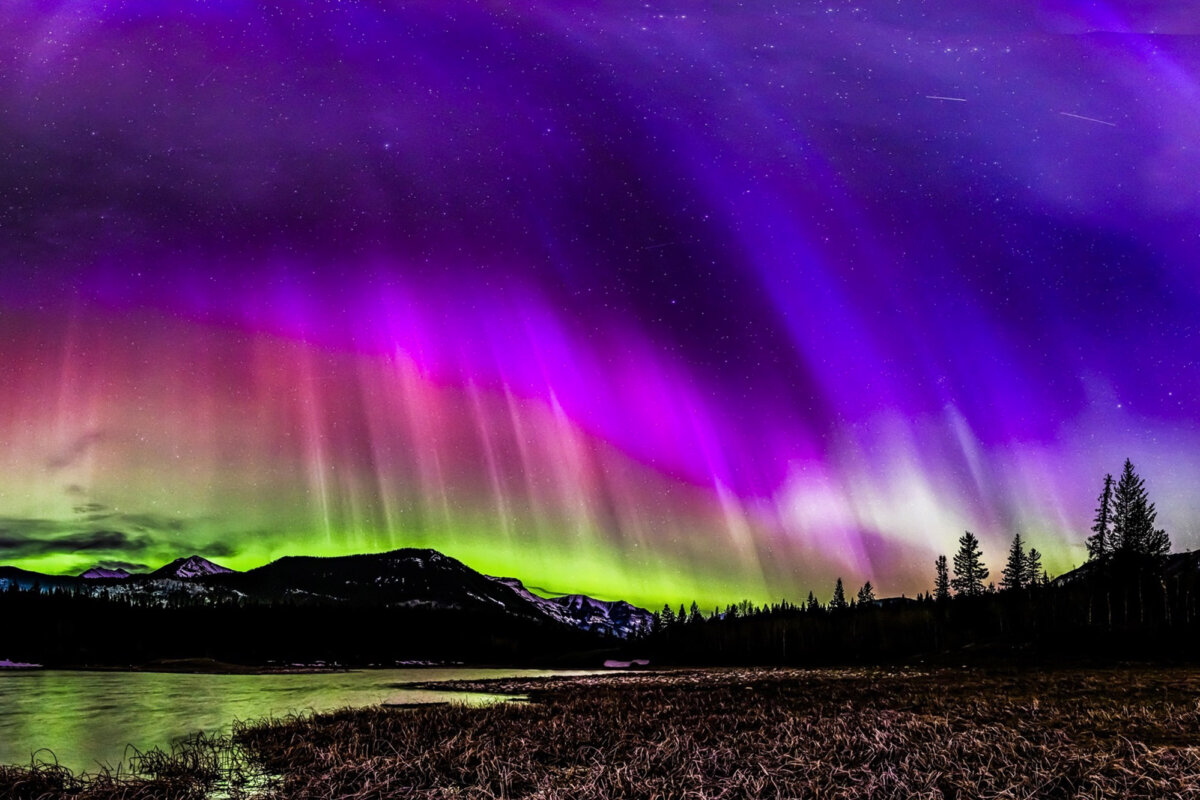
The shots Andersen captured attest to Earth’s declining magnetosphere. He says Earth’s pole excursion is “a million years overdue,” so the next could happen anytime.
“The last big excursion was 42,000, years ago,” he said.
Andersen joined this group of amateur night photographers several years ago. Many were geologists like him or tradesmen by day, and they formed soon after the advent of digital cameras, when shooting in the dark was suddenly possible. By then, he had mastered shooting manually with film, a skill that’s made all the difference in his night photography. Although today’s smartphones can boast vibrant auroras, his manually-shot digital photos are outstanding.
“People don’t know how to use cameras [anymore],” he said, adding that AI has replaced manual settings. “I used manual my whole life. That’s one of the benefits of starting out with film.”
The idea of chasing auroras was novel back then. Andersen and his cohorts broke new ground. “Calgary is one of the biggest, brightest cities on the planet,” he says. “In order to get out of the lights you need to go anywhere away from the city.”
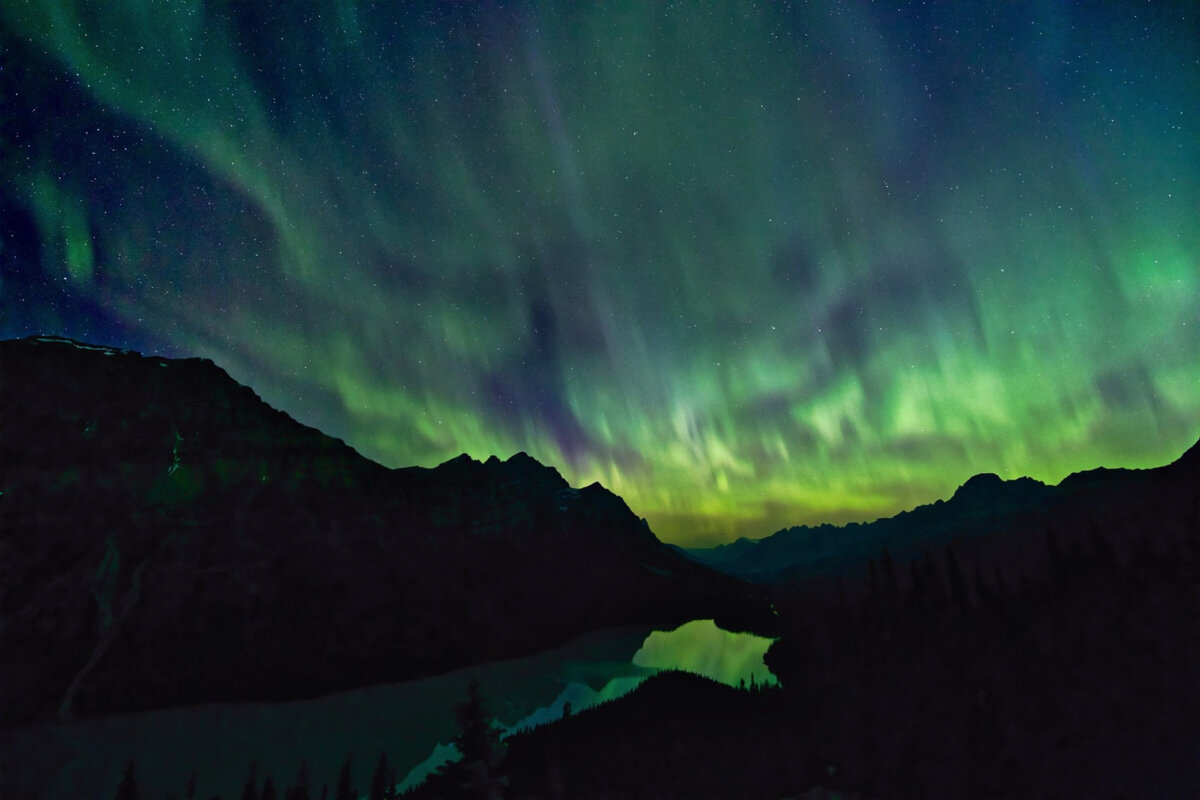
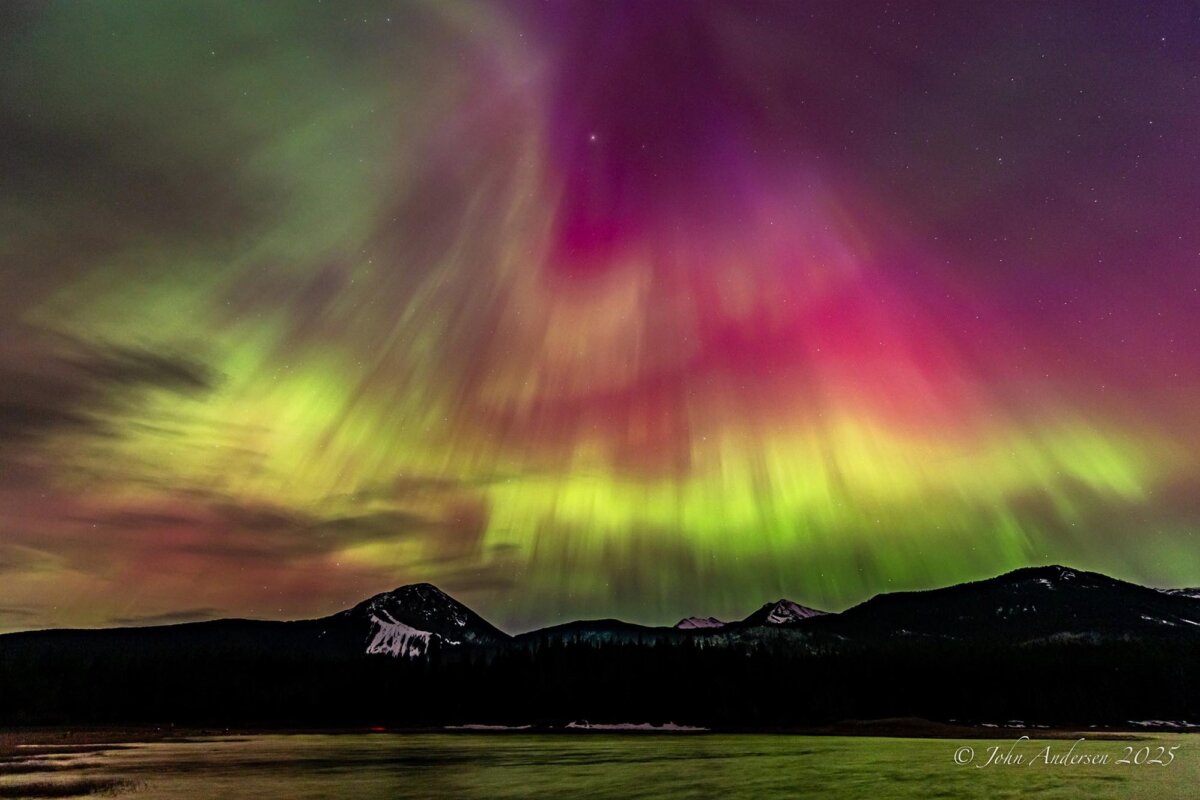
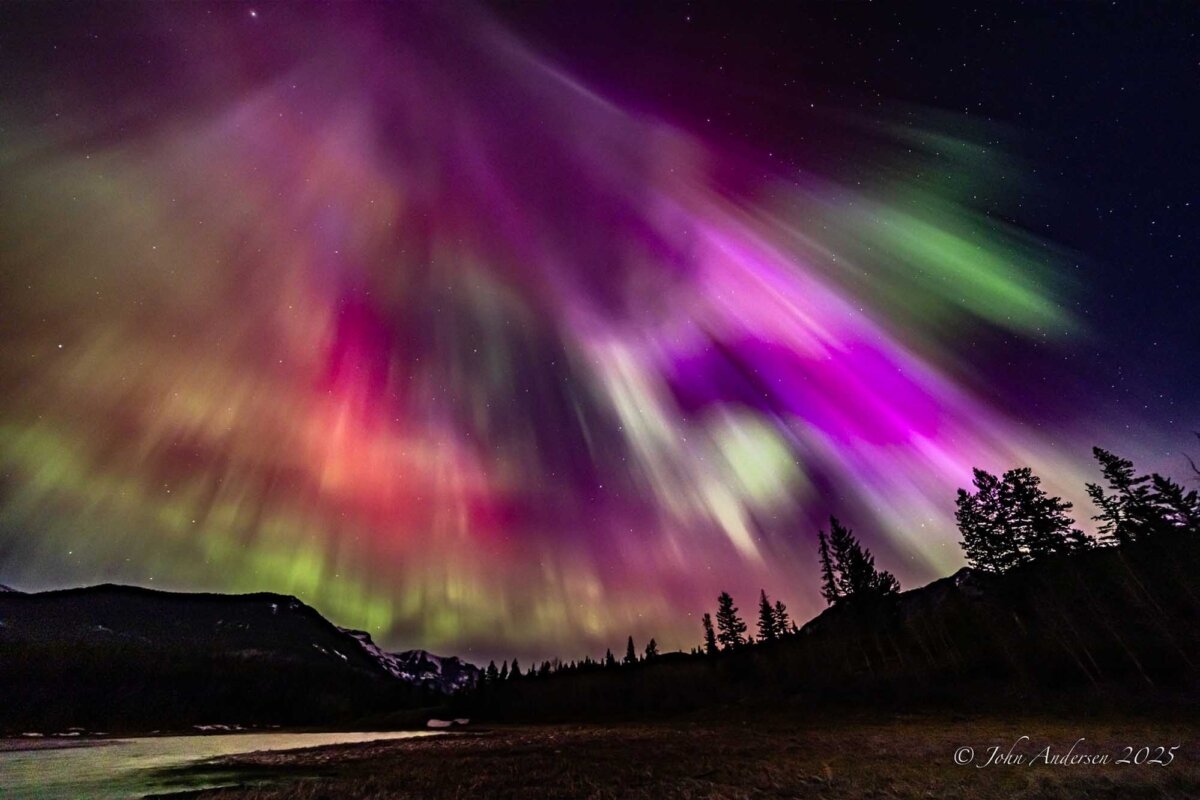
They began to drove north of city limits. Andersen preferred rural ponds and water bodies that would reflect the colourful skies.
Over the years, the city grew, and a brightly-lit ring road pushed them further north. Andersen has been photographing the night sky since then and was out shooting on Sept. 1, which he says is a special day for auroras.
The Carrington Event of 1859 was “the biggest solar flare that’s been recorded human history that hit,” he says. “It actually caused worldwide auroras.”
The Carrington Event was when a solar flare eruption on the sun ejected a huge mass of plasma into outer space. Blown by solar wind, this hurtled toward Earth at a tremendous speed and arrived in half the normal time, causing havoc. Telegraph stations got zapped; some even burned down.
But the auroras were dream-like.
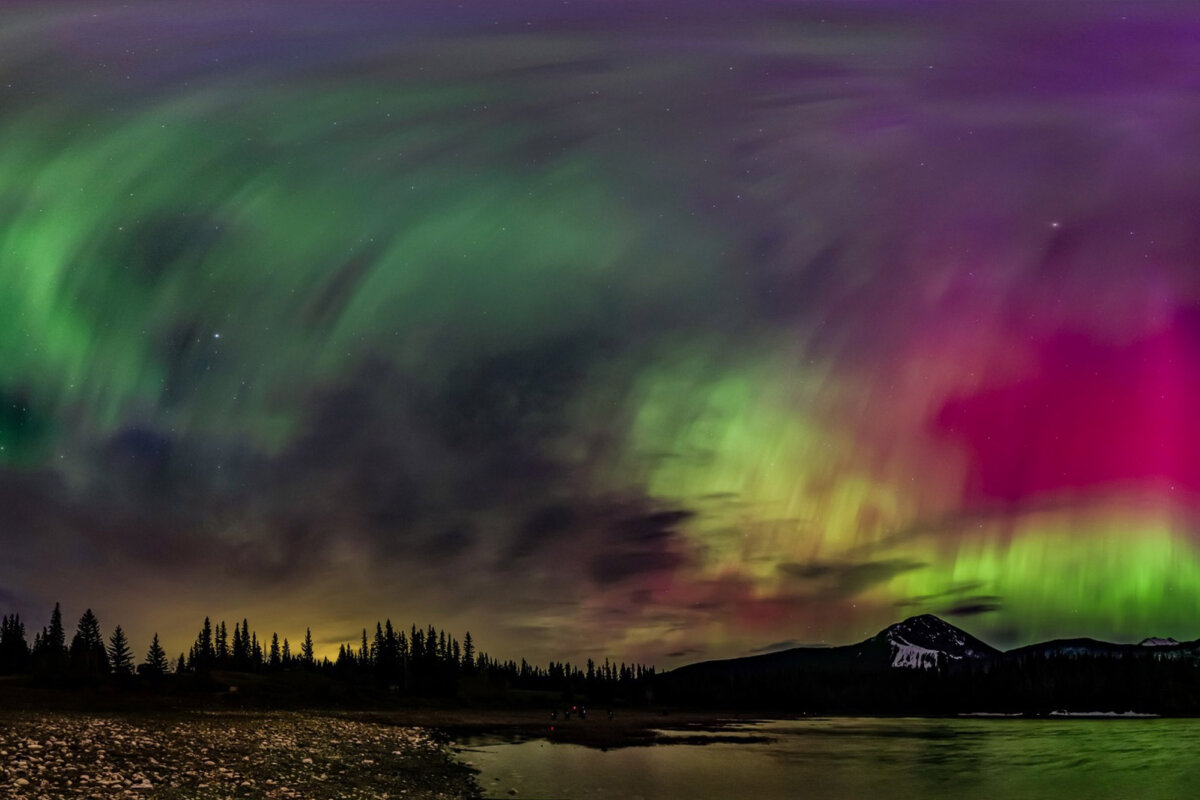
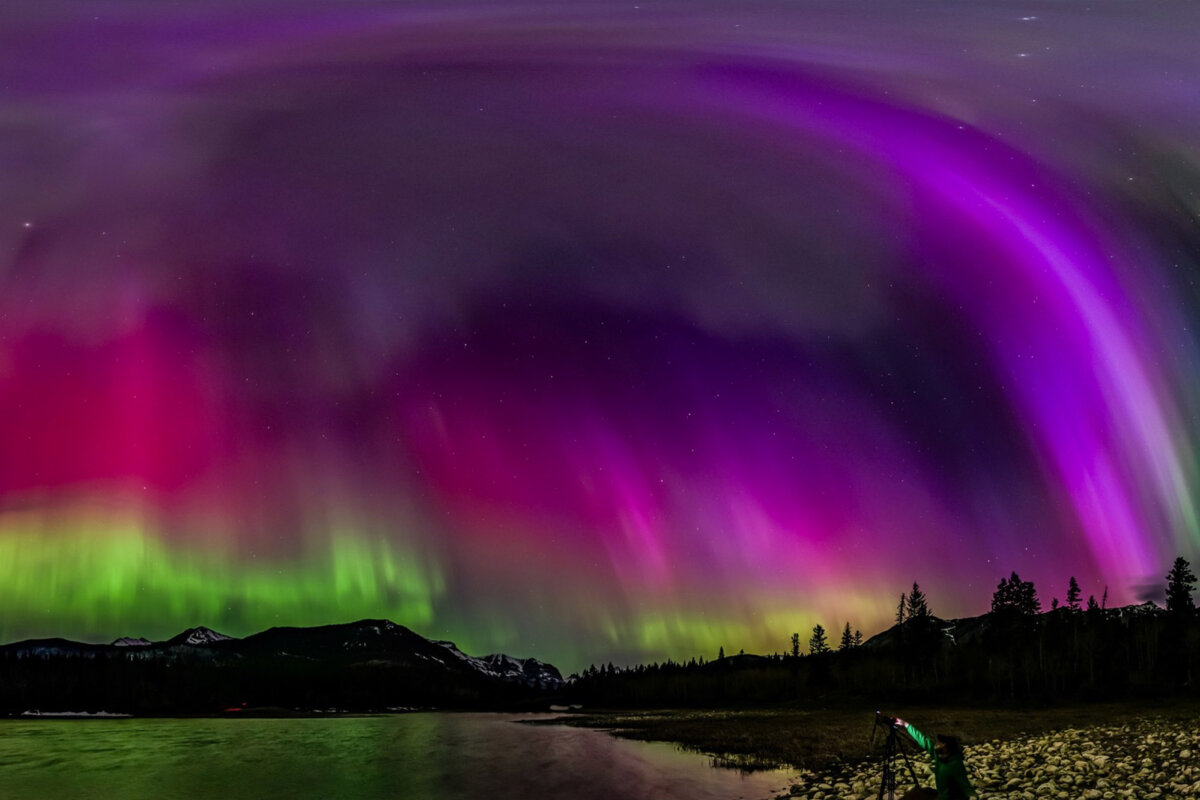
Northern lights appeared as far south as the tropics and reportedly illuminated the night sky so brightly that people could read newspapers by their glow. They exuded a striking deep-red as well as purple, green, and yellow hues.
When Andersen sees colours like those today, he gets excited.
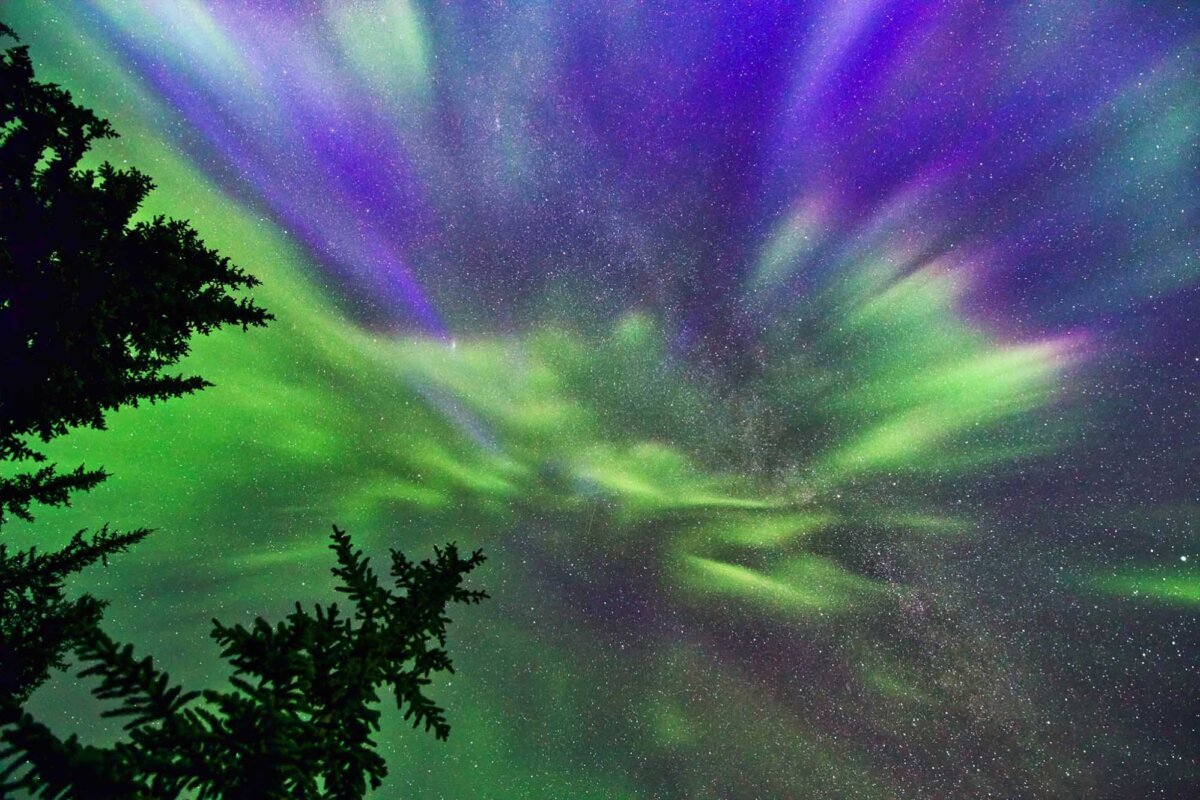
“If you get enough combinations of the different greens, reds, and pinks together, you can create all kinds of colours, including orange, yellow—it’s like a TV,” he said, noting that there’s science behind the colours; they’re not random.
Bright-green is the main aurora colour, he says. That’s caused by the excitation of oxygen molecules, O², when plasma enters Earth’s magnetosphere and causes them to fluoresce. Nitrogen, N², is another main component of our atmosphere, and it can cause a hot-pink colour.
Of course, there’s more than one type of oxygen and nitrogen molecule. There’s also O¹ and N¹. They’re stratified at different elevations and cause different colour variations when excited by plasma.
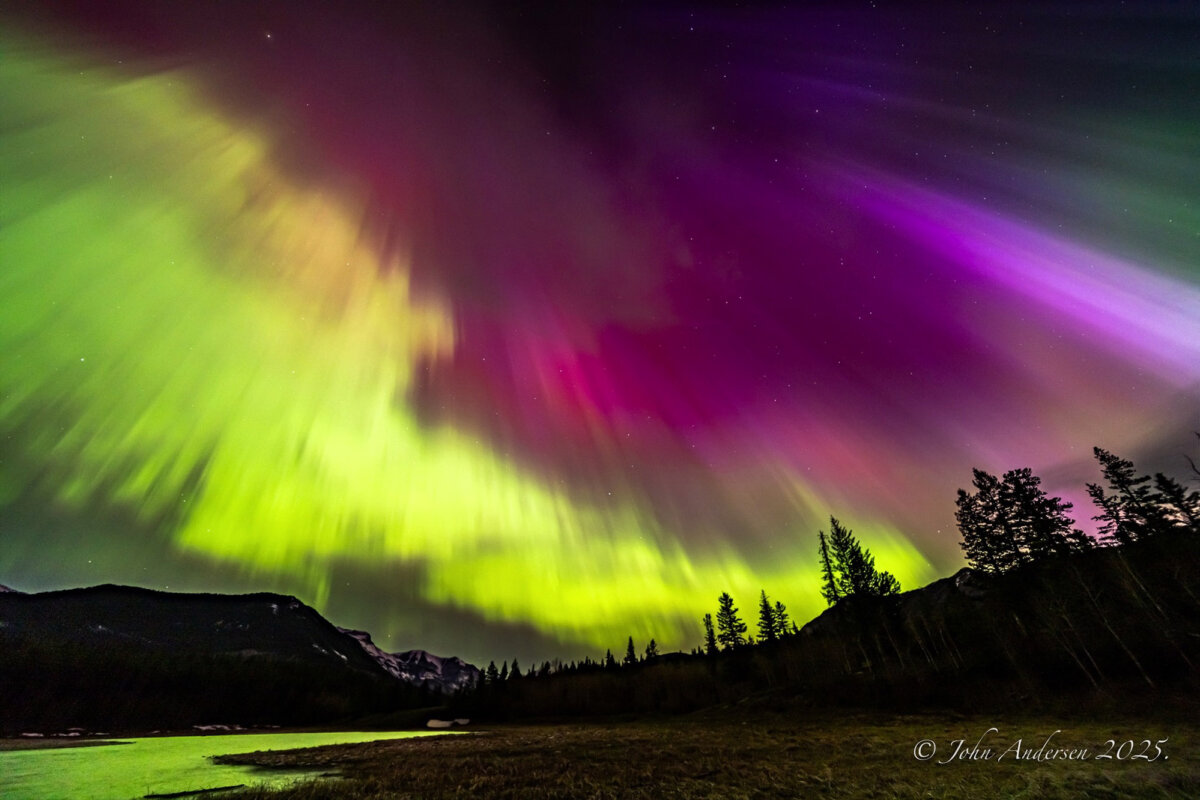
“Go higher, there’s this red colour, O¹,” Andersen says. “You get this pink fringe underneath the bright-green oxygen, and you get a combination where it’s pink and green.”
Sometimes the hues combine to cause a veritable aurora rainbow. “You get this pink fringe underneath the bright green oxygen,” he said, speaking of the typical culmination.
“A strip in the middle makes sort of like a golden colour. It’s fascinating.”
More Aurora Photos By John Andersen