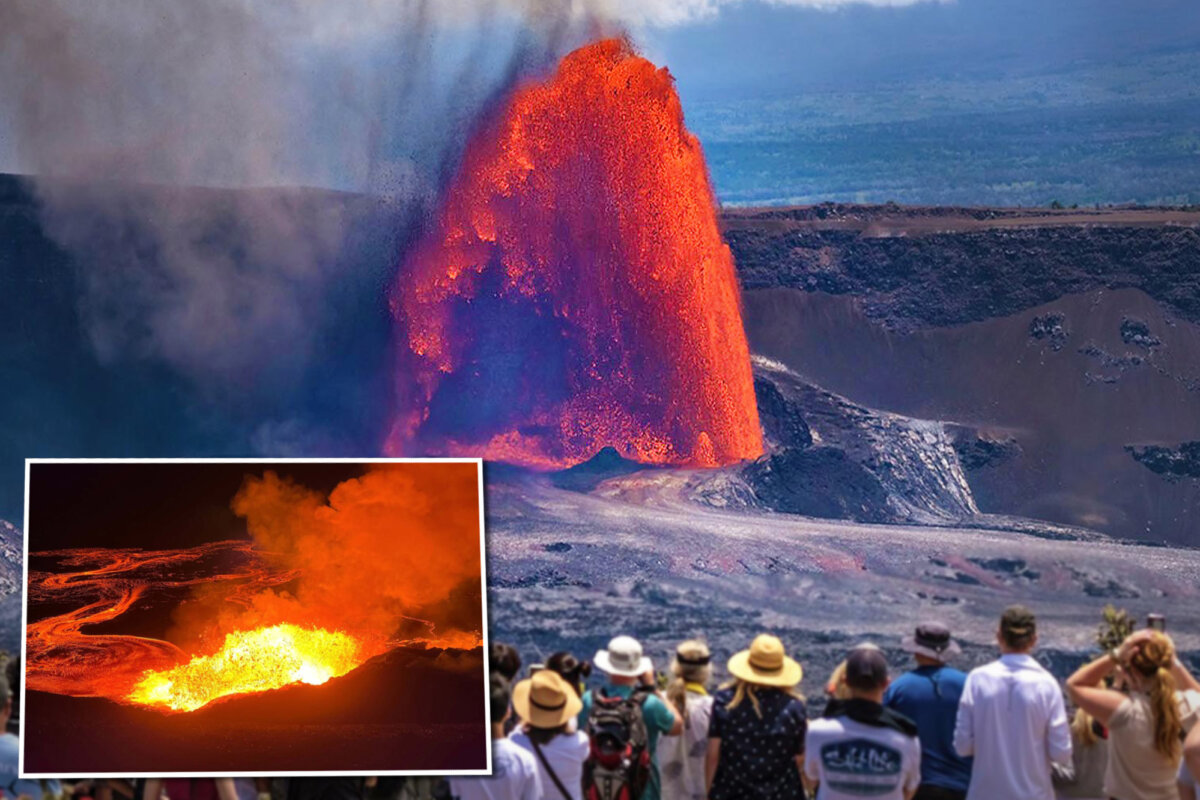
After days of quietly belching volcanic gasses, one of the world’s most active and dangerous volcanos began spewing lava again on the island of Hawaiʻi.
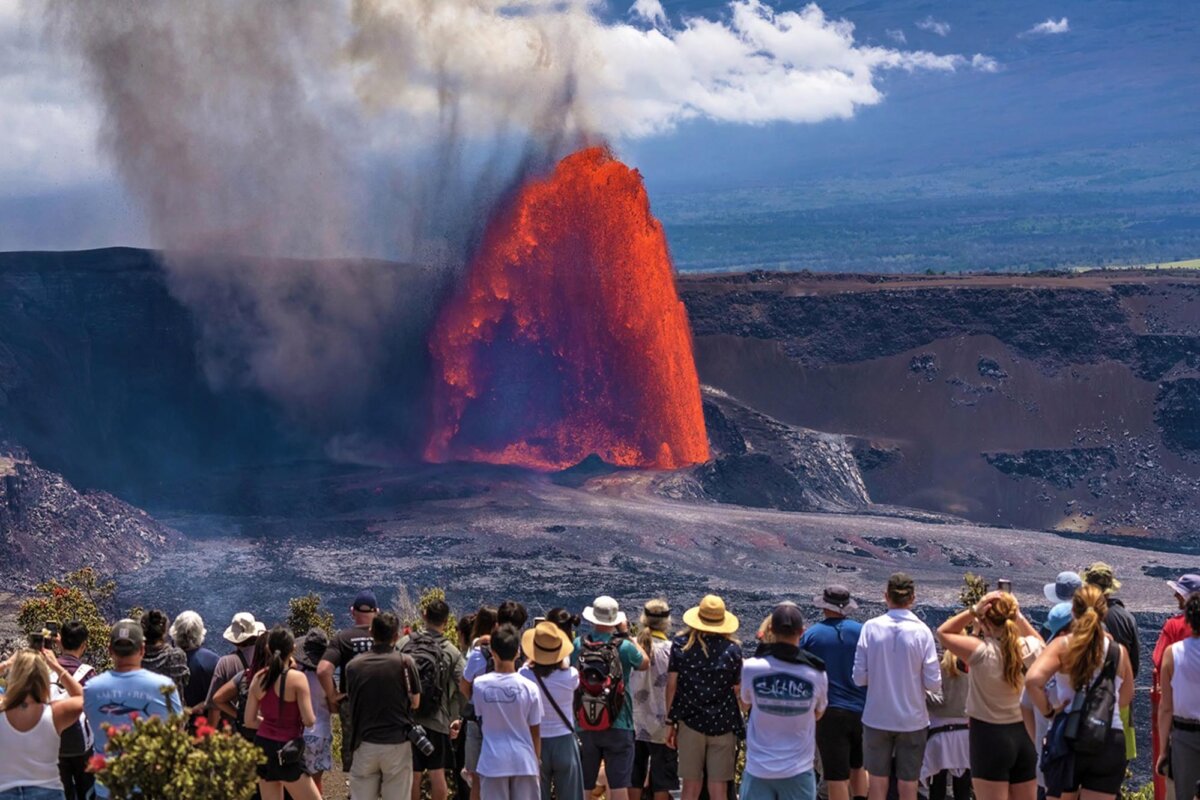
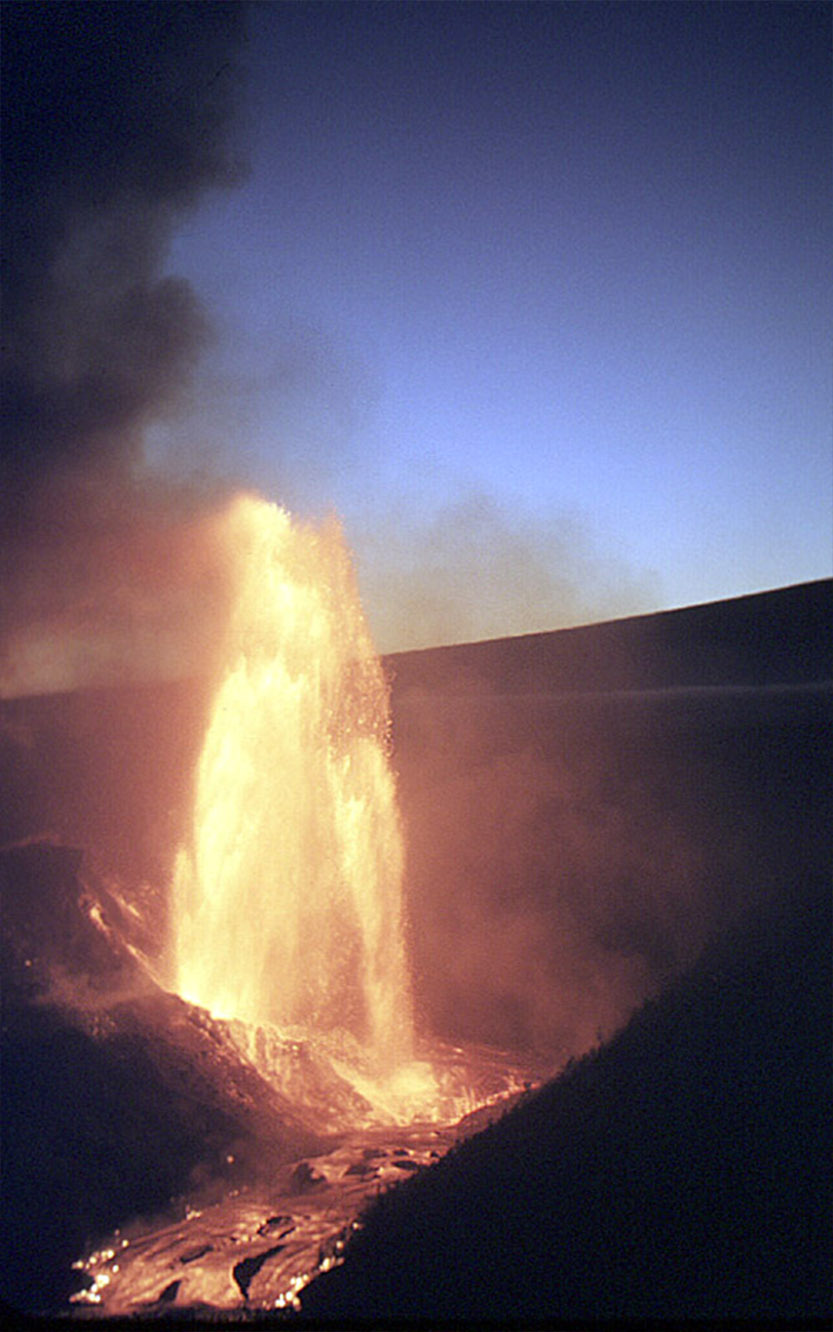
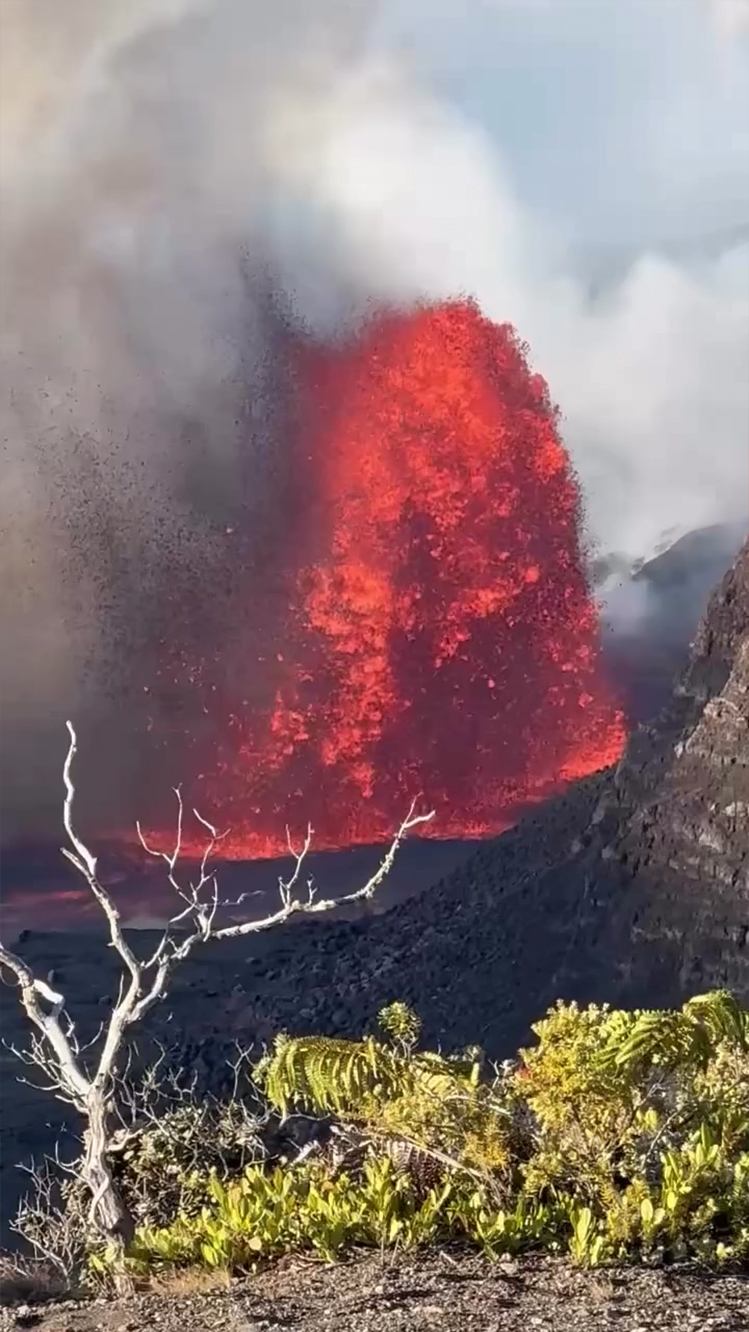
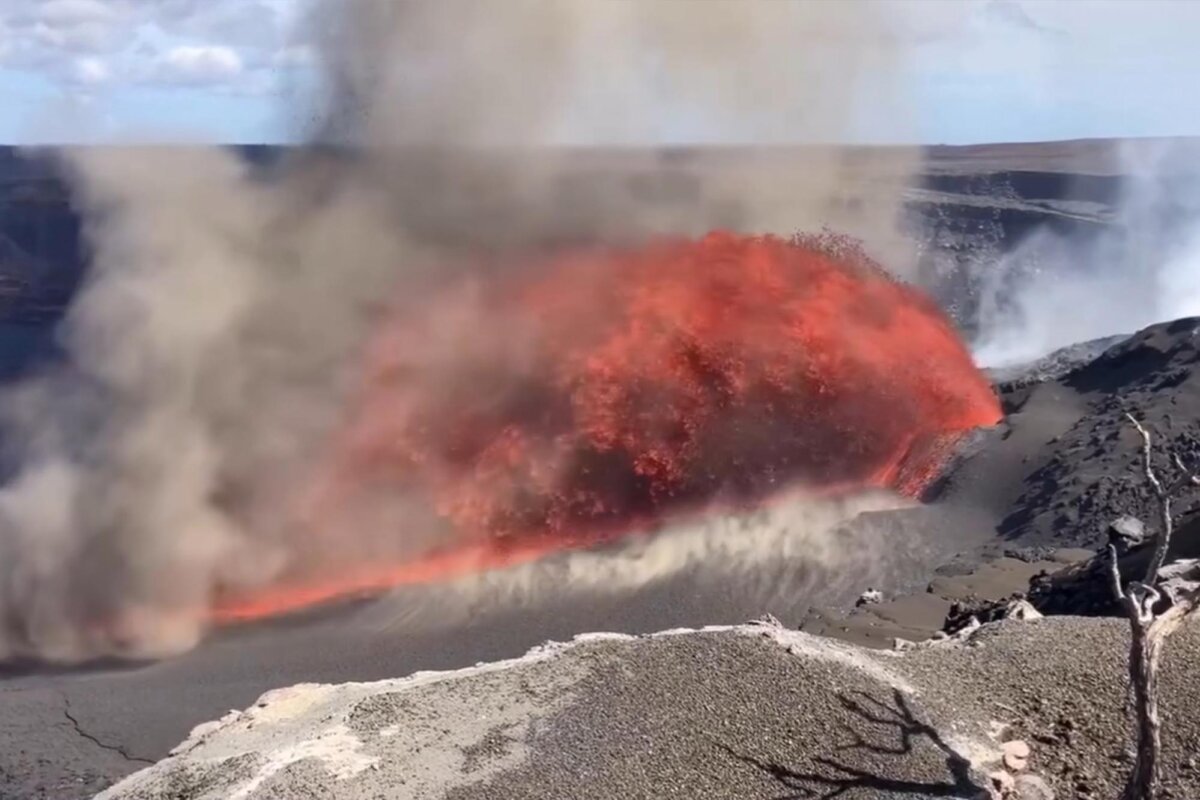
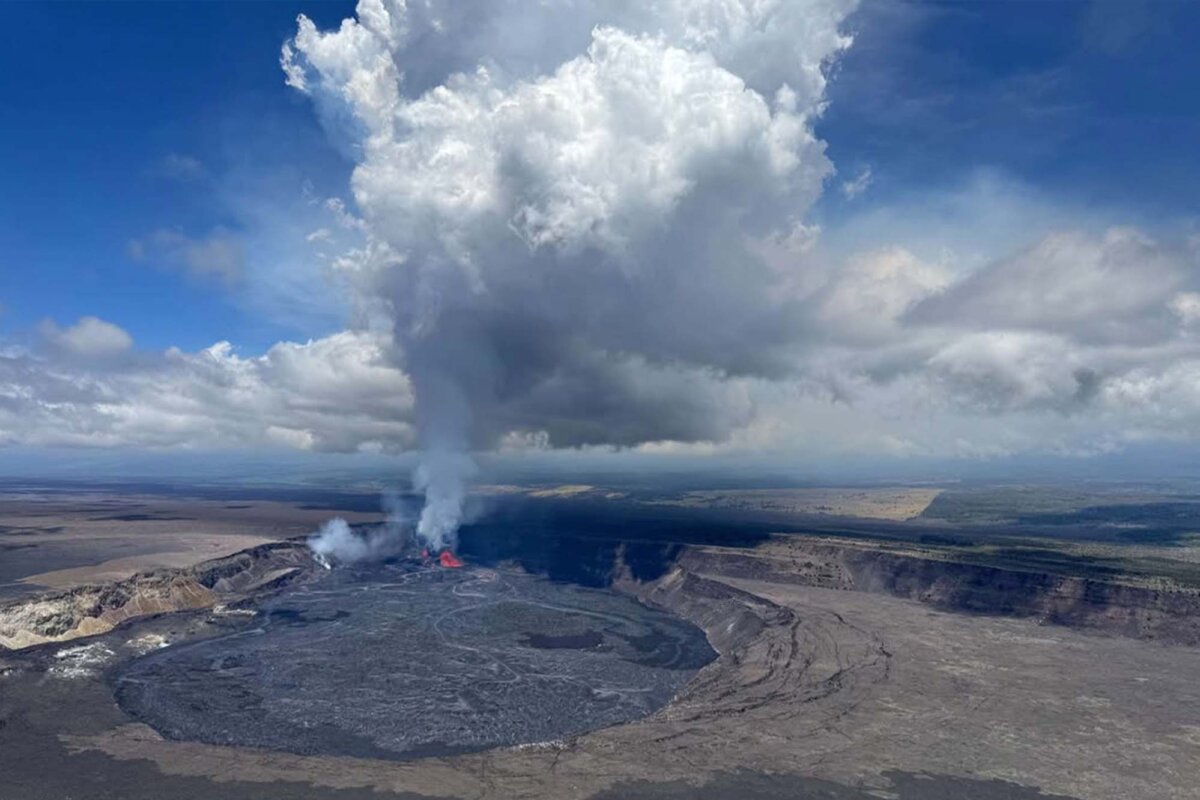
At 9:11 a.m. Eastern Time on Sept. 19, an enormous fountain of lava began spurting from the Kilauea caldera with arcs of orange molten rock reaching up to 700 feet high. A huge plume of gas and steam soared 10,000 feet overhead.
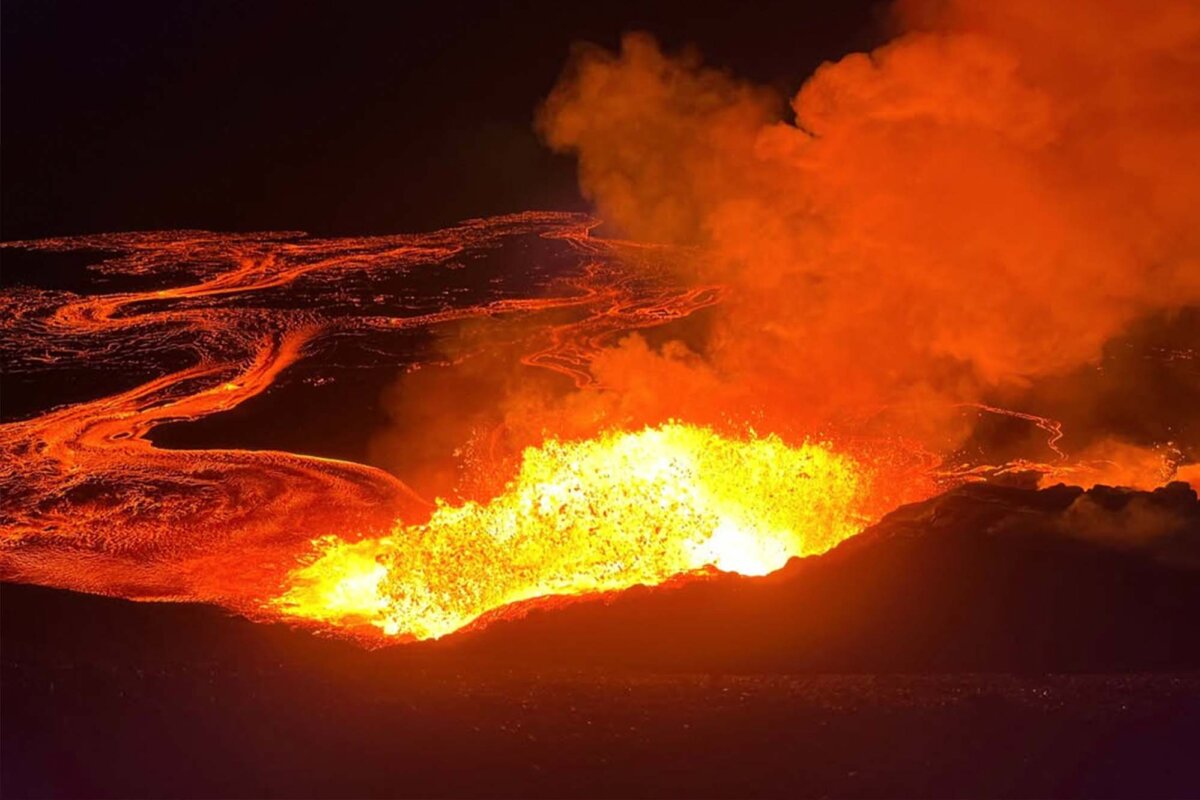
Multiple lava streams poured forth from the volcano as the latest eruption intensified. So far, all lava activity is staying within the crater in Hawaiʻi Volcanoes National Park.
Located 200 miles south of Hawaii’s capital of Honolulu, Kilauea has been in state of volcanic flux for months. Experts at the U.S. Geological Survey (USGS) have been waiting for weeks in anticipation. As Kilauea bubbled and overflowed, they measured its bulging crater and noted its “gas pistoning,” indicative of building magma pressure. This is Kilauea’s 33rd episode of “lava fountaining” since the current eruption began on December 23, 2024.
Over the summer, USGS posted explosive videos of volcanic fountaining online. In June, lava was seen squirting nearly 1,250 feet into the air. On Sept. 2, Kilauea’s 32nd episode was marked by molten rock flying 330 feet high.
Lately, visitors have been enticed to Volcanoes National Park to view the fiery scenery from overlooks along the crater rim. Thousands more tuned in online to watch the National Park Service’s volcano on livestream.
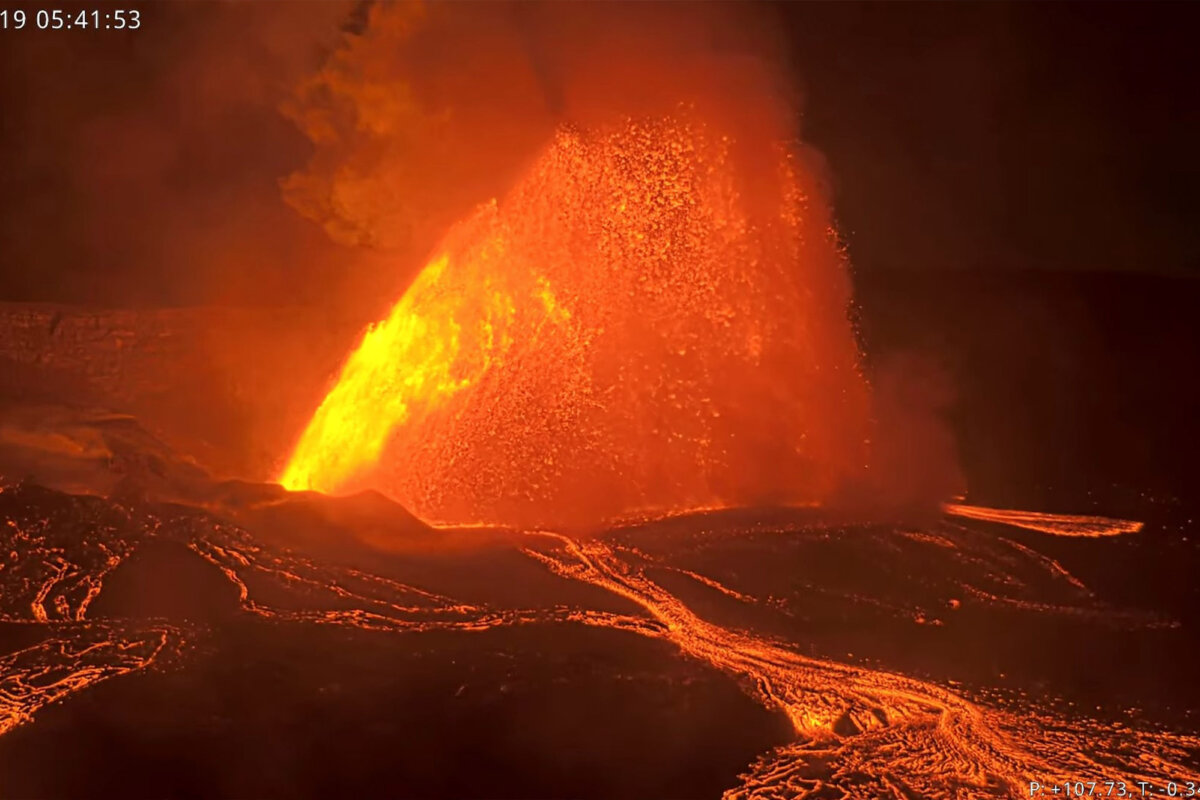
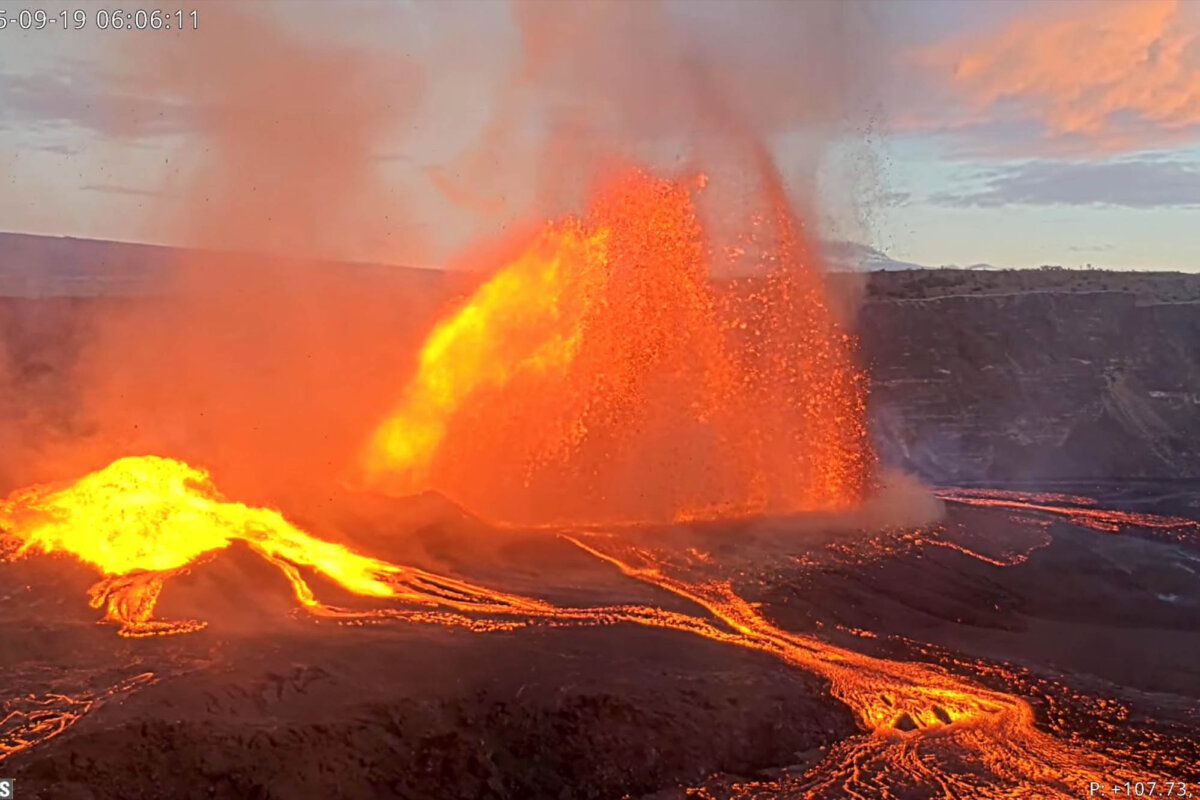
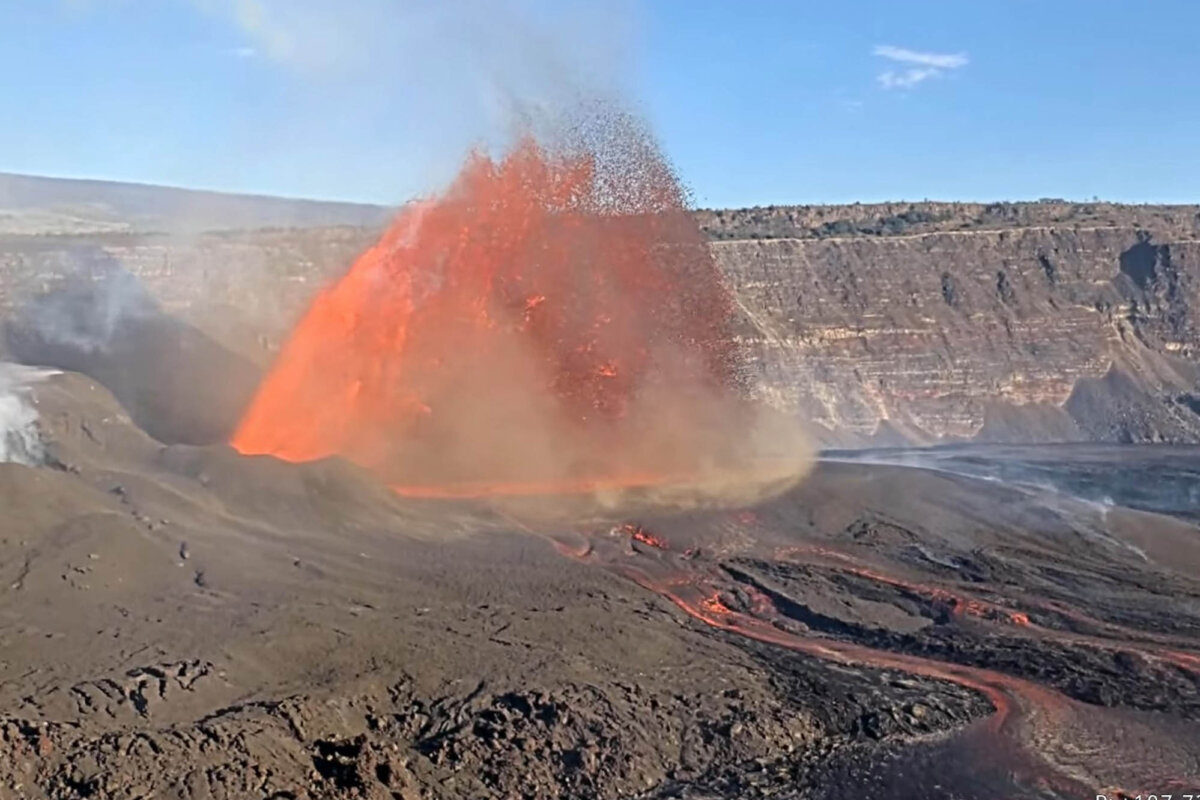
“Visitors from around the world are mesmerized by the eruptions,” Jessica Ferracane, a spokeswoman for Hawaii National Park, told The Epoch Times. “The volcano began erupting again this morning.”
During fountaining episodes, traffic has been stop-and-go for up to four miles before the park entrance, Ferracane said.
Kilauea’s episodes are generated in part by gasses released in the magma as it rises inside the volcano. Older and heavier magma from prior episodes caps the fresh new ascending magma. This blockage causes pressure to build and eventually blasts the degassed magma out like a cork from a champagne bottle that’s been shaken and opened.
Yet scientists continue to be mystified by volcanoes, despite all this knowledge. It’s hard to predict how they will evolve at any given moment.
“Our job is like being a bunch of ants crawling on an elephant trying to figure out how the elephant works,” Ken Hon, scientist-in-charge at the Hawaiian Volcano Observatory, told The Independent.
Native Hawaiian folklore looks at volcanoes more spiritually. “Many Native Hawaiian people feel a strong connection to Hawaiian volcanoes,” Ferracane said.
Legends say eruptions are caused by the goddess Pele, creator of the land. Living in the paradise of Hawaii has always been tied to Pele, as she may destroy the lives or homes of its inhabitants, or go around them, as she chooses.
Kilauea has displayed this truism in centuries both past and present. In 1790, the volcano took the lives of over 400 people, making the eruption the deadliest in U.S. history.
Pele, meanwhile, spared lives during countless eruptions during the 20th century. In the over 50 explosive events seen in 1924, only one death was recorded. An eruption in 1959 caused a 400-foot-deep crater and spectacular fountains of lava, but there were no direct fatalities. Kilauea was active in the 1970s, though no deaths resulted.
The last big eruption, from 1983 to 2018, ended with a bang. In 2018, 60 million tons of magma in the crater of Kilauea shockingly vanished all of a sudden, leaving a gaping hole, mystifying researchers. It had migrated eastward under the Earth, toward the sea, before bursting to the surface under Leilani Estates to form devastating fishers.
The ground shook and cracked. Molten rock bubbled and flowed out, claiming some 700 homes, displacing 2,000 locals. Though no one was killed, 23 were injured by lava bombs, chunks of solidified lava—some as large as a refrigerator—that can shoot hundreds of feet through the air.
After the lava left Kilauea hollowed out, with no outward pressure to hold it up, the caldera collapsed inward. A vast crater was formed, which remains today. Meanwhile, molten rock that had oozed from the fissures eventually found the ocean and formed acres of new land.
Pele has long been called a shaper and creator of land.
Since 2018, Kilauea’s caldera has fountained forth once again in a series of eruptions. So far, the spewing lava has been confined to the caldera and no one’s been harmed.
Since December, molten fountaining has covered 80 percent of the caldera floor with lava over the course of 32 episodes, the National Park Service says. All of these episodes stem from the same rising magma pathway and therefore belong to one single eruption, according to Hon.
The silver lining behind all the eruptions? For one, they allow a steady pressure releases over time, preventing big explosions all at once like the one seen at Mount St. Helens in 1980 that killed 57 people or historic eruptions at Kilauea.
But there are still dangers.
Over the last few months, the National Park Service’s U.S. Geological Survey has warned of hazards. Particularly downwind of Kilauea, volcanic gas can create a visible haze known as vog (volcanic smog), a cloud mixture containing sulfur dioxide, which can harm the respiratory system. Volcanic fountaining can also release fine filaments of glass called Pele’s hair into the air, causing eye and skin irritation.
Despite the hazards, though, Kilauea’s eruptions continue to stir excitement. National Park Service staff have been coping with motor traffic congestion on the crater as tourists and photographers flock to the caldera to witness one of the most magnificent forces of Mother Nature.