



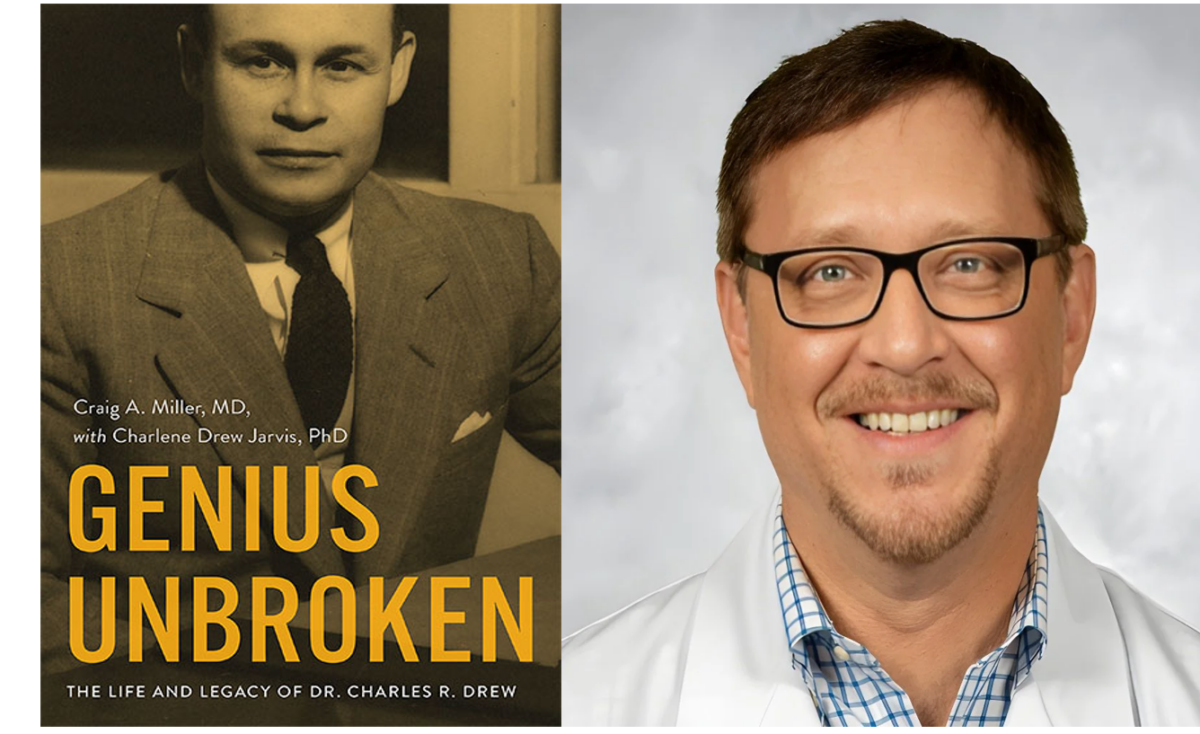
His name is likely unfamiliar, but his work has saved countless lives. If someone has had a blood transfusion, or required pints of blood during surgery, there’s a debt of gratitude owed to this medical professional. Soldiers wounded on the battlefield who survived because blood could be properly stored and ready to use during combat also owe a debt.
Readers will meet that man in the new biography by Craig A. Miller, “Genius Unbroken: The Life and Legacy of Dr. Charles R. Drew.” Thanks to diligent research combined with memories, documents, photographs, and newspaper clippings, readers will learn about an important medical advancement. Storing blood is something so routine today, that it’s hard to believe there was a time blood wasn’t already available. The physician behind it researched and outlined the blood storage process now used in blood banks around the world.
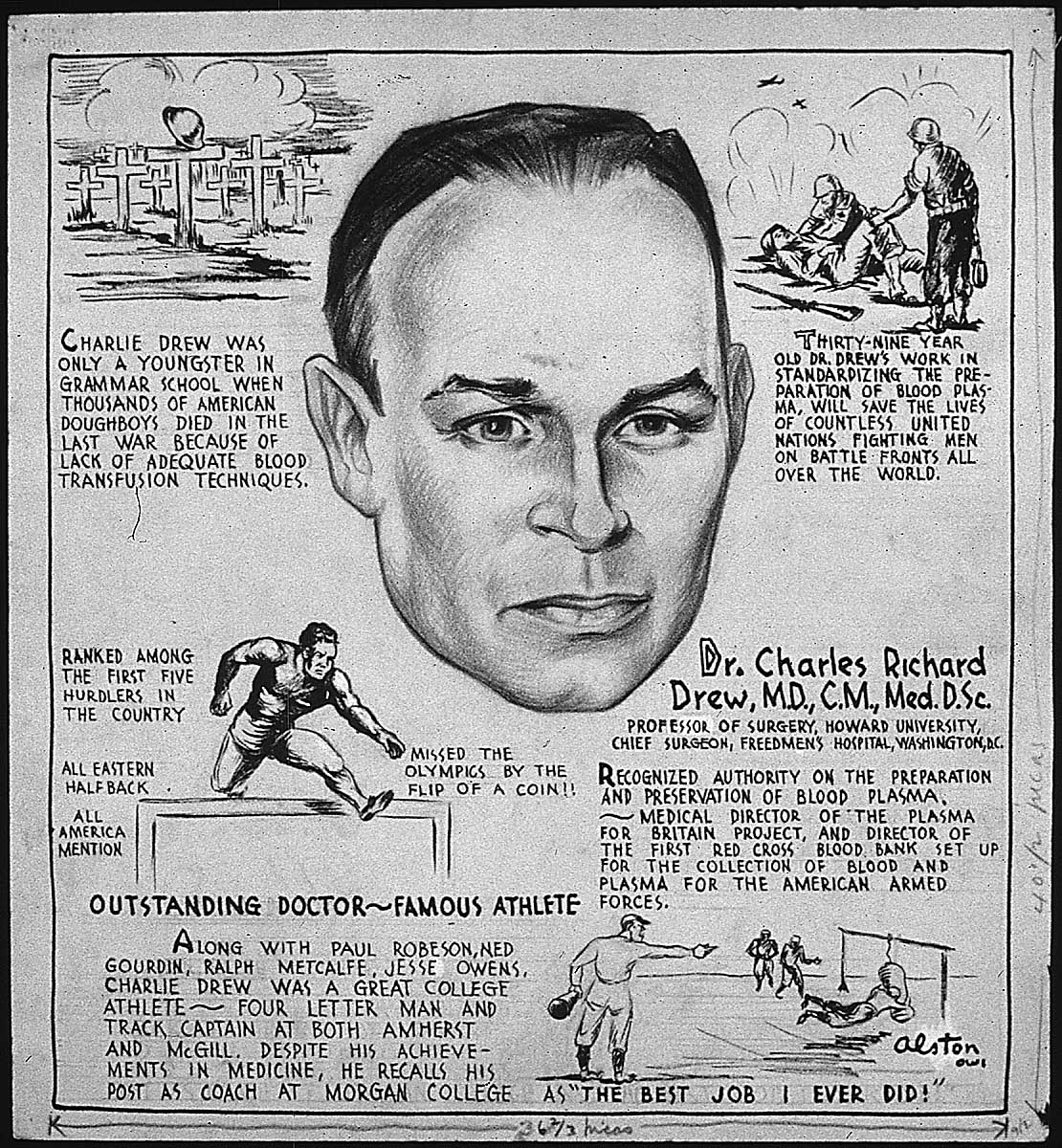
Creating Proper Blood Storage
In the late 1930s, Drew (1904–1950), already an up-and-coming surgeon and educator, joined the surgery department at Manhattan’s Columbia Medical Center. The head of the department chose Drew for a most important job. “If blood could be donated,” Dr. Miller wrote, “then kept in a storage facility until it was needed, the problem of having immediate, on-site donors would vanish.” Once stored, “blood could be transported, too, to places where donors might be wholly unavailable.”
The book traces Drew’s academic and scientific achievements through personal letters between him, a prolific letter writer, and his family, friends, and colleagues. Along the way, he impressed peers and professors alike throughout his career.
After his untimely death, Senator Hubert Humphrey acknowledged his contribution, noting for the Congressional record that Drew “chose to devote his gifts to the advancement of medicine rather than to the advancement of personal career or to winning the monetary rewards that were easily within reach.”
A Pioneer in Several Ways
One obstacle Drew faced was his African American heritage. Not many African Americans were able to move up the ranks of the medical profession at that time; for Drew, it was only due to his brilliance and ambition that doors opened to him. But as his own career flourished, he became all too aware of the discrimination against black doctors; the prevailing belief was, as the author wrote, that “white patients will not accept a Black physician.”
He spoke out to correct the misguided belief that blood from a black donor was unsafe for a white patient and brought attention to the lesser quality of care given to the black community.
Drew’s daughter Charlene Drew Jarvis, who holds a doctorate in neuropsychology, collaborated on the book. She provided her family’s memories of her father when he was a baby. His “bellowing cry” caused that his mother to fear that neighbors would think she was beating him.
She shared school records and evaluations from professors and supervising physicians. These confirmed his success in school sports, his growth as a researcher, goals as a physician, and how he met his wife.
Blood Preservation
Although plaques and statues were erected at the universities and hospitals where he served, Drew’s name remained relatively unknown. But his contributions in blood preservation at home and on the World War II battlefields were cheered by the medical profession. The process quickly became part of routine hospital procedures. However, until this biography, little has been known about the man regarded as the “Father of the Blood Bank.”
Told by an experienced medical biographer who has written books on surgeons Robert M. Zillinger and Michael E. DeBakey, Dr. Miller combines the medical background to illustrate the importance of Drew’s work with the literary skills to create a compelling life story.
In her foreword, Drew’s daughter related the importance of her father’s blood bank work. Only recently, however, did she learn about his efforts to change the minds of the American Medical Association for their “refusal to allow staff privileges for African American residents in all white hospitals throughout the country.” She wrote that he “railed” against that practice because it would stifle the “production of African American physicians for generations.”
Dr. Miller writes in a balanced style, providing the faults and brilliance of the man, physician, scientist, husband, father, son, and brother. There was so much packed into a life that ended tragically, and too soon.
The accolades that followed came from all walks of life, from the halls of Congress to the classes in medical schools throughout the country. It’s a biography rich in depth, and a call to action for the new generation of medical professionals and researchers to continue expanding research on blood storage.
Readers will find extensive footnotes and a lengthy reference section which may prove invaluable to medical students embarking on a similar path of scientific discovery. Like Drew himself, may they serve patients, educate the next generation of doctors, and commit to equality for all.
‘Genius Unbroken: The Life and Legacy of Dr. Charles R. Drew’
By Dr. Craig A. Miller, with Charlene Drew Jarvis
Georgetown University Press: Sept. 2, 2025
Hardcover, 328 pages
What arts and culture topics would you like us to cover? Please email ideas or feedback to features@epochtimes.nyc
