Certain numbers carry an almost uncanny significance in the way humanity tells its stories. The number 40 stands out as one of the most potent. Again and again, across Scripture, tradition, folklore, and even modern life, 40 marks a period of testing, transformation, and renewal. It is the number of waiting, trial, and transition. It’s long enough to change us, yet mercifully finite so that the heroes who endure may survive it.
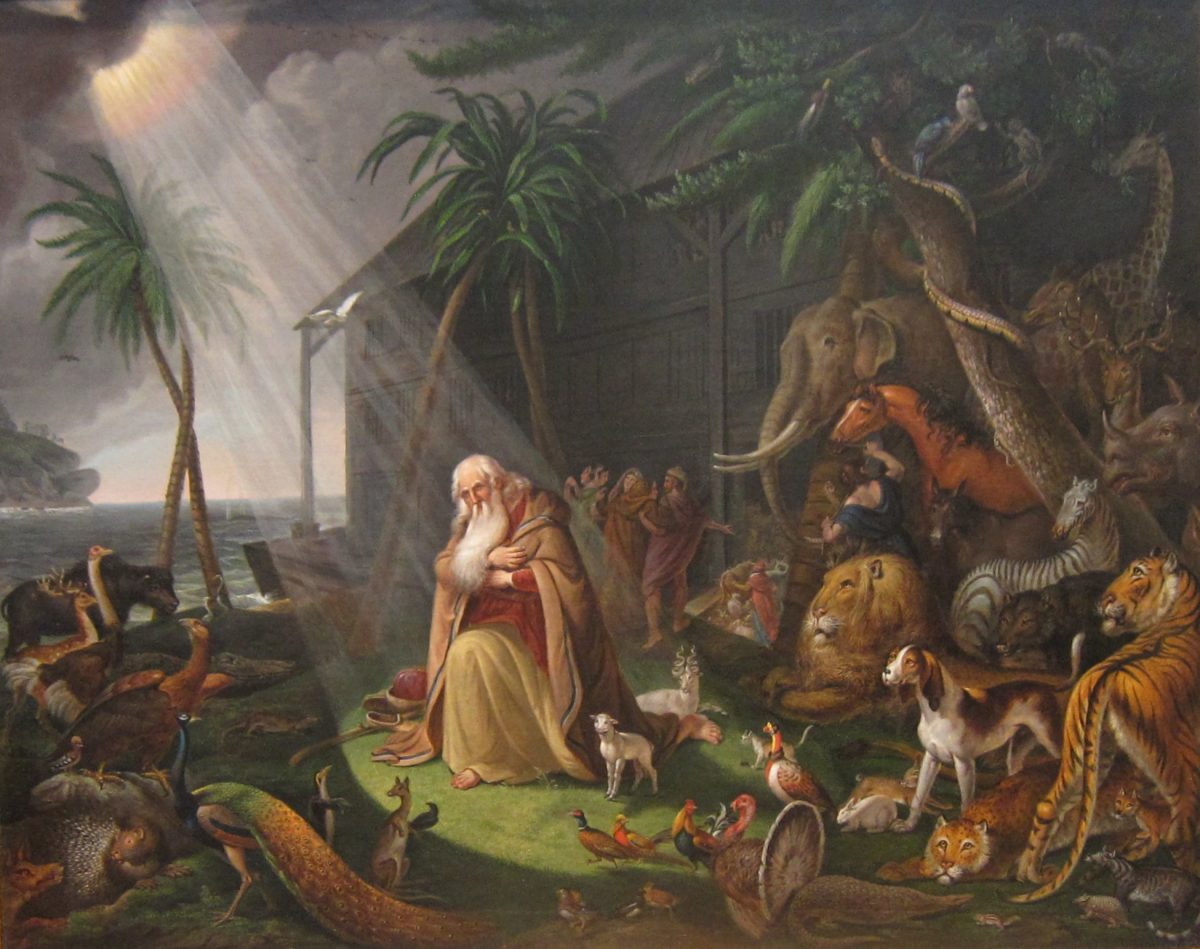
The Bible is filled with examples. Noah’s flood lasted 40 days and nights, washing away a corrupt world so that a new covenant could begin. Moses fasted 40 days on Mount Sinai before receiving the law of God, and again spent 40 days in intercession after Israel’s sin. The Israelites wandered 40 years in the wilderness until an unfaithful generation had passed away and a renewed people could enter the promised land. When Elijah was at his lowest, ready to give up, he was strengthened by heavenly food and journeyed 40 days and nights to Mount Horeb, where he received his new commission.
The pattern continues into the New Testament. Jesus himself fasted 40 days in the wilderness, resisting temptation and preparing for his public ministry. After the resurrection, he appeared to his disciples for 40 days before ascending to heaven, teaching them and commissioning them for the future. In every case, 40 is the bridge between one state and another: between corruption and covenant, despair and vocation, temptation and triumph, resurrection and mission. It is, if you will, a liminal space—a transition time—and it leads to something completely new and unexpected.
The Meaning of 40
Why 40? The answer is both practical and symbolic. The number is four times 10. It is the number of earthly fullness (four directions, four winds, four corners of the earth) multiplied by the number of law and order (the Ten Commandments). To undergo 40 days is to undergo the full measure of testing within the created order, under divine oversight. In the Bible, even punishment is tempered by this logic. The maximum lashes permitted by Mosaic Law was 40—judgment bounded by mercy. In Judaism, the ritual bath of purification must contain at least 40 se’ah (a unit of measure) of water. Rabbinic tradition marks 40 days as the point at which an embryo becomes formed life.
Even in the secular world, echoes remain. The very word “quarantine” comes from the Italian “quaranta giorni,” “forty days,” the length of time ships had to remain isolated during plague outbreaks before being readmitted to port. A human pregnancy, from conception to birth, spans about 40 weeks; it’s the natural period of hidden growth before a new life begins. Many cultures observe 40 days of postpartum rest (sometimes known as the “golden month”), recognizing the body’s need for recovery and the family’s need for bonding.
Again and again, then, 40 appears as the number of probation, purification, and passage. It is the span that tests whether we are ready for what comes next. It is long enough to strip away illusion, but not endless: The number 40 promises that renewal is possible.
The symbolism of 40 does not end in the realm of faith and ancient custom. It still pervades our everyday lives, sometimes in ways we scarcely notice.
Forty in the Arts and Culture
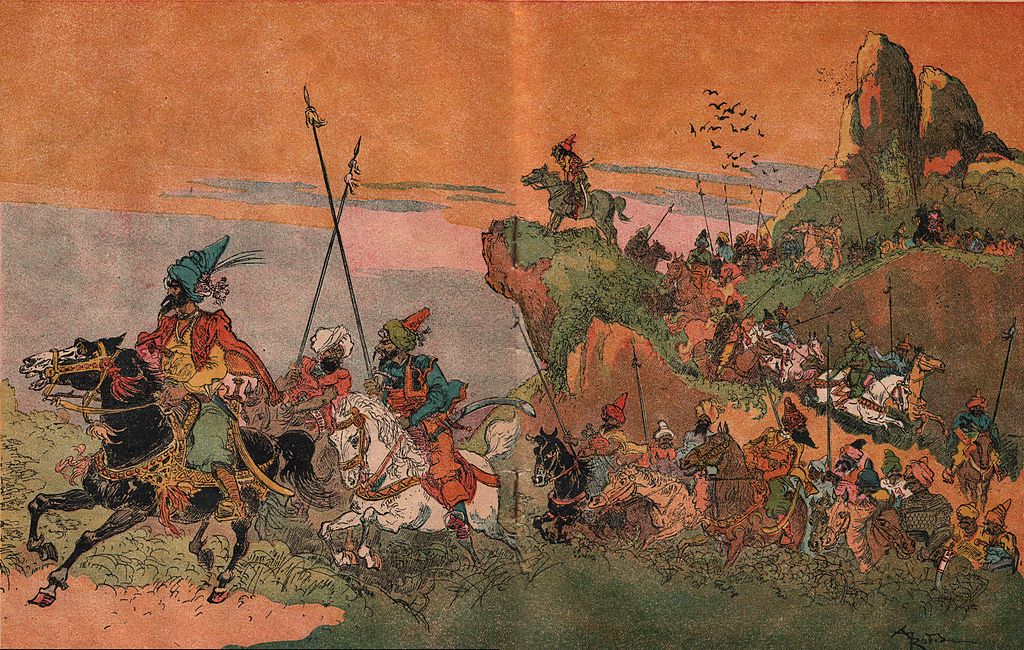
Consider folklore and the famous tale of “Ali Baba and the Forty Thieves.” Why 40? Because the number evokes multitude and menace—a testing of courage and cunning. Ali Baba is not pitted against a handful of rogues but against the full weight of danger, concentrated into the archetypal 40. The number here signals not just a challenge but also an ordeal demanding resourcefulness and endurance.
In our own idioms, “life begins at 40” has become a cultural proverb. The saying recognizes 40 as a turning point, a moment when youthful energy gives way to seasoned maturity. The ancients thought of 40 as the span of testing before renewal. Our modern quip acknowledges the same—that at 40, one is ready for a new chapter, being more grounded and resilient.
Writers and statesmen have played with this symbolism. Winston Churchill is often credited with this wry remark: “If you are not a liberal at twenty, you have no heart. If you are not a conservative at forty, you have no brain.” The line, whether entirely authentic or apocryphal, plays on the cultural association of 40 with maturity and discernment.
Similarly, Bob Hope quipped, “She said she was approaching forty, and I couldn’t help wondering from what direction.” Victor Hugo noted, “Forty is the old age of youth; fifty is the youth of old age.” And Mae West, with her usual sharpness, declared, “A man has more character in his face at forty than at twenty—he has suffered longer.” Each of these remarks reveals the same intuition: 40 marks the passage from testing into tempered identity.
Even science and industry reflect the theme. One of the most famous household products of the 20th century, WD-40, bears the number in its name. Why? Because it was the inventor Iver Norman Lawson’s 40th attempt at finding the right formula for water displacement. Success came only after trial upon trial—a perfect modern parable of 40’s association with perseverance and breakthrough.
History, too, provides its echoes. After the American Civil War, Gen. Sherman promised to redistribute land to freed slaves, with allocations of “40 acres and a mule.” Though the promise was largely unfulfilled, the phrase lived on in memory and was later immortalized by film director Spike Lee in the name of his production company. Once again, 40 appears as a number symbolizing hope, justice, and the possibility of new beginnings after trial and bondage.
The fact that these motifs resurface in such varied contexts—religion, folklore, literature, invention, politics, and pop culture—suggests that 40 remains imprinted on the human imagination as a threshold number. It is long enough to test but finite enough to give hope. It speaks to patience, to resilience, and to the possibility of transformation.
Nor is this merely symbolic. Some psychologists and life coaches today (though there are other theories) note that 40 days is an effective span for changing habits, forming new disciplines, or breaking addictions. The modern “digital detox” can often run on a 40-day model: long enough to reset neural pathways, short enough to be practical. In this way, ancient intuition and modern science converge.
Ultimately, 40 is a number that assures us our trials are not endless. It marks the point where hardship gives way to growth and testing becomes transformation. Whether in Scripture, folklore, or the familiar phrases of our daily speech, 40 whispers the same truth: that the road of trial, though demanding, is not infinite but finite, and from there leads to renewal.
What arts and culture topics would you like us to cover? Please email ideas or feedback to features@epochtimes.nyc