



CHICAGO—Imagine the world without “A wild goose chase” (“Romeo and Juliet”), “All that glisters is not gold” (“The Merchant of Venice”), “Wear your heart on your sleeve” (“Othello”), “Though this be madness, yet there is method in’t” (“Hamlet”), and “the milk of human kindness” (“Macbeth”). Those phrases and and so much more of William Shakespeare’s literary genius would have been lost if not for the devotion of two friends, who saved the great playwright’s works. That’s the story that is lovingly told in “The Book of Will,” now a stellar production by the Promethean Theatre Ensemble at the Den Theatre in Chicago.
Written by Lauren Gunderson and first mounted in 2017, “The Book of Will” is set in London three years after the death of Shakespeare (1564–1616). The play centers on the creation of the First Folio by John Heminges (Jared Dennis) and Henry Condell (Ben Veatch), who compiled a published collection of Shakespeare’s works.
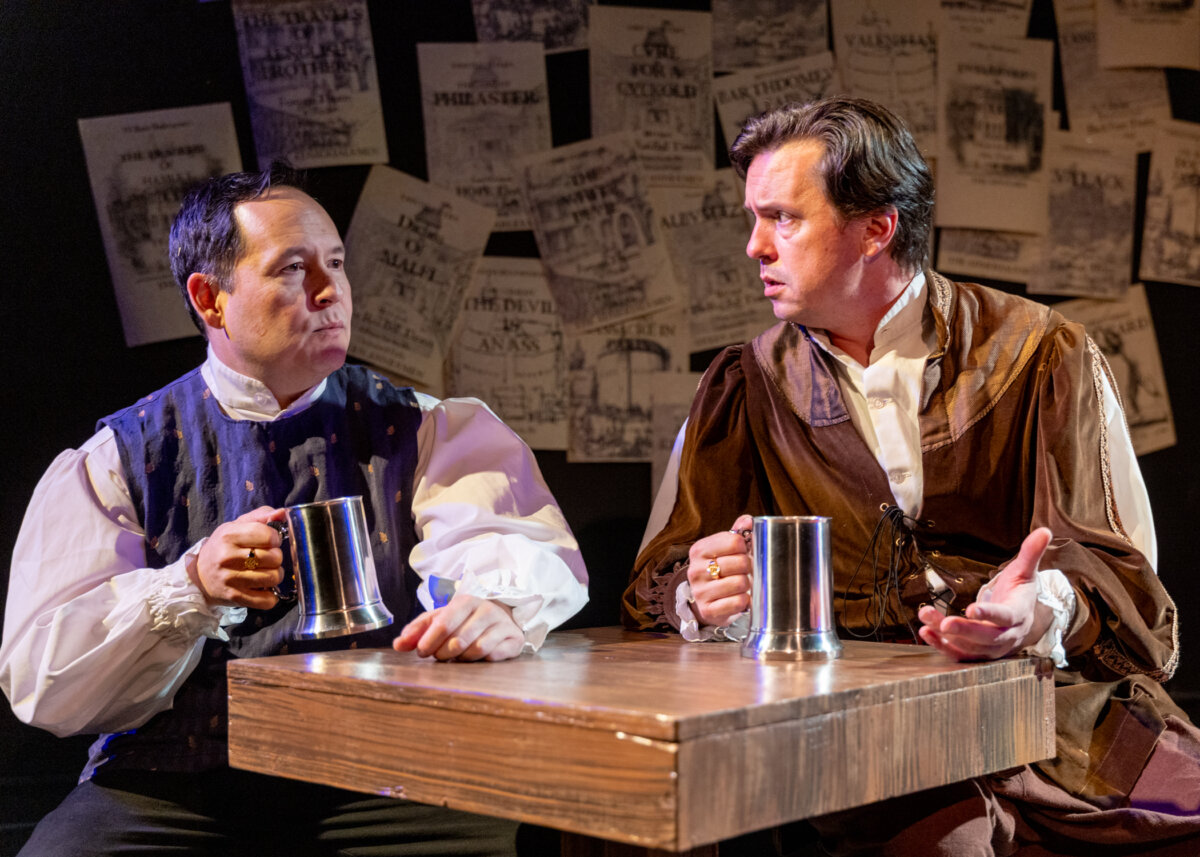
The play begins as the two men, who were actors with Shakespeare, are complaining about the awful performance of “Hamlet” they just saw. Joining them is Richard Burbage (Brendan Hutt), the greatest actor of the day (1567–1619), renowned for his performances of Shakespeare’s most popular works.

The following morning, Heminges and Condell learn that Burbage died in his sleep, and along with him the memory of Shakespeare’s plots, characters, and dialogue. At the time, since there were no laws against plagiarism, plays weren’t often published. While each individual actor had his own script, the entire plays were known only by someone like Burbage, who knew all the speeches by memory. Burbage’s death grips Heminges and Condell with the fear and sudden realization that many of Shakespeare’s plays might be lost forever.
They come up with the idea of bringing together all of Shakespeare’s plays into a book. They know nothing about publishing and realize that the task will be difficult. They could find some complete works that were in working scripts and some individual actors’ dialogue, but they would have to hope that some of the actors, who memorized their parts for the stage, would still remember their lines. They also faced the challenge of raising money to pay a publisher, the kind of publisher who wouldn’t put together a fake book of the Bard’s works for his own purposes.
 John Heminges (Jared Dennis, L) and Henry Condell (Ben Veatch) discuss what to do now that Shakespeare is gone, in “The Book of Will.” (Stephen Townshend/Distant Era)
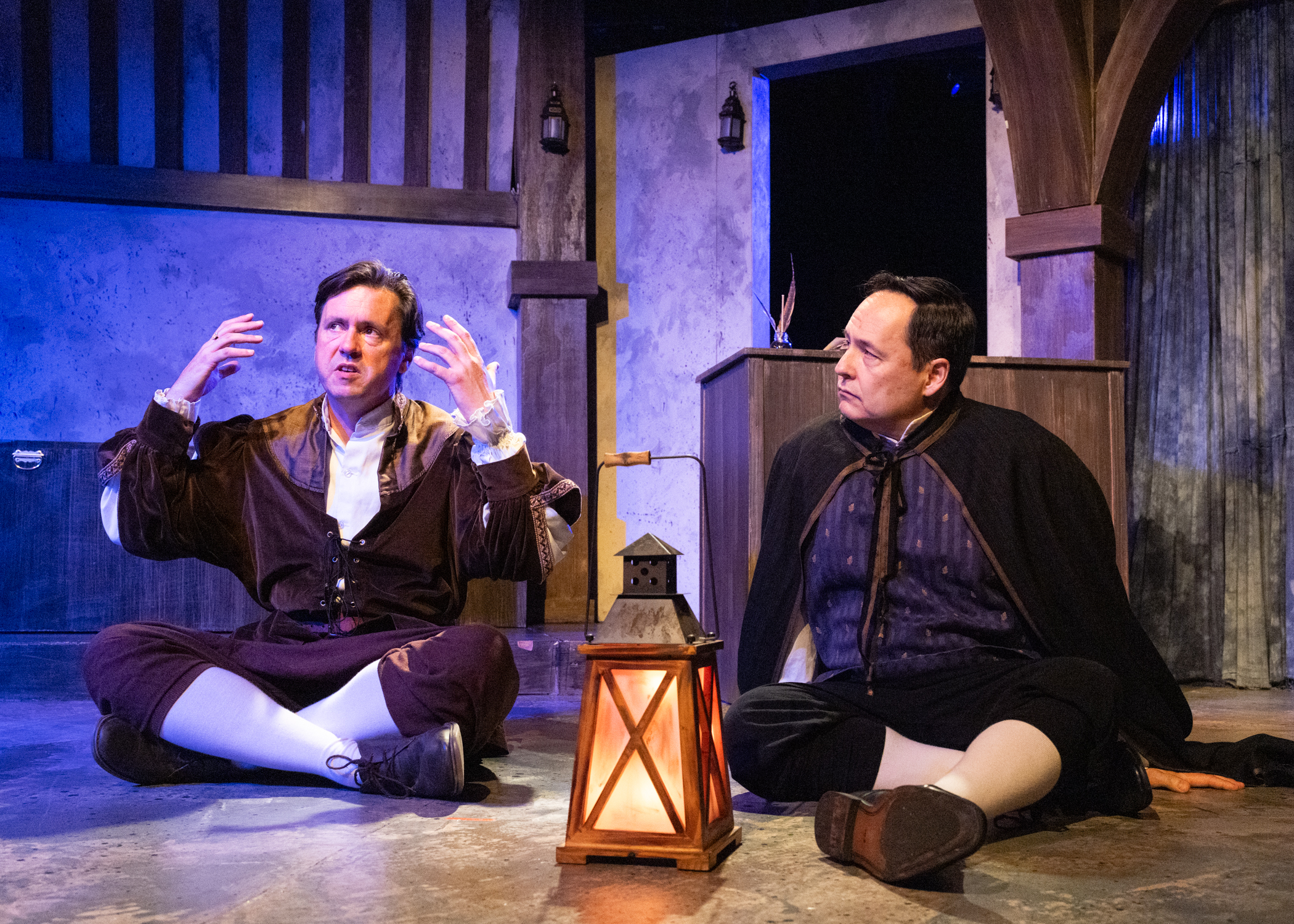
Directed with elegance and subtlety by Beth Wolf, “The Book of Will” is an engaging and often comedic charmer that blends historical fact with imagination and wit. Set in a minimalist stage by designer Trevor Dotson, the play’s lighting is by Jackson Mikkelsen and lovely Elizabethan costuming is by Rachel M. Sypniewski. The perfect sound design by Alex Trinh lets audience members hear every word of dialogue clearly. “The Book of Will” moves flawlessly from start to finish.
“The Book of Will” itself offers great history and storytelling, but the production also unfolds with wonderful emotion and power because of a talented group of actors. As Heminges, Jared Dennis delivers a strong emotional performance. As Condell, Ben Veatch provides many poignant moments. Furthermore, Brendan Hutt does a great job playing both Richard Burbage and the nasty publisher William Jaggard. James Lewis is humorous as drunken playwright Ben Jonson (1572–1637). Jonson’s epitaph for Shakespeare—that he was “not for an age, but for all time”—is a concise summary of the importance of preserving the great Bard’s work.
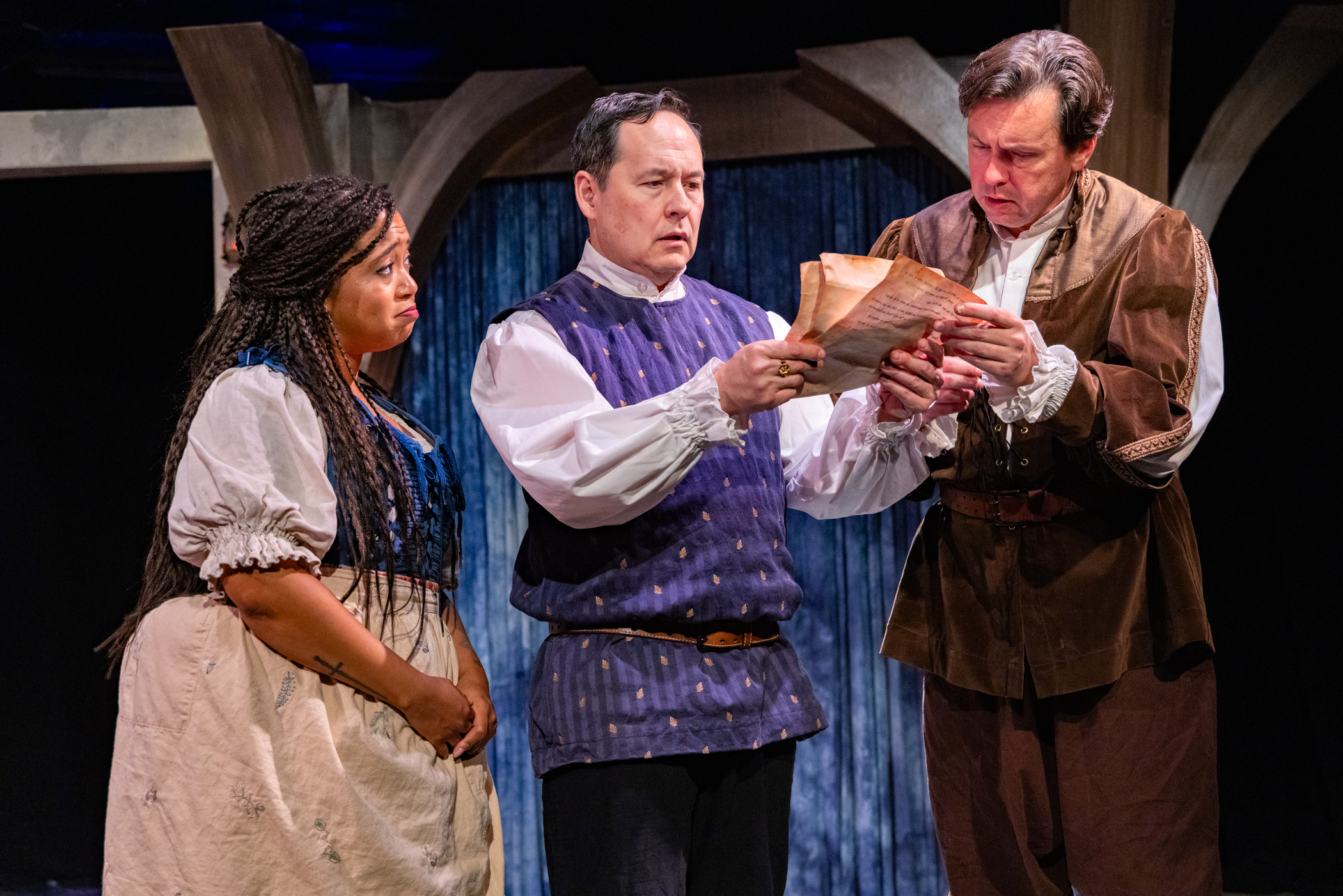 (L–R) Brittani Yawn, Ben Veatch, and Jared Dennis in “The Book of Will.” (Stephen Townsend/Distant Era)
Without the determination of Shakespeare’s friends and fellow actors, we might never have been able to hear “To thine own self be true” from “Hamlet,” or “All the world’s a stage” from “As You Like it,” or “Now is the winter of our discontent” from “Richard III.” Indeed, mankind would have missed out on so much if we didn’t know “The fault, dear Brutus, is not in our stars, but in ourselves” from “Julius Caesar.”
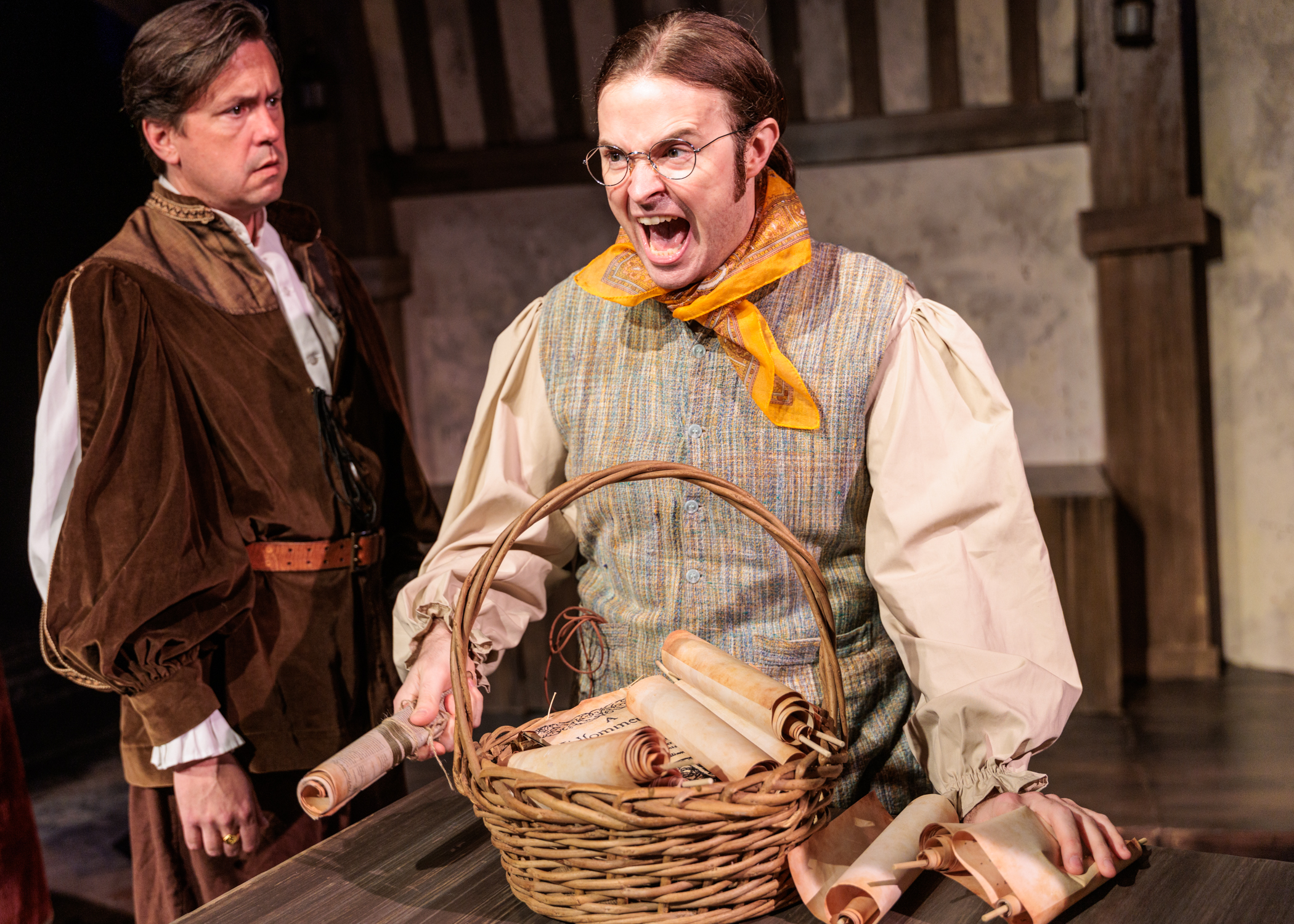 John Heminges and Kevin Sheehan in “The Book of Will.” (Stephen Townshend/Distant Era)
Of course, Heminges and Condell succeeded. The First Folio, which consisted of 36 Shakespearean plays was published in 1623, seven years after the bard’s death. Getting an insightful exploration of how two actors saved Shakespeare’s legacy for all time is an extraordinary treat for theater buffs and a special gift for lovers of Shakespeare. A must see!
‘Book of Will’
Promethean Theatre Ensemble
The Den Theatre
1331 N. Milwaukee Ave., Chicago
Tickets: 773-697-3830 or TheDenTheatre.com
Runs: 2 hours (one intermission)
Closes: Oct. 25, 2025
What arts and culture topics would you like us to cover? Please email ideas or feedback to features@epochtimes.nyc
