In the summer of 1534, Thomas More was imprisoned for refusing to acknowledge King Henry VIII as the head of the Church of England. From a grimy prison cell, the Catholic statesman wrote letters to friends and family that illustrated faith’s role in preserving his moral integrity, despite imminent death.
More’s Imprisonment
England in the 1530s was beset by widespread political turmoil. German theologian Martin Luther had published his 95 theses in 1517. The theses outlined a series of critiques against the Catholic Church for what Luther called overt corruption. They had a ripple effect throughout Europe, igniting what historians call the Protestant Reformation.
Although it had many causes, the Reformation in England came into full effect when King Henry VIII decided to split from the Catholic Church. Desperate for a male heir, Henry sought to divorce Catherine of Aragon, a noblewoman with important ties to Spain, and marry Anne Boleyn.
Despite the king’s desire, Pope Clement VII refused to annul the marriage on the grounds that a holy union should remain intact. Dissatisfied with this refusal, Henry decided to break with the Catholic Church and found the Church of England. By separating the church from papal jurisdiction, he could introduce new procedures that allowed him to divorce Catherine. The establishment of a new church deepened the often violent divide between Catholics and Protestants, which continued to modern times.
 A portrait of Henry VIII of England, 1540, by Hans Holbein the Younger. Oil on panel. National Gallery of Ancient Art, Rome. (Public Domain)
 As a devout Catholic and the former Lord Chancellor to Henry VIII, More resisted the king’s radical decision. For Catholics, the Pope was and is the highest earthly authority. More couldn’t bring himself to grant a king special privileges and undermine the authority of his spiritual leader.
On April 17, 1534, guards escorted More to a prison cell in the Tower of London, where he spent the last year of his life as a defector. His family was allowed limited visits, and he was still able to write. While in prison, he finished “A Dialogue of Comfort Against Tribulation,” which explores faith’s role in alleviating physical and psychological turmoil. The text resembles Boethius’s “Consolation of Philosophy,” also written from a prison cell before an execution.
Both More and Boethius remind readers that the human mind can guarantee freedom, no matter the body’s circumstances. In More’s words, “the mind should not be grieved neither with the pain that the body feeleth nor with the occasions of heaviness offered and given unto the soul itself.”
Physical obstacles like hunger and imprisonment deprive us of the ability to move and thrive, but they can’t fully obstruct our internal state. As long as we live, so does our most important freedom—the freedom to choose how to respond to circumstances.
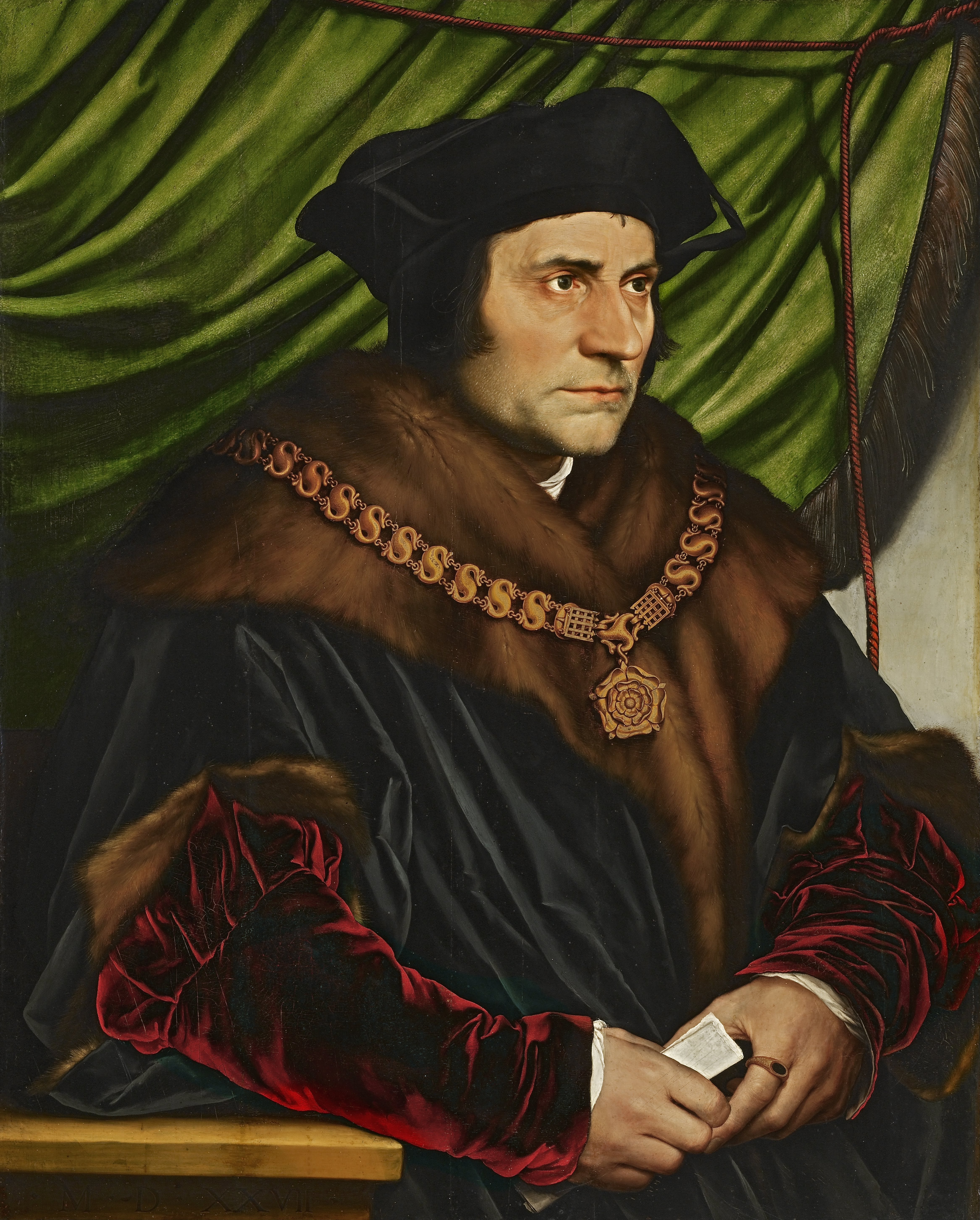 A portrait of Sir Thomas More, by Hans Holbein, the Younger, The Frick Collection. (Public Domain)
A Diligent Search
Almost everyone in the king’s court had sworn an oath, pledging allegiance to the crown in hopes of avoiding repercussions. As More explained to his daughter, Margaret, the king had given him several opportunities to “leave off the doubt of [his] unsure conscience in refusing the oath, and take the sure way in obeying of [his] prince.” Yet he didn’t budge. He wasn’t concerned with others’ decisions. He “would not condemn” them, nor take upon himself to judge their choices, for he believed that everyone must wrestle with their own conscience independently.
More stressed to his daughter that he had reached his conviction “by long leisure and diligent search for the matter.” As the king’s servant, he knew he owed his allegiance to the crown. Opposing the king meant foregoing his civic and political obligation. For a loyal man like More, that was a difficult decision. But his loyalty to the king’s temporal power was contingent on his Christian faith, which demanded allegiance to a power greater than any earthly kingdom.
As he said in a letter to his colleague Thomas Cromwell, an eminent lawyer and chief minister to Henry VIII, “I should first look unto God.”
Faithful From the Start
The tension between faith and politics ran through More’s entire life. Born in 1478 to a Catholic family, More showed intellectual potential from childhood. At 14, he was admitted to the University of Oxford. After two years of Greek, Latin, and philosophy, he quit his studies to pursue legal training. He began practicing law in 1502 and gained a reputation as a skillful lawyer and, later, as a politician. Throughout his career, his faith never waned. He once considered abandoning his practice to become a monk, but ultimately chose to serve England as a layman.
In 1505, he married Joanna Colt, with whom he had four children. He tutored his younger wife in music and literature, and his children became some of the most learned people in 16th-century England. Shortly after Joanna’s unexpected death, More remarried. Though he didn’t have any more children, he cared for his second wife’s daughter as his own, making sure she, too, received a thorough education.
Despite frequent business trips and demanding obligations, More always wrote to his relatives, imparting useful counsel and encouraging them to cultivate virtue. He was able to maintain an exemplary balance between his professional, religious, and familial commitments, until the king’s ultimatum shuffled his priorities.
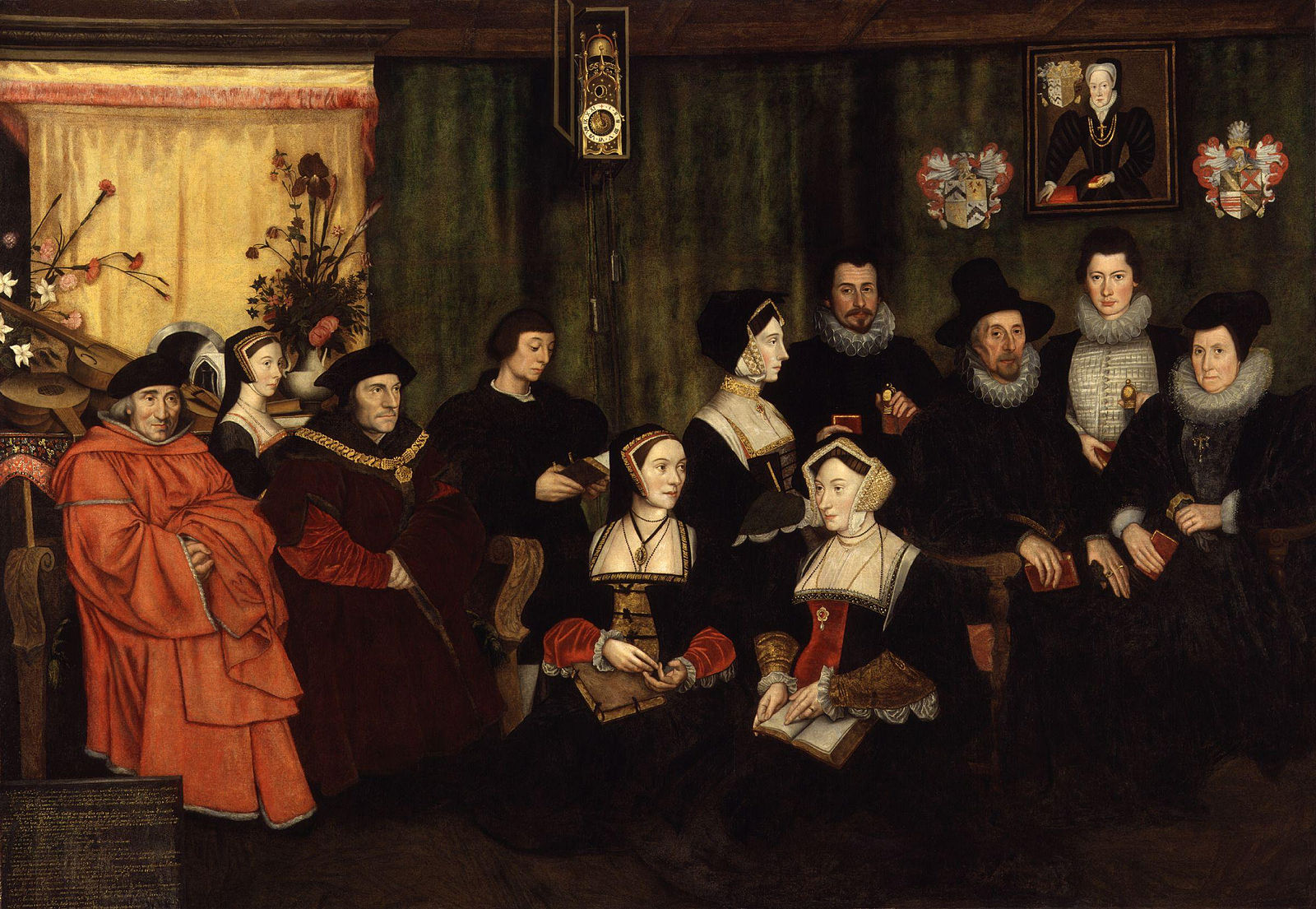 Sir Thomas More (third from left), his father, his household and his descendants. A copy after Hans Holbein the Younger, by Rowland Lockey. National Portrait Gallery, London. (Public Domain)
A Daughter’s Pleas
Most of the letters More received in prison were from his daughter, Margaret Roper, who, naturally, was concerned with his wellbeing. He constantly reassured her that his plight wasn’t as serious as she thought, and that material concerns were insignificant to him. As he wrote, “of worldly things I no more desire than I have,” for “I am in good health of body, and in good quiet of mind.”
Margaret insisted on persuading her father to swear the oath. More acknowledged the difficulty of refusing his daughter’s plea, but he also explained that his conviction was final:
“If I had not been, my dearly beloved daughter, at a firm and fast point, (I trust in God’s great mercy) this good great while before, your lamentable letter had not a little abashed me, surely far above all other things.”
He chose to stand by what he believed to be just, and what would have saved his soul from “perpetual damnation,” even against Margaret’s will.
Although he wouldn’t heed his daughter’s pleas, More’s fatherly love never waned. He often sent kind and comforting wishes to all his relatives, praying for their good health and encouraging them to grow stronger through their grief. One of the last things he ever wrote was a brief note to Margaret, where he reminisced on their last encounter:
“I never liked your manner toward me better than when you kissed me last, for I love when daughterly love and dear charity hath no leisure to look to worldly courtesy. Farewell my dear child and pray for me, and I shall for you and all your friends that we may merrily meet in heaven.”
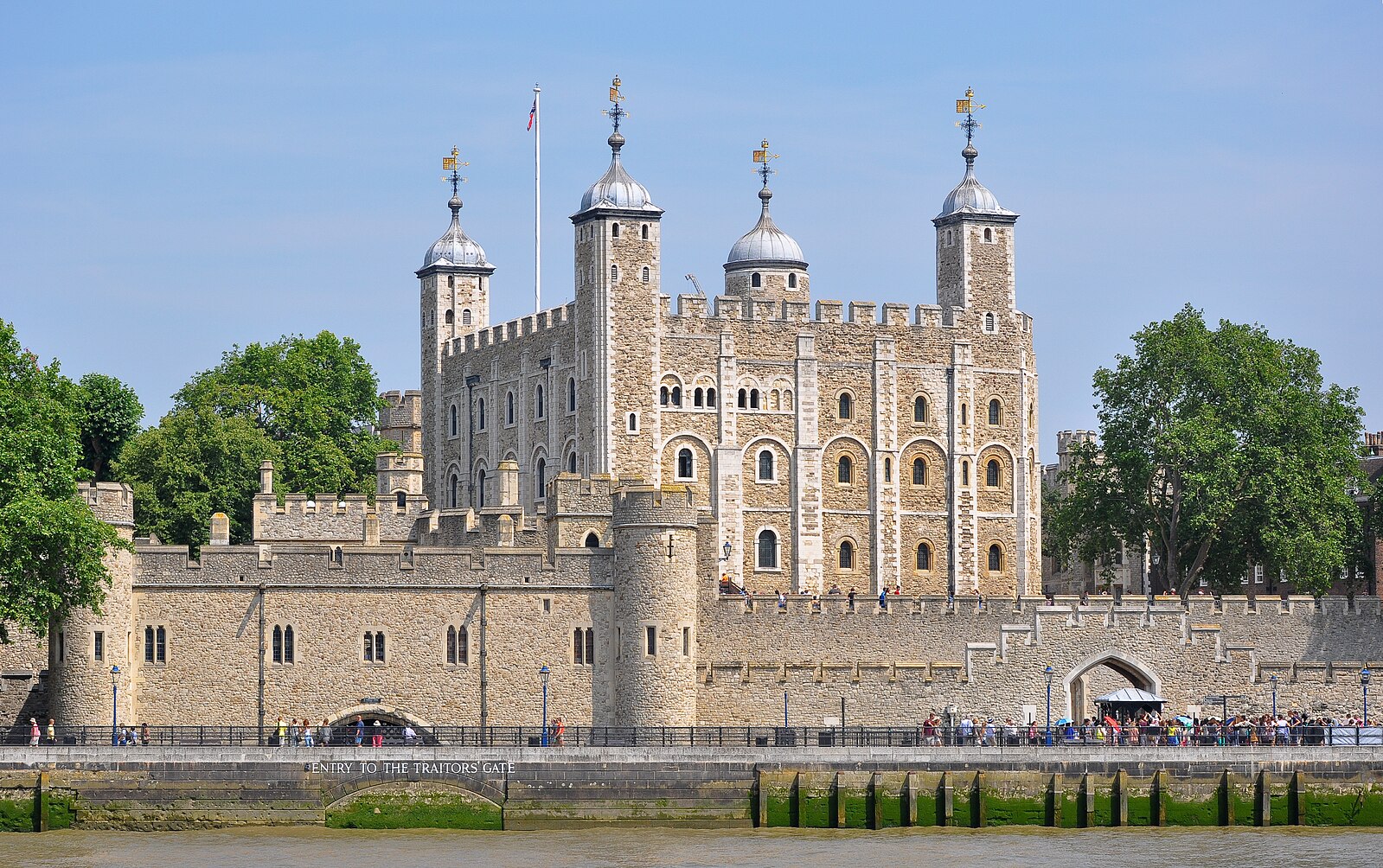 The Tower of London, when viewed from the River Thames. Thomas More was imprisoned for the last year of his life in the Tower. (Bob Collowan/CC-BY-SA-3.0)
 God’s Good Servant
In July 1535, More was tried for treason. The trial was swift. On July 6, 1535, he was beheaded, but not before uttering his most famous words: “I die the King’s good servant, and God’s first.”
More’s convictions aside, his example has universal value. As death approached, he never lost composure. He found strength and solace in his beliefs, which he accepted only after careful contemplation. His trust in a law higher than politics enabled him to stave off fear, while correspondence with loved ones preserved his humanity despite grim circumstances. More could have acquiesced to the king’s demands and lived another day. Instead, he chose moral integrity, which he valued much more than mere survival.
What arts and culture topics would you like us to cover? Please email ideas or feedback to features@epochtimes.nyc