



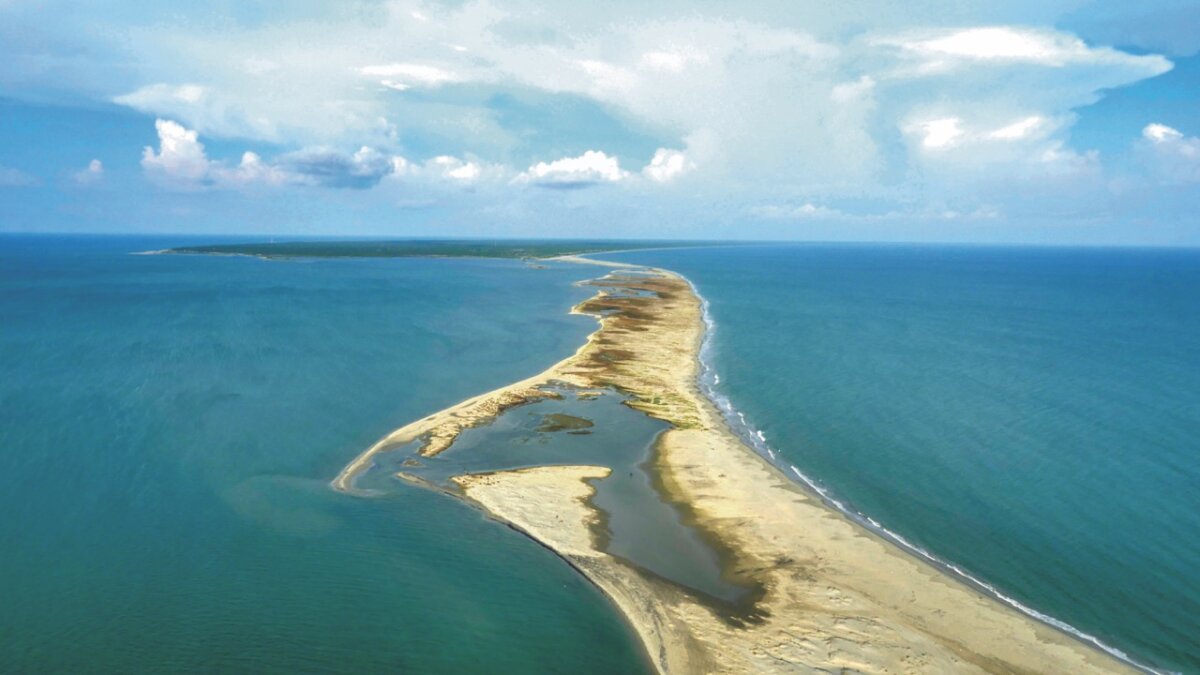
Stretching roughly 30 miles across the sea between India and Sri Lanka in Palk Bay, a mysterious piece of land remains a historical puzzle.
Ram’s Bridge is named for the ancient king of India who, according to legend, built the massive structure to march his army across the sea and rescue his imprisoned queen.
The romantic epic and its geological counterpart form the basis of the most important religious festival in India, Diwali, the Festival of Lights. Every year, over one billion Hindus, Buddhists, Sikhs, and Jains light rows of candles in remembrance of lighting the king and queen’s triumphant return home.
Ancient attempts to date the legend ranging from 5,000 to 12,000 B.C. and has spawned ongoing international disputes. The debate over the bridge’s cultural and geological origins continues to burn.
Believers hold fast to the likelihood that the suspicious stretch of land is the same bridge which figures in the legend, while skeptics claim the land mass is simply a natural formation.
An Intriguing Myth
The details of Ram’s quest reveal a fantastically different reality from modern-day India. In their understanding of these events, religious believers generally allow for the embellishment of symbolic and spiritual teachings throughout, but hold to the origins as being factual and not mythological.
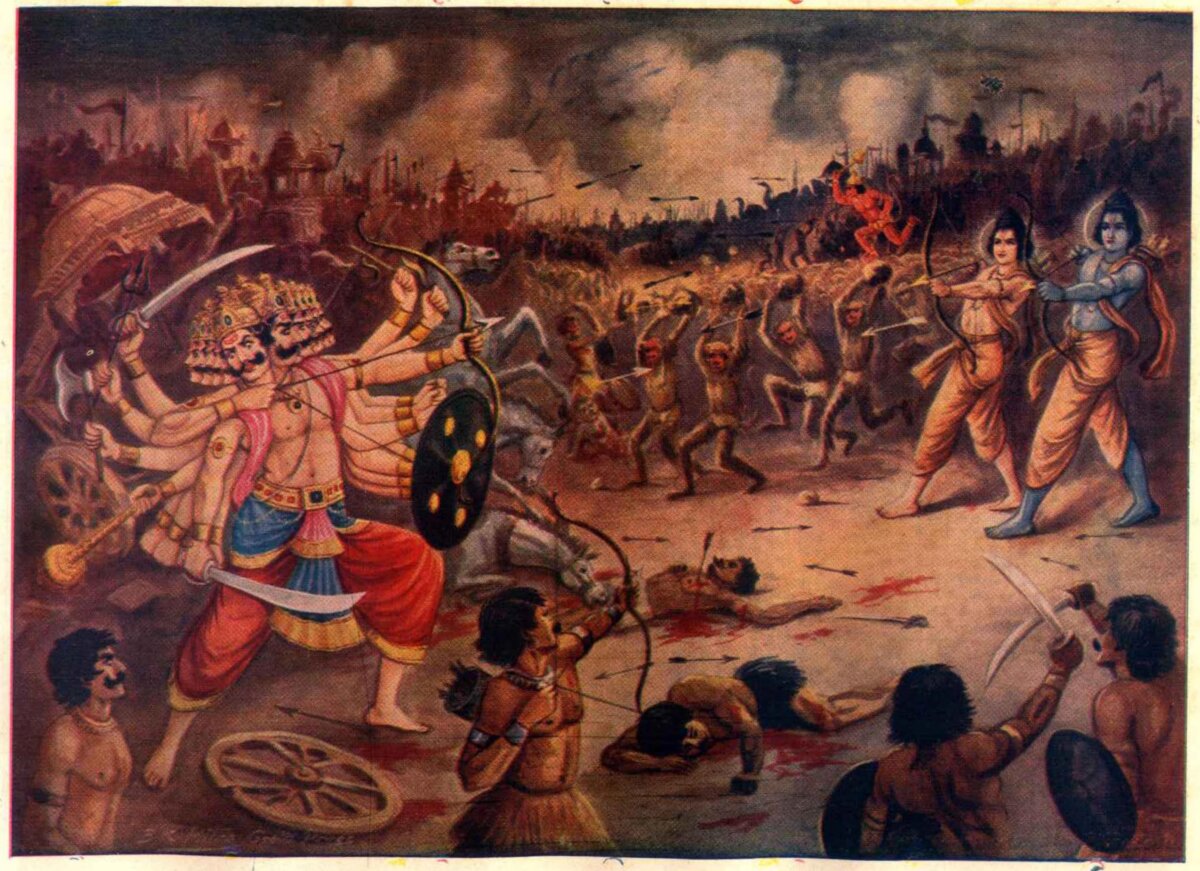
The queen, Sita, is kidnapped by Ravana, a demon king with 10 heads and 20 arms. He takes her across the sea in his “vimana,” or flying chariot.
The “Vanara,” the army which builds Ram’s bridge is believed to be a race of half-man half-ape creatures of tremendous size and strength led by their king Hanuman.
The story gives specific details as to the design and construction process of the bridge, which was constructed over five days. The giant Vanara beings uproot massive trees and boulders, layering and measuring the bridge with plumb lines.
Detailing their progress day by day until they reach the opposite shore, the story provides enough specifics to be compared with the results of recent geological surveys.
Amazing Evidence
Some of the more supernatural elements of the story have been substantiated. The notion of the bridge being built of magical floating stones draws attention to the presence of pumice in the area despite a complete lack of volcanic activity.
The stone materials found along the sandbar derive from the coastline and not from the sea. In 2004, the Geological Survey of India (GSI) began studying the area. While assessing the viability of development, the GSI’s own former director, S. Badrinarayanan, came to this realization:
“The presence of loose marine sands below these [boulders] indicates these are not natural and are transported. Unless somebody has transported and dumped them these could not have come there. This is an ancient causeway and an engineering marvel.”
In dating the rocks and sand forming the layers of the bridge, the rocks were dated to 7,000 years old while the sand was only 4,000; this indicates the much older rocks were clearly moved and placed atop the sand, and not part of a natural formation.
Economic Interests
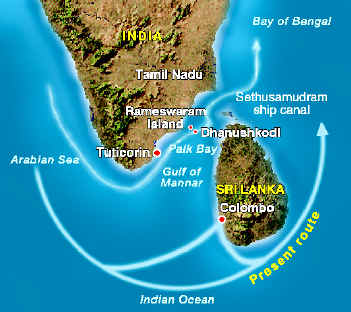
Major shipping routes have to circle Sri Lanka rather than passing through the bridge’s Palk Bay. In 2005, the proposed Sethusamudram Shipping Canal Project sought to dredge the sea floor allowing for a much shorter shipping route.
The economic advantages of this project initially seemed promising. However, the tremendous cost of clearing the bridge and deepening the shallow waters with a new channel about 984 feet wide by approximately 39 feet deep and over 100 miles long drew much criticism.
Subramanian Swamy, a prominent politician and statistician, challenged the project in court, citing the bridge’s irreplaceable cultural importance. He provided proposals for more sustainable shipping alternatives with railways.
The GSI’s survey had also discovered the existence of highly sensitive hot springs in the area making the project’s predictably devastating impact to the local marine life and fishing industry an even greater liability.
A 2007 survey by the Archaeological Survey of India (ASI) stated that it found no evidence of the bridge being man-made. The ASI later retracted this affidavit in the Supreme Court.
Declaring the bridge a national heritage site was first considered in 2007. Swamy has since petitioned the government not only for this recognition but for additional surveys to establish a consensus on the historical significance of the bridge.
After filing motions in January 2023 and again in May of 2025, his efforts were continuously ignored by the government. On Aug. 29, the Supreme Court ordered the government to provide Swamy a timely response.
The government was ordered to render a final decision on whether or not the bridge will be recognized and protected as a national heritage site.
As of the date of this article, the government has given no answer. The future of ancient history is at stake.
What arts and culture topics would you like us to cover? Please email ideas or feedback to features@epochtimes.nyc
