



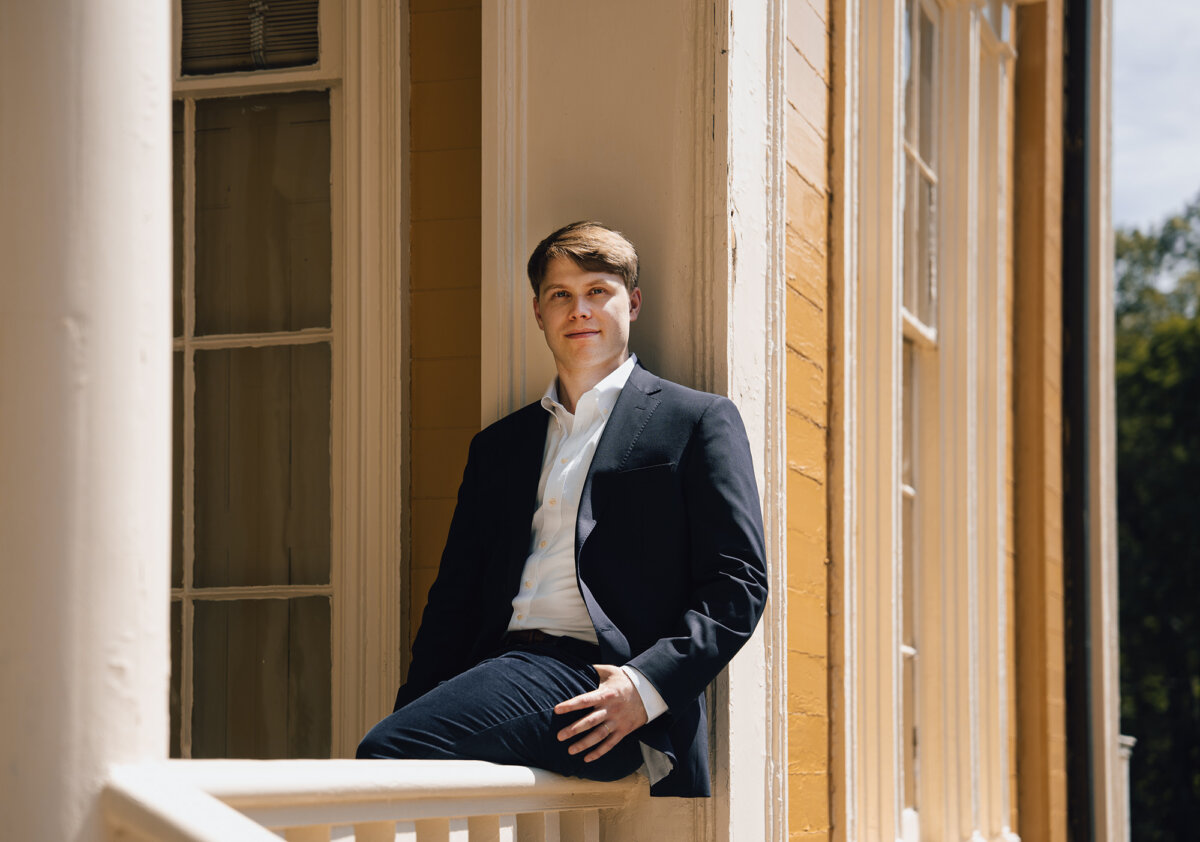
In the dazzling spectacle of a Shen Yun performance—in which ancient Chinese legends come alive through classical dance, soaring vocals, and a live orchestra blending Eastern and Western instruments—one essential but often overlooked element holds the show together: the MCs.
Millions of audience members have seen Shen Yun’s performances since its inception in 2006. Its eight companies of performers travel the world every year, delighting audiences on six continents. At every show, the audience is greeted by two masters of ceremonies, one speaking in Chinese and one in the local language. John Perry is an American MC, and he’s taken to the stage hundreds of times over the past seven years to act as what he calls “the bridge for the audience.”
Perry describes his role as connecting audiences with a world they may never have encountered. “I have to think, ‘Who are the people I’m talking to?’, put myself in their shoes, and think about what they want to see, why they are here. All the elements of the MC job are pretty much just thinking of others first,” he said.
Between each dance or music piece, Perry’s quick, engaging interludes—delivered in English alongside his Chinese counterpart—guide the flow without overshadowing the performances. This subtle art ensures that viewers, who are often unfamiliar with the 5,000-year-old traditions depicted onstage, feel welcomed into stories of ancient emperors and deities as well as contemporary tales of faith and persecution in China. He and his stage partner make the show accessible to global audiences, turning cultural gaps into a shared appreciation of beauty and goodness.

From Southern Roots to Spiritual Awakening
Perry’s path to the Shen Yun stage is a quintessential American story of self-discovery. Born and raised in Atlanta, he said, “I’m a very typical kind of American Southern boy.”
High school sparked an interest in performing arts through musical theater and singing, including some operatic training. Yet college at Georgia Tech pulled him toward the practical fields of computer science and mechanical engineering. He was initially driven by a youthful ambition to “save the world” through innovations in renewable energy.
As he delved into the sciences, however, he grew disillusioned and doubtful that the answers to the world’s problems could be found in technology. He became depressed and lost direction, spending his free time on video games, social media, and online forums.
It was during this time that he came to learn about Eastern philosophies, starting with the classic Taoist text “Dao De Jing” and discussions about the ancient Chinese concept of “qi,” the life-energy that runs through the body.

In 2015, while perusing an online forum on Eastern philosophy, Perry discovered Falun Gong, also known as Falun Dafa, a spiritual practice based on the principles of truthfulness, compassion, and forbearance. It transformed his life. He began meditating every day and doing the gentle exercises that characterize the practice. He stopped playing video games and spending all day online. Gradually, he found that his interests changed from ambition and desire to kindness and inner growth.
He decided to shift his studies from engineering to business, which is how he got involved in Shen Yun. Each year, local Falun Dafa Associations organize the Shen Yun shows in their own regions, so when the Atlanta shows were coming up, he decided to start promoting the event and treated it as a marketing internship aligned with his business degree.
As soon as he saw Shen Yun for the first time, he knew he wanted to be a part of it. Promoting it wasn’t enough, and before graduating in 2018, Perry auditioned for Shen Yun—not as an MC, but as a singer. He said the directors thought his singing was just OK, but with his affable personality, winning smile, and contagious enthusiasm, they decided he’d make a good MC. He finished his degree and soon after moved to upstate New York, where Shen Yun has its offices and dance studios. He never looked back.
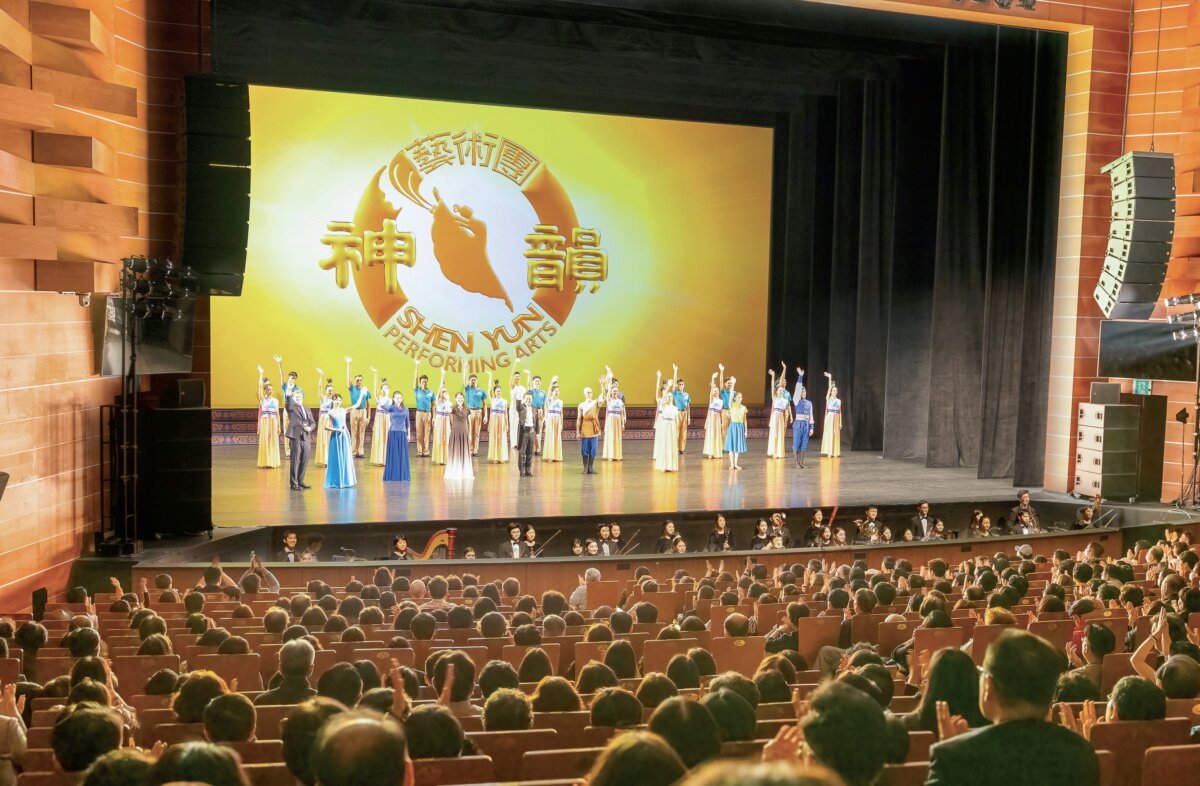
Overcoming Persecution Through Art
Shen Yun’s mission to revive the traditional Chinese culture that thrived before communism has come at a cost. The company, founded nearly 20 years ago by Falun Gong practitioners who escaped from China, exposes the human rights abuses of the Chinese Communist Party (CCP), including forced organ harvesting and cultural suppression. This has drawn relentless interference from Chinese agents, including sabotage attempts and threats.
In February, the Kennedy Center in Washington, D.C., was evacuated after a bomb threat was received on the opening day of Shen Yun’s performances. In March, similar hoaxes disrupted shows at Pomona College in Southern California. Last December, Atlanta Symphony Hall received an email from an individual threatening to kill everyone attending.
A few years ago, the attacks on Shen Yun became very personal for Perry. He said that his co-host revealed some distressing news: While they were on tour, her mother in China was thrown in jail over his co-host’s work for Shen Yun. His co-host had endured the pain silently for a month, smiling onstage while grappling with fear backstage. “It’s incredible that this can happen today, but it’s important to realize the reality of what’s going on,” Perry said. Fortunately, his co-host’s mother managed to eventually escape China and now lives in the United States—a testament to resilience amid persecution.
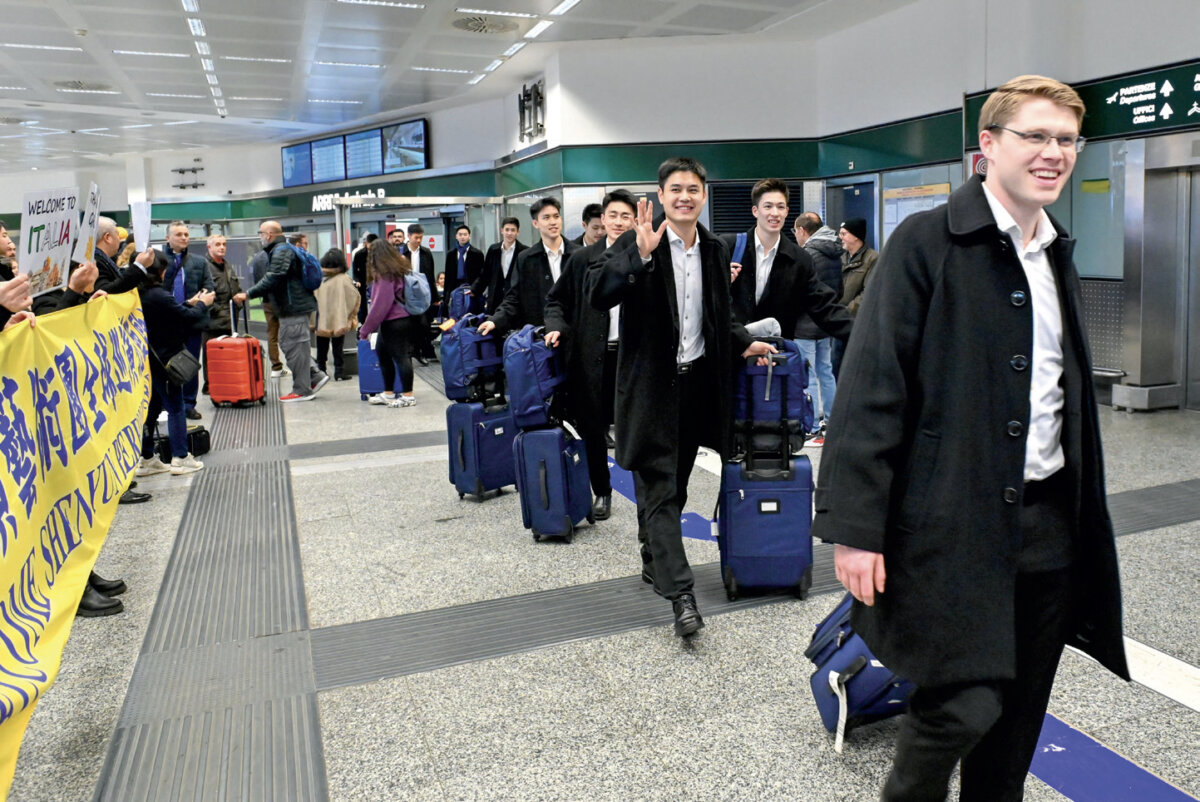
The incident galvanized Perry’s commitment to Shen Yun’s mission and gave him new respect for what the performers and organizers went through to establish the company two decades ago.
“Nobody in the world is really capable of doing what Shen Yun artists are capable of doing today,” he said. The founders of the performing arts company, many of whom faced persecution in China, had to forge new artistic paths. They revived traditional classical dance techniques and combined Eastern and Western classical music in one orchestra for the first time.
“I think that is the American essence right there,” he said. “The grit to persevere for your beliefs and for a better future—that is just so American.”

Why Shen Yun Matters Today
In a world dominated by screens and trends that come and go in the blink of an eye, Perry believes Shen Yun’s importance lies in its ability to inspire lasting memories for audiences and positive change in the entertainment industry. He highlighted how Shen Yun uses technology in a different way than other companies do, for example, in its innovative digital backdrops. “We have technology, but we are using it to promote the intangible goodness of art,” he said.
In his personal life, this means curating environments for mindfulness and eschewing excessive digital distractions to foster authenticity. “I’ve learned to tailor my digital environment so that it’s working for me rather than it using me—which is incredibly hard,” he said.
Live performances offer an irreplaceable energy that counters the spectator culture of modern life. “In the world today, you just have people becoming spectators instead of participants, and that’s really sad,” he said. “Every person has so much to offer the world.”
Reflecting on the trials faced by Shen Yun’s founders, he expressed deep respect. “I just try to remember to have respect for anyone who’s been through the fire because I didn’t have to go through that,” he said.

As Shen Yun continues its global mission, Perry reminds us that true art bridges divides and heals wounds, connecting people to each other as well as something greater. “Creativity connects us to the divine,” Perry said. “You know, we talk about a Creator [in the show]. Well, we have a little bit of that in each of us, and that is where art comes from.”
Perry recently read a biography of President Theodore Roosevelt, and one quote especially stood out to him: “There is nothing more practical in the end than the preservation of beauty.”
“That quote illustrates why I feel Shen Yun is so valuable and important to America and humanity, why it’s a great crime and blow to humanity when people seek to suffocate the beauty in this world for their selfish interests, and why we should strive to nurture and protect beauty in our own lives,” he said.
This article was originally published in American Essence magazine.
