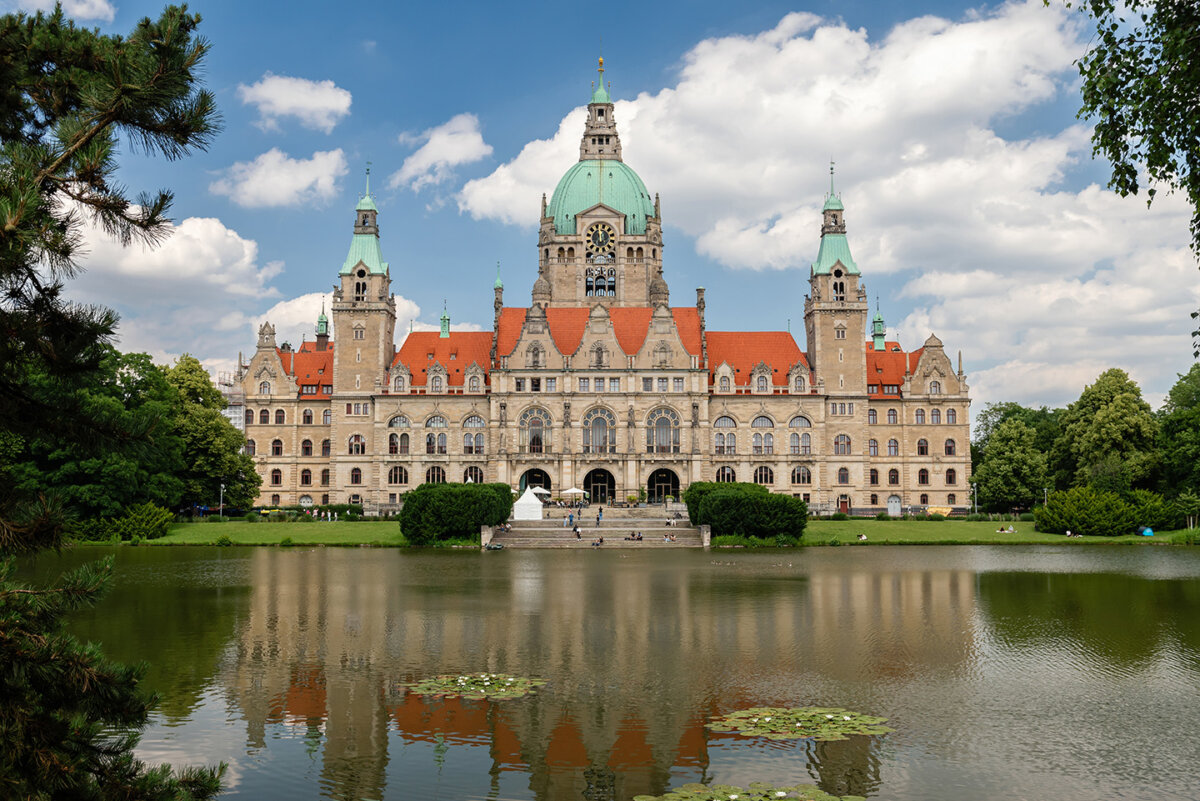
Despite its historical and castle-like appearance, Hannover’s architecturally eclectic New Town Hall was constructed in the early 20th century. Behind the building is the Maschpark (Hannover’s first public park) and the Maschteich (artificial lake), which were constructed alongside the building. (Evgeny Rukavitsyn/Shutterstock)
Located at the southern edge of Hannover, Germany, the imposing castle-like New Town Hall (Neues Rathaus) was built following the city’s 19th-century economic boom. With the formation of the Hannover–Brunswick Railway (one of Germany’s oldest lines) in 1843, the city’s population grew, along with its administration. It soon needed a larger municipal building—a new town hall.
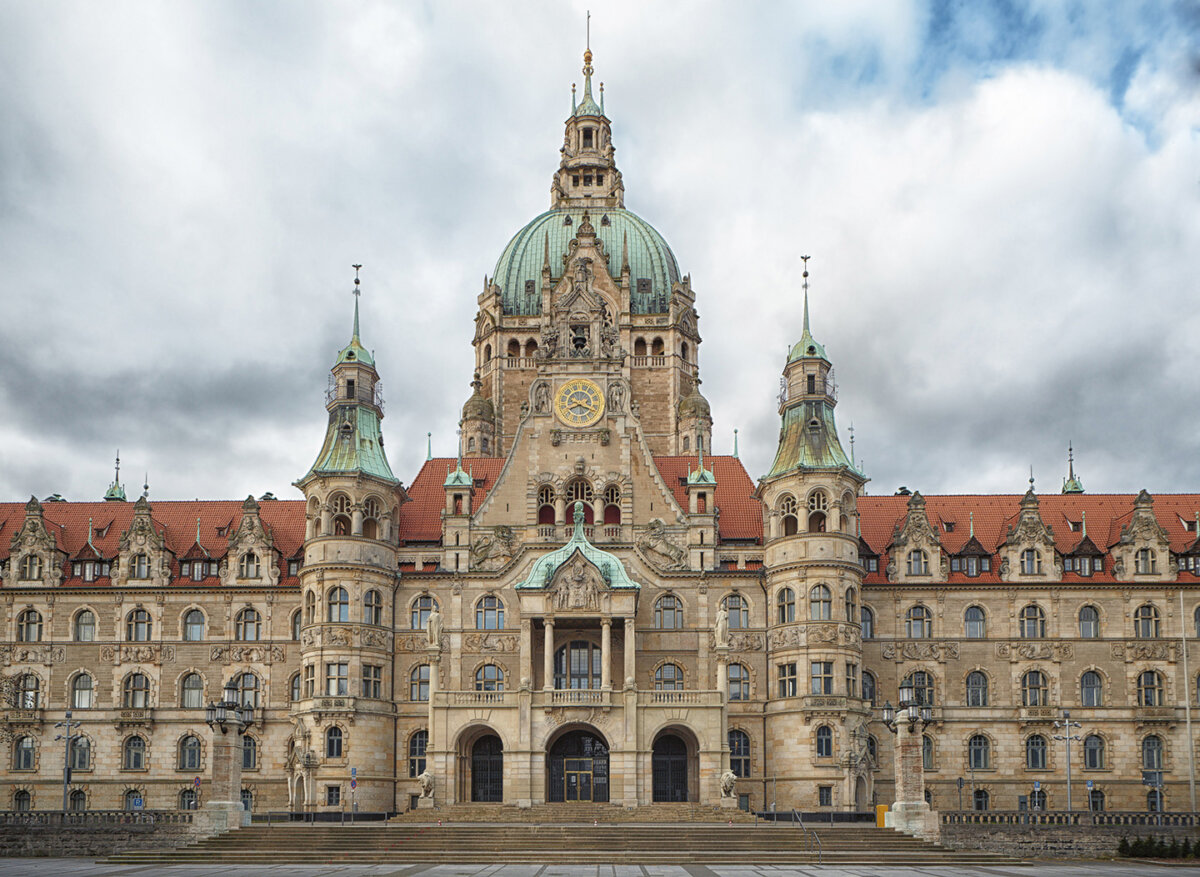
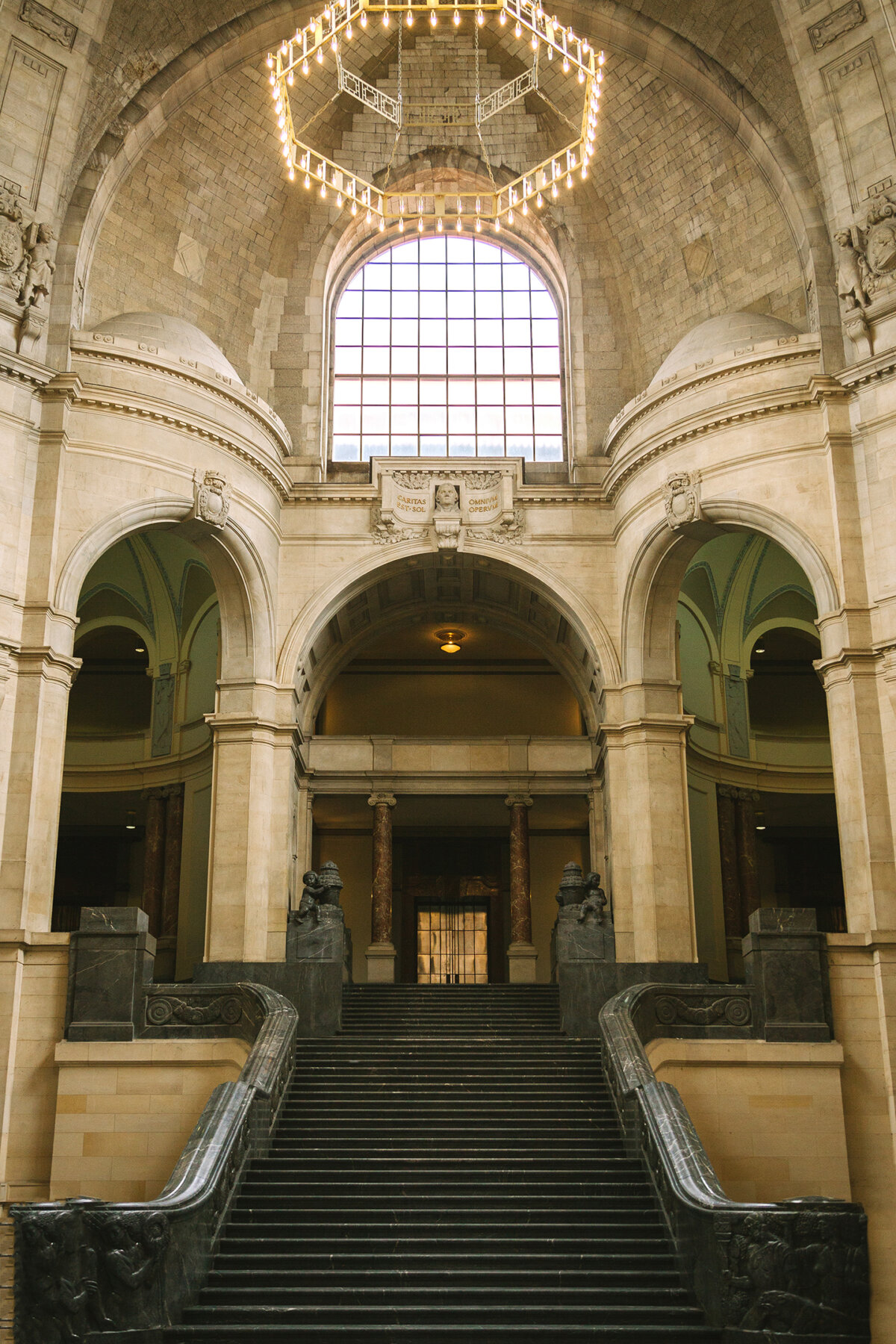
The nearly 100,000-square foot building exemplified the architectural eclecticism of the Wilhelmina era (1888–1918), or Kaiser Wilhelm II’s reign as Germany’s last emperor. Built between 1901 and 1913, the New Town Hall was initially designed by German architect Hermann Eggert (1844–1920) in the neo-Renaissance style. This eclectic style features Italian and French Renaissance influences as well as baroque elements. Later, Gustav Halmhuber (1862–1936) added the era’s emerging art nouveau influences to the building’s design—most notably in the Entrance Hall.
Since the New Town Hall was built on the River Leine’s floodplain, the building’s foundation required 6,026 beech wood piles to be driven into the ground to prevent it from sinking.
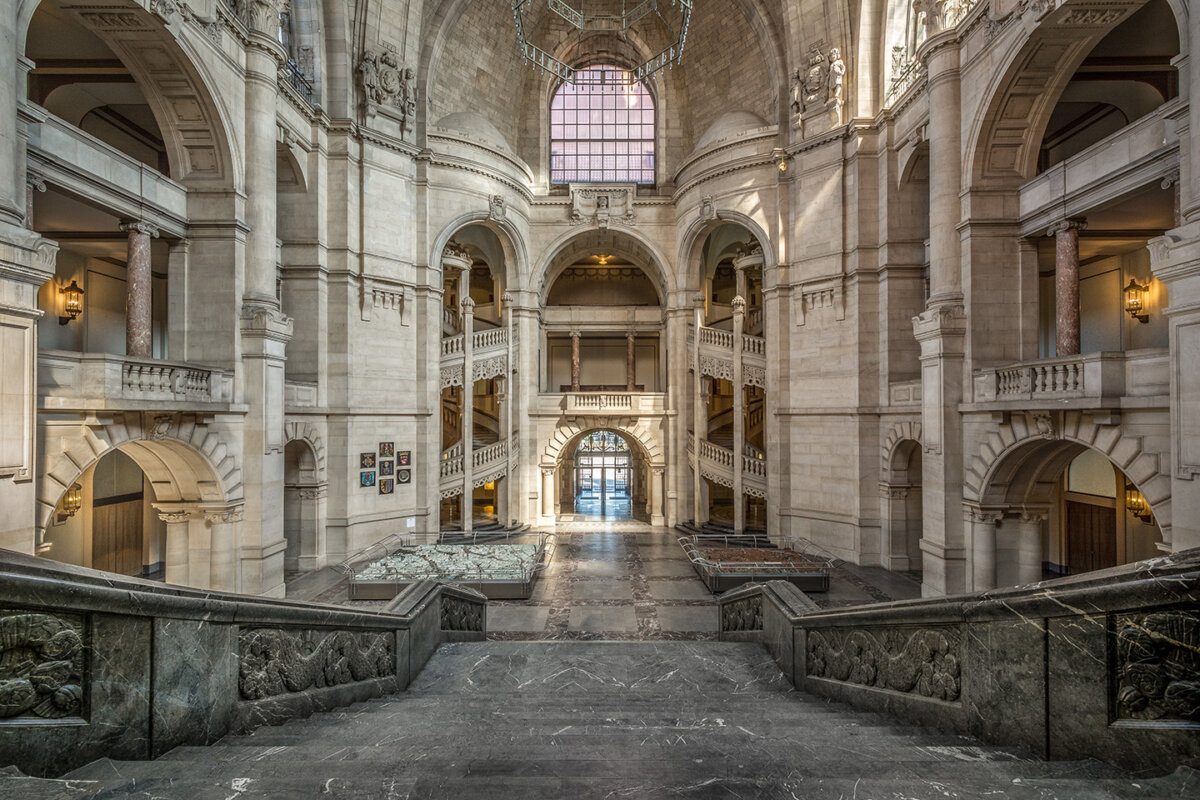
After the building was completed in 1913, the New Town Hall became the seat of the mayor, the head of the Hannover city administration. With its doors open to the public, the hall showcases a rotating exhibition of artists and craftsmen’s works, and houses a permanent display of four city models. These 3D models illustrate the four stages of Hannover’s development: the Middle Ages, before and after World War II, and a modern version of the capital city.
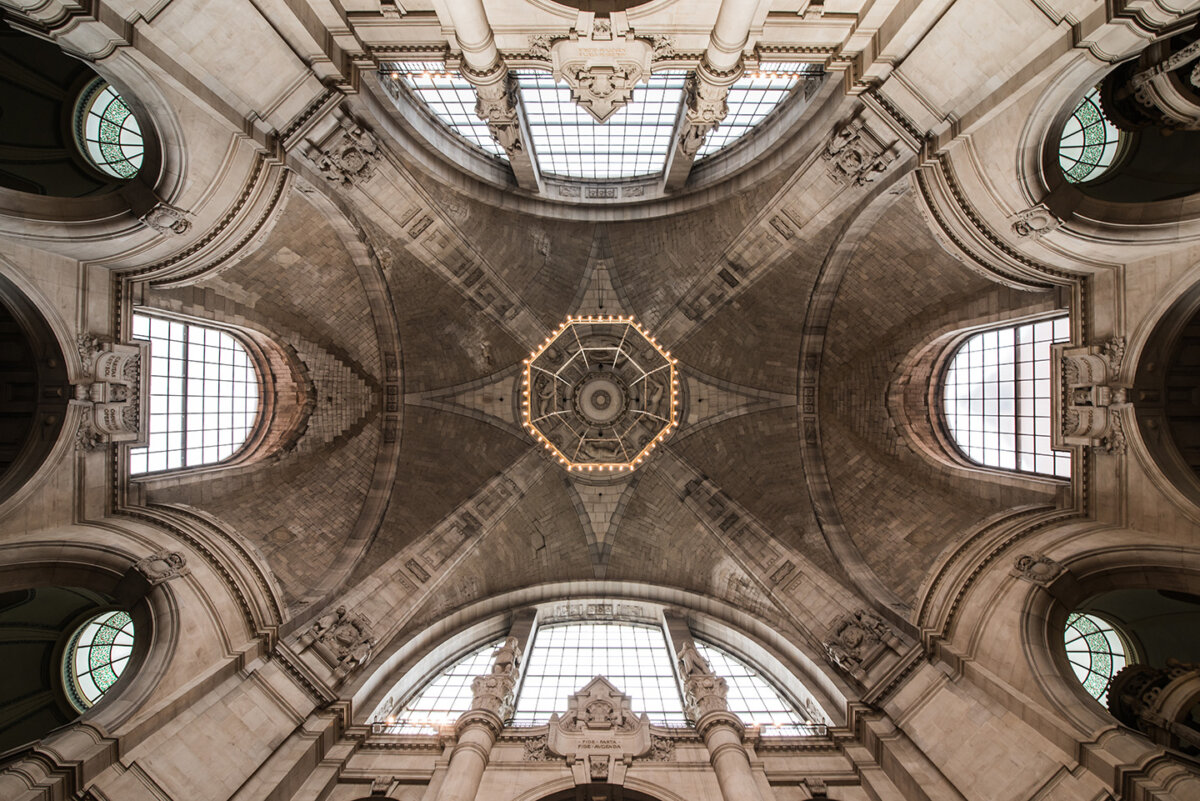
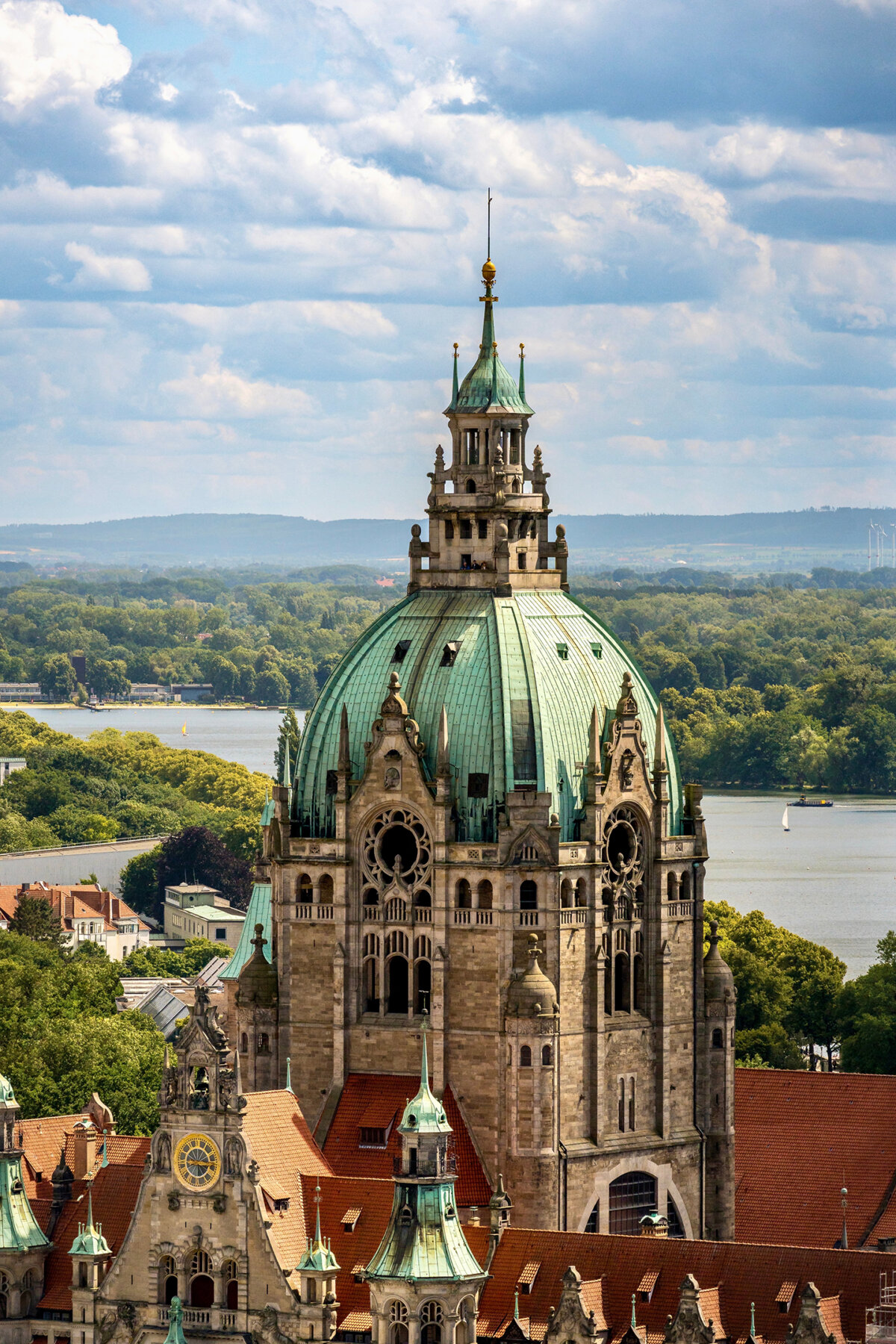
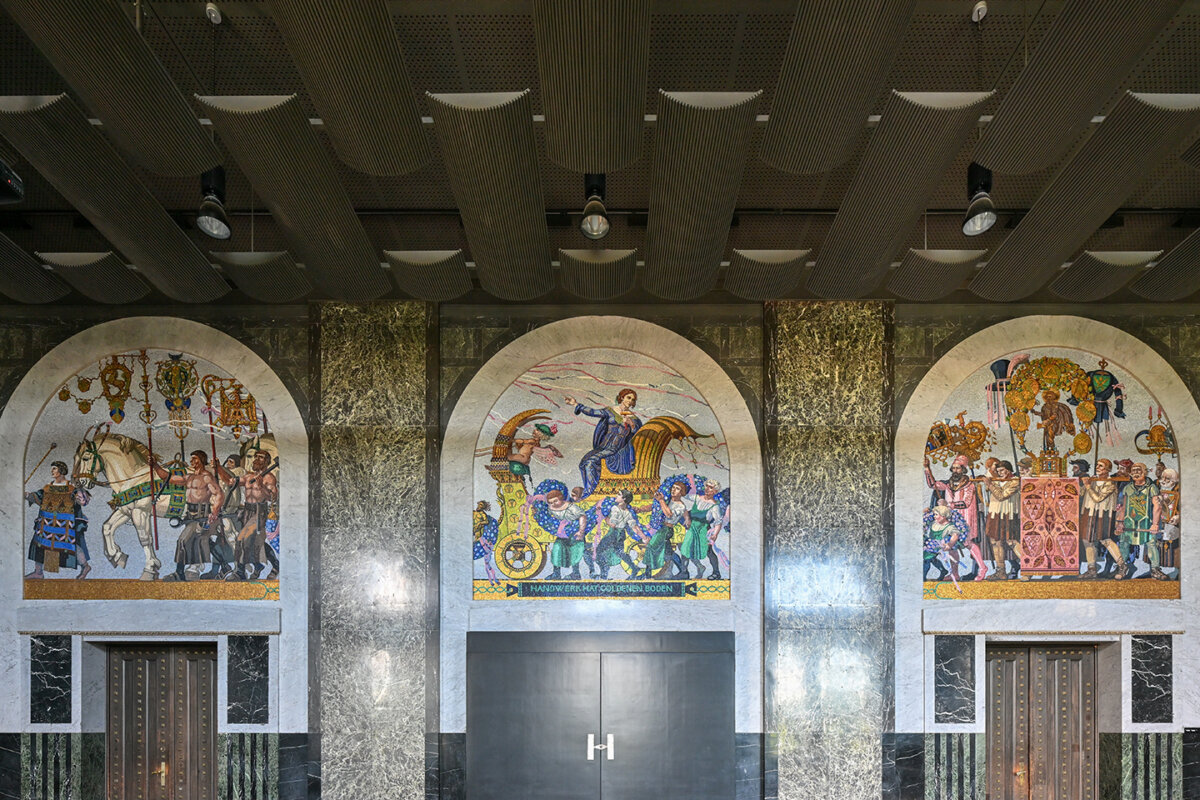
Hannover’s architectural gem is the only German town hall crowned by a dome. The hall’s regal facade is inspired by the Italian and French Renaissance styles, which emphasize classical symmetry and proportions. The building’s steep pitched roof with dormer windows and rich decorative motifs were borrowed from the French Renaissance, while the dome, rounded arches, and spiral staircases were influenced by the Italian Renaissance. (Bildagentur Zoonar GmbH/Shutterstock) Looking down the wide, grand staircase, the 100-foot long and 70-foot wide Entrance Hall evokes the atmosphere of a castle. The hall features Renaissance inspired spiral staircases at each corner, as well as coffered arches, arcades (covered walkways), balustrades, and pillars. (Raycer/CC BY-SA 4.0) The grand marble staircase that leads from the hall to the upper floors was designed by Gustav Halmhuber in the Jugendstil style, the German counterpart to art nouveau. Jugendstil gradually became more geometric and included mythological and religious figures, as seen in the marble sculpted cherubs above the stairs’ landing. (LightField Studios/Shuterstock) Rising around 100 feet tall, the Entrance Hall dome features groin vaulting, or a cross vault. The groin vault’s strength can support the ceiling while allowing considerable illumination to filter through the large arched and semicircular windows. At the four corners are the oculi above each of the spiral staircases. (nattawit.sree/Shutterstock) The New Town Hall’s prized jewel is Eggert’s parabolic dome. Rising 320 feet tall, the dome is equipped with a one-of-a-kind arched elevator. Following the parabolic shape of the dome, the elevator ascends at a 17-degree angle to the observation deck, where visitors can enjoy panoramic views of Hannover and the Harz mountain range from April to October. (Marvin Deneke/Shutterstock) Prominent in New Town Hall’s interior design is the German-style art nouveau. The Mosaic Hall showcases a triptych, designed by Julius Diez and constructed by Simon Theodor Rauecker, which illustrates a procession of merchants or craftsmen. (Felix Lipov/Shutterstock)
What arts and culture topics would you like us to cover? Please email ideas or feedback to features@epochtimes.nyc.
James Baresel is a freelance writer who has contributed to periodicals as varied as Fine Art Connoisseur, Military History, Claremont Review of Books, and New Eastern Europe.