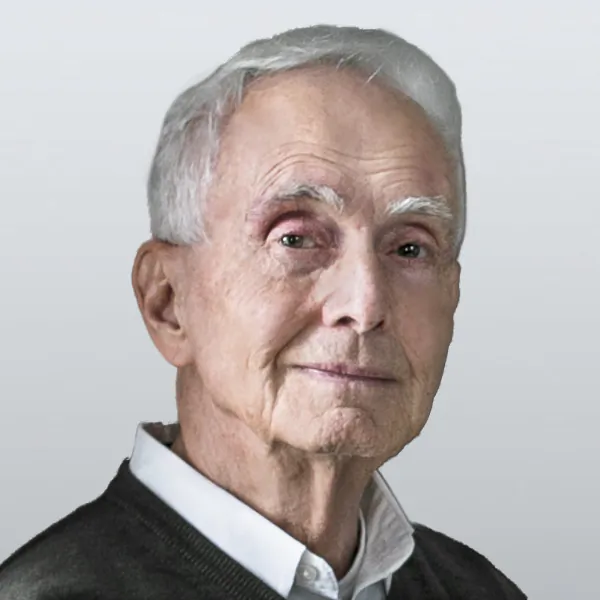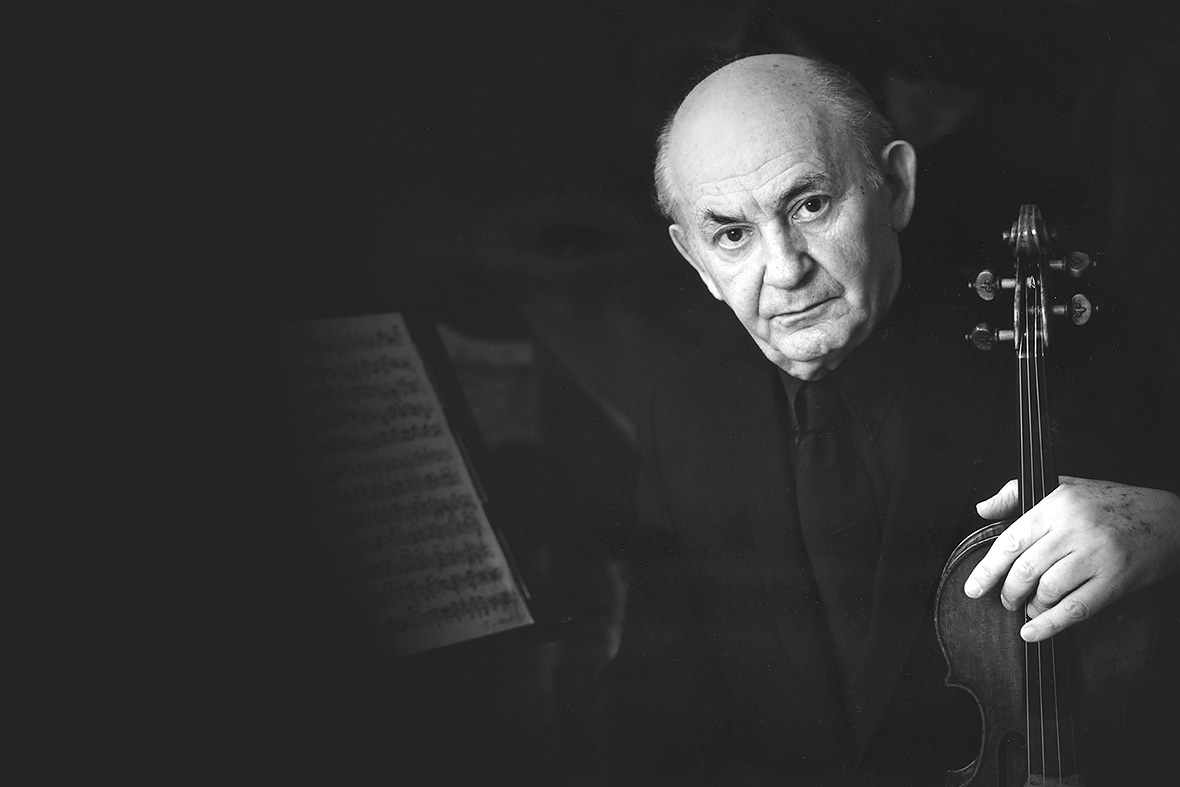
Life, chance, destiny, whatever you wish to call it, sometimes leaves people settled snuggly in one place. Johann Sebastian Bach never ventured more than 150 miles from his childhood home and never left Germany; but then there is Szymon Goldberg (1909–1993), who moved from the small Polish town of Wloclawek to the great city of Berlin, then to Java, then to Australia, then to the United States, and finally to Japan, where he died in his 84th year.
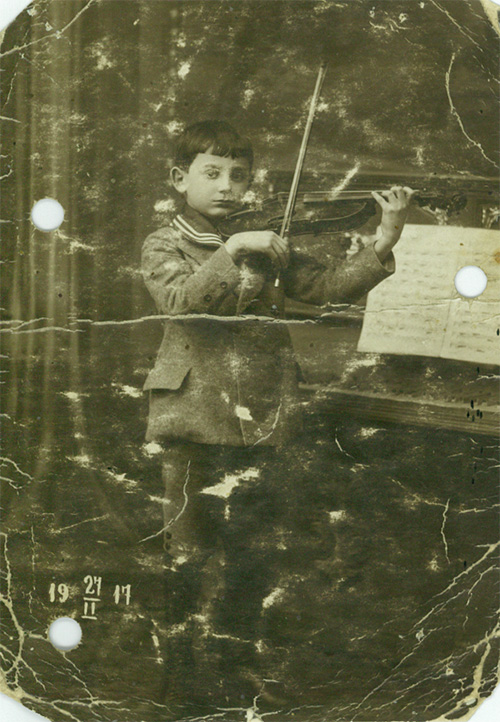
Goldberg, a contemporary of Jascha Heifetz (1901–1987) and David Oistrakh (1908–1974), was one of the world’s great violinists. The world-famous harpsichordist Wanda Landowska heard 8-year-old Szymon play and arranged for him to move to Berlin and study with the masters. He was never to see his parents again.
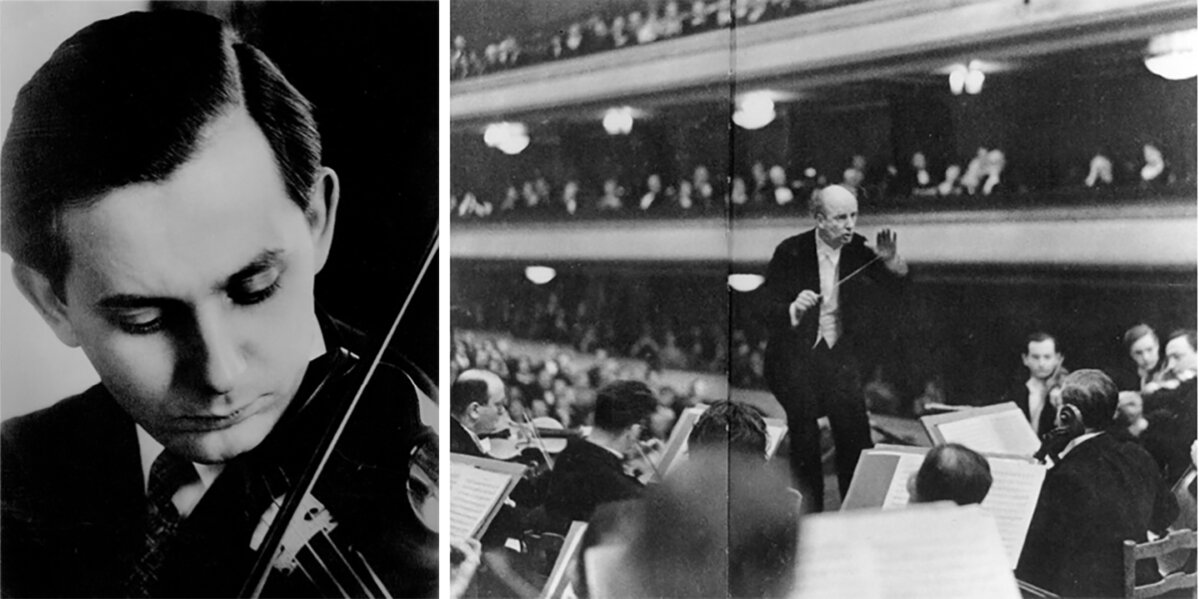
Another eight years passed, and 16-year-old Szymon Goldberg walked onto the stage of the Berlin Philharmonic to play three violin concertos in a single evening. Shortly after his stupendous success, he became first chair of the Dresden Philharmonic, and within another four years was engaged as concert master of the Berlin Philharmonic Orchestra, under the directorship of the legendary Wilhelm Furtwangler.
Furtwangler paid the 21-year-old virtuoso special honor by stipulating that he perform only when the director himself was on the podium. A deep friendship developed between these two giants, but their association was short lived. Hitler came; violence came, and after only four years, Goldberg joined the host of great minds and talents who fled Germany for their lives, penniless, uprooted, and at the mercy of whatever country might take them in.
Trauma and Recovery
Wloclawek and Berlin must have seemed like distant dreams as Goldberg found himself on a concert tour of Southeast Asia, but a nightmare awaited him in Java. As World War II raged on, the Japanese took possession of the country, arrested him, and placed him in a prison camp for three years. In these bleak conditions, he managed to get hold of a violin and thus invited Mozart and Beethoven as guests in that tangle of barbed wire, watchtowers, and despair.
It’s circumstances like these that music reveals its great power to console and sustain. A fellow prisoner related:
“I was ten years old when I was put in the same concentration camp as Mr. Goldberg. He performed Bach’s solo Sonatas for us, and I listened crouching right next to him on the floor, so closely that my face almost touched his knees. This was the moment I learned of the existence of such pure beauty.”
Indeed, it was music that had carried Goldberg through those black years. “When one suffers most from the harshness of reality and the dangers of life itself, music [he said] is something we cannot live without.”
At the war’s end, he was reunited with his wife, the singer Anna Maria Manasse, who had been imprisoned herself, and the two of them moved to Australia to recover from the emotional and physical ordeals of camp life.
In 1947, Goldberg resumed his concert career. He asked to be reinstated as concertmaster of the Berlin Philharmonic and, after being flatly refused, never set foot in Germany again. His recitals and orchestra engagements began in Holland and continued throughout Europe, North and South America, and even South Africa. After five years of wandering, he found a new home, the United States, an amiable, welcoming home, full of many old friends with their own poignant stories as refugees to tell.
His concert career flourished, but unlike other violin virtuosi, he spent much of his time playing chamber music: string quartets, piano quartets, and piano trios. In 1955, he founded the Netherlands Chamber Orchestra at the invitation of the Dutch government and served as artistic director, conductor, and musician for 22 years.
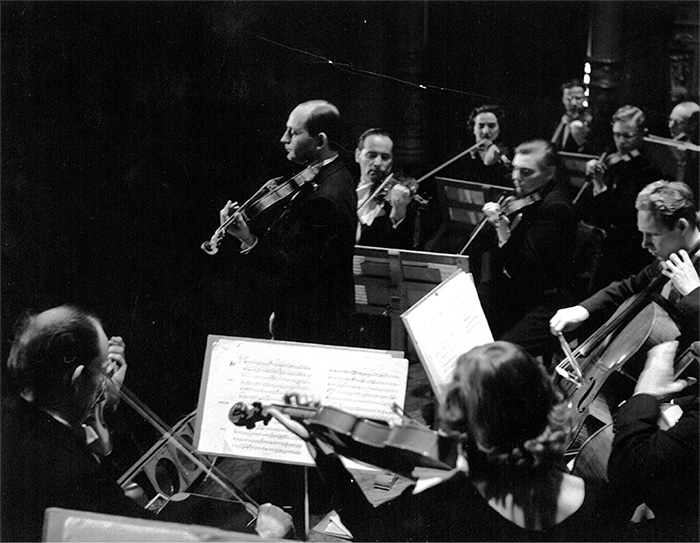
Several years after the death of his first wife, Szymon Goldberg married the prominent violinist Miyoko Yamane (1938–2006) in 1988. They lived peacefully in Philadelphia, spending summers and Christmas holidays in Japan. As his energy diminished, he spent less time as a musician and more time as a teacher at the Curtis Institute, Juilliard, and the Manhattan School of Music.
When he was 71, the violinist moved to Japan with his wife, serving as principal conductor of the New Japan Philharmonic. An eternal student, he continued studying the works he loved best, infinite works that no artist—or any human for that matter—is entirely able to grasp.
The Eighth World
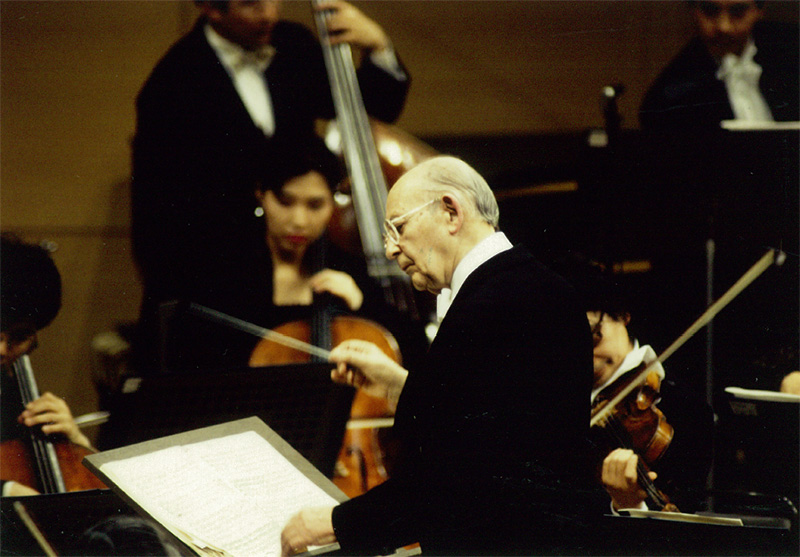
Goldberg was reluctant to speak of the past. Constant throughout a turbulent life of displacement and tragedy were grace and quietude, a sunny disposition, a gentle smile, a kindly manner. There was an innate dignity about him, a brilliance of mind, and a deep sincerity. His music-making reflected these virtues, which sustained what Furtwangler had called the “orthodox spirit of German music.”
The violinist wasn’t an ostentatious player; his tone was chaste and sweet rather than florid, his phrasing and dynamics never overstated; virtuosity was used only to reveal the heights and depths of the work.
In his lifetime, Goldberg had lived in seven worlds: Eastern and Western Europe, the Dutch Indies, Australia, the United States, and Japan. However, he was born into, and ever remained a citizen of an eighth world, the world of great music. Music, great music, is, after all, about something—something immense. It’s the promise of a world better than ours, transcendent, sublime, and everlasting. It always welcomes a weary traveler.
What arts and culture topics would you like us to cover? Please email ideas or feedback to features@epochtimes.nyc.