



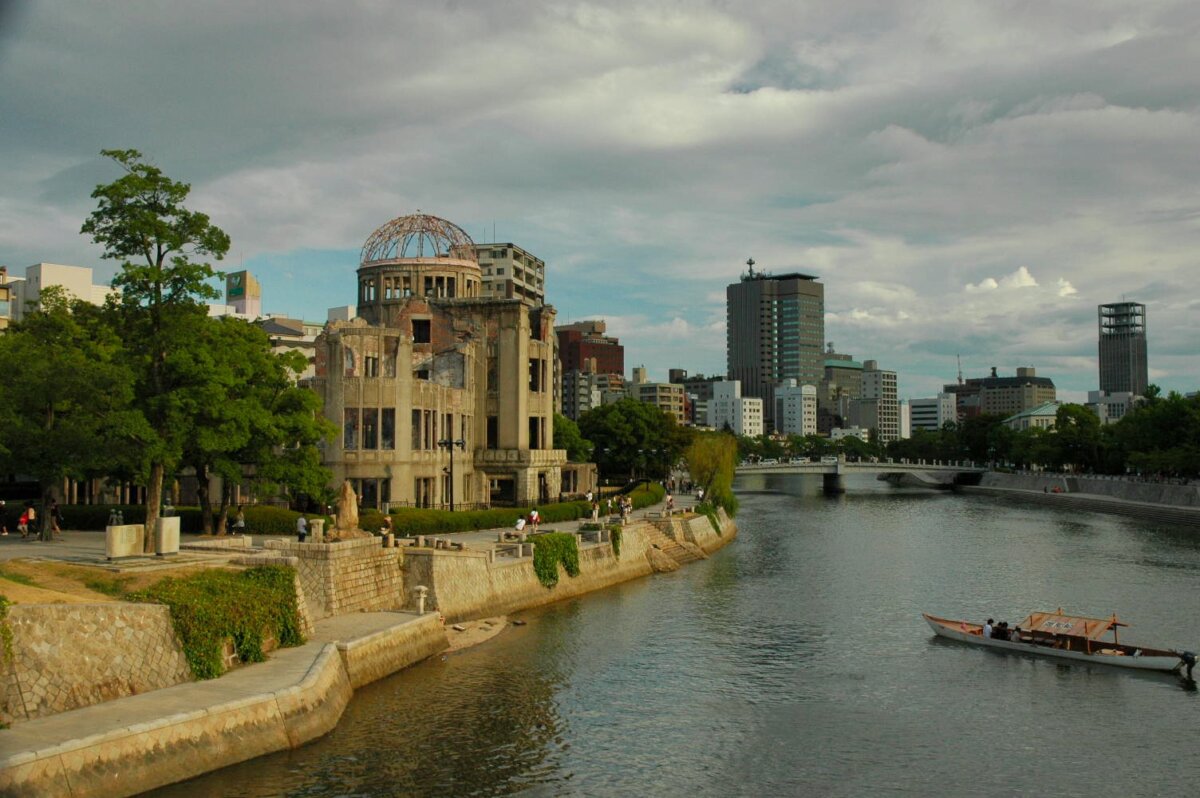
The 80th anniversary of the bombing of Hiroshima was Aug. 6, 2025. Every year since 1947, the city has held a peace ceremony, a vigil, to honor the dead and the survivors. The ceremony, held in the city’s Hiroshima Peace Memorial Park, welcomes visitors to bear witness to the gripping history and its solemnity.
Though the park is filled with painful images and memories, the ceremony is also filled with inspiring music and dance performances, poetry readings, art exhibitions, as well as dedications and speeches by the mayor of Hiroshima and Prime Minister of Japan.
Every year on Aug. 6 at 8:15 a.m., Hiroshima skies are filled with the sound of air raid sirens. The harrowing sound is a stark reminder of the last moments of life in Hiroshima before the bombing. On that day in 1945, the air raid sirens rang out. It was a common occurrence that usually happened when American weather planes were passing by. The citizens of Hiroshima disregarded the sirens and went about their morning completely unprepared for what was about to unfold.
Now, the sirens ring out over a city resurrected and committed to both its past and future. The initial predictions that plant and animal life wouldn’t return to normal for decades proved entirely untrue. The city is beautiful and bustling, with the exception of a few scars left in place as reminders of the tragedy that Hiroshima refuses to let be forgotten.
Peace Park
That first year, the area that would become the peace park stood relatively bare, but grew year by year into the now vibrant hub. The park’s overall design was decided in 1949 by a competition. The winning design went to Kenzo Tange, a professor at the University of Tokyo.
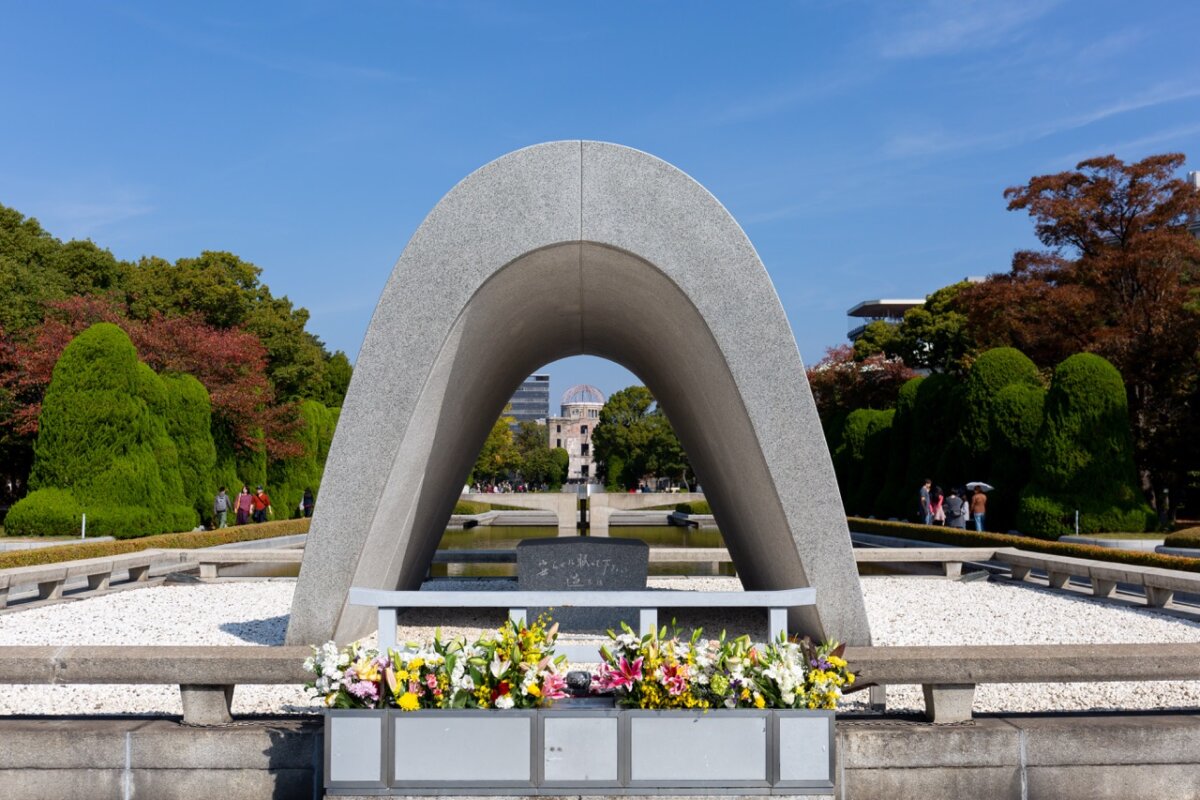
In the middle of the park stands the cenotaph, or war memorial. It was built in 1952 in the shape of a roof meant to symbolize shelter for the bombing victims. Engraved with the words “Let all the souls here rest in peace, for we shall not repeat the evil,” it contains the names of every known victim of the bomb.
As new names continue to be added, the total approaches 350,000. The structure is oriented so that visitors may stand at one end, offer prayers, and look through the long tunnel to see the Hiroshima Peace Dome on the far side of the park.
The unforgettable image of the Peace Dome reminds visitors of the only major structure near ground zero to survive the blast. Built in 1915 as the Hiroshima Prefectural Products Exhibition Hall, the skeletal structure has been preserved exactly as it stood after the bombing.
As night falls on Aug. 6, the Motoyasu River that flows beneath the dome is filled with glowing lanterns in remembrance of the victims. The festival’s many thousands of visitors line both sides of the river shoulder to shoulder to witness and share the beautiful offering.
Adjacent to the park grounds is the Hiroshima Peace Museum. Built in 1955, it contains charred but recognizable clothing from the victims, harrowing photographs of the destruction and aftermath, and a piece of stone steps and wall seared by the blast with a victim’s silhouette known as the “human shadow etched in stone.”
The steps and wall were originally part of the Sumitomo Bank, and were meticulously preserved and transferred to the museum. The faint outline of a human figure sitting on the steps still remains after 80 years.
One of the most iconic symbols of the city and its legacy are the Chinese Parasol trees, now known as the Atomic-bombed Phoenix Trees. Standing less than a mile from the hypocenter, the trees lost all their leaves and branches in the blast but remained standing.

When they began leafing out again the following year, they became a symbol of resilience and hope for the people and the rebuilding process. In 1973, one of the trees was transplanted to the Peace Park. Some worried the tree wouldn’t recover from the shock of the transplanting process. It survived yet again and renewed the city’s spirit.
Yearning for Peace
Since July 16, 1945, more than 2,000 atomic bombs have been detonated, in tests by eight different countries. Since the first Hiroshima festival in 1947, the mayor has each year issued a declaration calling for global peace and condemning the continued development of nuclear weapons.
For the many attendees each year, the Peace Ceremony is a deeply moving, haunting, and inspiring tradition to share. For the foreigners, the Japanese, and the residents of Hiroshima, there is something both profoundly universal and unique for everyone.
The many choirs, soloists, dance groups, poets, painters, and speakers all share their deepest love and reverence for what the city has come to represent.
The 80 years of groundbreaking efforts of preservation and reconstruction serve to both immortalize the haunting images and stories of the bombing and revive the city and its people. Above all else is the ceremony’s petition that no city should ever again suffer the horrors of war.
What arts and culture topics would you like us to cover? Please email ideas or feedback to features@epochtimes.nyc
