R | 2h 13m | Drama | 2025
Norwegian filmmaker Joachim Trier’s “Sentimental Value” is both beautiful and hard-hitting. Trier, Stellan Skarsgard, lead actress Renate Reinsve, and newcomer Inga Ibsdotter Lilleaas have made a heartrending portrait of the haunting complexity of family bonds, and the pain and catharsis of artistic creation.
Story
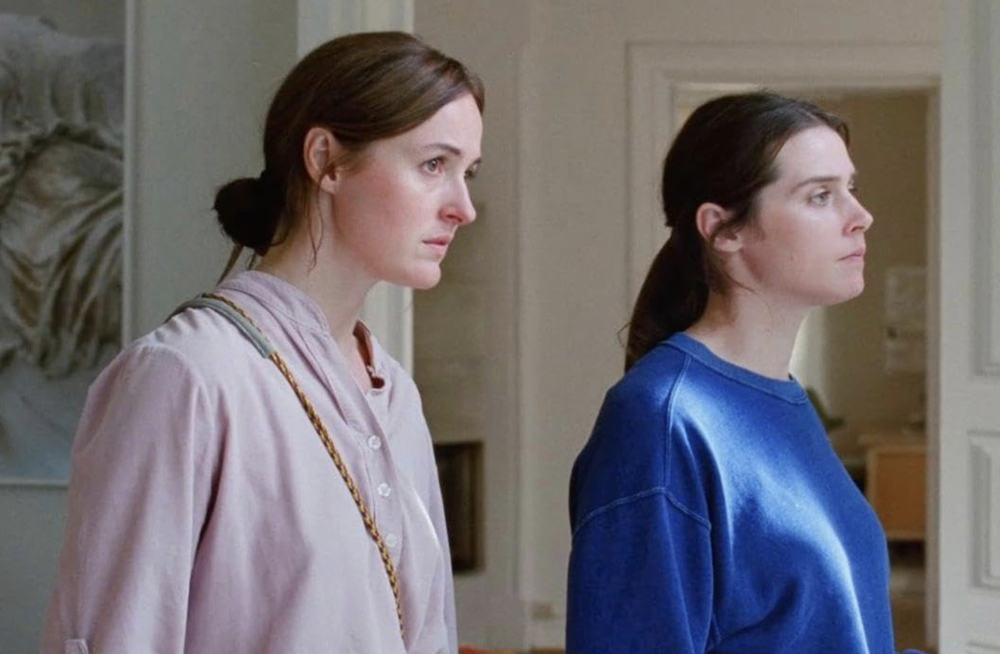
‘Sentimental Value” focuses on sisters Nora (Reinsve) and Agnes (Lilleaas) and their tense reunion with their father, Gustav Borg (Skarsgard), a charismatic but absentee dad attempting his filmmaking comeback.

Daughter Nora and dad Gustav aren’t exactly on good terms. Between Gustav’s physical absence from the lives of her and her sister, and Nora’s pursuit of theater acting over film (Gustav hates theater), Nora’s resentment of her father has grown to a steady boil over the years.
Hoping to repair his relationship with his daughters, Gustav writes an autobiographical script based on the life of his mother, with the hopes that Nora will play the lead role.
When Nora declines, perhaps partially as retribution (and definitely as a ploy to secure funding), Gustav offers it to eager young American star Rachel Kemp (Elle Fanning) instead. This naturally complicates the Borg family’s fractured structure even more. What daughter wouldn’t want her long-uncaring father to come crawling on his knees, hat in hand, multiple times, to insist on a reconciliation? “Sentimental Value” thus becomes an emotional journey of reconciliation and the healing power of art.
4 Stars
This drama provides a powerful cinematic experience that will keep audiences captivated by its clarity and honesty. The narrative arcs are extremely well-constructed, easy to absorb, and allow the viewers to quickly familiarize themselves with the pain and humor of the Borg family. (The film is mostly in Norwegian with English subtitles.)
Where “Sentimental Value” shines most is in the four main performances, all of which are outstanding. Each actor has at least one hit-it-out-of-the-park, defining moment that sticks in the memory.
Skarsgard delivers a complex performance, his character motivated by an attempt at redemption. He ultimately transforms from a self-absorbed, distant father to an involved dad with a meaningful, loving relationship with his two girls. Gustav uses cinema—heartbreakingly, the only language he knows—to process his past, seek forgiveness, and heal the present. His comeback film is clearly a creative penance.
Reinsve’s Nora is a true dynamo of hemmed-in emotion. Carrying vast reserves of sadness, panic, and anger, she is the anguish of paternal abandonment personified. Her incandescent stage presence juxtaposed with her inability to communicate real-life pain is textbook, as well as a revelation.
On the other hand, Agnes, despite starring brilliantly as a child actor in her father’s early films, turned down stardom and chose domestic stability. She took on the role of the caregiver and diplomat—also a textbook manifestation of this type of familial dysfunction.

The introduction of Rachel is a narrative stroke of genius. Fanning portrays Rachel as an altruistic and sensitive artist who, via her authenticity and integrity concerning her art and craft, unintentionally helps Gustav and Nora confront each other. It’s also possible that it’s intentional—relinquishing her ego for the sake of the director’s vision and the family’s future healing.
‘Sentimental Value’
The film establishes a continuous and painful dialogue between art and life. Gustav’s explicit autobiographical comeback project forces him to revisit his failures as a father and husband. This process raises a crucial question: Is the process of creating art a genuine form of seeking forgiveness? Or is it more of an elegant way to externalize guilt?
The film’s only weakness, to these American ears, is a typically European (in this case Scandinavian) soundtrack, featuring that particular kind of pseudo-jazz-European-pop-1960s-American-dentist-office-music that typically drenches the walls of New York’s Angelika Film Center. Had it featured an American-friendly, folksy acoustic guitar type of soundtrack, it would get 4 1/2 stars. However, art being subjective, the art house and avant-garde film crowds and the French film aficionados will most likely think the soundtrack has, well, sentimental value.

The most powerful scene is Agnes’s comforting of big sister, Nora. She explains how she became the strong, settled one because she had Nora as a protector. This scene is some of the best acting you’ll see in film today.
“Sentimental Value” is a meditation on inherited pain, the intricate cost of artistic creation, and the difficult, yet essential, path to forgiveness and reconciliation.
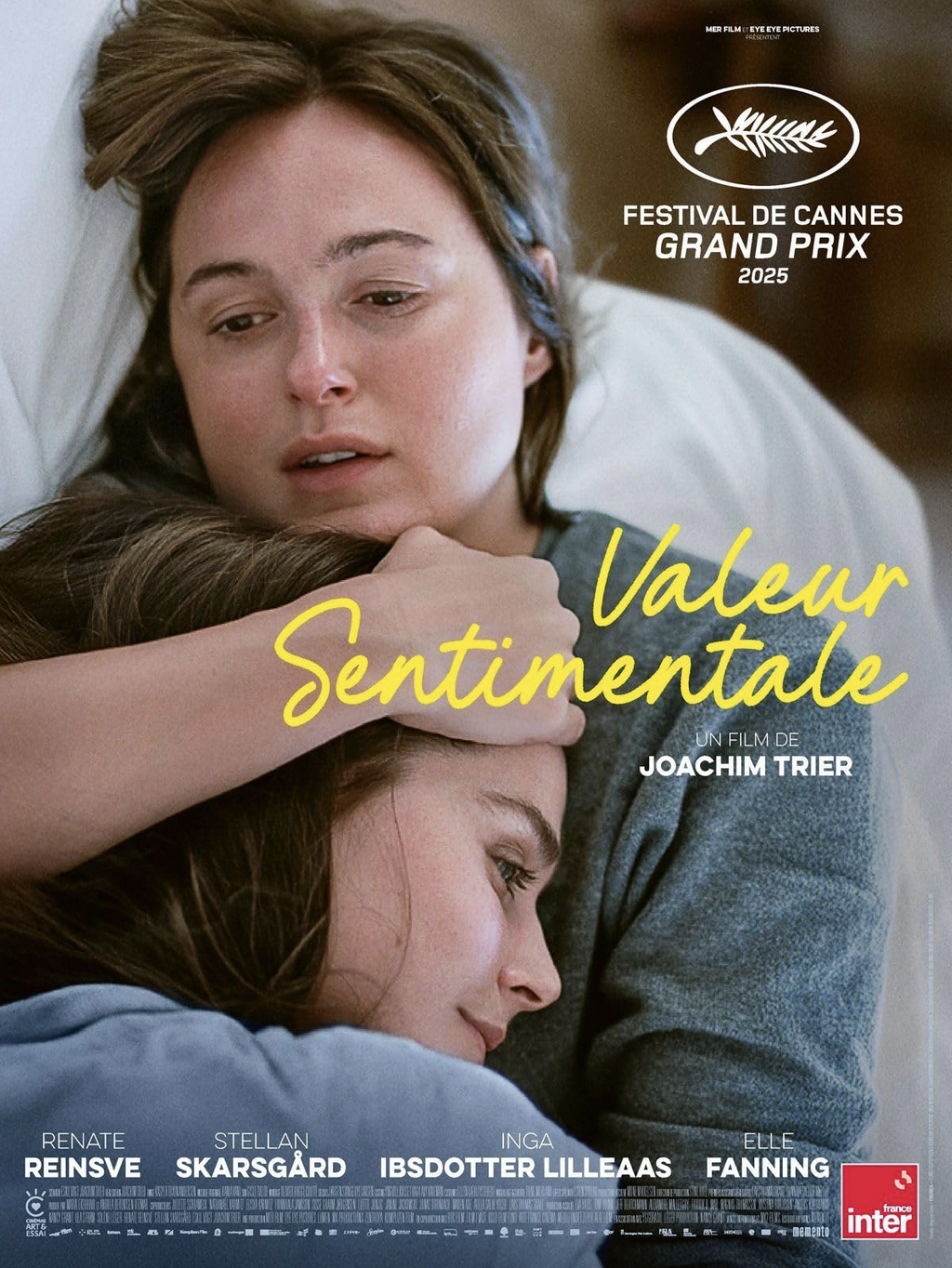
‘Sentimental Value’
Director: Joachim Trier
Starring: Stellan Skarsgard, Renate Reinsve, Inga Ibsdotter Lilleaas
MPAA Rating: R
Running Time: 2 hours, 13 minutes
Release Date: Nov. 7, 2025
Rating: 4 stars out of 5
Would you like to see other kinds of arts and culture articles? Please email us your story ideas or feedback at features@epochtimes.nyc