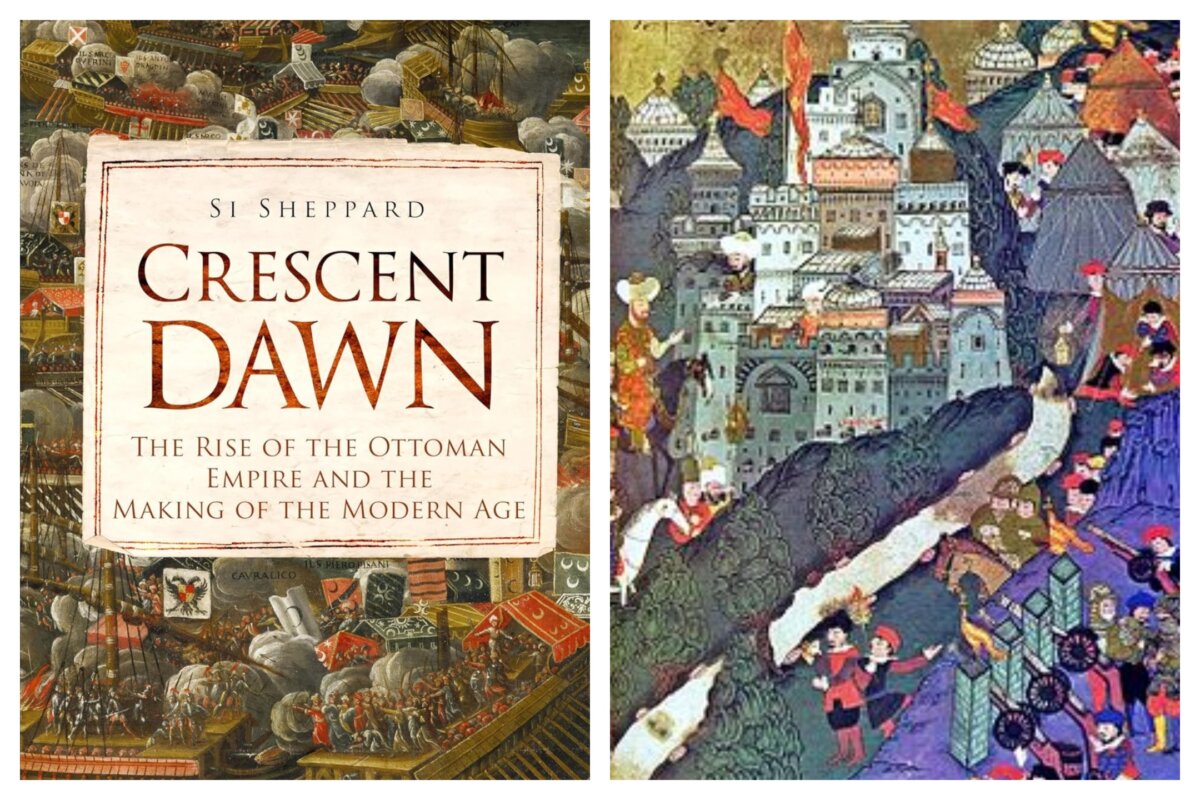
War. War. War. The Ottomans became an imperial power by way of the sword. Si Sheppard, in his new book “Crescent Dawn: The Rise of the Ottoman Empire and the Making of the Modern Age,” makes that point very clear. This exhaustive volume takes readers through the origins, rise, and plateau of the Ottoman Empire, covering its conflicts with European powers, from Hungary to the Holy Roman Empire to Spain and Portugal over, approximately, a 200-year period.
The book explains the origin of the Ottomans, or Osmanlis as they were called after their founder Osman, the warrior. Osman expressed a dream of global expansion to a sheikh. Impressed and inspired, the sheikh gave Osman his daughter’s hand in marriage in the belief that the dream was a prophecy. The dream, if it did actually occur, proved prophetic over the following centuries. It was, however, no straight and clear path.
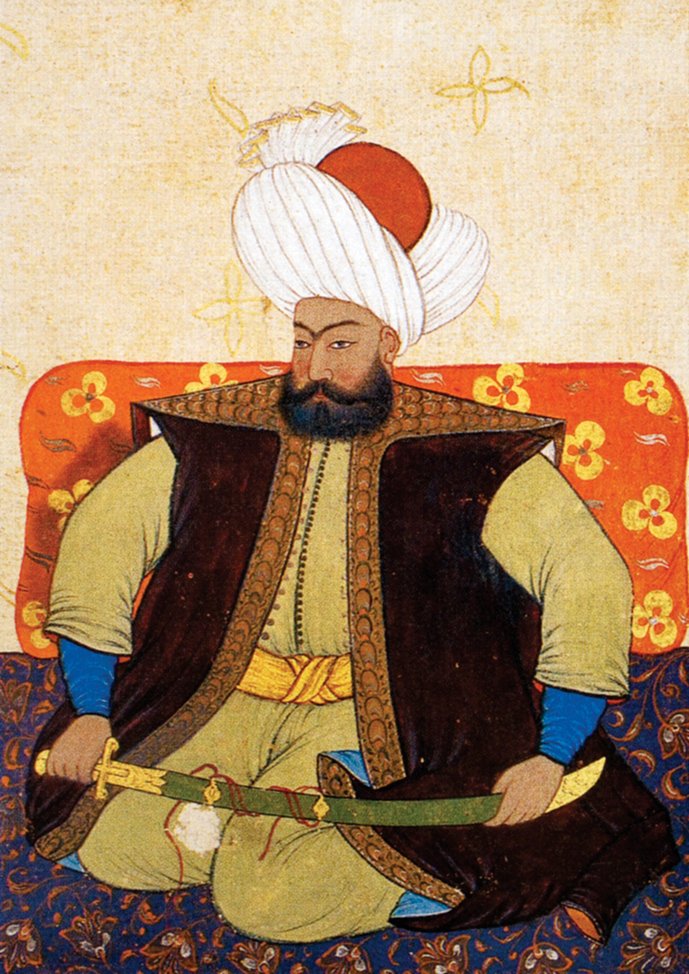
The book indicates that the Ottoman Empire could very well have been struck down in its infancy after a catastrophic defeat in 1402 by Timur the Lame at Ankara, today’s capital of Turkey. But Sheppard claimed its survival and ultimate flourishing was based on one very common theme: “They were in the right place at the right time.”
He broke this idea down in three points: First, the death of Timur in 1405 and his empire’s lack of “institutional staying power”; second, by the time of his death, the Ottomans were just as European as they were Asian; and third, Europe was splintered into small, bickering kingdoms, unwilling to collaborate to stamp out the growing Muslim empire, and therefore became isolated—easy prey for the Ottomans.
A Lack of Coordination
Thus begins a long onslaught of slaughter. It is a book of war described from the angles of Islam and Christendom. Sheppard did not spare the graphic details of fighting and the fate of prisoners of war from decapitation to flaying.
The author discussed how competing Christian kingdoms used the Ottoman threat as a means to rise above each other, whether by refusing aid to their fellow Christian kingdoms or, more provocatively, by establishing treaties and alliances with the Ottomans. This splintering became more pronounced and problematic for Christendom when Martin Luther initiated the schism in the Catholic Church. The work spends substantial time explaining how effective Luther’s Protestants were in the fight, or lack thereof, against the Ottomans.
“Crescent Dawn” paints the 15th and 16th centuries as a time of crisis, turmoil, and panic. The author pulled from countless sources, from popes to bishops to knights, regarding the fear that the seemingly unstoppable wave of Ottoman power would wipe Christianity off the map. There were some kingdoms, specifically that of France, which seemed apathetic to the plight of Christian Europe. With this lack of coordination, at least coordination en masse, much was often required of individual kingdoms and states to hold off the Ottomans. Places like Hungary, Bosnia, Vienna, Rhodes, and Malta, proved invaluable to the preservation of Christian Europe.
World War or Cold War?
The expansion of the Ottoman Empire was not solely resisted by Christian nations. Other Muslim states and tribes resisted, as well as the Hindus of India. As Sheppard wrote, it was a time of heroism, chivalry, and sheer brutality. From set battles to naval warfare to sieges to pillaging feckless villages and ports, “Crescent Dawn” details a vast array of conflicts and skirmishes. The book is a constant barrage of war.
Sheppard, however, didn’t abide by a chronological order. Rather, he moved from location to location, highlighting the military and political actions of each state. Of the many kingdoms and states, the Holy Roman Empire often looms large, hiring soldiers, purchasing naval vessels, and working to establish coalitions.
As the work moves along the conflicts spread throughout Europe, North Africa, and India, it makes the case that the fight against the Ottomans was the first world war. It is a stated thesis of the book, and perhaps the theory does hold water, but the idea doesn’t fit well. The conflict, for one, covers too much time and, two, suggests that the conflicts waged by or against any growing empire constitutes a world war.
For some readers, the thesis may stick. The author may only loosely hold this theory, as he makes the claim only in the book’s conclusion (though it is mentioned twice on the dust jacket). The author also suggests that the fight against the Ottomans is similar to the Cold War and the attempt to contain the Soviets—certainly, at least to me, a more apt comparison.
An Engaging Read
When it comes to the Ottomans making the modern age, as the book’s subtitle suggests, I had anticipated the author moving into the 19th and 20th centuries. The timeline ends around the end of the 16th century. There is no mention of Ottoman influence on culture and technology, and sparingly on commerce. No doubt the Ottomans were one of the world’s great cultural shifters at the time when the medieval period was ending. But there is hardly any mention of anything outside of war and the threat of war.
By that same token, it is true that the most substantial method to impact global culture, technology and commerce is through warfare. Sheppard, however, didn’t spend much time discussing how the Ottomans made the modern world—if indeed they did at all. To me, the book’s primary theme is how the Ottomans used force and, as Sheppard suggests, timing to become an empire.
I thoroughly enjoyed the book, as any reader interested in warfare and religious-specific conflict would be. Sheppard’s work is exhaustive, yet not exhausting. The topic of bloodshed, as gruesome as that may seem, is too engaging to bore any reader. Kings, sultans, spies, assassins, bishops, popes, knights, and commoners all play a significant role in this book. For those interested in the rise of the Ottomans and how the Christian world fought—at times together, but most often separately—against them, “Crescent Dawn” is indeed a select choice.
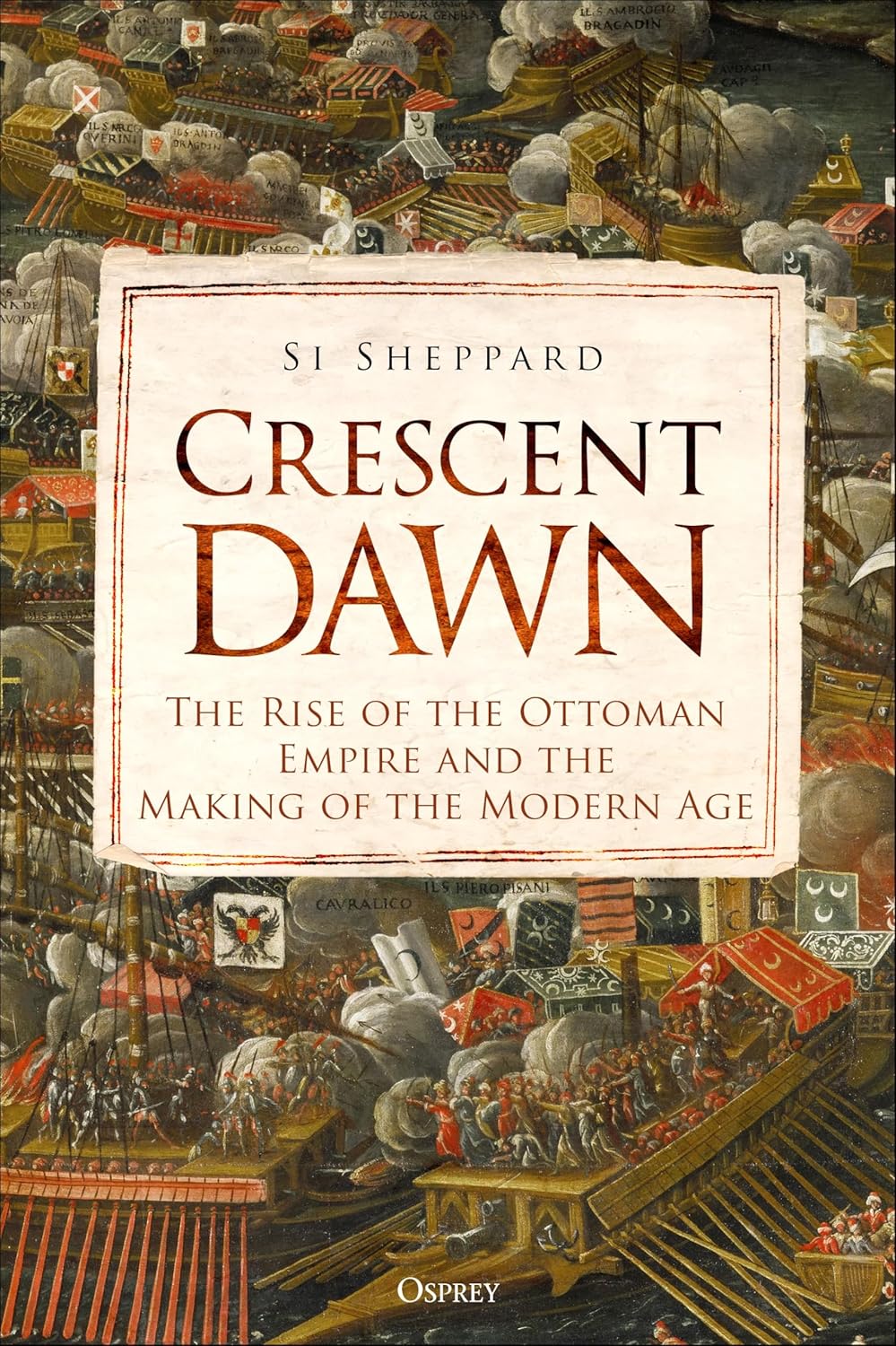
‘Crescent Dawn: The Rise of the Ottoman Empire and the Making of the Modern Age‘
By Si Sheppard
Osprey Publishing: Feb. 25, 2025
Hardcover, 528 pages
What arts and culture topics would you like us to cover? Please email ideas or feedback to features@epochtimes.nyc