



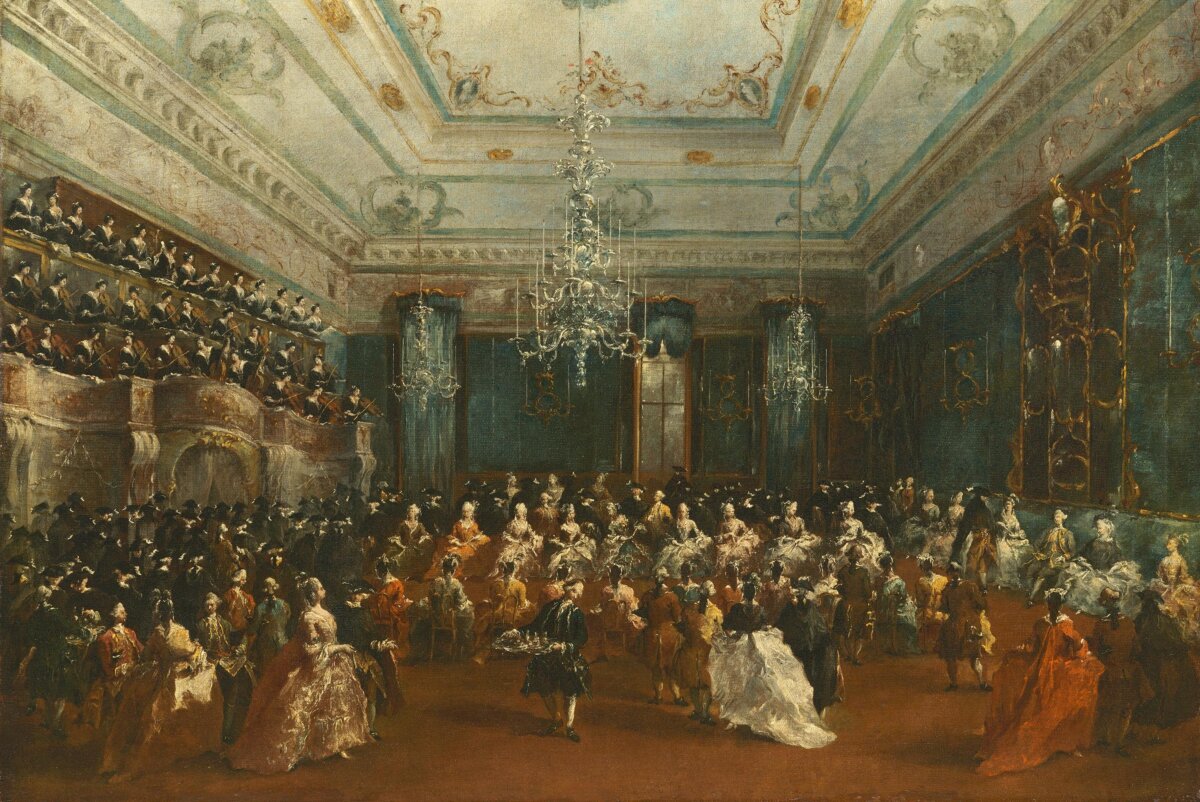
Think of some characteristic sounds of Venice: water slapping against the stones of the canals, oars dipping into the water, gondoliers chattering, the peal of church bells.
Now add one more sound: a bright ribbon of strings and voices rising from a chapel gallery where the musicians, all women, perform unseen behind metal grillwork and lace curtains.
That was the Ospedale della Pietà (Hospital of Mercy). Half orphanage, half music conservatory, it was one of Europe’s wonders in the 17th and 18th centuries. World-weary travelers came from far and wide not only for the paintings and the palazzi, but to hear the “figlie di coro,” the “daughters of the choir.”
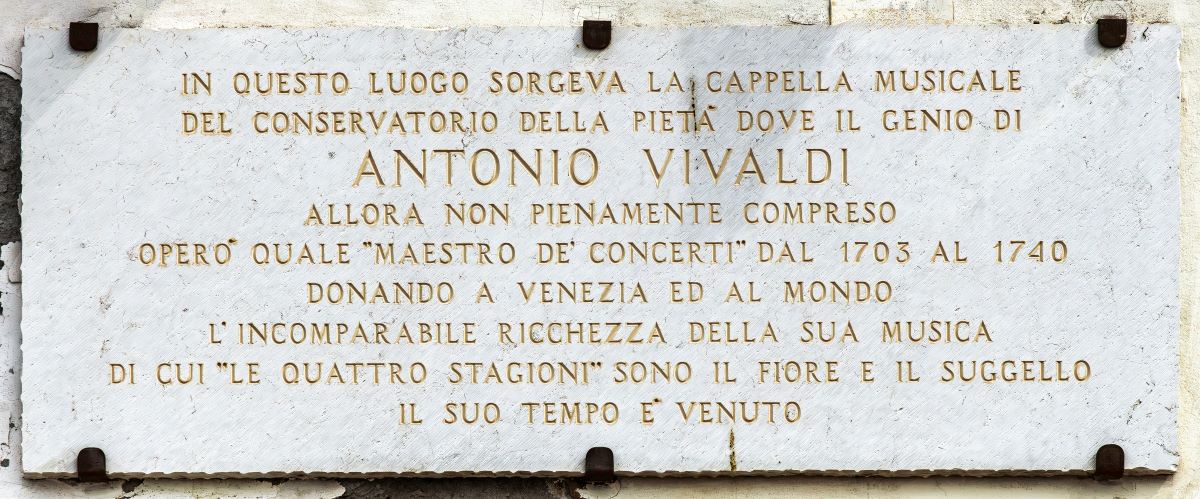
Among those who served the Pietà was an energetic red-haired priest named Antonio Vivaldi. He was best known for his “Four Seasons,” but this was only one of more than 500 concertos he wrote for the talented orphans who ranged in age from teenagers up to what we would consider retirement age. He also wrote more than 50 choral works.
There is a joke, supposedly first told by Igor Stravinsky, that Vivaldi wrote the same piece 500 times. There is some truth to this jab, since his pieces all have a similar characteristic sound. But while he honed a particular style that may sound monotonous to unfamiliar ears, he always tailored his compositions to the particular instrumental skills and vocal types available to him in the Pietà at the moment he was writing.
It may be surprising to learn what these forgotten singers sounded like. Not all of them were typical altos and sopranos. There were also tenor, and even bass, parts in Vivaldi’s works. Who would have sung these?
‘Contralto Profundo’ and ‘Oktavistka’
As the documentary “Vivaldi’s Women” (2006) explains, “For a long time the common assumption was that men must have been drafted to fill those parts,” hypothesizing that male staff members served this function. Alternative theories were that the bass parts were filled by instrumental roles, played by cellos and double basses, or that “the bass parts were transposed up an octave.”
However, as Vivaldi researcher Micky White has shown, there was once a woman in the Pietà’s archive named Anna del Basso. There was also another unidentified woman who was thought to be a bass.
In musical terms, del Basso would be known today as a “contralto,” a female singer with a low voice. But here it gets complicated. The contralto range is itself subdivided into several types. The higher of these is the “contralto profundo,” considered a female tenor. The lowest of these is the “oktavistka” also known as a female bass. This type of singer can produce notes richer and darker than a usual contralto, going as low as a male baritone.
Vivaldi’s “Gloria” (RV 589), a sacred choral work set to the hymn of “Gloria in Excelsis Deo,” has a part written for this rarest of voice types. So does “Dixit Dominus” (RV 594), a setting of Psalm 110 that begins with “The Lord has said.” Hence why these parts were long thought to be performed by either a man or a low instrument.
Vivaldi’s Women
It is only within the last 20 years that this mystery has become better understood. The critically acclaimed all-female singing group Schola Pietatis Antonio Vivaldi, was formed by Richard Vendome in 2005 with the express purpose of meticulously recreating the historical sound of Vivaldi’s female ensembles at the Ospedale della Pietà.
This ambitious project brought together talented musicians dedicated to performing Vivaldi’s sacred music in a manner that authentically reflected the original all-female vocal and instrumental traditions. The ensemble’s commitment to historical performance practice sought to shed new light on the unique auditory world Vivaldi inhabited and composed for.
The BBC’s “Vivaldi’s Women” chronicles this fascinating endeavor and brought these obscure findings into the light. Rupert Edwards’s production, commissioned by BBC Four, captured the essence of the group’s mission and the historical context of Vivaldi’s music.
Here, we are introduced to a living female bass, Margaret Jackson-Roberts, who sings the low parts Vivaldi wrote. Her voice has been described by the Financial Times as “mellow but powerful and richly textured.”
The documentary, available to watch for free on YouTube, is also paired with a concert of Vivaldi’s “Gloria” that the group gave at Venice’s Pietà. The performance is a complete historical reenactment, with the singers wearing basic, uniform-like gowns suitable for women living in a religious institution. It also features the famous circumstance that Jean-Jacques Rousseau once complained about upon hearing the original women perform: “What grieved me was those accursed grills, which allowed only tones to go through and concealed the angels of loveliness of whom they were worthy.”

Why did the Pietà’s singers perform behind a metal grill? The most common reason was to maintain moral purity and modesty. Venice was famous for its decadent atmosphere, and many male travelers were curious about these all-female ensembles. A screen protected the women from prying glances.
In addition, many of the women were disfigured by childhood diseases, most commonly smallpox. The screen maintained an illusion of beauty by transmitting only lovely voices to the audience, allowing the listeners to focus on the music.
A Venetian Revival
Since the pioneering performance of this Oxford-based group, several other ensembles have arisen to carry on their work. In 2018, Suzanne Fatta formed “The Women of Vivaldi” in Buffalo, New York. In 2022, the ensemble La Serenissima released a recording, “Vivaldi’s Women,” which features a recording of “Nisi Dominus,” Vivaldi’s setting of Psalm 127.
Within the specialization of early Baroque music, these groups form something of a super-niche of experts in Venetian music. And so, across three centuries, the Pietà’s gallery sings again, revealing the radiant faces behind the curtain.
What arts and culture topics would you like us to cover? Please email ideas or feedback to features@epochtimes.nyc
