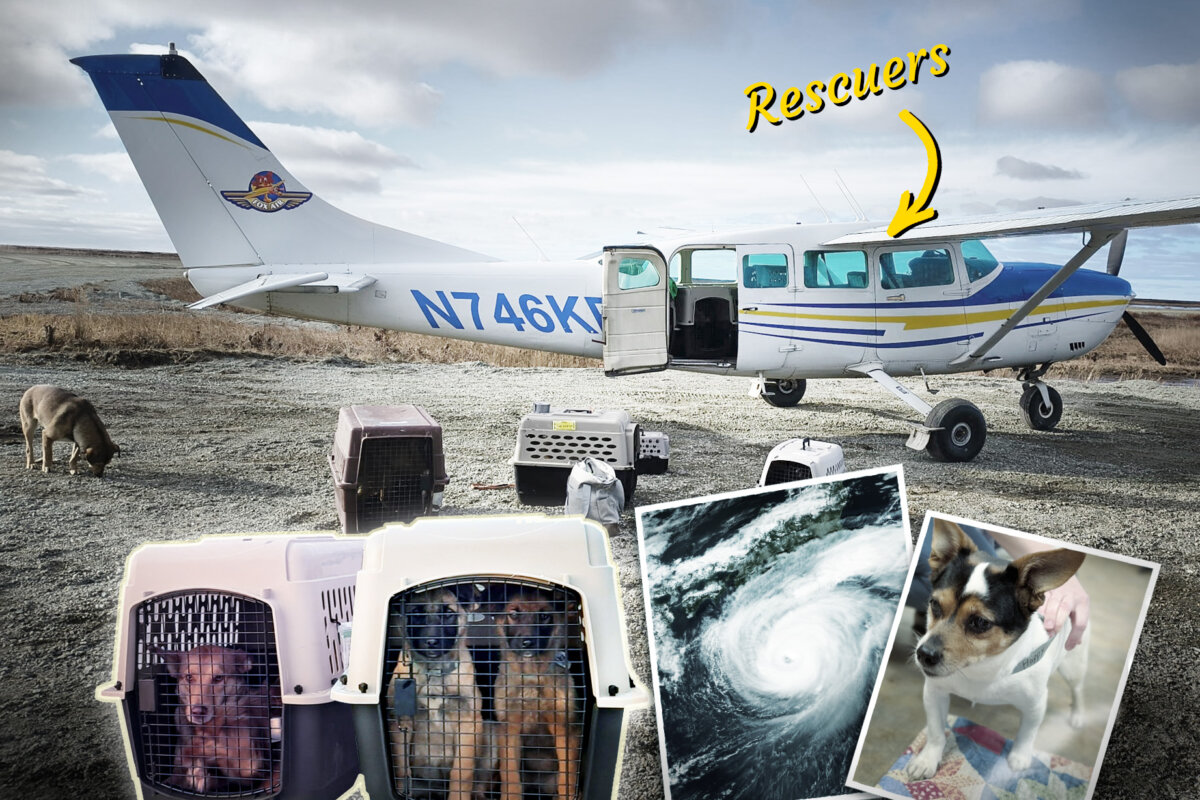
The endangered dogs were flown inland wearing makeshift duct-tape collars, riding in improvised totes with some puppies snuggled inside a Spiderman backpack. The flight was part of a desperate rescue of 192 canines last month when tropical Typhoon Halong flooded Kipnuk, a remote village on Alaska’s Kuskokwim Delta, resulting in 1,800 people evacuating.
Crates filled with dogs were unloaded from several planes in Bethel, about 100 miles northeast of Kipnuk, then brought to Bethel Friends of Canines to receive care until they could be reunited with their owners.
“We weren’t about to stand by and let these dogs be left out in a flooded and deserted village, separated from their loving owners, to starve and die,” Jenna Stewart, director of development for Bethel, told The Epoch Times.
“This was a huge undertaking, but this is what Bethel Friends of Canines does. It pulls together and helps its community.”
On Oct. 12, Typhoon Halong battered Alaska’s western coastline, leaving several villages devastated. Located in some of the most remote parts of Alaska, there aren’t any roads to Kipnuk or other neighboring communities like Kwigillingok and Nightmute. The only way in or out is by either boat or plane. Due to extreme rain, all the buildings in Kipnuk were flooded (some were even carried out to sea) except one—the school and teachers’ residences were spared.
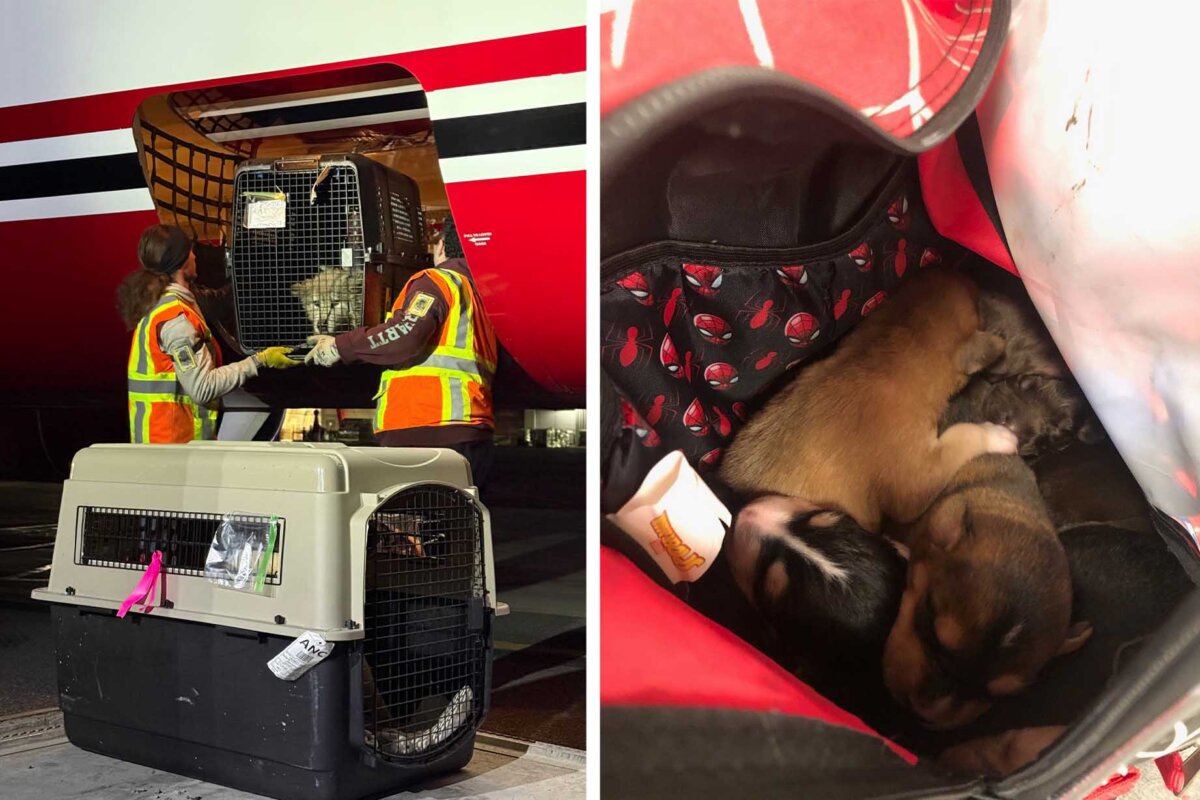
Military choppers were flown in to evacuate the residents. Pets were prohibited from riding, however, and so were left to fend for themselves. Locals then called Bethel to help save their dogs, at which point Stewart and Bethel staff began the largest canine rescue operation the non-profit had ever undertaken.
“There was no way [locals] could be able to return to collect their pets,” Stewart said, speaking of the Kipnuk evacuees, who were brought to shelters in Anchorage, another 360 miles east. “These dogs would have been exposed to contaminated water, lack of food, and certain death.”
Within hours, Bethel staff had secured a charter plane to Kipnuk. Local schoolteachers stayed behind, determined to collect the dogs, and with an airlift now on the way they began scouring the village for stranded pets. Some were found in yards and some in homes that had been left unlocked in the haste of the evacuation. Others were tethered next to the airport, while some roamed free and had to be caught.
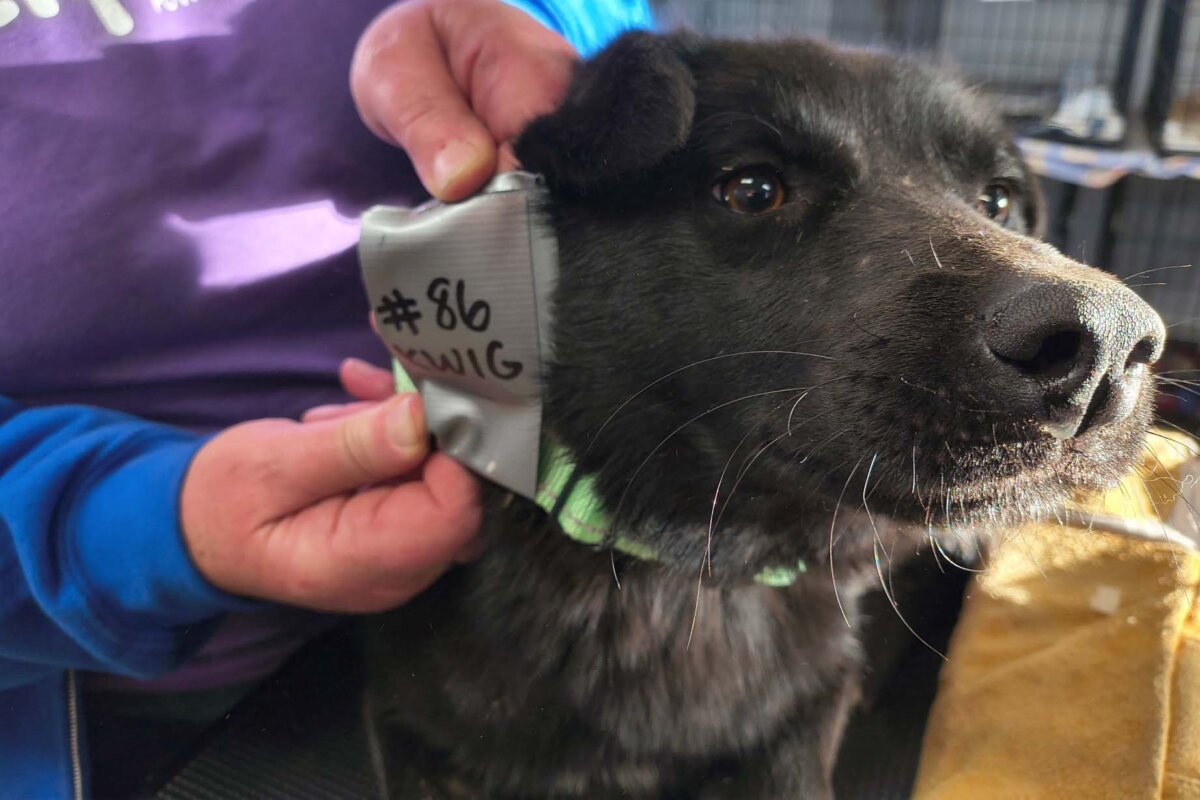
Creative logistical solutions were improvised to get all the dogs to safety. Volunteers stowed them in all manner of totes and bags and loaded as many on the plane as possible. Each was outfitted with a makeshift duct-tape collar scrawled with names and phone numbers, whatever information they could find, to help reunite each pet with its owner.
“They were determined to use any bit of airplane space that was available to them,” Stewart said.
By the end of the first night, they’d rounded up and shipped 15 pups. Over the next two weeks the rescues continued (and still continue), as many dogs were let loose by their owners, who believed that would be their best hope of survival.
“They are not easy to catch!” said Stewart.
So far, 192 dogs have been brought in—and one turtle, a classroom pet that was saved from the school.
Strangely, though, not one cat was found.
“Not a lot of cats live in rural Alaska,” Stewart said. “If there were, we would have rescued them.”
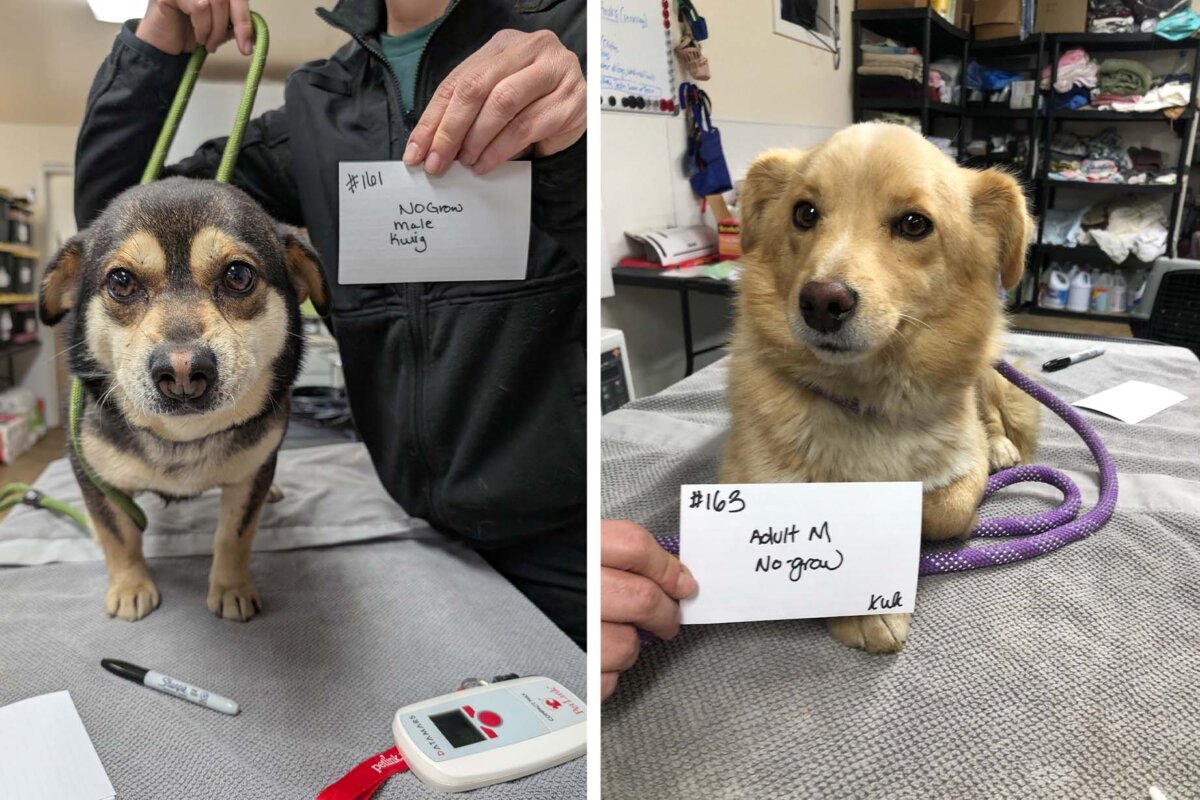
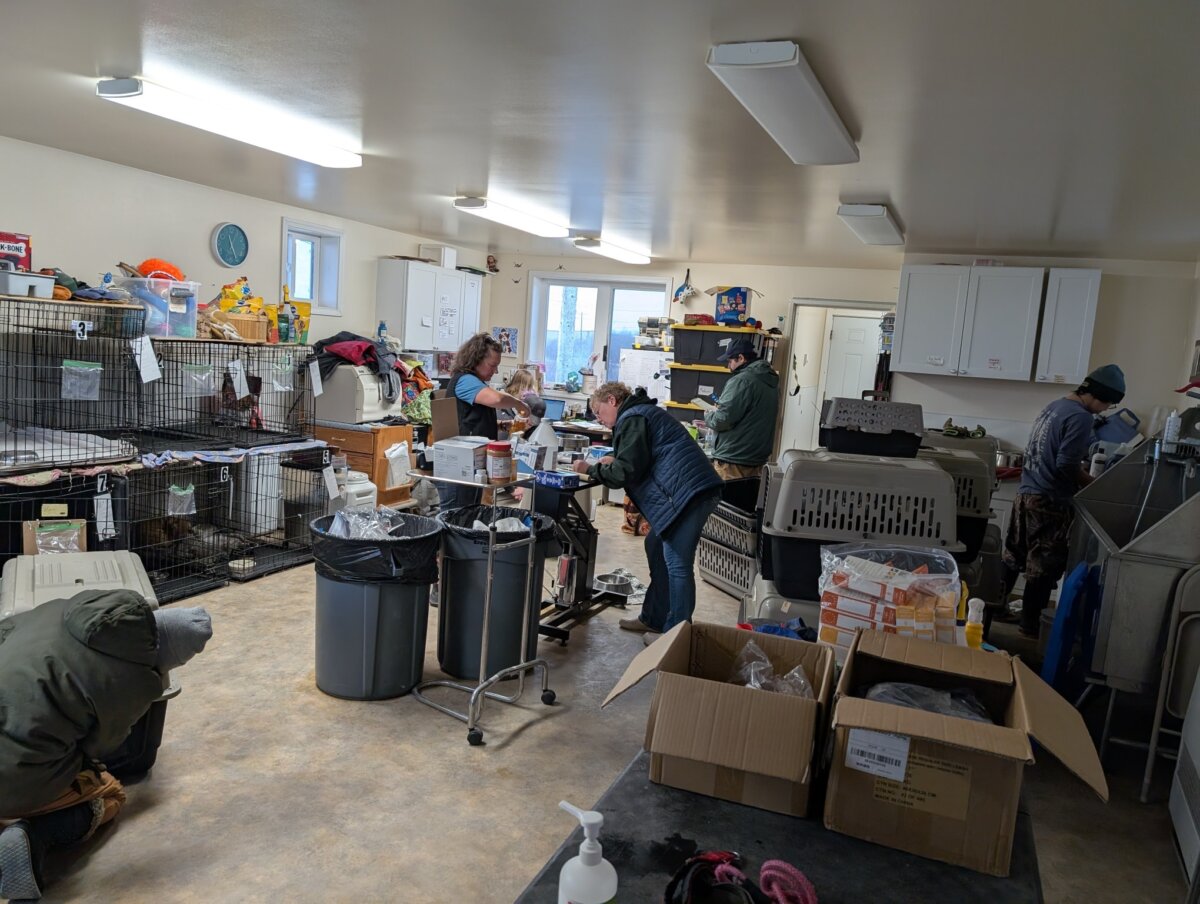
The pets were bathed and vaccinated at Bethel Friends of Canines, though the organization is only a rescue, not a shelter with designated room for housing animals. Staff have placed dogs in wire crates in their small two-room building and built an outdoor area to house them temporarily. Other dogs went to foster homes in Bethel and Anchorage.
“When word spread of what was happening, so many people in Bethel reached out to us—either offering their homes as a foster home or their time at our kennel building to help care for these dogs,” Stewart said.
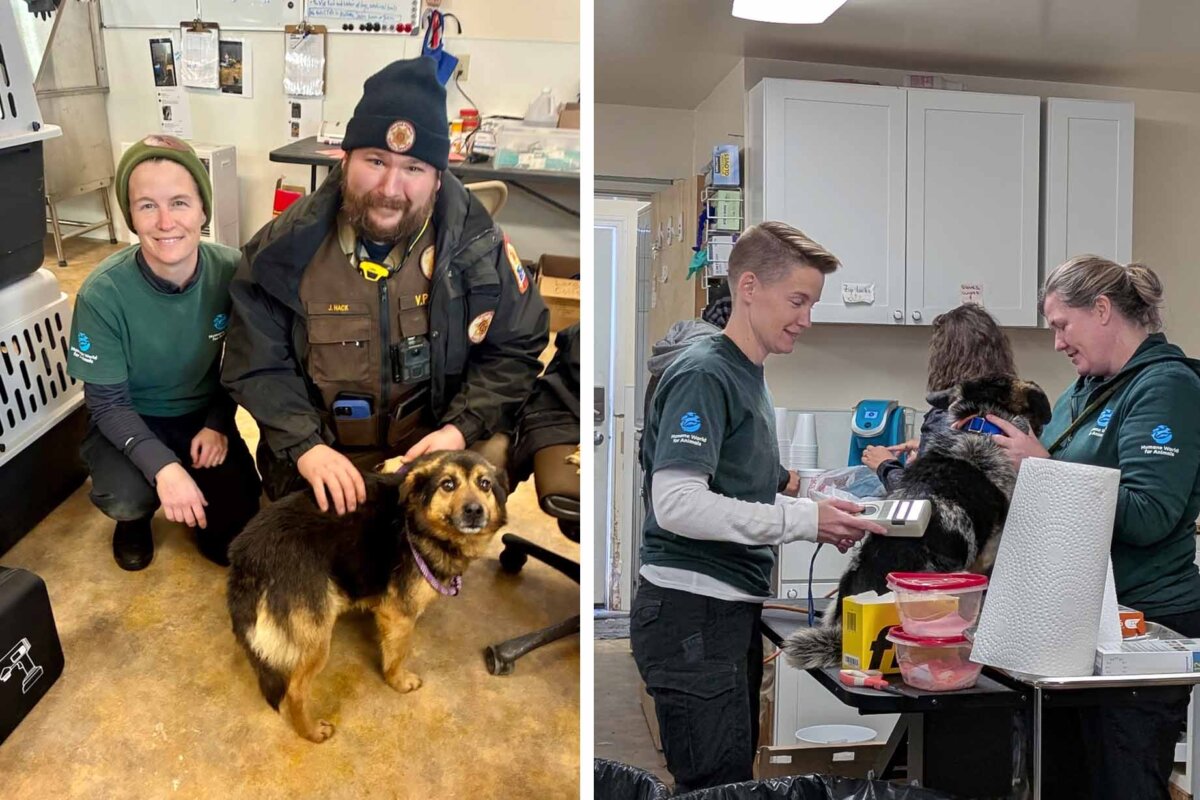
Now, with the weather back to normal, some villagers have returned to Kipnuk to rebuild. Most of the dogs have been matched to their owners, though many lost their homes in the flood and won’t return for some time. Bethel’s partners in Anchorage have stepped up to foster their temporarily homeless pets.
“We are the only rescue in our region. There are no shelters, no pounds, no animal control officers in any of these villages,” Stewart said. “Our community needed our help and we used everything we had to help them.”