“The most eloquent book in French prose” is how American historian William Durant described Blaise Pascal’s “Pensées.” Pascal (1623–1662) conceived the work as a defense of Christianity but died before completing it. He left behind copious notes, which, when first published as a book in 1670, gained popularity as thought-provoking musings on the spiritual life writ large.
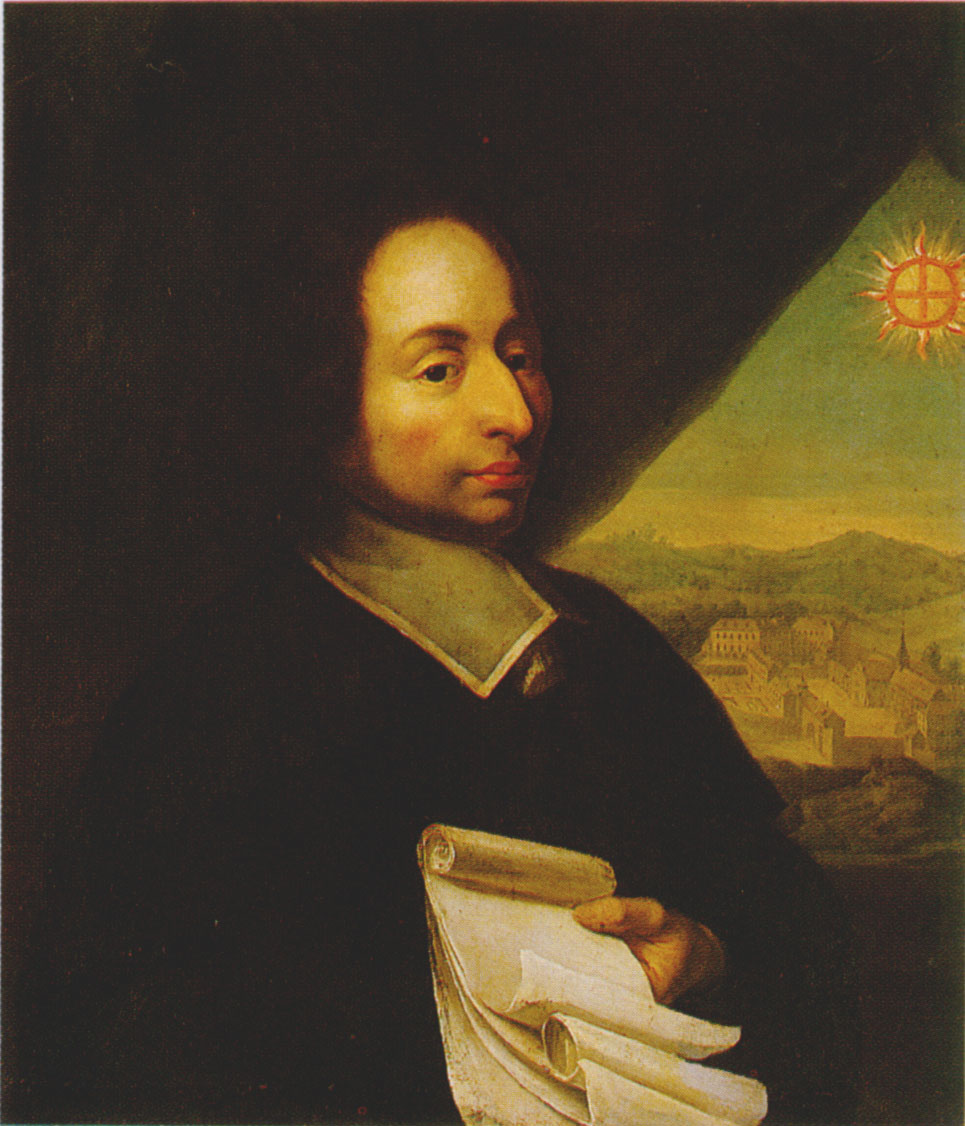
Here are five of Pascal’s most suggestive aphorisms, some more famous and some less, about faith, reason, and other timeless topics.
1. The Truths of the Heart
In the introduction to a 1958 edition of the “Pensées,” quoted throughout this article, English poet T. S. Eliot warned readers that the aphorisms couldn’t be understood in isolation. Even though they are fragmentary, they still reflect Pascal’s systematic worldview. The example Eliot mentioned is arguably Pascal’s most famous saying: “The heart has its reasons, which reason does not know.”
Pascal, Eliot suggested, was speaking specifically about faith. Unlike cold calculations that tell us what makes sense and what doesn’t, faith doesn’t yield precise answers. But that doesn’t mean it isn’t useful or true. The truths of faith are personal matters of intuition. They reach more deeply than reason alone. As Pascal put it in the next aphorism, “It is the heart which experiences God.”
2. A Thinking Creature
A pioneering physicist and mathematician, Pascal understood the value of reason. Although faith is beyond its domain, reason remained an awesome power for the Frenchman. Like countless others, Pascal thought that the ability to think logically distinguished humans from other living creatures: “Man is but a reed, the most feeble thing in nature; but he is a thinking reed.”
In the wild, humans may be less resilient than other species. But they compensate for physiological inadequacies with their minds, which invents tools, produces speech, and imagines futures.
While plants and animals don’t seem aware of their condition, humans are. Pascal held that thinking comes from people’s awareness of their condition. Be it pleasure or pain, humans know they feel something, and they can think about it. “All our dignity consists, then, in thought,” he suggested. Thinking through scientific and theological matters was a prerequisite for Pascal’s wellbeing. Whatever domain thought investigates, he saw thinking, and thinking well especially, as necessary to actualize the human potential.
3. Greatness in Misery
From his assumptions about reason and awareness, Pascal reached a provocative conclusion about “misery.” In his words, “The greatness of man is great in that he knows himself to be miserable.” Readers may find this puzzling or objectionable. What greatness is there in knowing wretchedness? How could pain, death, and disease ever amount to anything great?
Pascal’s statement isn’t an exaltation of misery as good and worth pursuing. It’s the knowledge of misery that is great, not the misery itself. That awareness inspires the pursuit of virtue, which for him was synonymous with God. Being aware of brokenness and corruption is the first step to cure them.
4. Nature’s Order Is Divine
In a section about Christian theology, Pascal noted that “a man should be convinced that numerical proportions are immaterial truths, eternal and dependent on a first truth, in which they subsist, and which is called God.”
Numbers exist; they don’t change, and our minds can all perceive them. Numbers and mathematical symbols allow us to describe chemical and biological processes, engineer durable infrastructure, and discover immutable relations between abstract but intelligible symbols. This orderliness, which Pascal observed in all of nature, represented to his eyes a perfection only the highest of principles could embody—a divine principle he called God.
But Pascal warned readers that they shouldn’t reduce the divine to a source of mathematical truths and chemical balances. That is, the divine wasn’t just a fixed, determining principle. Pascal specified that God is also a loving entity, one who
“fills the soul and heart of those whom He possesses, a God who makes them conscious of their inward wretchedness, and His infinite mercy, who unites Himself to their inmost soul, who fills it with humility and joy, with confidence and love.”
The natural order was proof of God’s immutable design, but the possibilities that belief in God offered humans were much vaster and more dynamic than a rigid cosmos could allow.
5. Human Warmth
Speaking of eloquence, Pascal wrote that “There are some who speak well and write badly. For the place and the audience warm them, and draw from their minds more than they think of without that warmth.”
The Frenchman was a precocious child with an enviable gift for numbers and equations. The son of a wealthy aristocrat, he never lacked access to books and academic resources. Study took up most of his days. As he aged, he also became a prolific writer and busy inventor. He knew of solitude firsthand, which often seemed to boost his creative powers. But, as the aphorism suggests, he must have also realized that spending thousands of hours in productive isolation was depriving him of the “warmth” he could enjoy in others’ company.
Pascal knew that speaking before people, in formal or informal contexts, could spur the mind to heights it couldn’t attain alone. It could make one think more, and maybe even better. Readers may wonder if Pascal ever regretted choosing an insulating lifestyle over the more gregarious habits of his salon-going contemporaries. Regardless, he seemed to recognize that something special and noteworthy unfolded in the meeting of human minds.
Jansenism, Censorship, and Pascal’s Legacy
For most of his life, Pascal wrestled with faith. He grew up motherless in a Catholic family, but his religious upbringing was rather lax. His father homeschooled him. Study occupied most of his and his two sisters’ time.
In the winter of 1646, after breaking a hip, Pascal’s father began a three-month treatment under the supervision of two of the best doctors in the northwestern town of Rouen, where the Pascals were living. The doctors were followers of Jansenism, a fringe but growing community of believers opposed to the Catholic church of their day. During their frequent visits, Pascal organically adopted their views and eventually got involved in theological debates.
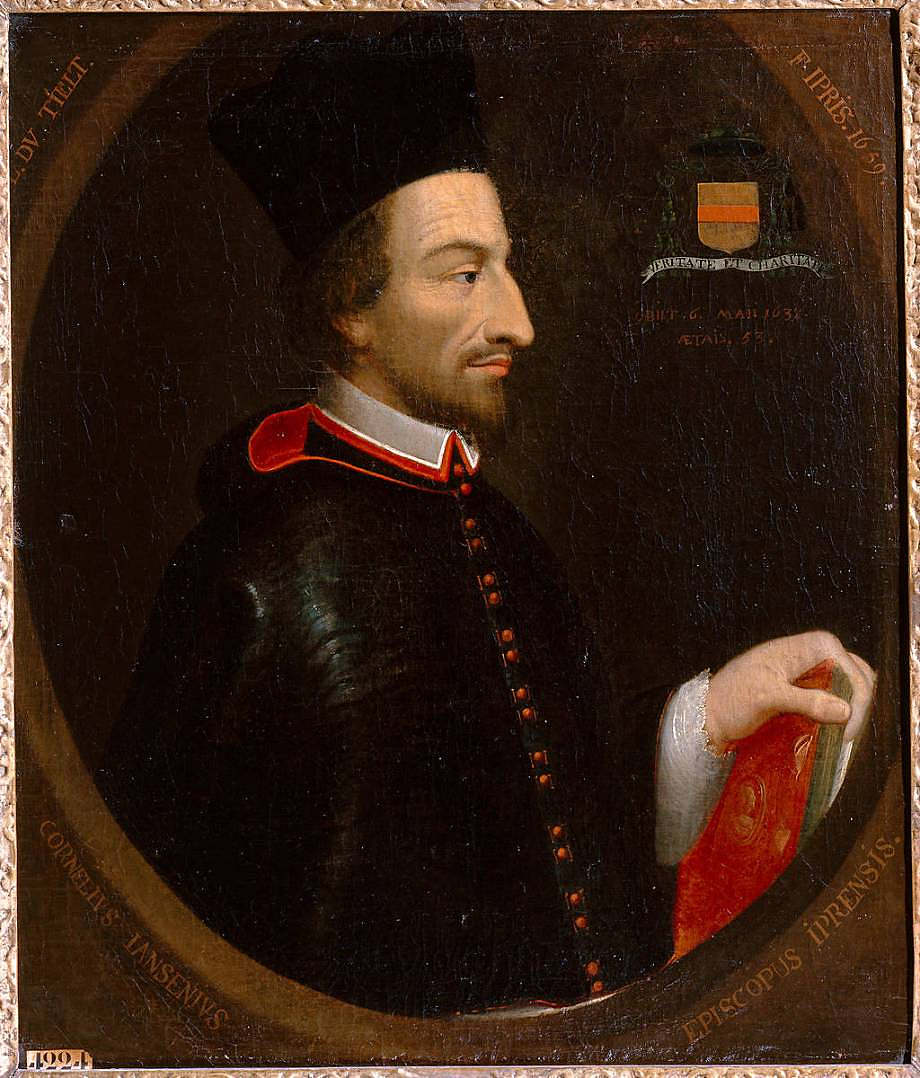
Like Calvinists, Jansenists argued against the existence of free will. They also held that divine grace and salvation are completely beyond human influence. This worldview dated back to a debate between North African theologian Augustine of Hippo (354–430) and British monk Pelagius (circa 390–418), though it remained primarily a personal and intellectual matter. During Pascal’s time, it became a fervent political issue. The mathematician contributed to this Jansenist-Catholic diatribe with the “Provincial Letters,” a series of 18 polemical texts written between 1656 and 1657 that sought to defend Jansenism and its proponents. The final letter mounted a scathing critique of the Pope. As a result, the church banned them, though they continued circulating widely.
Pascal’s sister Jacqueline also took great interest in Jansenism. She eventually joined the convent of Port-Royal, southwest of Paris, which served as a headquarters for French Jansenists. A physically feeble young man who needed his sister’s financial support, Pascal decried her choice. But his brotherly love never waned.
In an attempt to suppress Jansenism’s calls for reforms in church and state, France’s King Louis XIV forbade the convent from accepting novices and demanded that all Jansenists sign a theological formulary to renounce their convictions. It was 1661. That same year, Pascal responded with “Writ on the Signing of the Form”: a long polemic that exhorted Jansenists to hold true to their beliefs. This publication fueled his reputation as a dangerous dissenting voice. Throughout this turbulent period, he continued writing sections of the “Pensées.” He died one year later, though controversies about his ideas continued beyond his death.
In 1789, the year of the French Revolution, the “Pensées” joined Pascal’s letters in the Catholic Church’s “Index Librorum Prohibitorum,” a catalogue that listed books Catholics were forbidden from printing or reading. Historians still debate about the causes for this censorship, though it was likely due to a resurgence of interest in the book and its occasional anti-Catholic opinions. Whatever the case, Pascal’s work kept circulating widely in the centuries to come. Today, it remains one of the modern era’s most fascinating books.
What arts and culture topics would you like us to cover? Please email ideas or feedback to features@epochtimes.nyc