



Every artist needs his muse. Looking at Sandro Botticelli’s (circa 1445–1510) most iconic masterpiece, “The Birth of Venus” (1485), it’s easy to imagine the painter choosing the scene and subject matter to suit his muse and not the reverse.
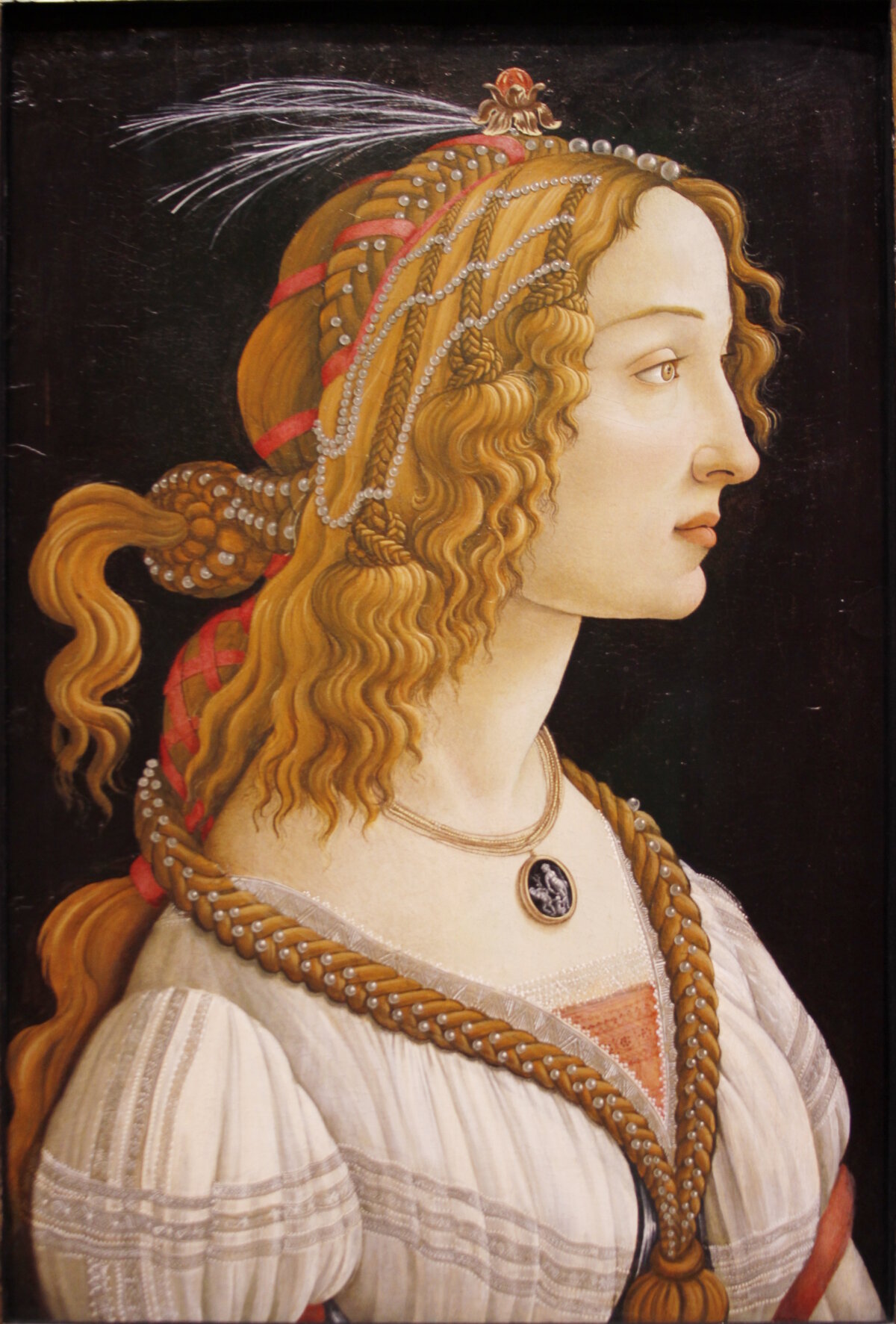
His muse’s name was Simonetta Cattaneo Vespucci (circa 1453–1476), and she appears in many of his most significant works. What can’t be seen in all the details of the painting was the depth of Botticelli’s devotion to her. He chose her for his “Portrait of a Young Woman” painting nearly 10 years after her premature death from tuberculosis.
A Child Prodigy
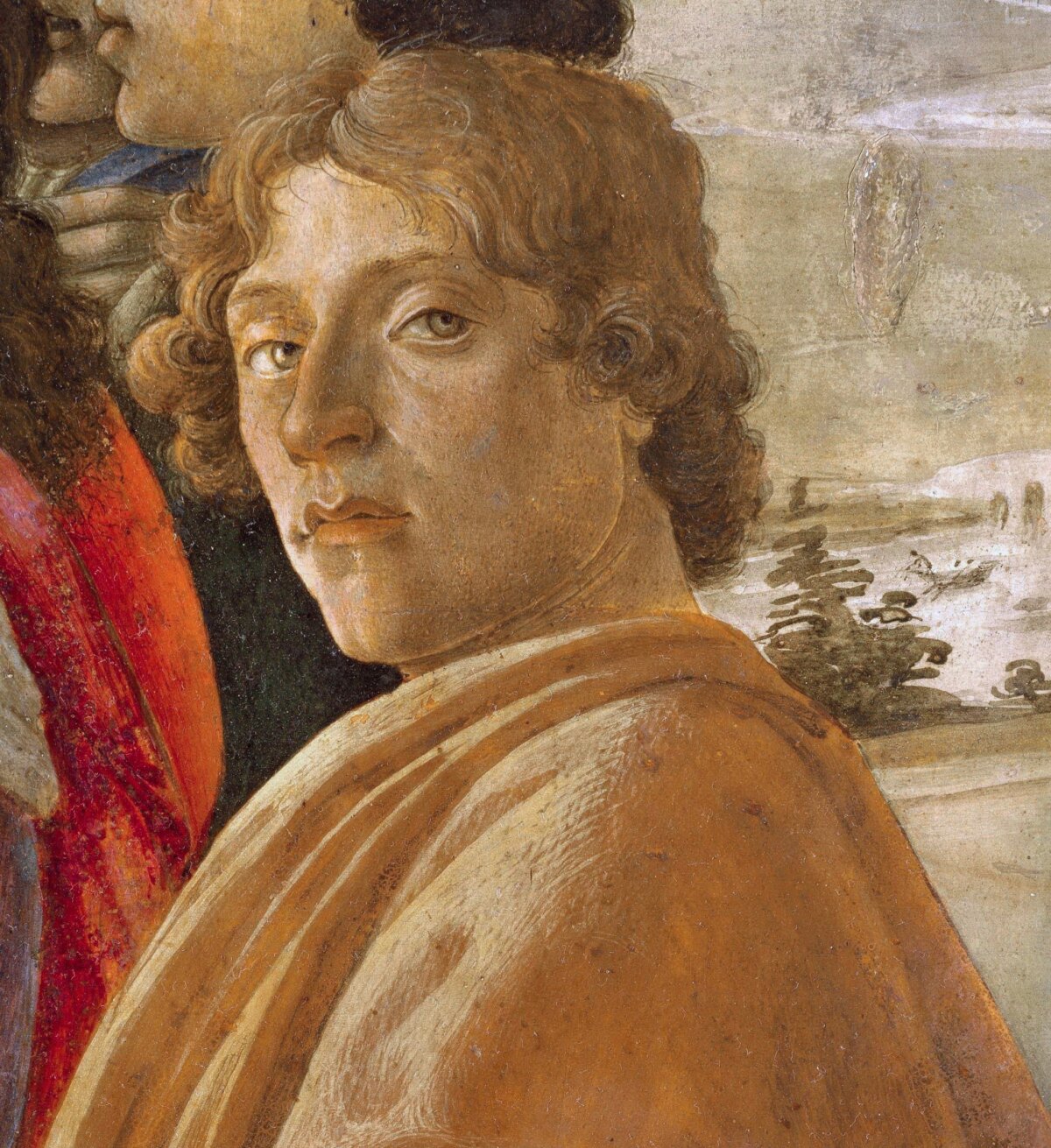
The ideal student and teacher found each other in Botticelli and Fra Filippo Lippi (1406–1469). As children, both lacked motivation to pursue any calling other than painting. The enthusiasm and potential Botticelli showed in beginning his apprenticeship was quickly recognized and returned by Lippi, and Botticelli’s progress was rapid. At time, their paintings throughout the next five-year period were difficult to tell apart.
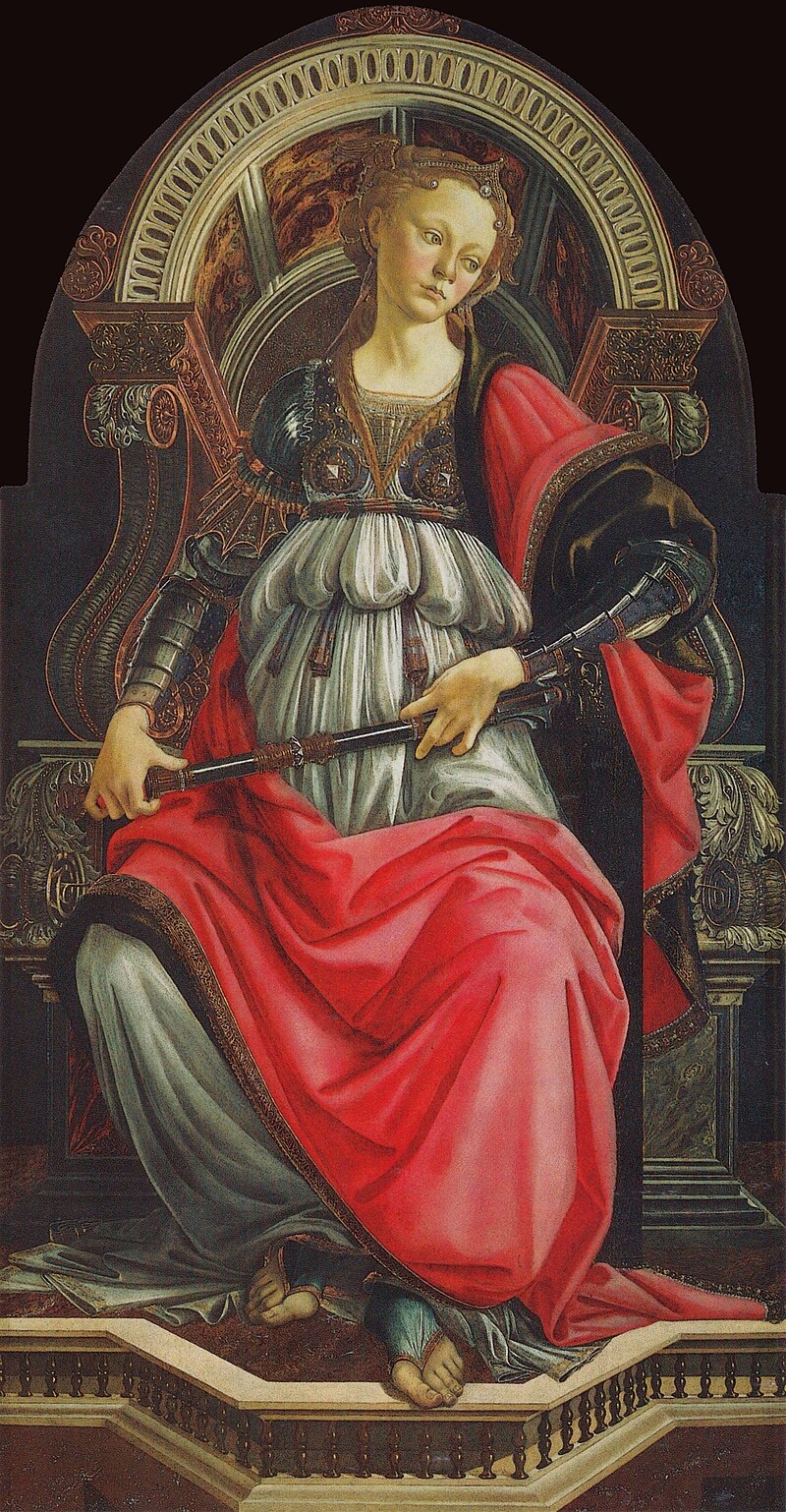
Lippi’s graceful and serene characterization of women is present in Botticelli’s first masterpiece, “Fortitude.” Part of a set of panels depicting the seven virtues, the figure’s curiously introspective expression would be a recurrent choice by Botticelli in characterizing many of his favorite female subjects.
The Muse Next Door
Simonetta’s husband was a distant cousin of none other than Amerigo Vespucci (1454–1512). But as fate would have it, Simonetta lived in Botticelli’s modest neighborhood. Her beauty is documented by more than just masterpieces of art. She was adored throughout Florence, including by the illustrious Medici family.
In 1475, Giuliano de’ Medici commissioned Botticelli to create a banner with Simonetta’s likeness to present at a jousting tournament. He entered waving the banner proudly, won the tournament, and declared Simonetta the most beautiful woman in Florence. She died that following year, and the city was still mourning the loss a month later.
The combined affections of Botticelli and the Medicis ensured Simonetta’s immortality in masterpieces of both Christian and pagan inspiration. Lorenzo and Giuliano influenced Renaissance imagery by promoting the Neoplatonic ideal of searching for harmony and perfection in all works.
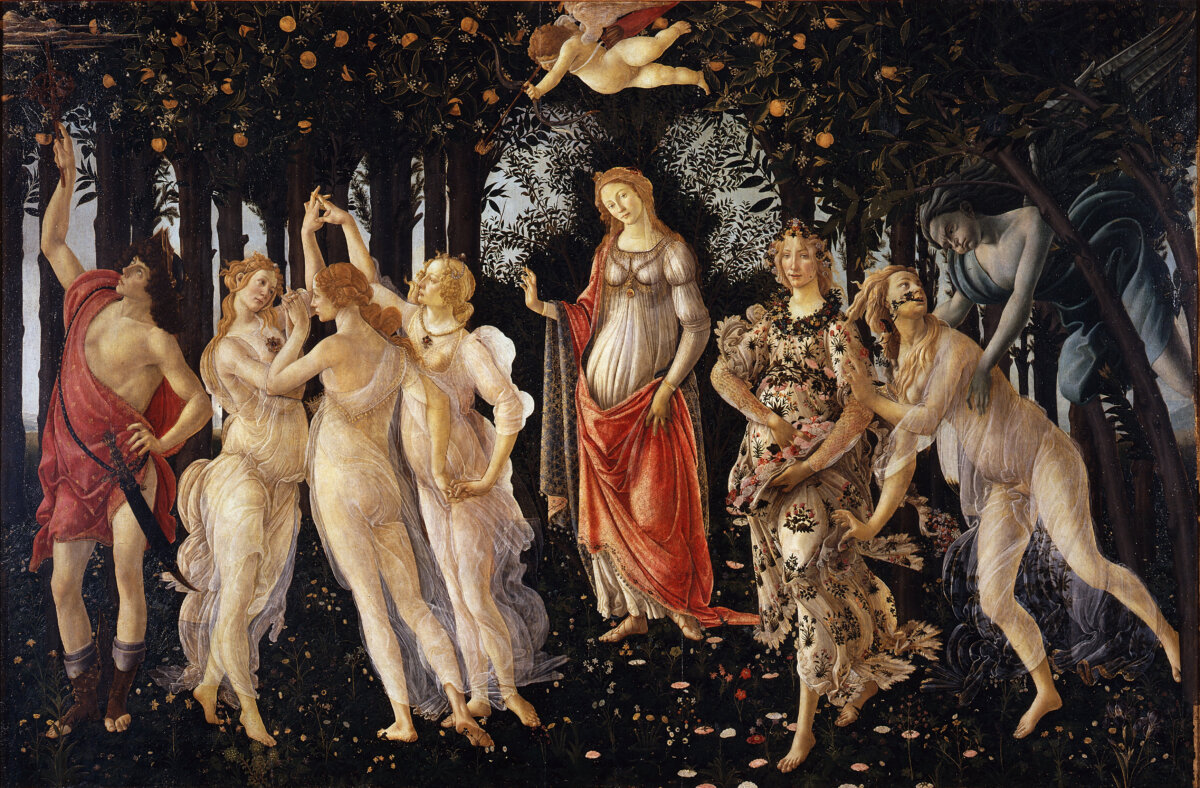
The cultural environment they created allowed for Botticelli’s “Primavera” (circa 1482), which was provocative for its omission of a clear religious or moral narrative. Placing Simonetta as the central figure of Venus, the artist surrounded her with eight additional mythological figures, including Mercury, Cupid, Zephyrus, Chloris, Cupid, the Three Graces, and Mercury.
Together, they share no common episode or narrative. Why Botticelli chose each as a different aspect or representation of spring remains a subject of debate, but there is no doubting his choice of Simonetta as Venus.
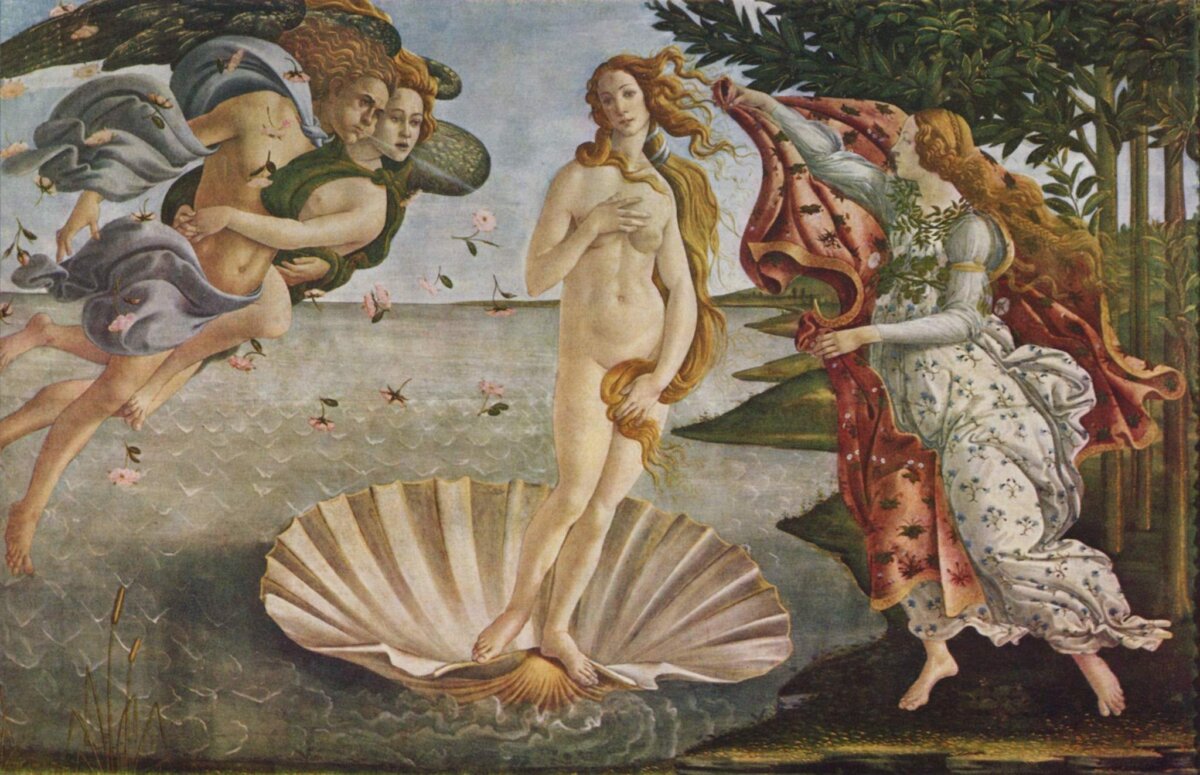
Continuing her development in this role, the Medicis commissioned “The Birth of Venus” to be kept in a chamber of their country house the Villa de Castello. At that time, a life-size nude painting of any subject other than Adam and Eve was unheard of.
The painting was not shown in public, and because the beloved Simonetta was its muse, its growing reputation was one of welcome inspiration rather than scandal. It marked a turning point in Renaissance art, allowing for a new appreciation of nudity in secular themes. The new trend, however, did attract critics.
The Bonfires of the Vanities
In 1492, the death of Lorenzo de’ Medici, by this time known as Lorenzo the Magnificent (1449–1492), left a gaping hole in the political and cultural leadership of Florence. His absence allowed for the rise to power of Dominican monk Girolamo Savonarola (1452–1498). The monk had a talent for preaching fire-and-brimstone sermons.
This gained him widespread support throughout the city that had so recently pushed artistic standards to new heights. In an atmosphere of religious austerity, Savonarola and his supporters denounced and burned not only paintings, but musical instruments, elaborate dresses, wigs and makeup, mirrors, and gold—anything that could be considered frivolous.
It’s not proven, but widely believed, that Botticelli also participated in these bonfires. Savonarola’s preaching brought about his own excommunication by Pope Alexander VI. Soon afterward, he was hanged and burnt at the stake in the same piazza where he had burned so many treasures.
The events in this period of Botticelli’s life succeeded in discouraging him from ever again painting nudes. Sources disagree as to the full extent of Botticelli’s involvement and alignment with Savonarola’s movement. But according to Giorgio Vasari’s seminal work, “The Lives of the Most Excellent Painters, Sculptors, and Architects,” (1550) Savonarola’s influence was the primary cause of Botticelli’s artistic relapse.
“Fra Girolamo Savonarola of Ferrara, of whose sect [Botticelli] was so ardent a partisan that he was thereby induced to desert his painting, and, having no income to live on, fell into very great distress. For this reason, persisting in his attachment to that party … he abandoned his work.”
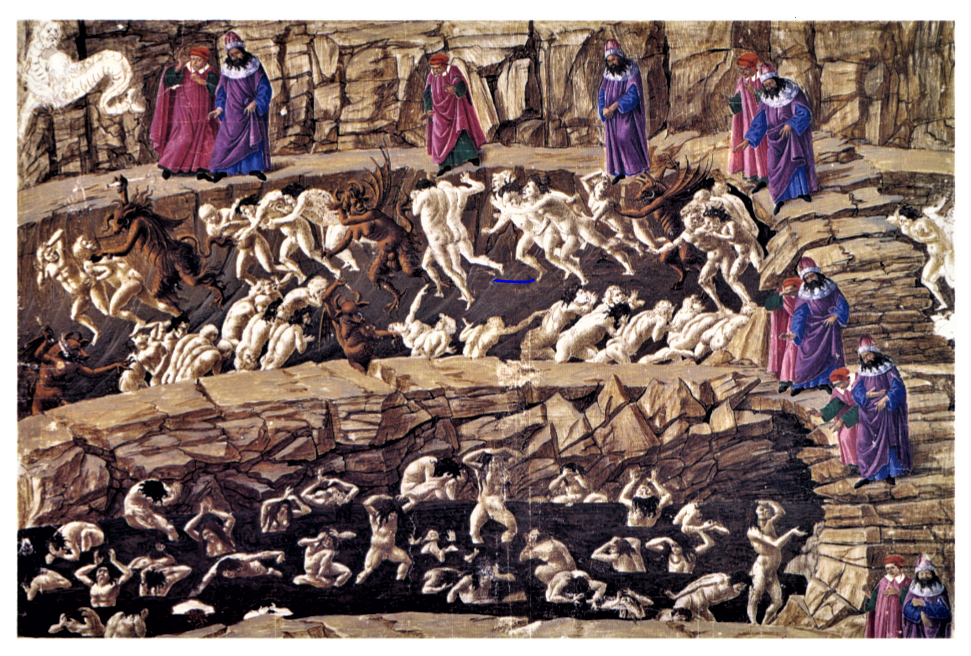
Although Botticelli didn’t give up painting entirely, his output after 1500 was sparse. A collection of 92 drawings illustrating Dante’s “Divine Comedy” (1321) contains a depiction of the poet’s exquisitely detailed layers of Hell in similar fashion to his previous “The Assumption of the Virgin.” It was to this collection that he devoted most of his energy in his later years.
His final commitment to his art was his last request to be buried at Simonetta’s feet some 34 years after her passing. To this day, they remain together in the church of Ognissanti in Florence.
What arts and culture topics would you like us to cover? Please email ideas or feedback to features@epochtimes.nyc
