Hans Christian Andersen’s fairy tale “Buckwheat” personifies what unbecoming self-importance looks like. He demonstrates how improper pride is dangerous because it leads one to take an irrational, or exaggerated, view of oneself, including feeling superior to others.
A farmer owns a field full of rye, wheat, oats, and buckwheat. Beside this field, looking fondly upon the crops, is an extremely old willow tree with a cleft in the middle of its trunk and “grass and blackberry tendrils creep[ing] out through the cleft.”
All of the plants grow healthy and strong. The oats are especially beautiful with their yellow flowers, which, “when ripe, [look] like little yellow canary birds sitting on a branch … and the fuller the ears of grain the lower they [bow] their heads in reverent humility.”

However, though the field is full of wonderful plants, flowers, and friends, the buckwheat refuses to bow its head and stands as tall as possible. It says to the willow tree, “I am quite as rich as the oats … and, moreover, I am much more sightly. My flowers are as pretty as apple blossoms. It is a treat to look at me and my companions. Old willow, do you know anything more beautiful than we?”
The willow tree nods its branches, suggesting that it does know something or someone far more beautiful than the buckwheat. However, the prideful buckwheat ignores his nodding and calls him stupid and ugly. It sees itself as far superior to all the other plants in the field.
Hubris
Soon a fierce thunderstorm rolls over the country and approaches the field, threatening all the plants in it. Seeing the storm, the wheat, oat, rye, and willow tree humbly bow their heads to prepare for the storm. But the buckwheat refuses to do so.
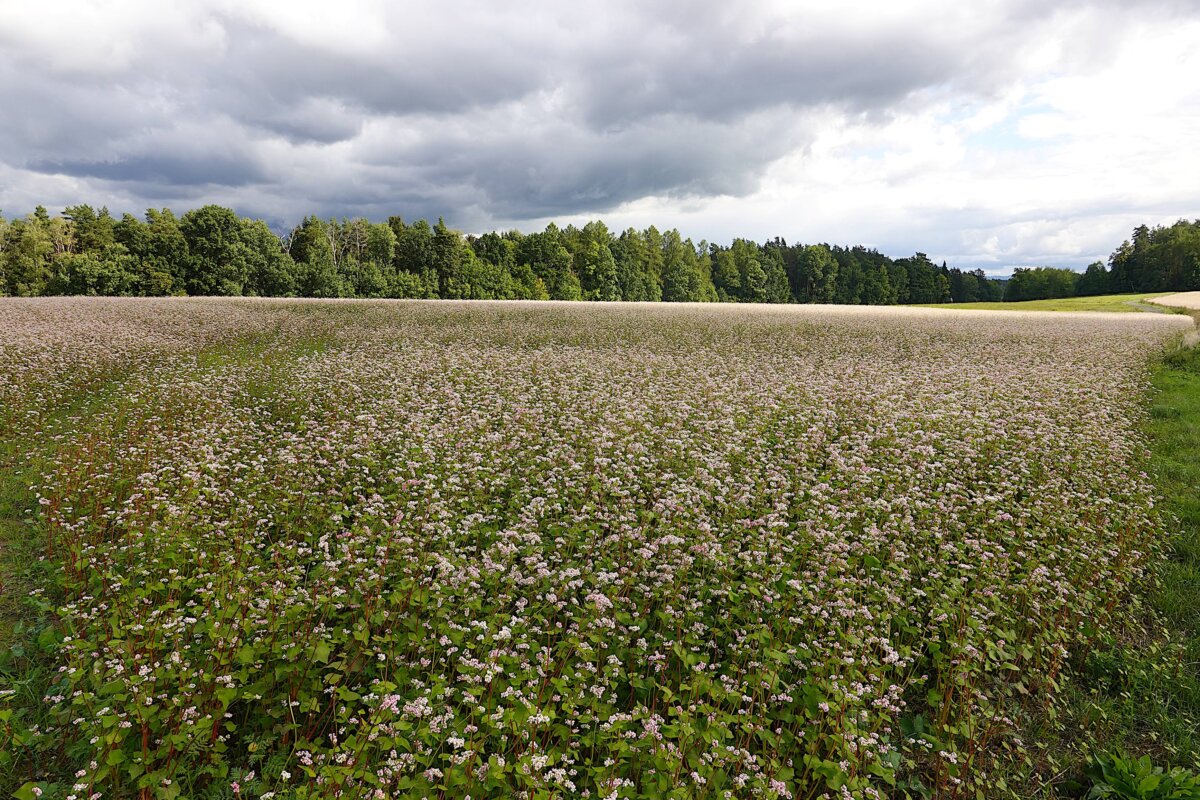
The other plants plead with the buckwheat to lower its head. The willow tree further warns it, “Do not look at the lightning when the cloud breaks. Even human beings dare not do that, for in the midst of the lightning one may look straight into God’s heaven. … What would not happen to us, mere plants of the field, … if we should dare do so?”
Yet all this wisdom falls on deaf ears. The buckwheat stiffens itself in pride all the more. It believes it’s superior and claims that perhaps, indeed, it will see God.
The storm draws near and grows fiercer and fiercer, until it’s finally over the field and all its plants. The storm brings with it wind, rain, thunder, and dreadful lightning. The buckwheat turns its face directly toward the storm, much to its detriment.
Through this story, children can see how harmful unseemly pride is and how far it can make them fall. Improper pride often makes people believe that they can go higher than it actually can and that they’re far greater than they actually are. Unfortunately, such an illusion will be met by dreadful, humbling reality.
Children can learn from the buckwheat’s story that pride comes before a fall. Humility can be the way to irrigate the garden of the soul. Humility produces flowers which see their own beauty while simultaneously acknowledging and admiring the wonder and beauty around them.
What arts and culture topics would you like us to cover? Please email ideas or feedback to features@epochtimes.nyc