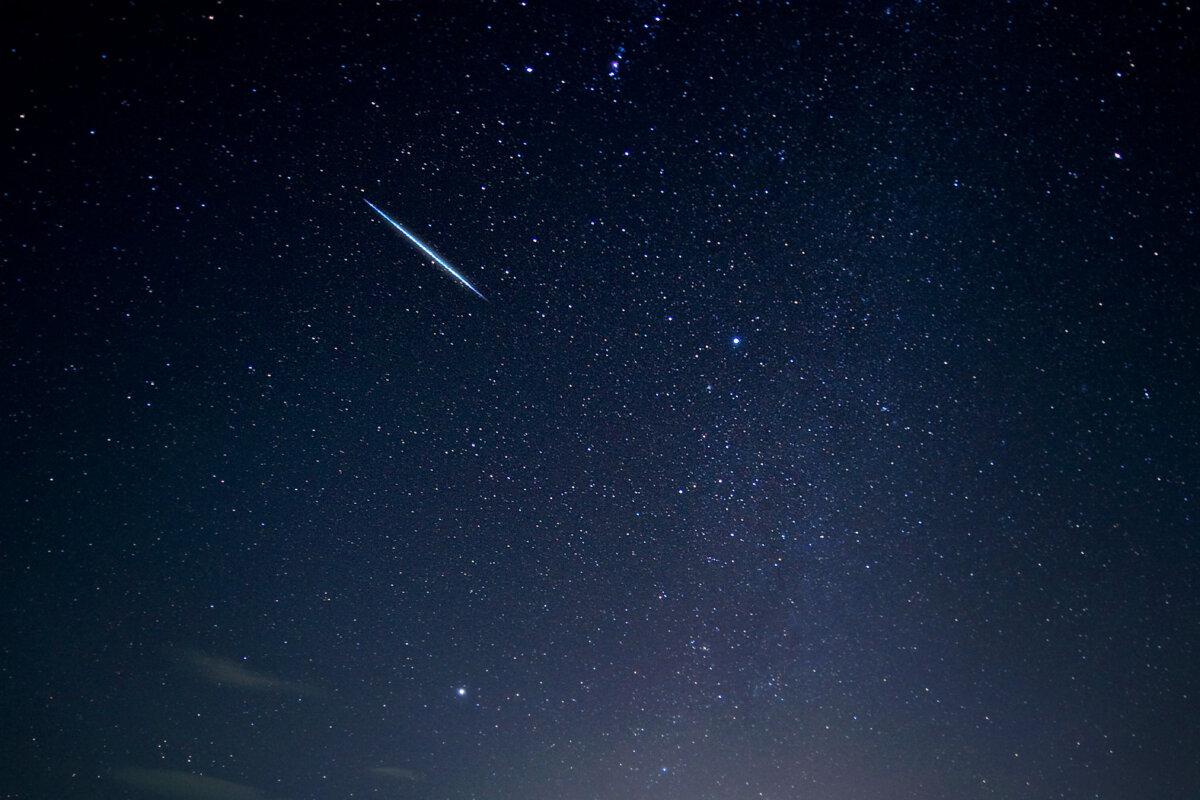
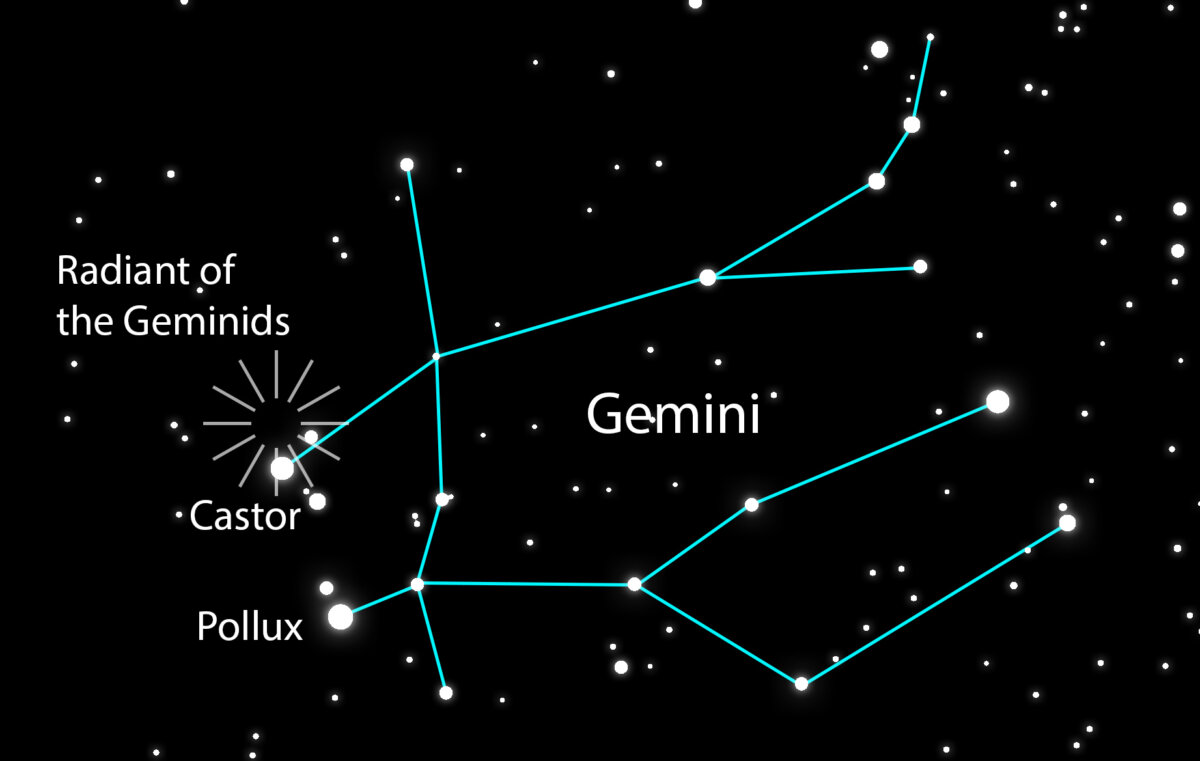
Fifty-two light years away, the bright star Castor shines in the northern hemisphere of the stars’ globe, appearing as the head of one of the twins in the constellation Gemini. Seeming to shoot in all directions from Castor is one of the world’s most prolific meteor showers, which rains down on Earth’s atmosphere in all their fiery glory every December—the Geminids.
While Castor is unfathomably far away, the meteors that seems to radiate from it will be only some 60 miles above Earth’s surface when they peak next month, around Dec. 13–14. Optimally dark skies at that time—permitted by a waning crescent moon—will mean this celebrated meteor shower will be easy to spot. Under ideal darkness, one may see as many as 120 meteors per hour.
Fireballs From Space
The point from which meteors appear to originate, called the radiant, is fixed among the stars. Meteor showers, like the Geminids, are typically named after the constellations where their radiants are found, though they don’t in fact originate from anywhere near those insanely far-away stars.
Meteors begin their existence as part of larger cosmic objects such as asteroids or comets, which, when their matter is shed, produce vast complexes of space debris that litters the solar system. This matter orbits the sun basically along the same path as their parent object. Wherever Earth’s orbit crosses those streams of debris we are bound to see meteors.
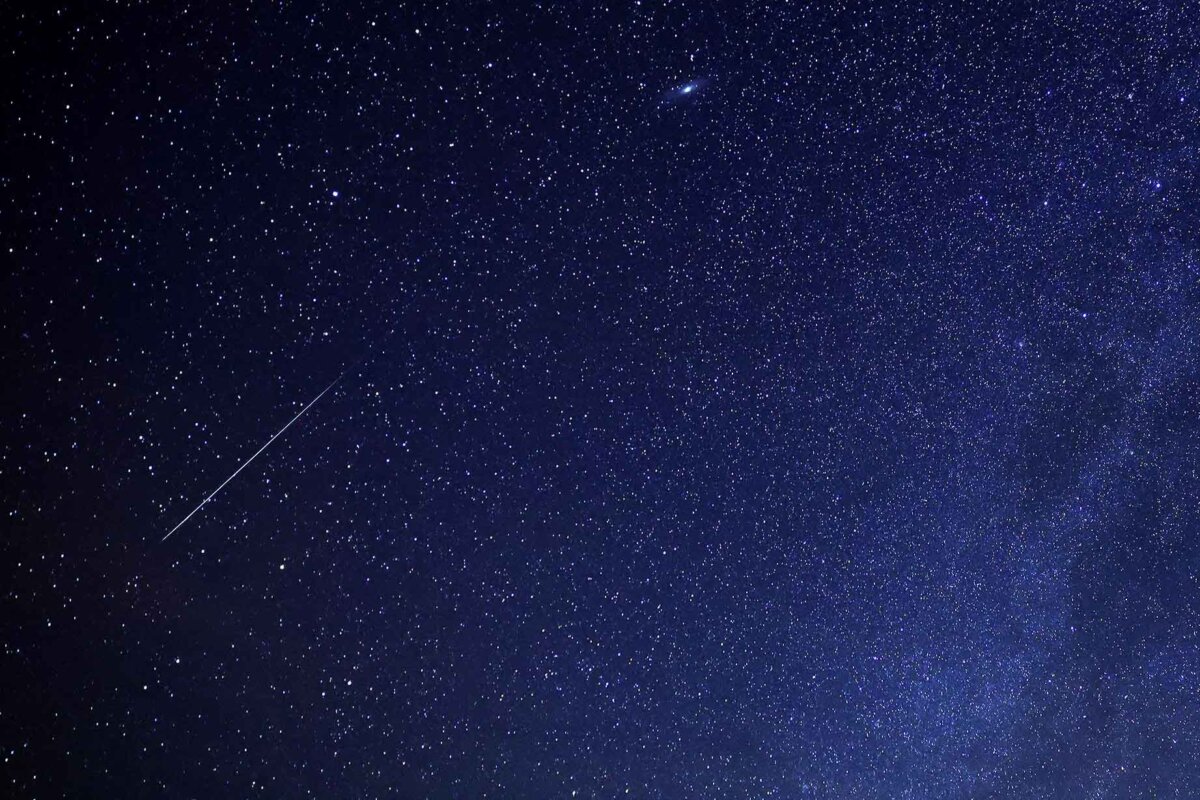
A meteor is just a space pebble that falls to Earth. It bursts into flames caused by friction upon hitting the atmosphere and burns up. Because they look like thin streaks of light darting across the night sky, we also call them shooting stars.
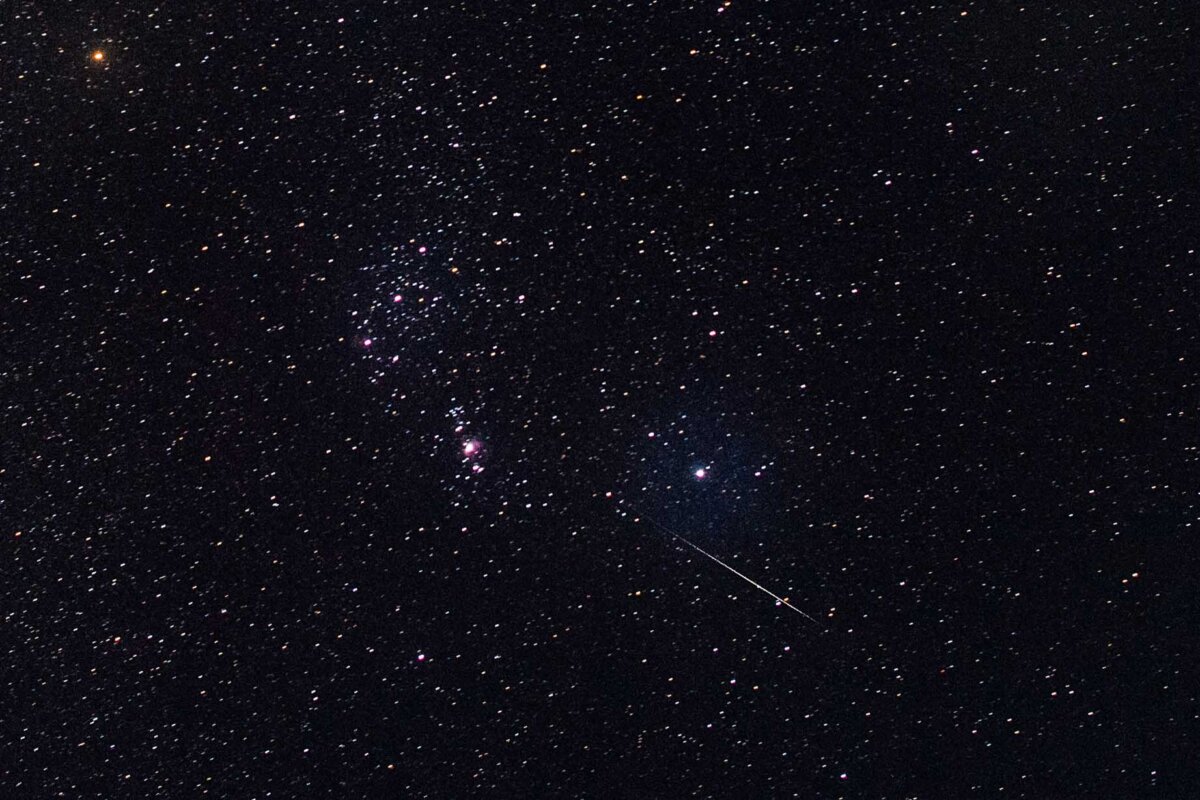
Sometimes meteors burn brighter and leave long trails of glowing gas behind them and are called “persistent trains” or, more dramatically, fireballs. The Geminids are famous for their slow-moving, long-lasting “Earthgrazers” that shoot horizontally across the sky and sometimes break up like spectacular fireworks.
How to View the Geminids
The Earth will cross the Geminids’ meteor stream from Nov. 19 to Dec. 24, though the meteors will peak in mid-December. Since the last quarter moon falls on Dec. 11, their peak will overlap a slender waning crescent moon, meaning little natural light pollution will wash out the shower. Assuming there’s good weather, the dark skies will be ideal for Geminid spotting.
The big questions is whether people will want to stay awake late enough to enjoy the spectacle. Viewers will need to wait till 2 a.m. (your local time) before the radiant point near Castor rises to its highest, giving the broadest field of view, though it will still be possible to see some meteors earlier in the evening when the radiant will be near the eastern horizon.
It’s important to note to not search near the radiant itself for meteors—even though they appear to radiate from that point. Meteors are best viewed while whooshing out across the sky, so scan the full starry expanse. It’s advisable to just lie back on a lawn chair with a sleeping bag and snuggle up with a cup of hot cocoa to keep warm.
Where Do They Come From?
Now that we know meteors come from near-Earth objects and not from bright star Castor, why do they seem to radiate from that far-away star? It’s just a trick of one-point perspective.
Like railroad tracks travelling parallel that to seem to converge on the horizon, the Geminids’ debris stream seems to converge on a fixed point. They were once part of a larger space object in our solar system, an asteroid called 3200 Phaethon. Though it’s not known how the debris broke off this asteroid, it continues floating along its orbit. When Earth crosses the stream, we can trace these meteors back along their orbit just like how we trace train tracks to the horizon. The fact that the Geminids converge on Castor is entirely coincidental.
But while the vast majority of meteor showers come from comets, the Geminids do not. As mentioned, the object 3200 Phaethon is an asteroid—and a rather unusual one.
Comets are vast, amorphous complexes of cosmic particles that were ejected from a solid nucleus that becomes volatile when it nears the sun. Asteroids, meanwhile, are just simple space rocks that may have once been comets. They either shut down and went dormant or exhausted their volatile material and went extant. Asteroid 3200 Phaethon is one of the few that was once considered a comet, called 1983 TB, before being declared an asteroid.
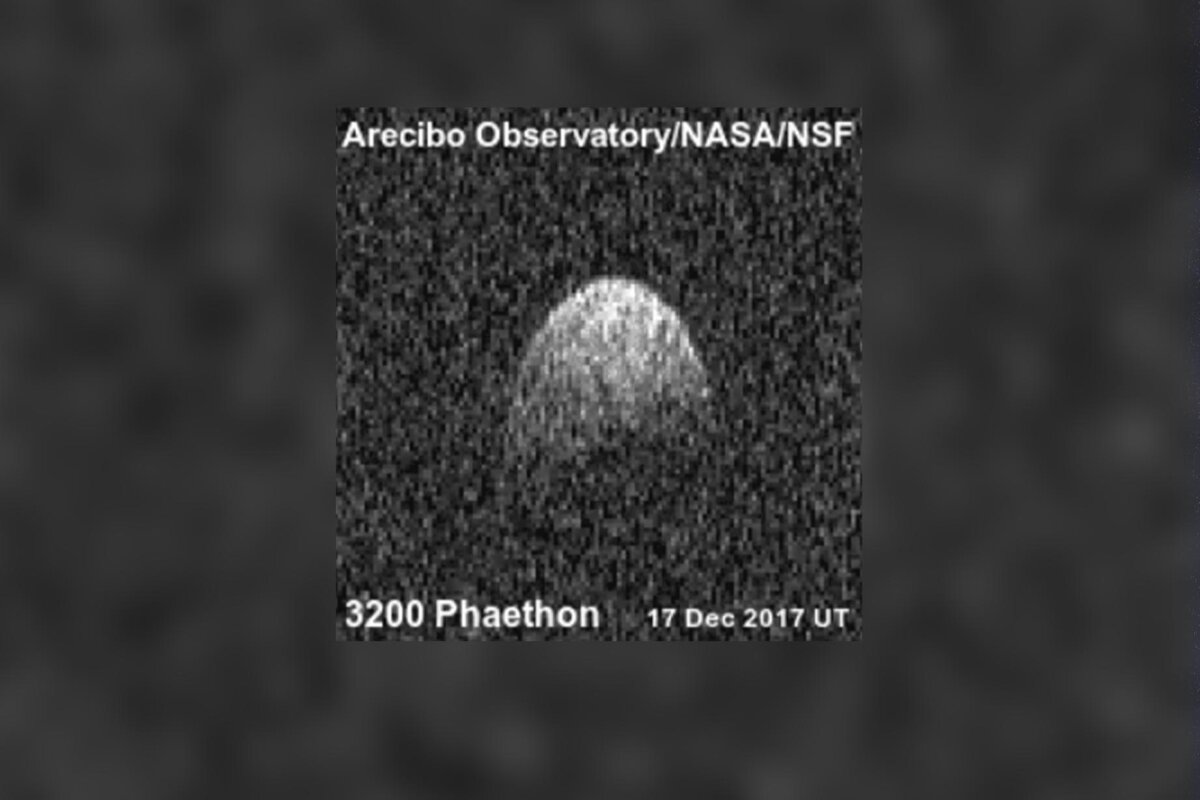
Its orbit was calculated and was found to match that of the Geminids meteor shower, then a mystery arose. Never before had an asteroid been associated with meteors. To this day, researchers are puzzling over how this asteroid ejected all those baby meteoroids into space.
Unlike some comets that spend decades in deep space before appearing in our solar system, Asteroid 3200 Phaethon lingers cozily near our home planet. It circles the sun every 1.4 years and travels very close to the sun—half way between it and Mercury—while stretching out past Mars at its farthest.
One day in the not-too-distant future, scientists may get a close-up look at 3200 Phaethon. Plans are already in the works for Japan’s spacecraft DESTINY+ to intercept the asteroid in 2028. We may acquire data about the origins of a celebrated meteor shower that enthralls sky gazers every mid-December.