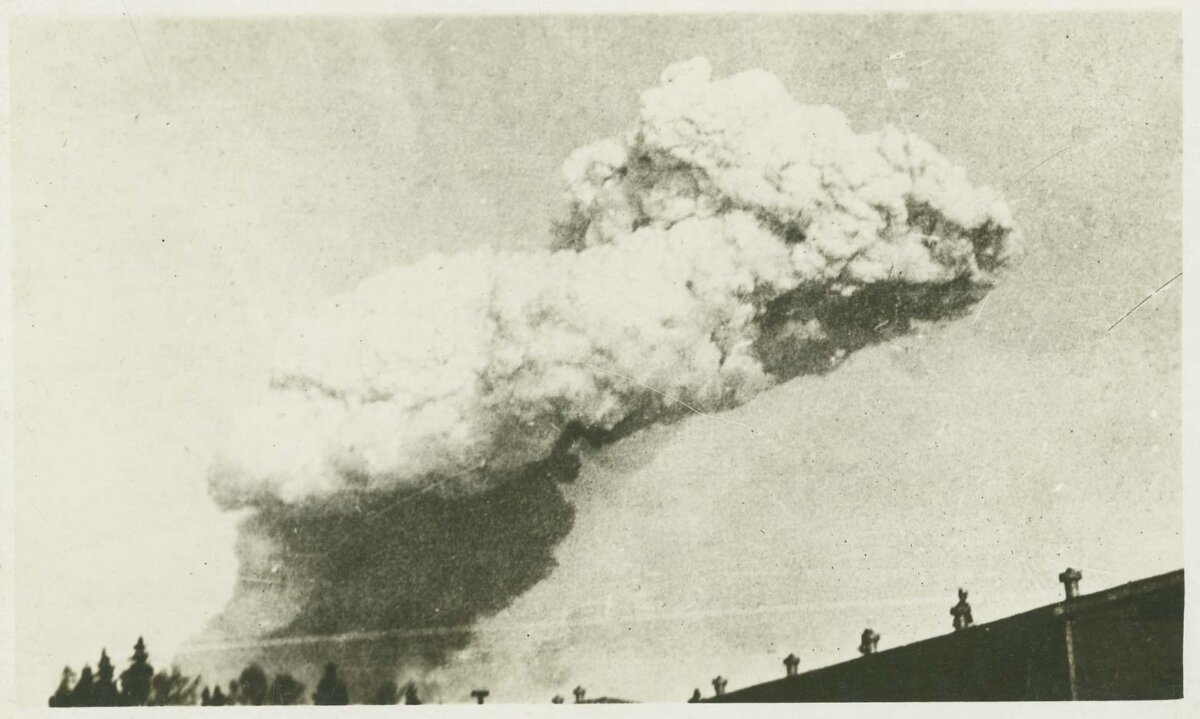
When the French ship SS Mont-Blanc crashed into the Norwegian SS Imo, those who knew about the French vessel’s cargo anticipated that the disaster would soon get much worse.
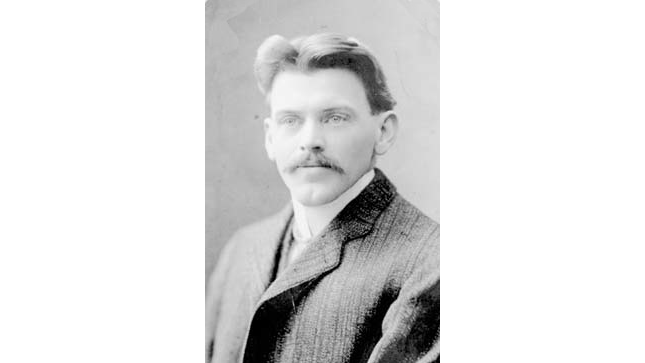
All of the workers around the pier and the railyard in Halifax, Nova Scotia, Canada, including train dispatcher Patrick Vincent Coleman, who was known by his middle name, started running around, warning everyone they could about the inevitable blast that was about to occur.
A Day to Remember
It began as a normal day for Coleman on Dec. 6, 1917, when he left his wife and 2-year-old daughter at home to head to work. Coleman was a rank above a normal telegraph operator. The train dispatcher had the important task of managing train schedules through the telegraph. He was well-known due to helping stop a runaway train a few years prior. He worked as a trusted dispatcher at the Richmond Train Station that was located just a few hundred feet from Pier 6.
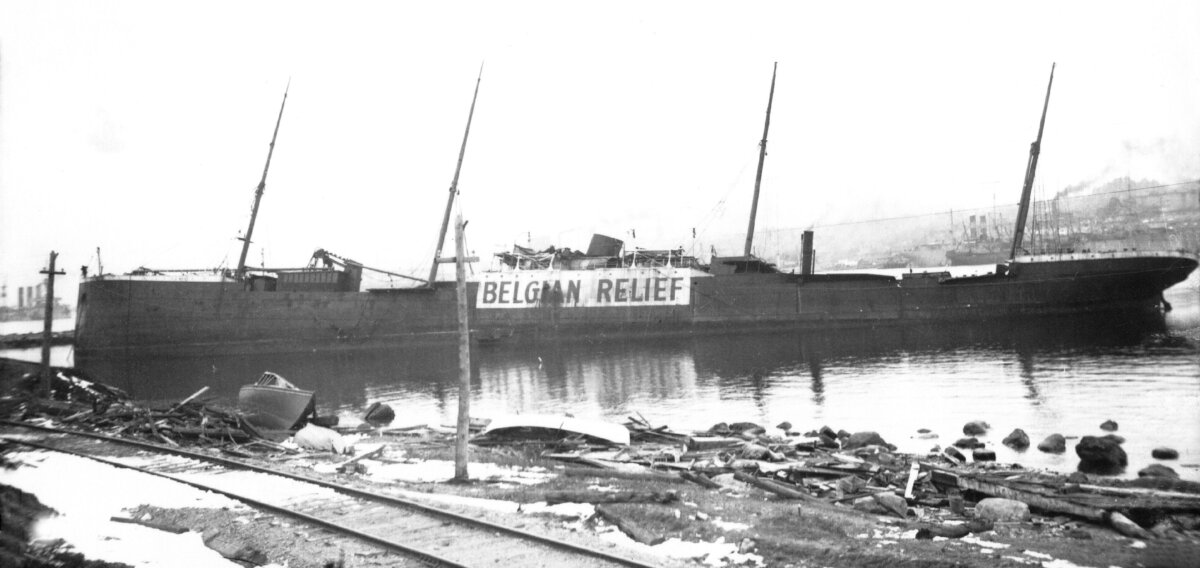
Coleman was inside the station when he heard a loud crash at 8:45 a.m. The Imo was headed to sea with relief supplies for the World War I efforts. Suddenly, the Mont-Blanc smashed into the Imo’s bow. The Mont-Blanc ran aground, engulfed in flames.
Pier workers started running around frantically. Only the Mont-Blanc’s crew knew that the French steamship was loaded with 2,609 tons of picric acid (a powerful explosive used in munitions of that era), 276 tons of dynamite, 68 tons of guncotton stored below deck, and several drums of benzol on deck. Those who knew an explosion was imminent started warning everyone in the town.
The Explosion
Coleman heard an explosion. A sailor soon ran into the train station and alerted Coleman and his co-worker Chief Clerk William Lovett that the ship was going to blow up.
Coleman and Lovett both ran from the train station. Then, Coleman stopped dead in his tracks. He remembered that a train carrying about 300 people was scheduled to arrive at the Halifax station at 8:55 a.m. Despite Lovett’s pleas not to return, Coleman went back to the station to warn the incoming train of the impending disaster.
Critical Telegraph Message
Coleman promptly returned to his station, jumped on the telegraph machine, and went to work communicating in Morse code. “Hold up the train,” Coleman’s message stated, according to the Maritime Museum of the Atlantic. “Ammunition ship afire in harbor making for Pier 6 and will explode. Guess this will be my last message. Good-bye boys.”
Coleman waited for a second to see if he got any response. At 9:05 a.m., the Mont-Blanc exploded and blasted away most of the town with it. Coleman’s body was later found underneath a pile of rubble, still at his telegraph station. His telegraph key, pen, wallet, and watch were found and are now on display at Halifax’s Maritime Museum of the Atlantic, having been donated by Coleman’s widow.
Coleman’s last-minute message was credited for saving the train and thus the lives of the nearly 300 passengers on board. His message was heard by train stations hundreds of miles away, alerting authorities to quickly send help to Halifax.
Had Coleman never sent his message, the train station in Halifax would have just gone dark suddenly, and nobody would have known what had happened.
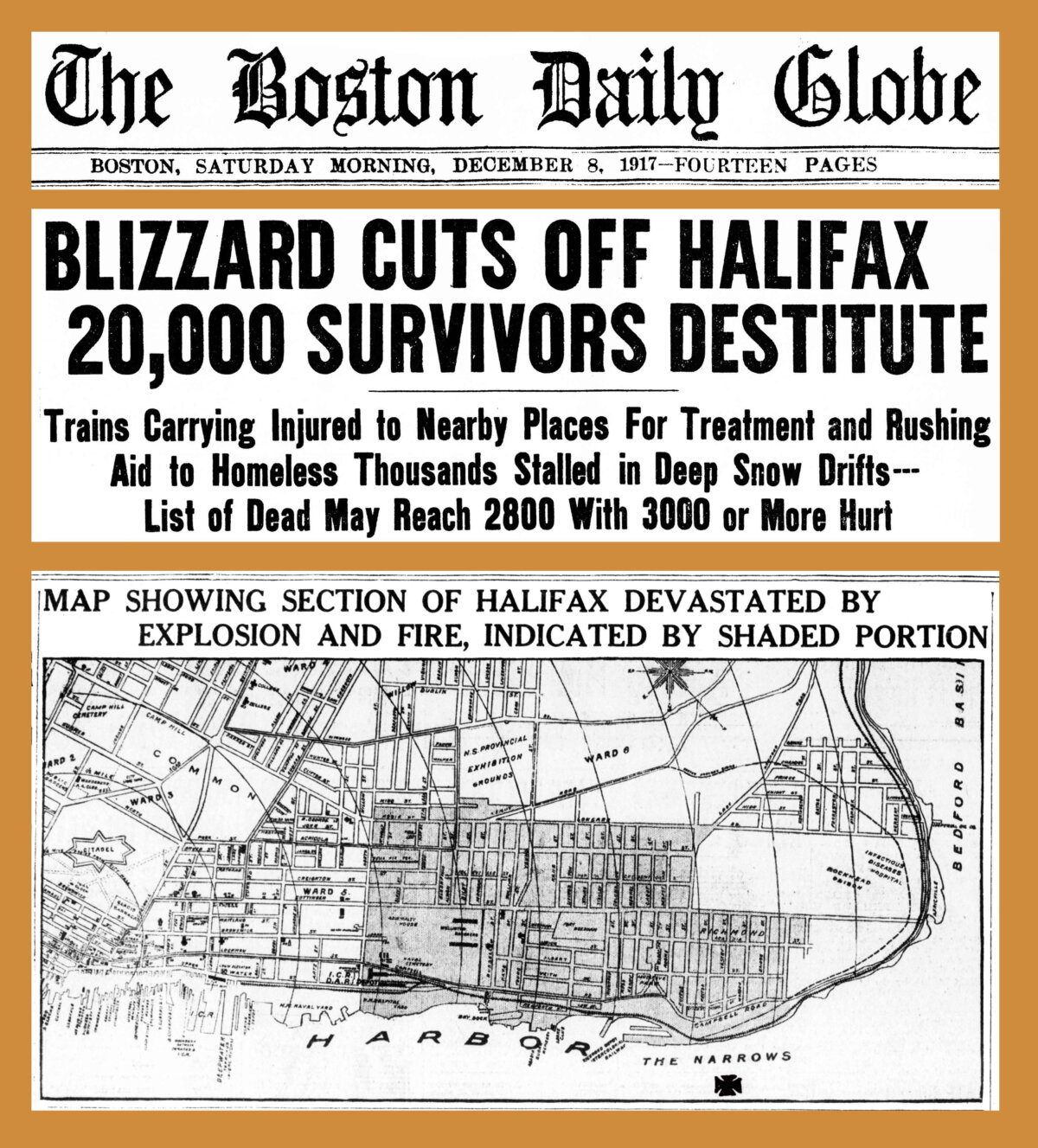
The blast was so fierce it destroyed much of the town, including the Coleman family’s home. After the explosion, Coleman’s two older children rushed home from school to help their family. Coleman’s wife, Frances, and 2-year-old daughter were home when their house collapsed, leaving them with serious injuries, which they ultimately survived.
Despite the efforts of many, the greatest man-made explosion of its time decimated Halifax. The blast killed around 1,600 people and injured 9,000 more.
Since his death, Coleman has been honored as a hero. In 2004, he was inducted into the Canadian Railway Hall of Fame. In 2017, his hometown voted to name a Halifax harbor ferry “Vincent Coleman” after the local hero.
What arts and culture topics would you like us to cover? Please email ideas or feedback to features@epochtimes.nyc