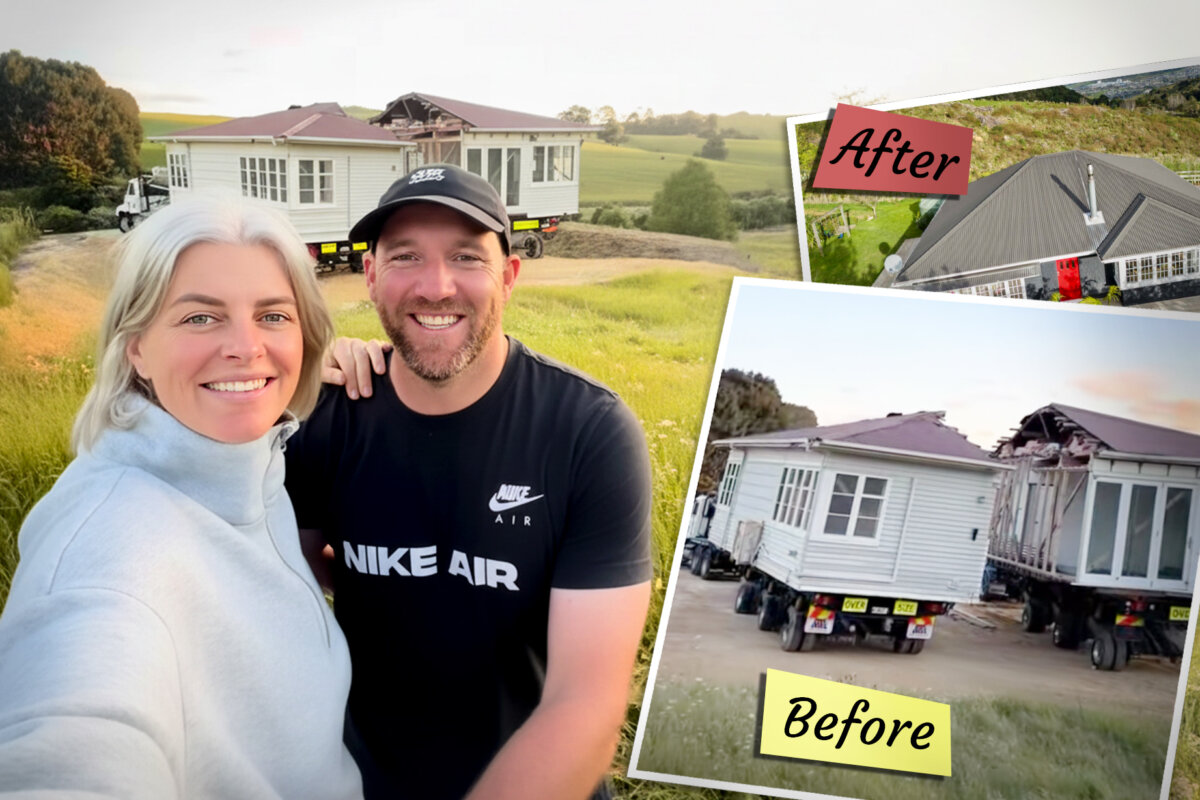
When the sky-high cost of living in New Zealand finally priced Aimee Clotworthy out of her hometown, she and her husband jumped on a new trend being followed by droves of hopeful homeowners Down Under—they bought their dream home, then had it cut in half, loaded onto a truck, and shipped to a homestead in the middle of nowhere.
Clotworthy and her family have since been embracing the affordable isolation of the wilderness and the freedom it affords them. Their 12-year-old son and 7-year-old daughter have put down their iPads to play outdoors—he loves hunting and she makes mud pie “potions” in the backyard—and the couple are living within their means, expenses in check.
“We don’t have a giant house and a giant mortgage because we don’t need it, but we’ve got space to grow our own vegetables,” Clotworthy, 34, told The Epoch Times, adding that the house they had shipped to a hilltop south of Auckland—a beach bungalow built in colonial Kiwi style—oozes character.
“We’ve got stained glass windows, things like that, where not a lot of homes have that.” She notes the high ceilings, wide hallways, and native timber flooring not found in newer cookie-cutter houses.
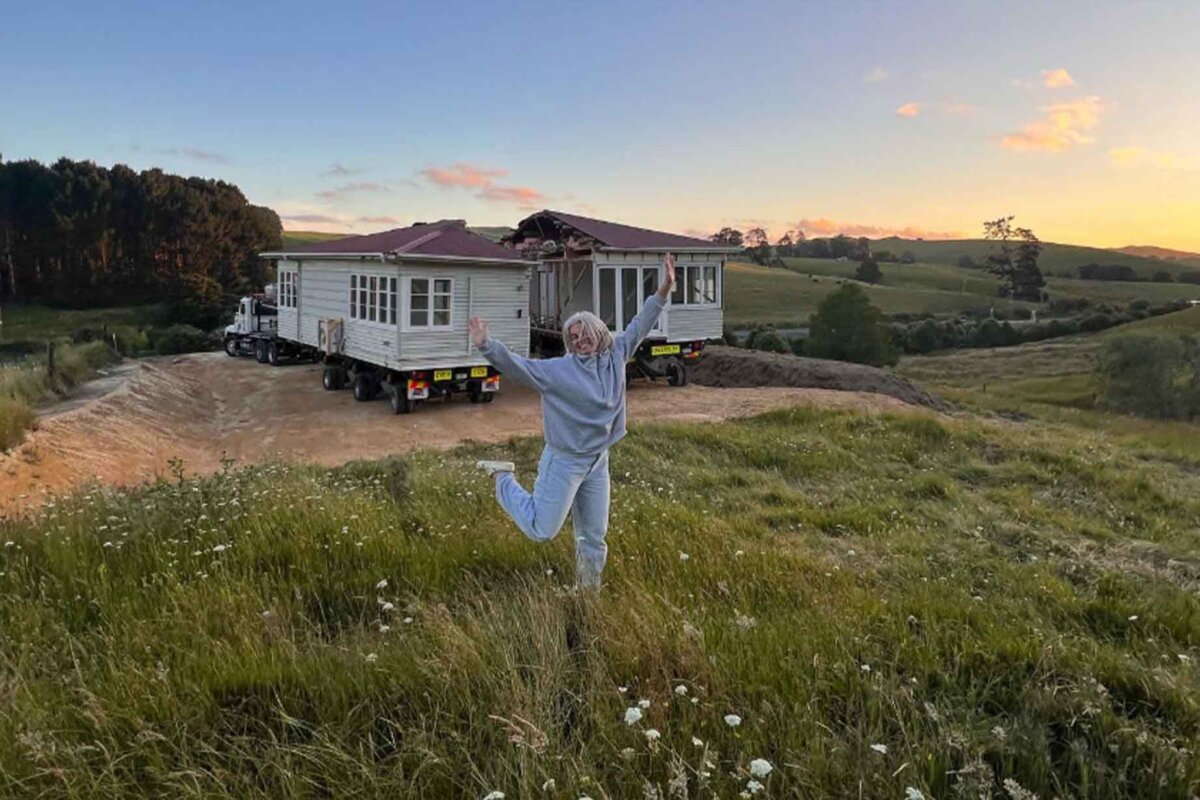
Hundreds if not thousands of New Zealanders have been doing likewise: buying relocatable homes from the real-estate equivalent of car yards where agents peddle homes, some of which date back decades. Clotworthy’s family, from Waikato, bought their 1920s bungalow last November. It’s their second relocatable home.
Like many Kiwi families, they were driven to such extreme housing solutions by the economy. The exorbitant living costs in New Zealand have increased the price of buying a new home far above buying one that’s decades, or even over a century, old and has been upcycled.
“It is a lot more cost effective,” Clotworthy said. “Otherwise we wouldn’t have been able to afford to build.”
New Zealand’s remote geographic location is partly responsible for cost hikes on everything from food to building materials to fuel.
“There’s a lot of New Zealanders that are doing this as well now, because the cost of living here is huge,” she said. “The cost of fuel is huge, it’s almost $3 a liter. Food prices at the supermarket are ginormous.”
There have long been issues with inflation, profiteering, and the supply chain in New Zealand. Under these preconditions, the COVID-19 pandemic triggered a crisis of living costs.
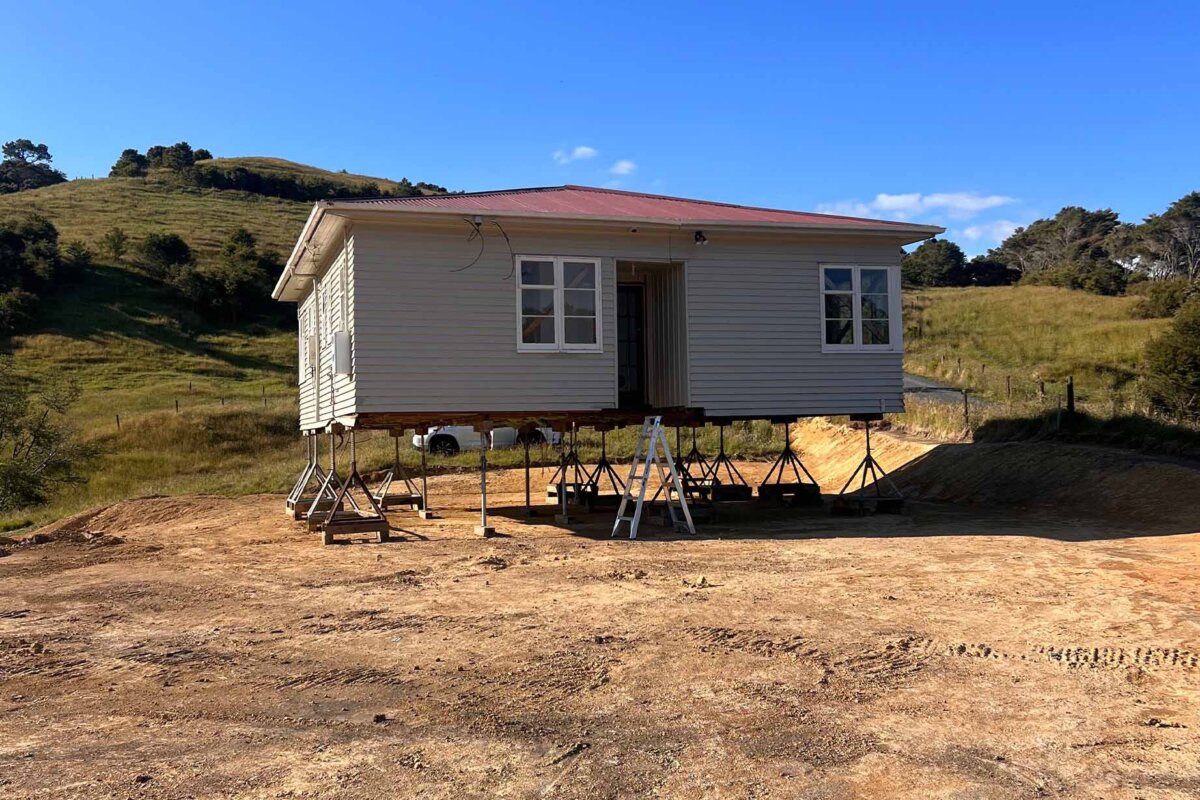
These days, Clotworthy, who owns a beauty therapy clinic and whose husband, Patrick, 44, runs his family’s butcher shop, has been tackling renovations on her own terms. Because her husband isn’t that handy with home improvement work, she says, he left it up to her to plaster the walls, varnish the wood floors, and make the design decisions. Their charismatic house from the 1920s is now looking a lot more like a home from the 2020s and is fully livable again.
Growing up in a suburban beach paradise in Whangaparāoa, north of Auckland, Clotworthy says she developed a love for the slower pace of country life early on. After meeting Patrick, who’s also from a small town, they converged on a plan (albeit somewhat haphazardly) some 10 years ago to buy their first relocatable home.
Living in the home on a farm without proper wiring or central heating for a time and then enduring a decade-long reno project meant little overhead. This put them in a financial situation to live the lifestyle they wanted for their kids and buy a second relocatable home after selling the first.
Old houses in the city, such as their current colonial-style bungalow, originally built in central Auckland, stand in the way of real estate developers—like the Chinese firm that previously bought their bungalow with its original property to begin a new project. These developers sell the structures at cost to middlemen agents willing to store the houses in lots, almost like used cars, before turning them around to prospective homeowners in the market for a relocatable house.
Some homes come renovated while others are more dilapidated, though each has its unique character. After the purchase, they’re loaded onto trucks and shipped to properties outside the big city. That was the story for Clotworthy and her family.
She says their first relocatable home cost just $5,000, though it had holes in the floor and cardboard covering the windows. “It was colder on the inside than it was on the outside,” she said.
Eventually the house was repaired, but by then they were ready for a new home—their current bungalow, which they bought in November 2024.
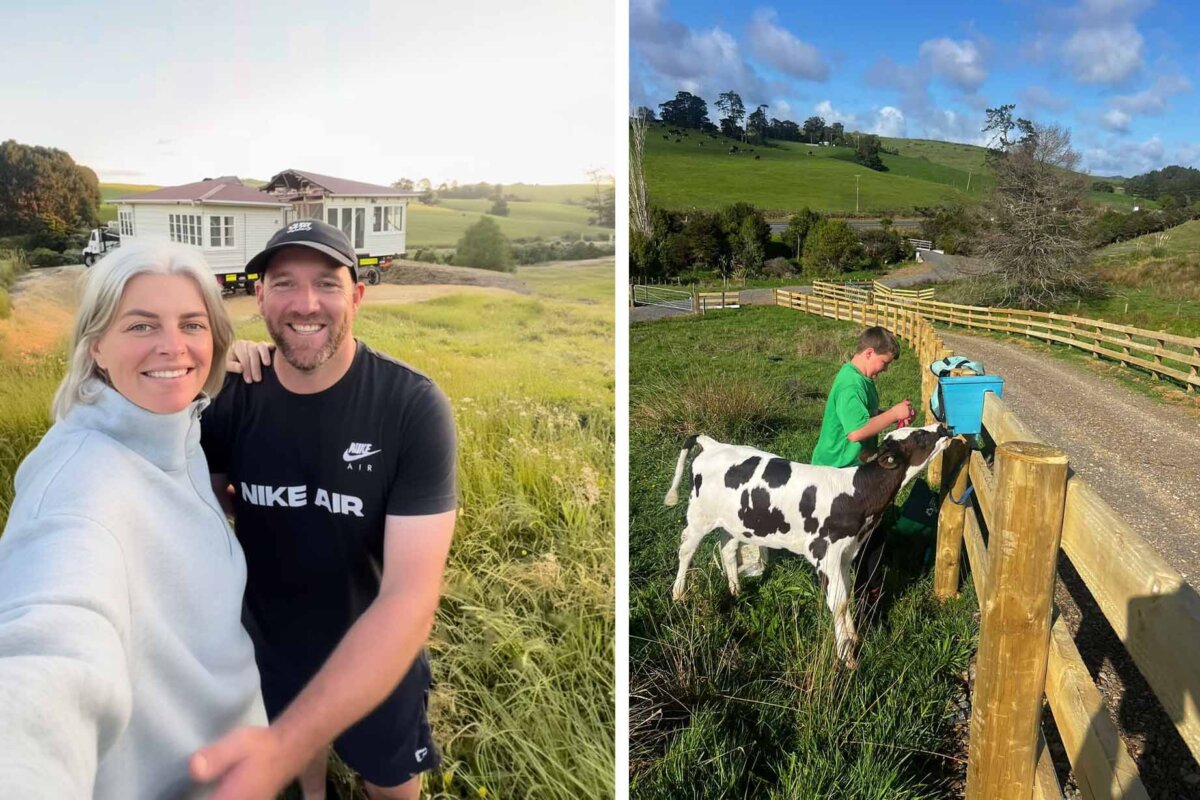
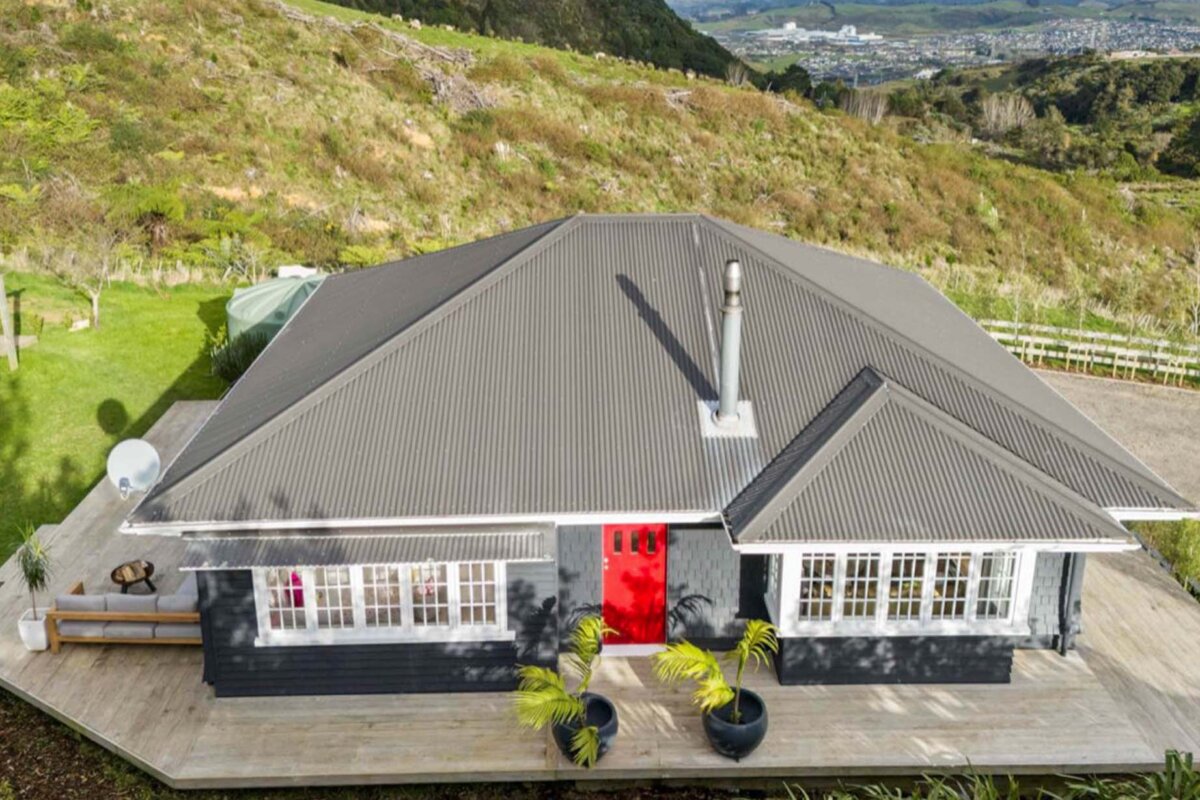
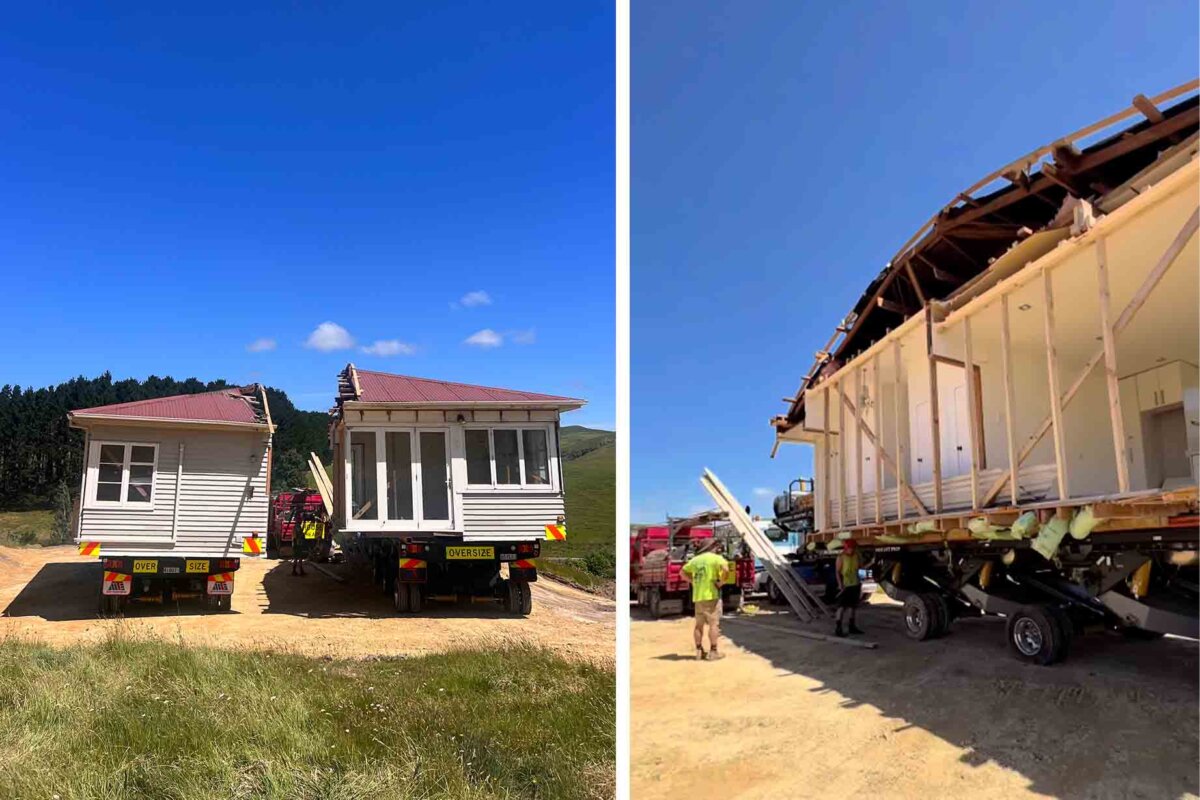
Their new house was almost fully renovated and up to code when they bought it. The two halves only had to be knitted back together and linked to the power grid before it was livable again. At $100,000, the cost they paid for the house was far less than what they would pay for a new home in Auckland, which start at roughly $600,000.
The couple scouted for land and found a lonely hill with a flat top in Waikato, south of Auckland. That set them back $299,000, yet it offered the rural lifestyle of their dreams.
“We drove past the sign about a hundred times,” Clotworthy said, adding that it’s a “really lovely setting.” They have a massive backyard with a panorama of rolling hills and a freshwater creek that supplies water for the garden.
Although not fully off the grid, the homestead provides self-sufficiency by producing food. Their vegetable garden and free range chickens are supplemented by Patrick’s family’s butcher shop, which gets a bargain on meat.

Today, the couple’s kids are thriving in nature. “No houses in sight, no street lights at night—just peace,” Clotworthy said. “The peacefulness of the country is grounding.”
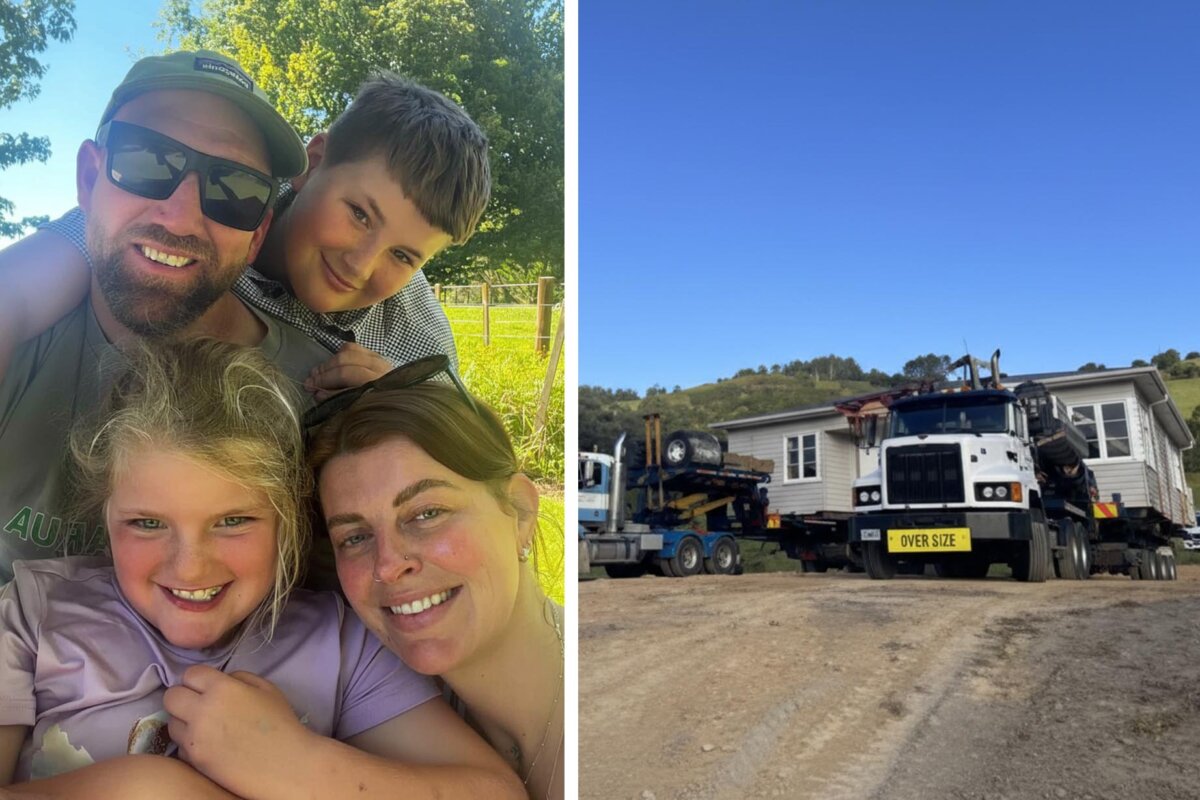
After confiscating the kids’ iPads and devices and limiting TV time and movies, the couple’s son, Gordon, and daughter, Allice, are “learning life skills some adults don’t even get the chance to,” she said. The siblings attend a small country school of 200 students.
They’re building attention spans while slowing down and following the pace of real life, Clotworthy said.
“We want to be able to raise our children and be present, and this is what allows us to do that.”