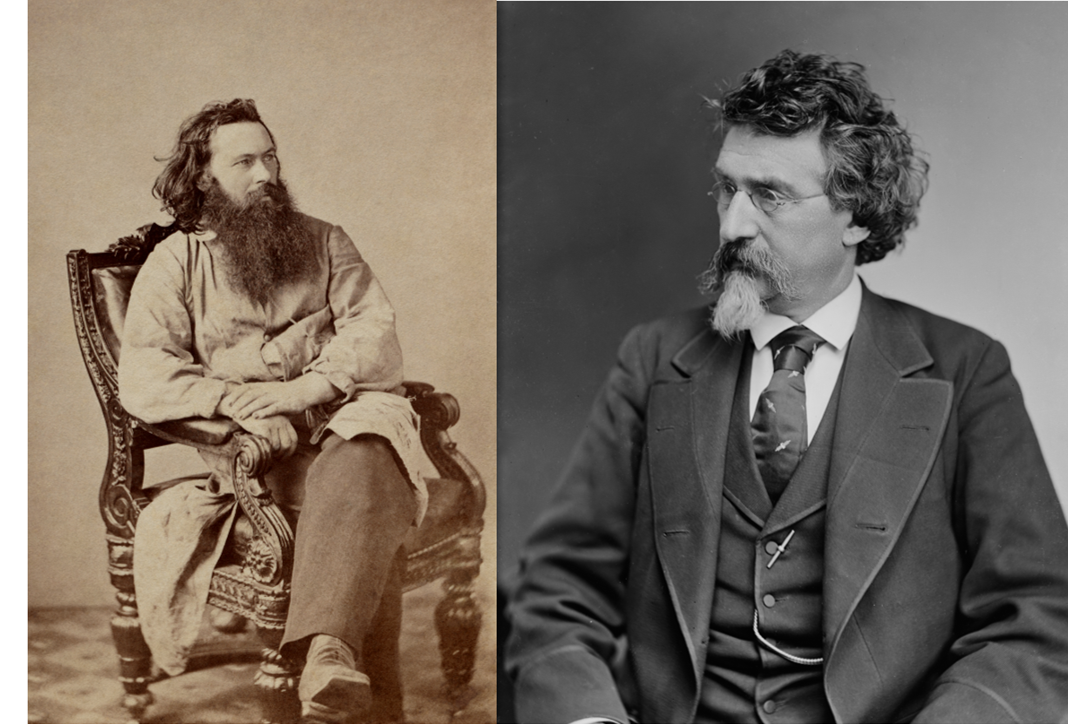
Timothy H. O’Sullivan (1840–1882) remains one of the most consequential though underappreciated photographers in American history. His images shaped the nation’s understanding of both the Civil War and the vast Western frontier, but his name never achieved the prominence of contemporaries like Mathew Brady (1823–1896) or Alexander Gardner (1821–1882).
His anonymity partly stems from the studio practices of the era. Many of O’Sullivan’s photographs were published under others’ imprints, obscuring his authorship. Today, scholars increasingly acknowledge that O’Sullivan helped define the visual record of 19th-century America even though he became one of its forgotten masters.
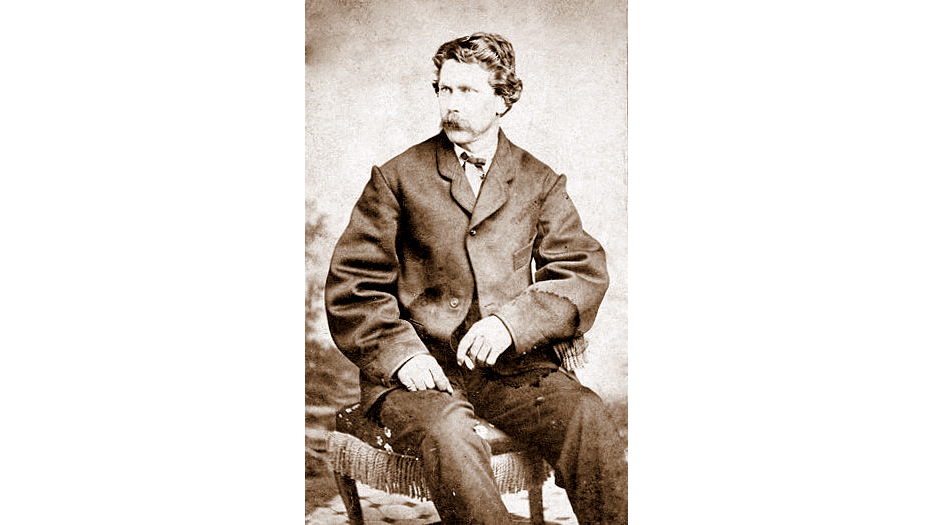
O’Sullivan was born around 1840; basic facts of his early life remain unclear. Some historical sources state that he was born in Ireland, while others assert New York City. The documentary record leaves the matter in doubt.
During his teenage years, he was employed in Mathew Brady’s New York gallery, where he learned the difficult craft of wet-plate photography. Brady’s operation relied on numerous assistants who took the photographs that Brady later published under his own name. O’Sullivan’s darkroom skills, precision in preparing glass plates, and innate sense of composition were cultivated within this environment.
Visualizing the Civil War
When the Civil War erupted in 1861, photography had not yet proven itself as an indispensable documentary medium. Brady envisioned that war could be photographed on a scale never attempted before and organized expeditions to military fronts.
O’Sullivan, along with Gardner and other operators, was dispatched into the field equipped with bulky cameras, fragile chemicals, and portable darkrooms mounted on wagons. Though Brady financed and published much of the work, the actual field photography was performed by these assistants, whose exposed plates often bore no personal credit. This practice led to decades of misattribution; many images now recognized as O’Sullivan’s were long labeled as Brady’s.
O’Sullivan’s wartime work places him at some of the most significant sites of the conflict. He photographed the aftermath of the Second Battle of Bull Run in July 1861 and documented the Union’s movements during the Peninsula Campaign. On Sep. 19, 1862, he recorded stark and unsettling images at Antietam, the bloodiest single day of the war, resulting in approximately 3,600 fatalities.
His photographs there, including the harrowing dead of the Cornfield and Sunken Road, offered an unvarnished portrayal of battle’s toll. In his images of colonels, generals, and soldiers, he also captured the human side of the war. Exemplifying the danger, there is even a photograph taken by O’Sullivan of Brady facing fire later at the Battle of Petersburg.
His Gettysburg work remains among his most significant contributions. The well-known image commonly titled “A Harvest of Death”—published in “Gardner’s Photographic Sketch Book of the War“—is attributed to O’Sullivan.
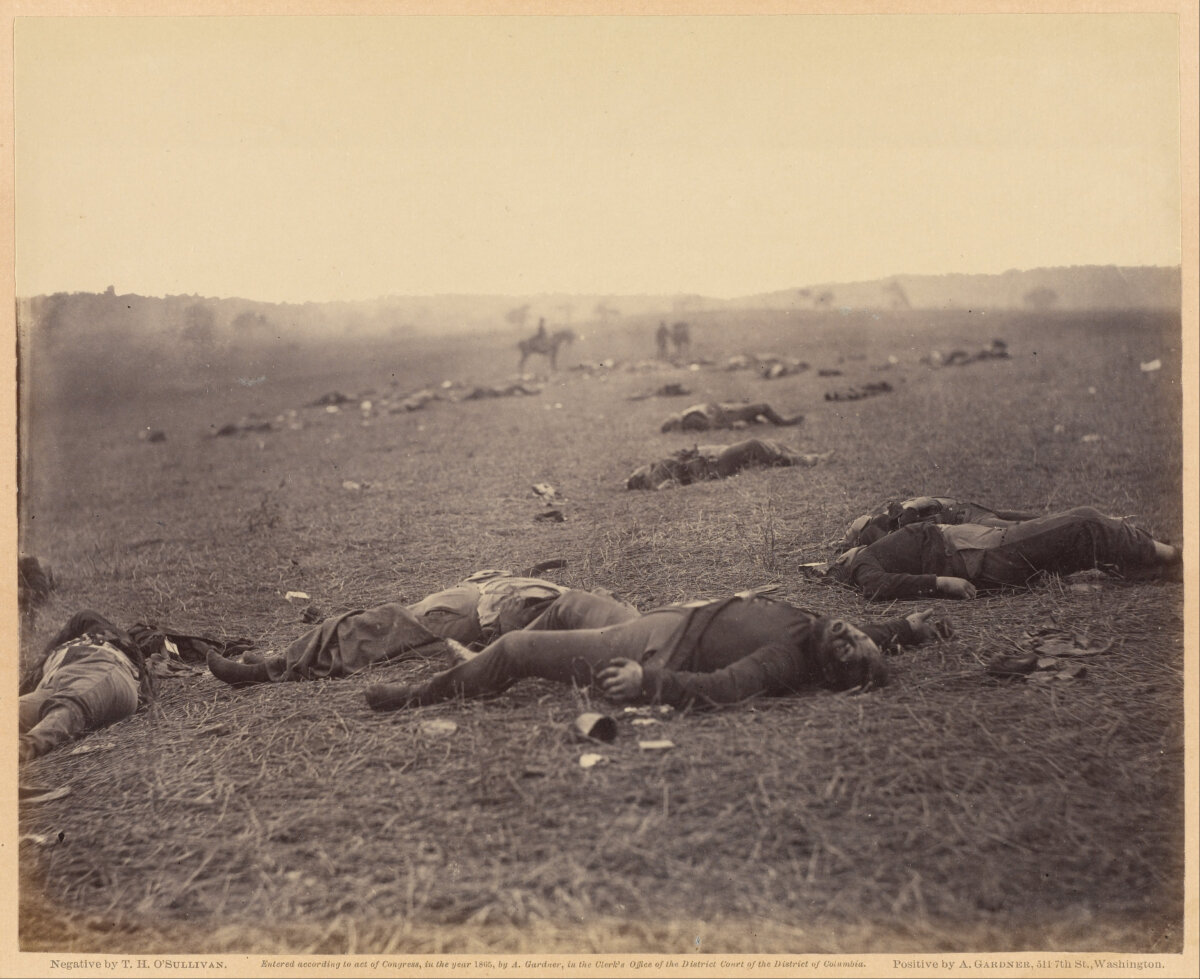
The photograph’s disordered bodies and its bleak recession into the horizon presented something Americans had never confronted in print: the true, unromantic aftermath of battlefield slaughter. That the plate appeared under Gardner’s imprint rather than O’Sullivan’s name reveals just how easily authorial credit was blurred in 19th-century photographic practice.
O’Sullivan continued following the Union armies through the later years of the war. He produced images during the Petersburg siege and at Fort Fisher, documenting engineering works and encampments, fortifications, field hospitals, soldiers’ quarters, captured soldiers, and the grim evidence of what had occurred hours before. Through these images, he helped define how Americans visually understood warfare.
The Civil War became the first thoroughly photographed war largely because of the labor of men like O’Sullivan, who worked professionally, carefully, and, time and again, anonymously. There is a preserved photograph of a man believed to be O’Sullivan, sitting in front of a photographer’s wagon hauling a box labeled “Brady’s.”
Geological Expeditions
After the war, O’Sullivan’s career took a dramatic and pioneering turn. In 1867, he joined the U.S. Geological Exploration of the Fortieth Parallel, led by geologist Clarence King (1842–1901). This scientific expedition sought to map and analyze the region between the Sierra Nevada and the Rocky Mountains.
As official photographer, O’Sullivan traversed vast stretches of the West on horseback and wagon, lugging heavy equipment through deserts, canyons, mountain passes, and remote mining districts. The images he produced introduced Americans to landscapes that were almost entirely unknown to Eastern audiences.
During King’s survey, O’Sullivan photographed the austere shorelines of the Great Salt Lake, the harsh openness of the Great Basin and the Mojave Desert, and the towering geologic features of Nevada and Utah. His images combined scientific exactitude with a strikingly modern aesthetic, embracing starkness, oblique framing, and the raw, unmanicured character of the terrain. His work conveyed the West not as a romantic idyll but as an immense and occasionally forbidding natural world.
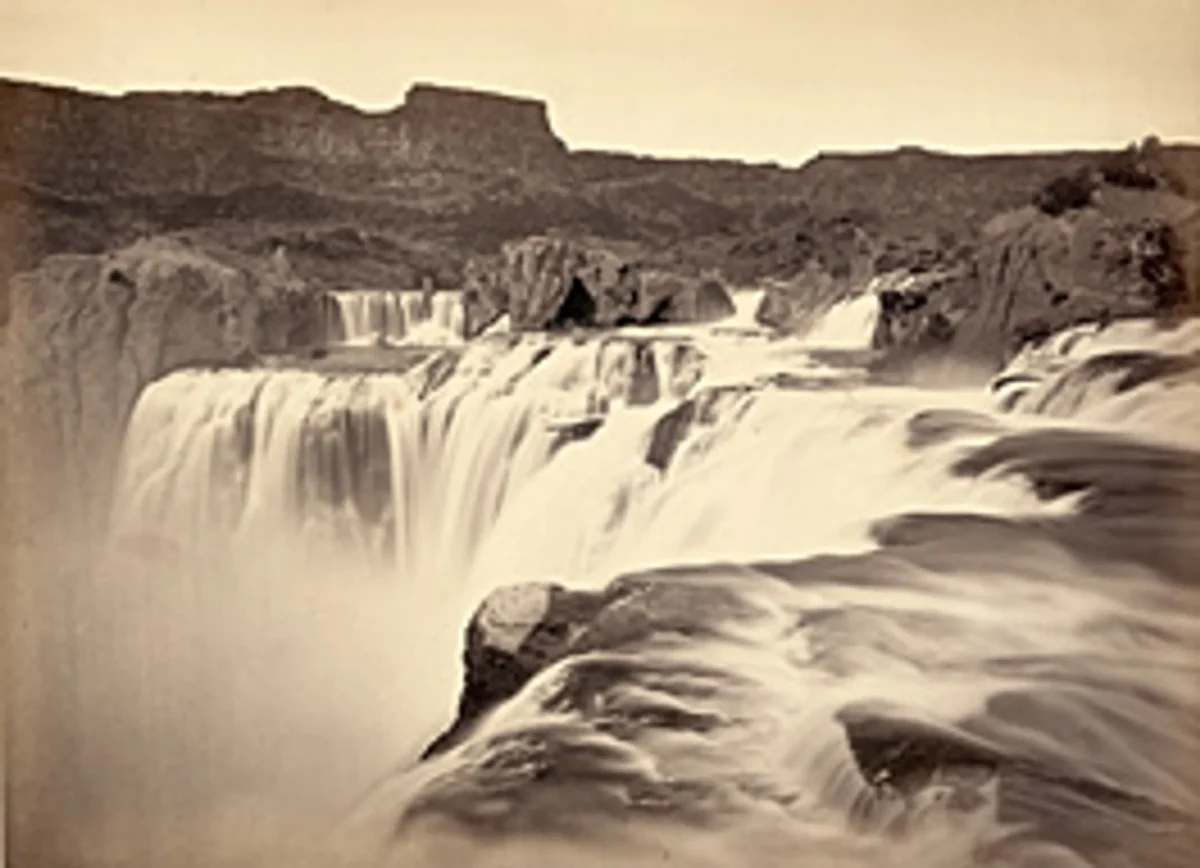
In 1871, O’Sullivan joined another monumental federal effort: the U.S. Geographical and Geological Survey of the Territories under Lt. George M. Wheeler (1842–1905). As one of the survey’s official photographers, O’Sullivan created some of the earliest widely circulated photographic records of major Western natural wonders.
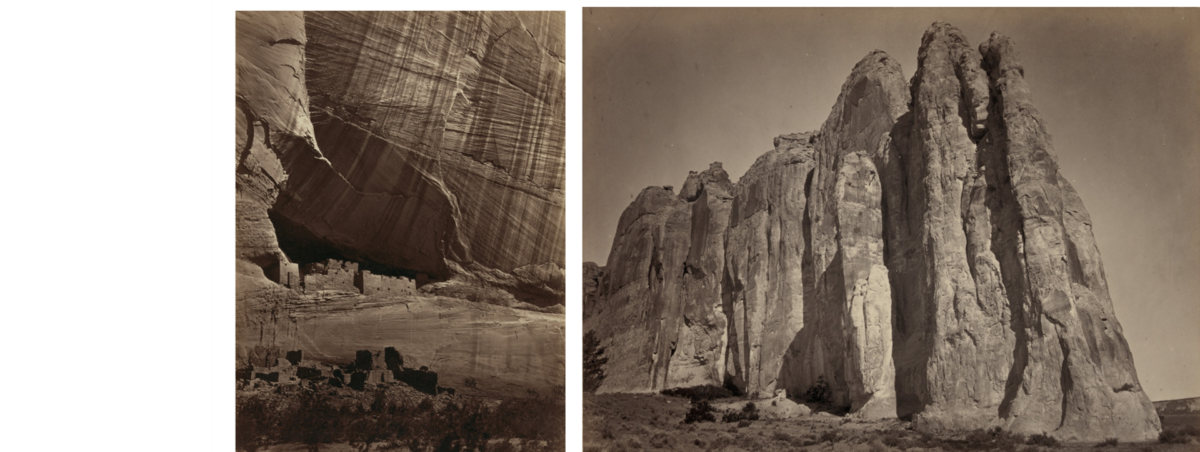
Among his most celebrated works are his photographs of Shoshone Falls in Idaho—sometimes called the “Niagara of the West”—where he captured the falls’ immense power and scale with remarkable technical mastery. He also produced iconic views of Canyon de Chelly in Arizona, including the now-famous image of the ruins in a crater in the rock wall and another of the expedition’s miniscule tents in the foreground dwarfed by towering sandstone walls.
O’Sullivan also made early photographic views of the Grand Canyon region during the Wheeler surveys. Though not the first photographer ever to approach the canyon, he was the first to produce published photographs that gave viewers a sense of its overwhelming depth and complexity. Under grueling and unforgiving processing conditions hard to comprehend in today’s digital, click and shoot world, he produced canyon images that stand as milestones of American photographic history.
By the early 1880s, O’Sullivan’s health had begun to decline, and he eventually returned to Washington, where he worked briefly for the Treasury Department. He died in 1882 at age 42 on Staten Island, New York.
O’Sullivan left behind no memoirs or extensive correspondence and was known to few outside of his trade. What survives is his astonishing body of photographs. His images captured war, inhumanity, exploration, settlement, and the sublime scale of the American experience.
O’Sullivan may not be the household name that Brady or Gardner became, but he was, in many ways, perhaps, the sharper eye and the braver innovator. Indeed, his photographs shaped the nation’s understanding of itself at a transformative moment. Though history long obscured his name, his images remain among the most powerful and enduring of 19th-century America.
What arts and culture topics would you like us to cover? Please email ideas or feedback to features@epochtimes.nyc