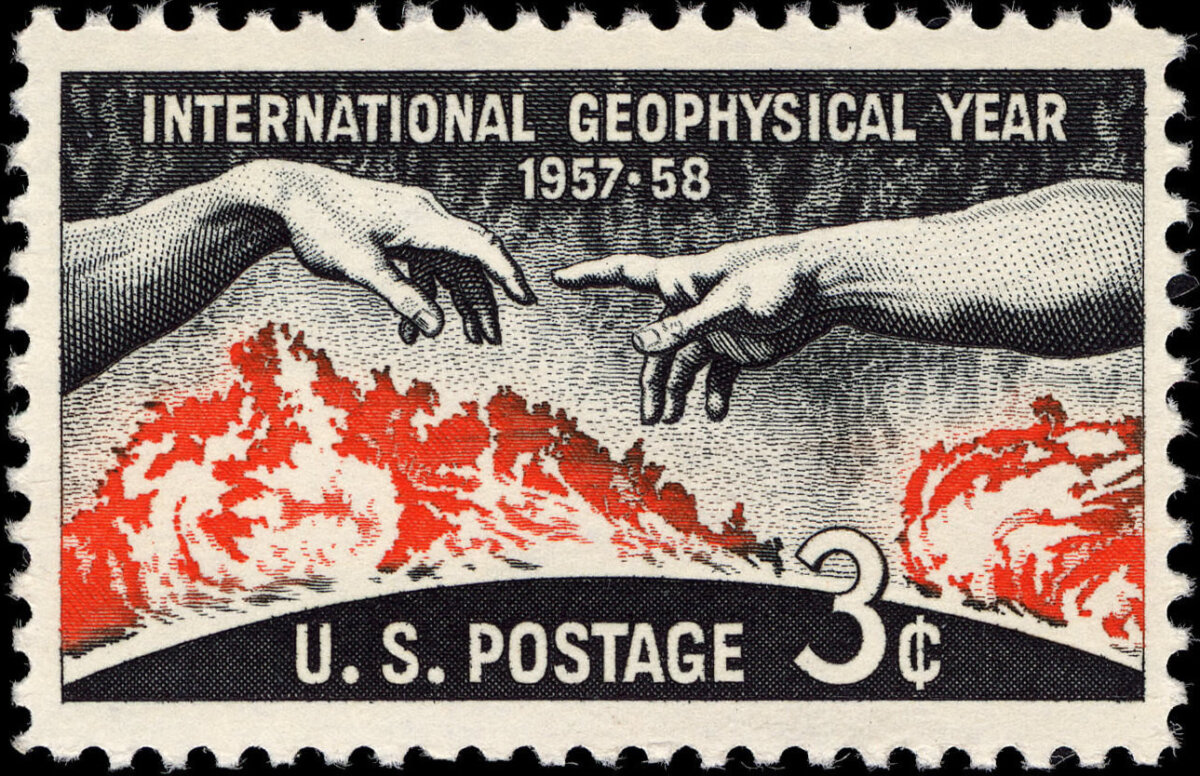
“Sydney,” Lloyd Berkner asked, “don’t you think that it is about time for another international polar year?”
A decorated naval officer and brilliant radio engineer, Berkner’s question was directed to Sydney Chapman, the British geophysicist. Berkner and Chapman were in Silver Spring, Maryland, having been invited to the home of James and Abigail Van Allen for dinner. Much like Berkner and Chapman, Van Allen was well known in his specific field of nuclear physics.
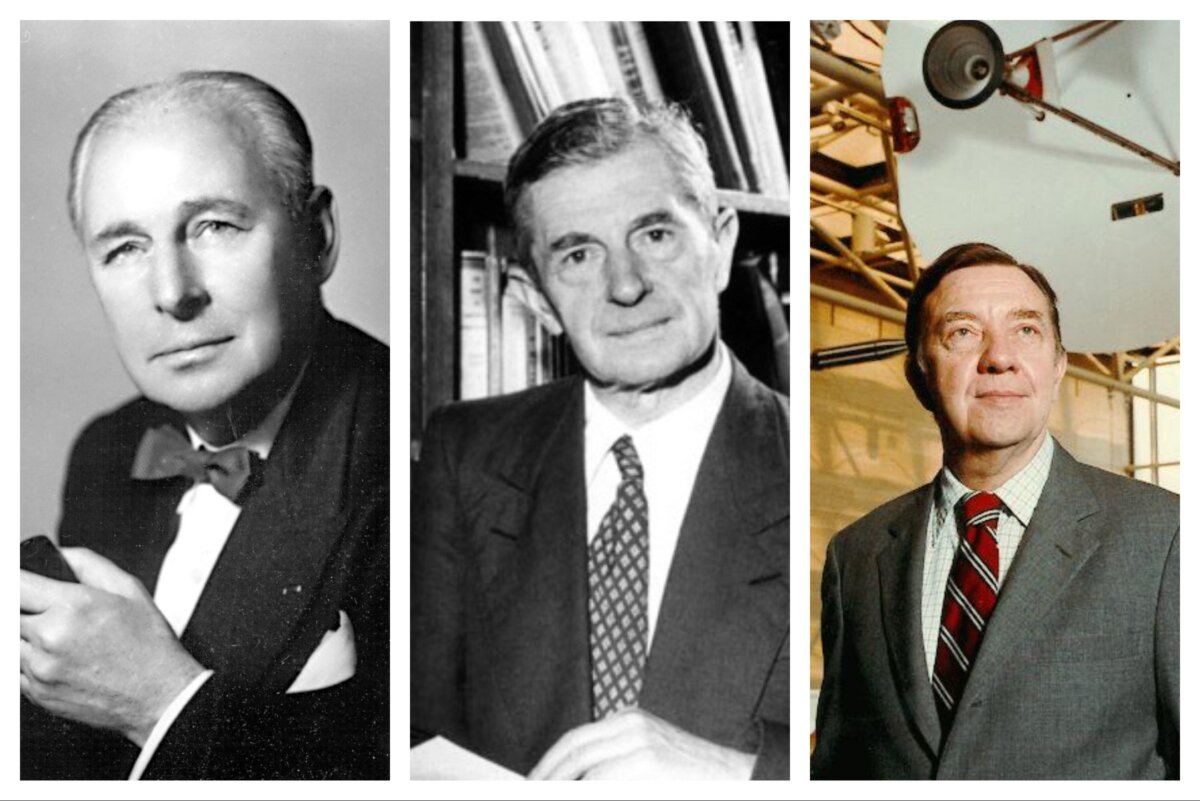
The dinner had moved from the dining room to the living room where the meal was replaced with glasses of brandy. The conversation shifted from geophysics to geomagnetism to ionospheric physics to, finally, Berkner’s intriguing question. Chapman had actually participated in the Second International Polar Year of 1932 and 1933. On this April night in 1950, Chapman agreed. It was time for another international polar year.
The First International Polar Year had taken place between 1881 and 1884, and involved 11 nations. The Second International Polar Year, which took place 50 years later and involved 40 nations, was, according to international weekly journal Nature, “the simultaneous recording of meteorological, geomagnetic and auroral data in the polar and other regions of the globe.”
Chapman not only agreed with Berkner’s suggestion. It was something that he’d been giving plenty of thought to, and he believed that the best time to conduct the Third International Polar Year would be between 1957 and 1958—a time of maximum solar activity.
A Focus on Antarctica
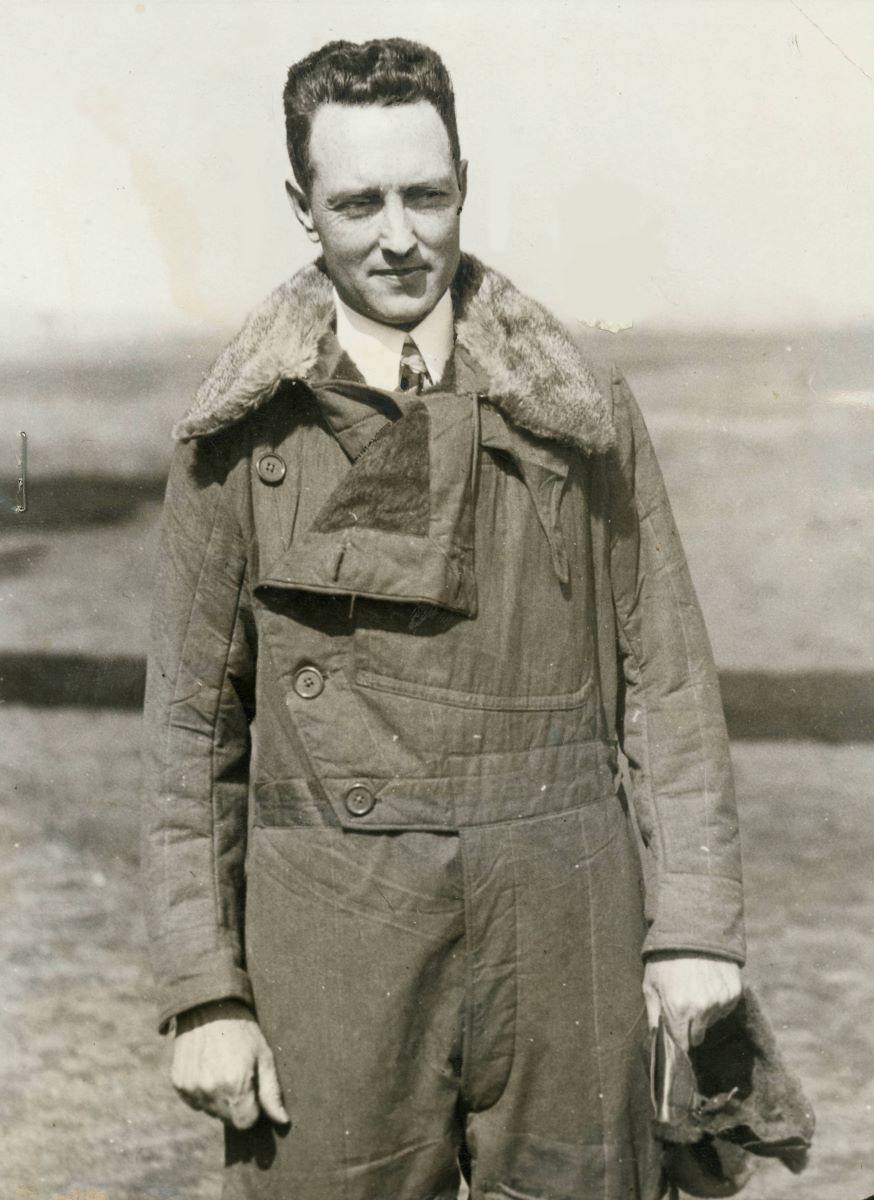
America had been involved in both polar year expeditions. Its major contribution in the second expedition was the installation of the first meteorological station in Antarctica on the southern end of Roosevelt Island. This was established as part of the Second Byrd Expedition, led by Adm. Richard Byrd. Conversely, there were 40 stations placed in the Arctic.
Byrd, who was awarded the Medal of Honor for conducting the first flight over the North Pole with Floyd Bennett, believed the Antarctic region was important to understanding the globe. Before his first expedition to Antarctica, he stated, “Man cannot claim mastery of the globe until he conquers the Antarctic continent.” One of those who obviously believed such a statement was Berkner, who had been part of the First Byrd Expedition from 1928 to 1930.
Byrd, who led five expeditions to the southern continent, was also a champion of world peace. He was the honorary chair of the No-Foreign-War Crusade during the late 1930s. Sadly, Byrd died in March 1957, only a few months before the start of the Third International Polar Year, which became more commonly known as the International Geophysical Year (IGY). The results of the IGY, specifically in his beloved Antarctica, would have pleased him.
Resolving Issues
By 1952, word about the IGY had spread throughout the international scientific community. There was one obvious international difference in the upcoming IGY compared to the previous two. The world was now embroiled in a Cold War.
The IGY was contingent on international cooperation. But with the two leading powers—America and the Soviet Union—at each other’s throats, such a proposal seemed impossible. If the Soviet Union, which now controlled a vast portion of Eastern Europe, was not involved, it could hardly be considered international. Additionally problematic, much of the data obtained over the decades was classified, and the results of the IGY would predictably be also. The scientists hoped to resolve these two issues.
In October 1952, the first IGY meeting, held in Brussels, was organized by the International Council of Scientific Unions—though it was known formally under its French name, Comité Spécial de l’Année Géophysique Internationale (CSAGI).”
The scientists’ first problem was inadvertently addressed shortly after Joseph Stalin died. Now that the man who ruled the Soviet Union with an iron fist was out of the picture, a shake-up in Soviet leadership might result in a softer touch.
Regarding the second issue, Berkner recommended that the experiments by the IGY not be conducted by the militaries. The data would fall under the CSAGI umbrella.
Toward the end of 1954, the Soviet Union indicated that it would be involved in the IGY. Regarding the immense amount of data that would be streaming in from various stations all over the world, the CSAGI scientists suggested the creation of World Data Centers. CSAGI received a boost when the United States and the Soviet Union agreed to create data centers, which became known as World Data Centers A and B. The World Meteorological Organization (WMO) agreed to create another data center, which was conveniently called World Data Center C.
Scientific Contributions
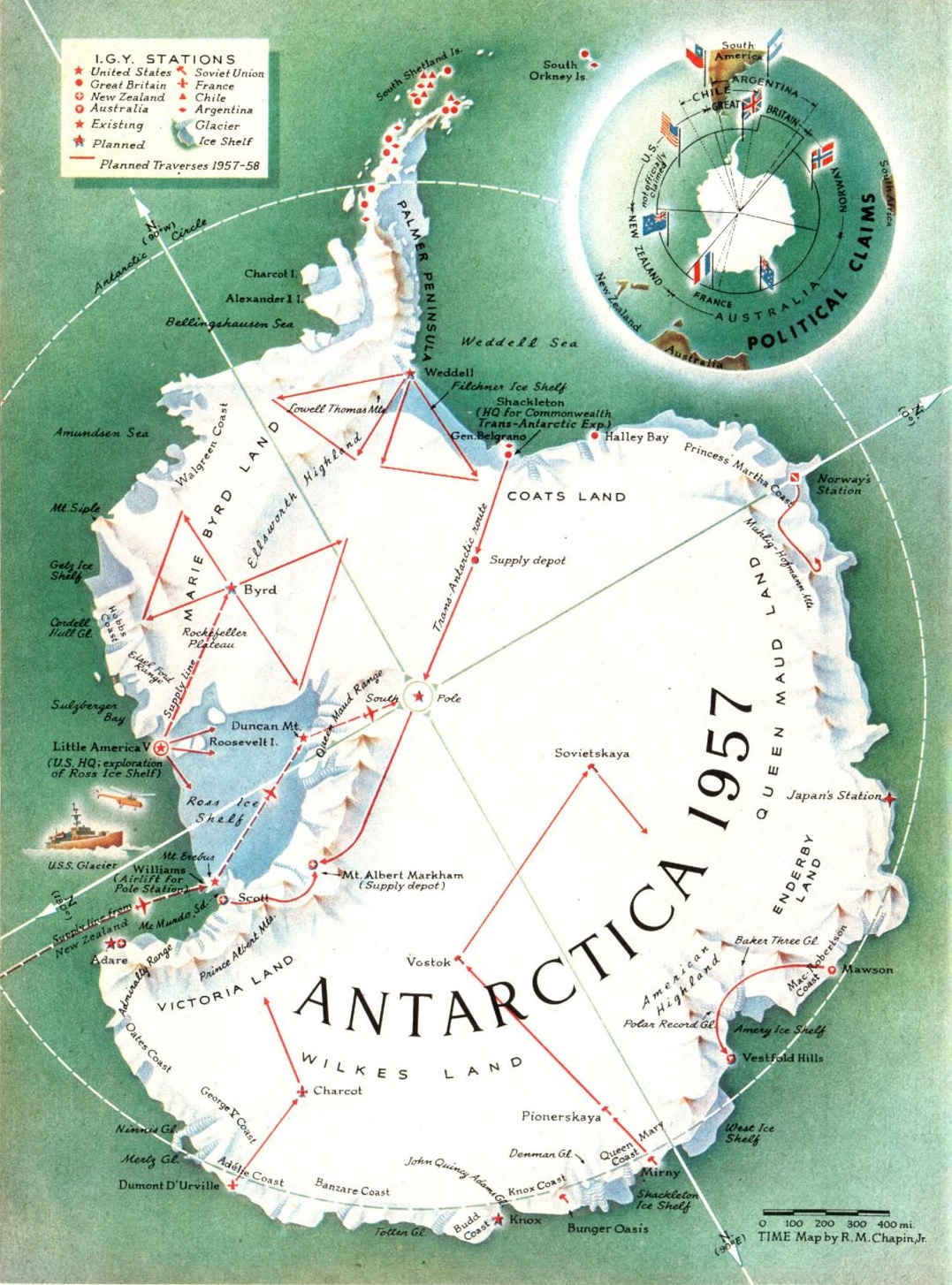
On July 1, 1957, the International Geophysical Year began and continued for 18 months, ending on Dec. 31, 1958. By the start of the IGY, 46 nations were involved, and by its end, 67 countries had cooperated. Tens of thousands of scientists contributed to the massive effort to study the Earth and the sun. Numerous leaps in science took place. The theory of tectonic shift was confirmed by oceanographers. Regarding astronomy, when the United States stated they would be launching satellites, the Soviet Union responded in kind, ultimately setting off the Space Race. Additionally in outer space, a radiation belt was discovered, which was named in honor of the man who theorized such a belt existed—it was called the Van Allen Belt.
Finally, in Antarctica, the United States established seven stations, as well as founded the U.S. Antarctic Program, which remains in service. Altogether, 50 stations were established by 12 countries. According to the National Oceanic and Atmospheric Administration (NOAA), the scientists discovered that 90 percent of the Earth’s ice is on and around Antarctica, therefore securing nearly 70 percent of the Earth’s fresh water. Their efforts also improved the prediction of weather patterns and improved the scientific understanding of the Southern Hemisphere’s seismology.
A Place for Peace
The most significant contribution from the study of Antarctica was what came a year after the IGY ended. It was not just the international scientists who noticed something politically historic had taken place. It was also the global leaders. Thousands of individuals from various backgrounds, even those from belligerent nations (that is, the United States and the Union of Soviet Socialist Republics), worked together peaceably and effectively. The international collaboration during the IGY had left an indelible mark on the political world. The hope was that it would continue.
On May 3, 1959, the United States suggested to the other 11 nations involved in Antarctica—Argentina, Australia, Belgium, Chile, France, Japan, New Zealand, Norway, South Africa, the Soviet Union, and the UK—that a conference be held to discuss how the scientific collaboration could continue, how the southern continent could maintain its current legal status, and how to ensure that Antarctica would be used only for peaceful means.
On Oct. 15, 1959, the Washington Conference began. It was during this week in history, on Dec. 1, 1959, that the Antarctic Treaty was signed by the 12 nations, which according to NOAA, “created a continent free from nuclear weapons and open to scientific research; the first truly international territory.” On June 23, 1961, the treaty went into force, and has remained a shining example of international collaboration. Today, 58 countries have agreed to the treaty.
It is interesting to consider that the Antarctic Treaty—“one of the most successful and long-lasting international agreements in history”—is ultimately the result of three scientists enjoying dinner, glasses of brandy, and what James Van Allen recalled as ”one of the most felicitous and inspiring” of conversations.
Never miss a This Week in History story! Sign up for the American History newsletter here.
What arts and culture topics would you like us to cover? Please email ideas or feedback to features@epochtimes.nyc