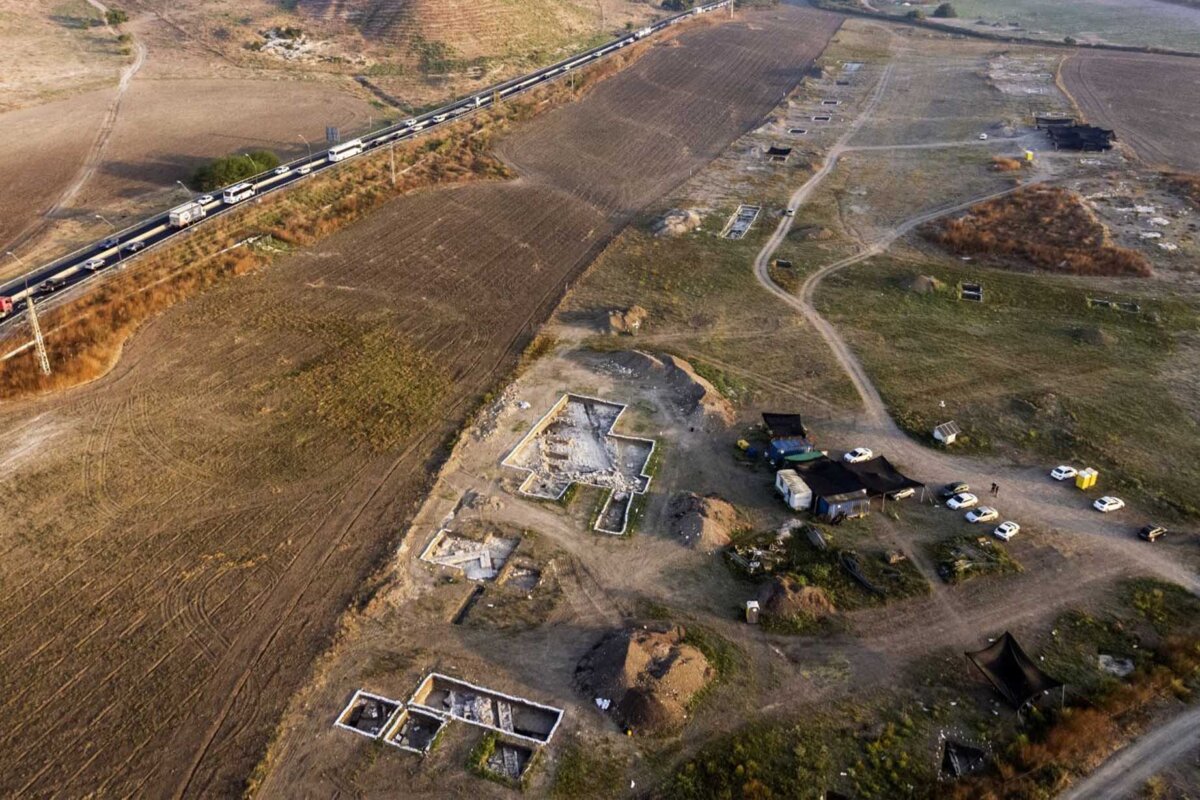
There is a very busy, well-used road that runs through Israel’s Jezreel Valley—a place overshadowed by biblical references to Armageddon. The roadside here has become a place of discovery for archeologists, who continue probing ancient ruins for clues about a lost civilization. A recent find now tells of cult rituals and wine-making 5,000 years ago.
Along Highway 66, which runs southeast from Haifa to the West Bank, archaeologists from the Israel Antiquities Authority (IAA) have been exploring the terrain ahead of road construction to upgrade the highway. Recent digs have unearthed ancient ritual objects of Canaanite origin as well as a wine press hewn directly from the living rock bed.
The Canaanites were a diverse group of city states and kingdoms that occupied the Levant during the Bronze Age—before the Israelites set foot on what is now Israel—and they shared a common language and culture. Ancient Canaanite ruins that include a city gate and temple were uncovered just over a century ago and were found to be the remains of the ancient city Tel Megiddo, which in 1966 became Tel Megiddo National Park.
The newly discovered wine press and ritual artifacts now paint a more complete picture of how that ancient culture functioned.
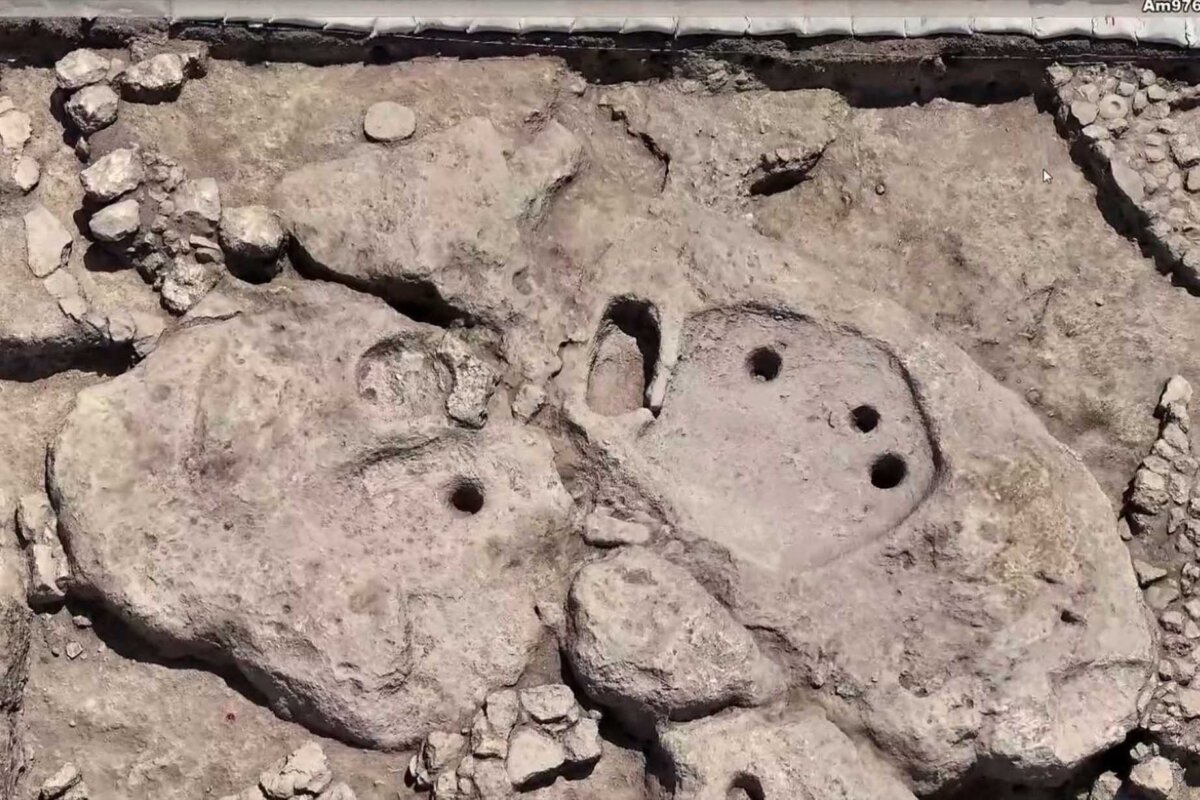
“The discovery was made during the course of salvage excavations,” IAA researcher Amir Golani said in a press release, calling the wine press a “smoking gun” that proves what archaeologists had long suspected.
“Until now, direct evidence indicated that wine could have been produced 5,000 years ago, but we did not have comprehensive proof of this.”
Carved into the rock is a sloped treading surface where grapes were crushed and drained of juice, which then flowed into a collection vat. Though similar presses have been found elsewhere in Israel, they’re very hard to date. This wine press, thought to be one of the oldest in the country, hails from 5,000 years ago during the Early Bronze Age I, when Tel Megiddo was expanding its influence. The press apparently held importance in past society, as evidenced by a cluster of residential buildings that surrounded it at that time.
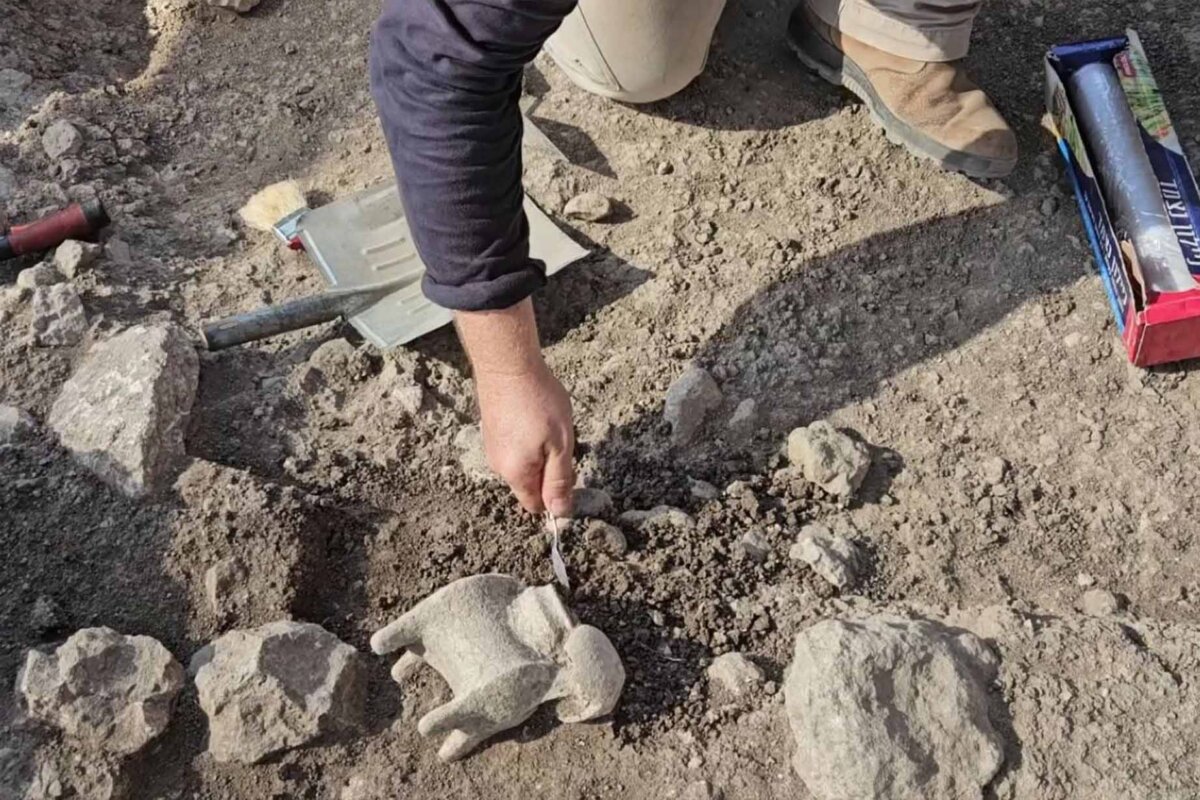
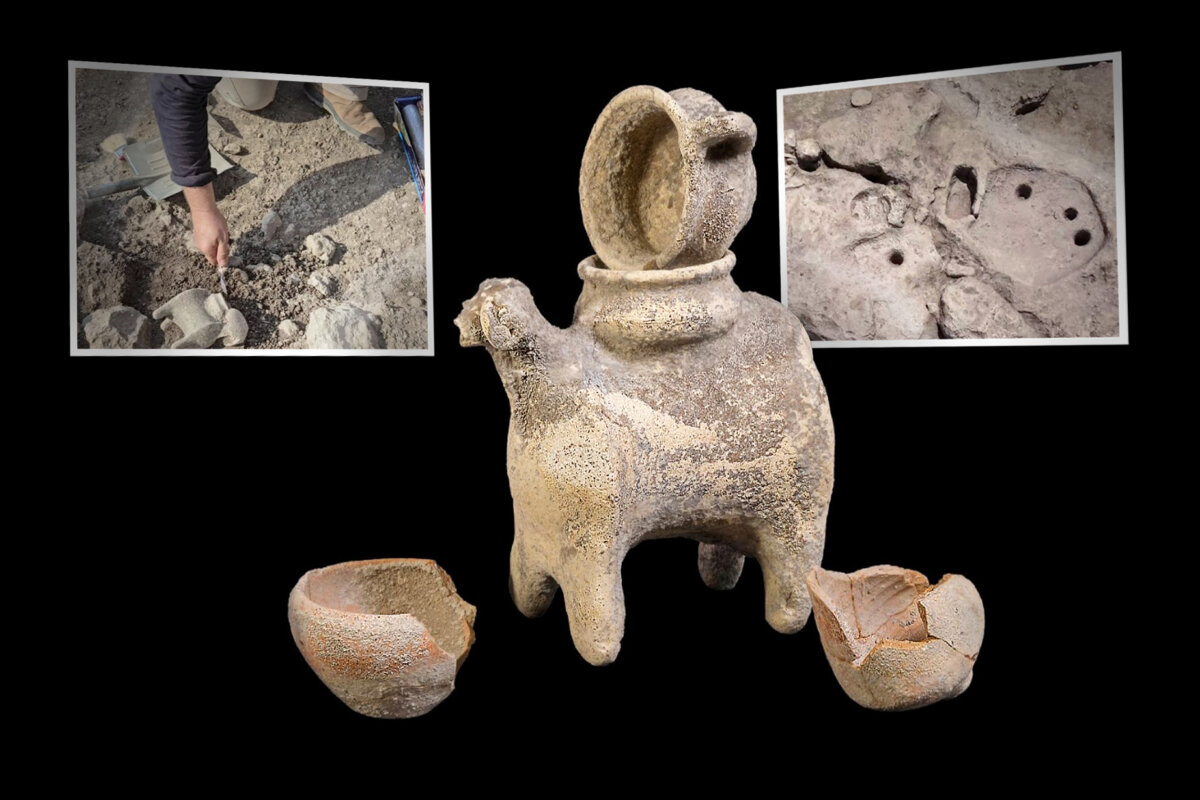
In addition, several small pits filled with “fantastic and intriguing” objects from several millennia later were also uncovered. During the Late Bronze Age II, 3,300 years ago, someone apparently placed them inside these pits and did so with great care. Believed to be ritual offerings deposited as a form of consecration or libation, these artifacts may reveal insights about a Canaanite “folk cult” that existed here before the Israelites arrived.
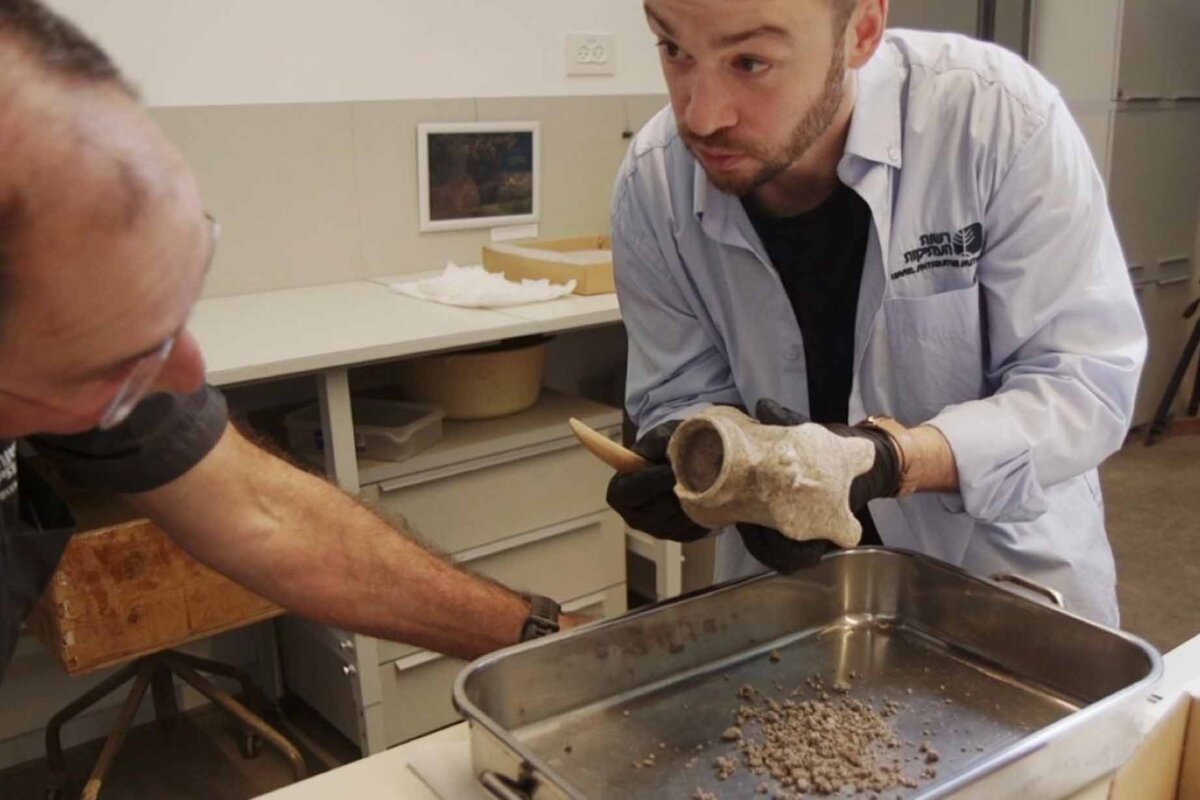
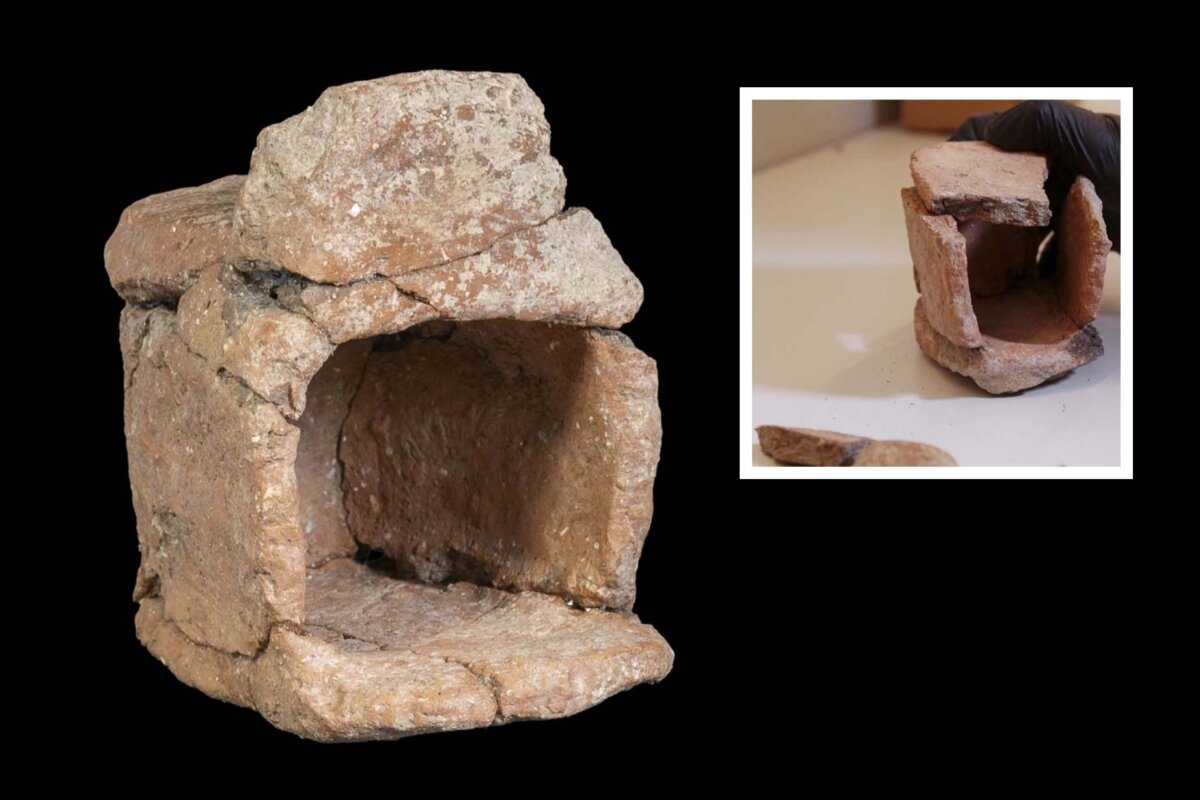
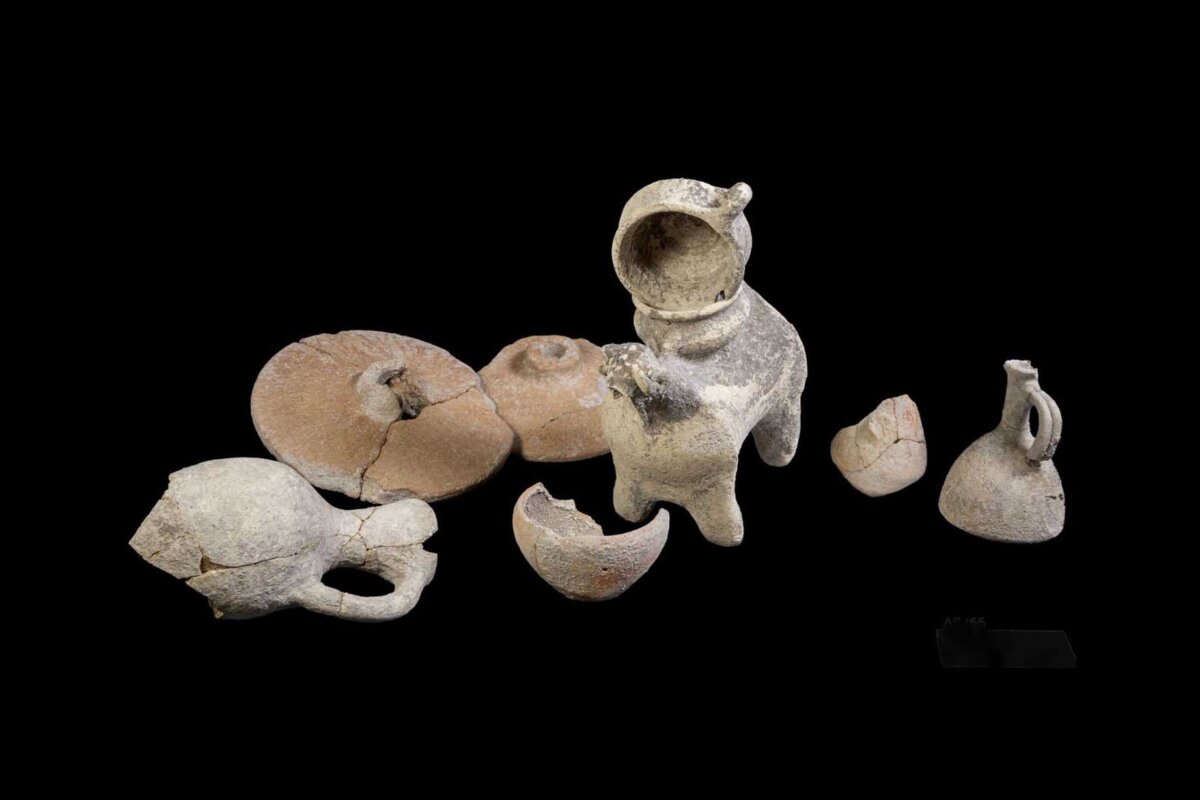
The researchers found a miniature ceramic temple broken into several pieces, which was later reconstructed, as well as ceramic vessels that served multiple purposes; a sort of “tea set” was found, which included a small server-like pouring container that was used for filling a larger zoomorphic vessel shaped like a ram. The ram’s open mouth acts as a spout through which liquid pours into a number of small bowls, which complete the set. These ceramics probably held liquids such as milk, oil, wine, or other valuable beverages, the IAA stated.
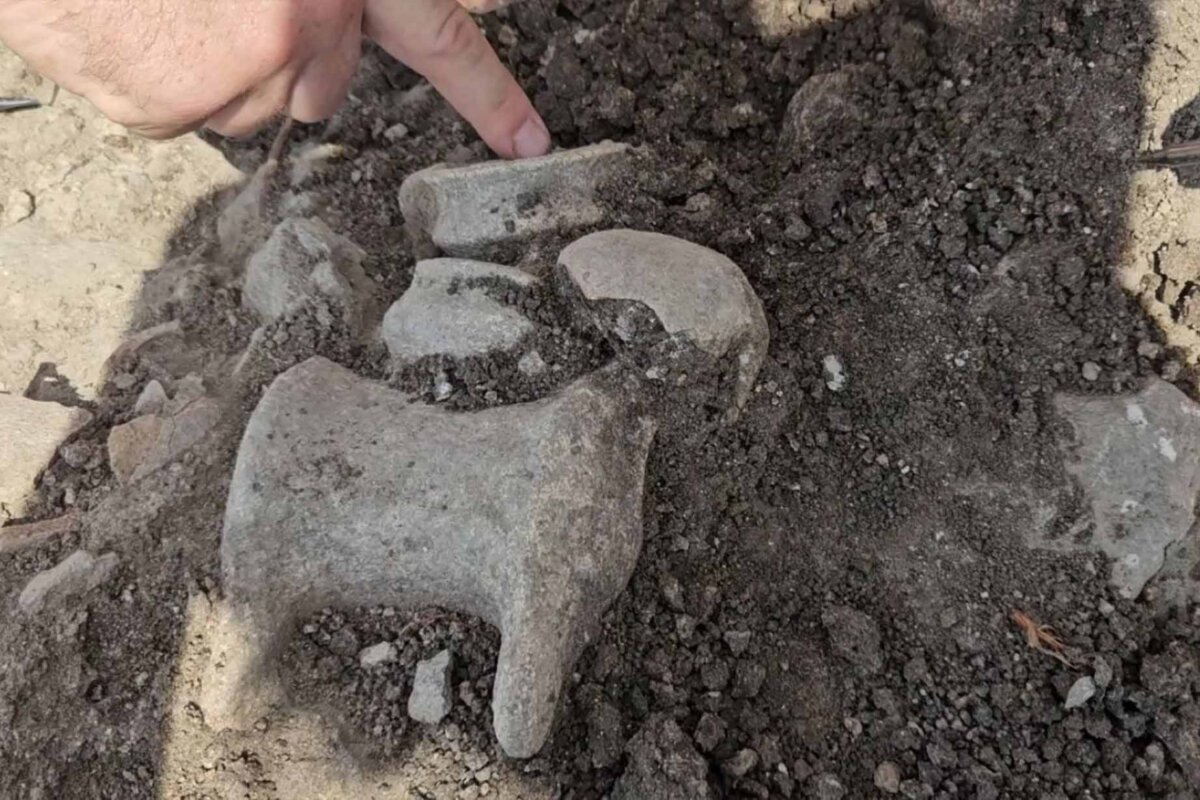
Next to a large rock outcrop that might once have served as an altar at the site, the researchers found still more buried artifacts, including several pieces of broken pottery similar to the ones depicted in the photograph below.
IAA researchers theorize that this location represents some sort of rural cult activity. During the Late Bronze Age II, the large temple in Tel Megiddo would have been in the direct line of sight of these grounds, which were situated along the road leading to the main city gate. The open-air altar might have been a place where farmers, who couldn’t enter the city or the temple, could make agricultural offerings such as wine or oil.

These discoveries are new connective fabric that show worship extending from within the city to the outside during a time of Canaanite expansion, though they also point to another connection. With the upgrading of Highway 66, Israel’s periphery will be linked more intimately with its interior, and in so doing, nearly a mile of new excavations have begun. The IAA, in conjunction with Netivei Yisrael, the National Transport Infrastructure Company, is thus reconnecting Israel with its Canaanite roots in the Jezreel Valley.
“This is something that we are very interested in,” Golani said, “because it is the same Canaanites and their pagan cult which the Israelites had to deal with when they came into the land of Israel.”