



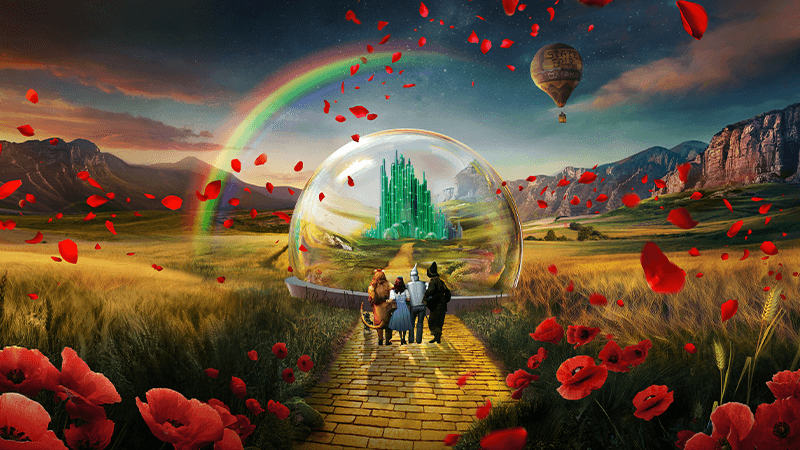
G | 1h 15m | Fantasy | 1939
From 1959 to 1991, the annual network broadcast of the classic 1939 MGM film “The Wizard of Oz” was one of the most anticipated television events of the year. That was before streaming. But even today, Victor Fleming’s beloved family production retains a special mystique.
For many reasons, it was perfectly suited for the “4-D” enhanced presentation at the Sphere in Las Vegas. Probably no other film has ever looked this big. Watching “The Wizard of Oz” is once again “an event” while it plays at the Sphere.
The unmistakable venue truly looks spherical from the outside, but the inner auditorium more accurately resembles a hemisphere, with the steep cliff-like stadium seating facing the curved presentation space.
The screen literally wraps over and around the audience, so AI built out the film’s landscapes and backdrops to create the illusion of an all-encompassing environment. To put it into perspective, the 160,000 square-foot screen is at least 20 to 30 times larger than typical IMAX theaters, which generally measure from 5,000 to 8,000 square feet.
Obviously, the fantastical world of Oz lends itself to this kind of spectacle. Ironically, Harold Rosson’s early black-and-white cinematography arguably looks even more strikingly dreamlike than the color sequences in Oz. The Kansas plains have an ethereal shimmer that makes them feel like they stretch on forever.
Dorothy Goes to Oz
Of course, it’s still the same story everyone ought to know. Dorothy Gale (Judy Garland) is a sensitive young girl living with her Uncle Henry (Charley Grapewin) and Auntie Em (Clara Blandick) in the middle of hardscrabble Kansas.
When the mean neighbor Almira Gulch (Margaret Hamilton, who also plays Oz’s Wicked Witch) obtains a writ to confiscate Dorothy’s little dog Toto (Terry the Cairn Terrier), Dorothy runs away from home.
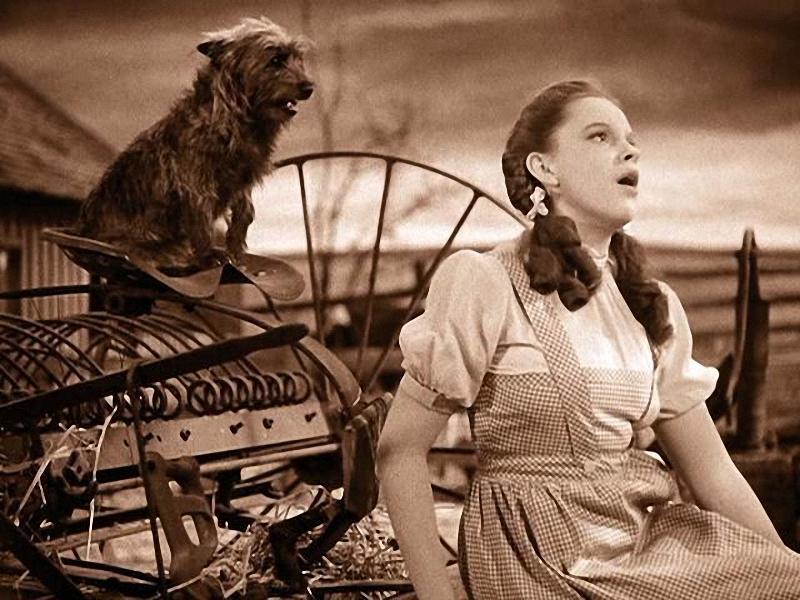
Soon thereafter, kindly sideshow fortune teller Professor Marvel (Frank Morgan, who also portrays the Wizard) convinces her to return. However, she arrives back at the farm just as a massive tornado strikes, whisking her and Toto off to Oz.
The Sphere’s 4-D effects have rightly generated a good deal of buzz, particularly for the tornado scene. Wind machines and misters create stormy physical sensations. However, the rumble and vibrations really impress viewers on a gut level.
This is a good example of why “The Wizard of Oz” was the perfect choice for the Sphere’s inaugural classic screening. One big special effects sequence nicely demonstrates the venue’s visual and audio capabilities, but films with frequent explosions might induce headaches and exhaustion.
There are no special glasses and nothing ever appears to jut out from the screen. However, there are immersive elements, like the life-sized flying monkey drones that descend from the ceiling while Dorothy is imprisoned in the Wicked Witch’s castle.
As fans well know, “Wizard of Oz” also features several musical numbers, which take full advantage of the Sphere’s cutting-edge sound system. For the Sphere’s presentation, the original vocal tracks were isolated and remarried to a specially rerecorded orchestra performance of the original arrangements.
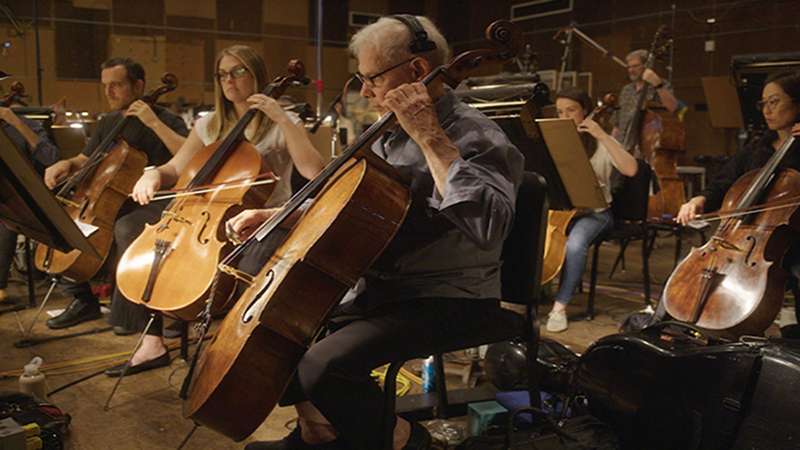
As a result, the music better represents composer Harold Arlen’s artistry. Purists might be scandalized by the absence of the number, “If I Were King of the Forest,” which was cut as part of the abridgment to facilitate more daily screenings. Try not to be late, because you’ll probably sit near several people who want to record Garland’s rendition of “Somewhere Over the Rainbow,” which comes early in the first act.
Imperfections
Shortening “The Wizard of Oz” might constitute sacrilege for many fans, but the Sphere’s edit gives the film an undeniably brisk pace. Except for Dorothy’s first encounter with Prof. Marvel, there aren’t many glaring gaps, at least if you aren’t a die-hard devotee.
Most of the criticism of the Sphere’s enhanced up-sizing has focused on AI’s impact on facial features. It’s true that several background munchkins (the little people of Oz) appear to vacantly stare into space. Some could find it disconcerting, but genre film fans might consider it aptly surreal.
The “softening” of Garland’s face isn’t nearly as pronounced as critics make it out to be. Instead, the greatest distractions involve the conspicuous haze when the camera’s focus shifts from figures in the foreground to the background, or vice versa.
The iconic performances still hold up, especially Ray Bolger as the Scarecrow, whose loose-limbed corn field dance looks terrific. Garland’s rendition of “Somewhere Over the Rainbow” retains the same aching longing. Even at 336 feet tall, her dramatic performance exudes keen expressiveness and youthful exuberance.
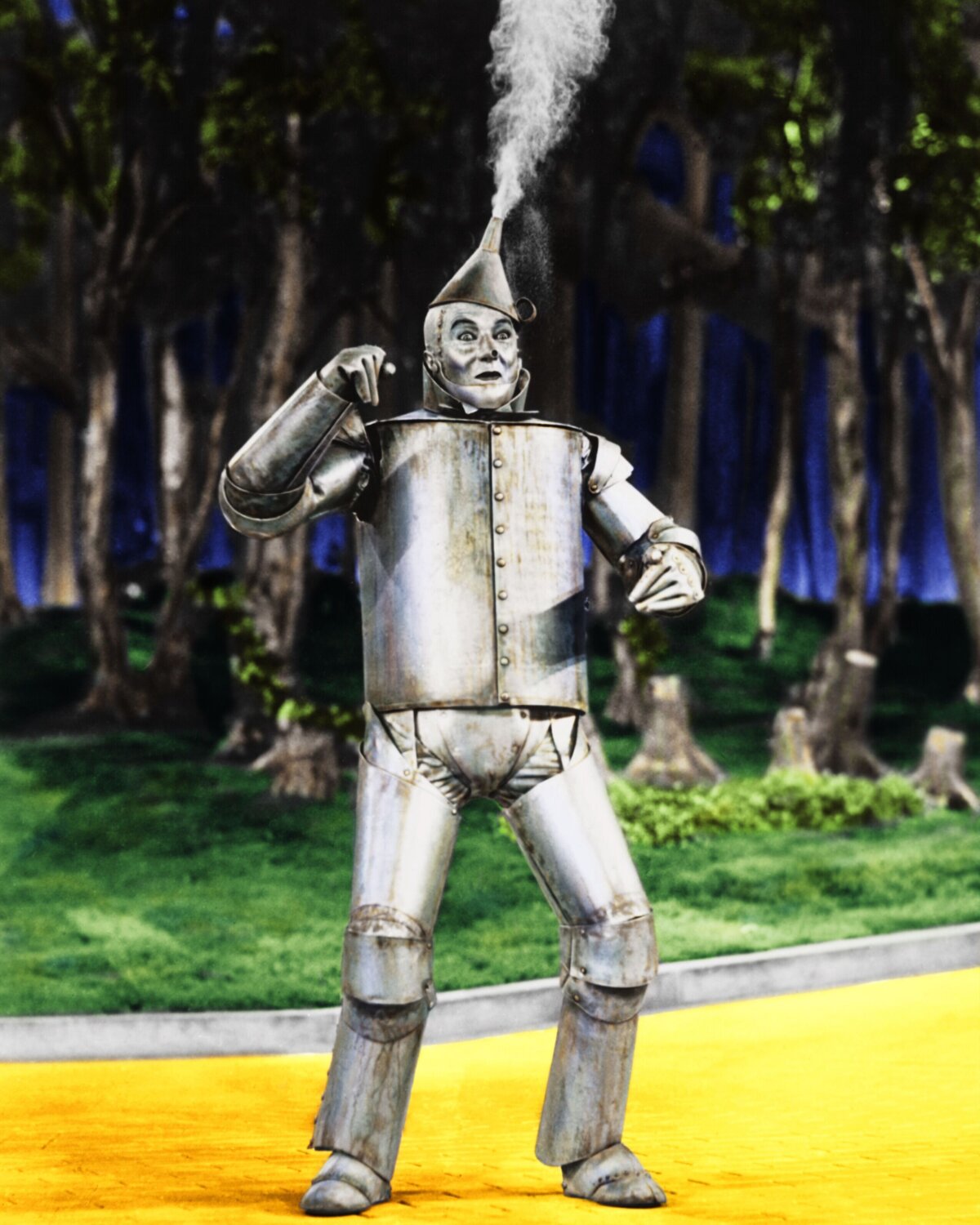
Arguably, the poignancy of Jack Haley’s Tin Man shines through just as much, or possibly even more, on this enormous canvas. Conversely, the silliness of Bert Lahr’s Cowardly Lion is also magnified because everything is enlarged by the Sphere.
It’s the same music, but with greater depth and clarity. It’s the same ensemble, but on a scale all involved most likely never imagined.
Indeed, it’s the same film, albeit with a snip here and there. But the experience is new. Frankly, for serious cineasts, the vastness of the screen makes it worth the pricey ticket. It’s hard to think of many equally suitable films, featuring music, colors, and grandeur worthy of the Sphere treatment while also attracting both families and high-rolling VIPs.
Indeed, “The Wizard of Oz” suits Vegas, because both are worlds away from Kansas. Recommended as the best show in Las Vegas.
“The Wizard of Oz” screens at the Sphere through March 31, 2026.
‘The Wizard of Oz’ at the Sphere
Director: Victor Fleming
Starring: Judy Garland, Ray Bolger, Jack Haley, Bert Lahr, Frank Morgan
MPAA Rating: G
Running Time: 1 hour, 15 minutes (Sphere)
Release Date: Aug. 29, 2025
Rated: 5 stars out of 5
What arts and culture topics would you like us to cover? Please email ideas or feedback to features@epochtimes.nyc
