



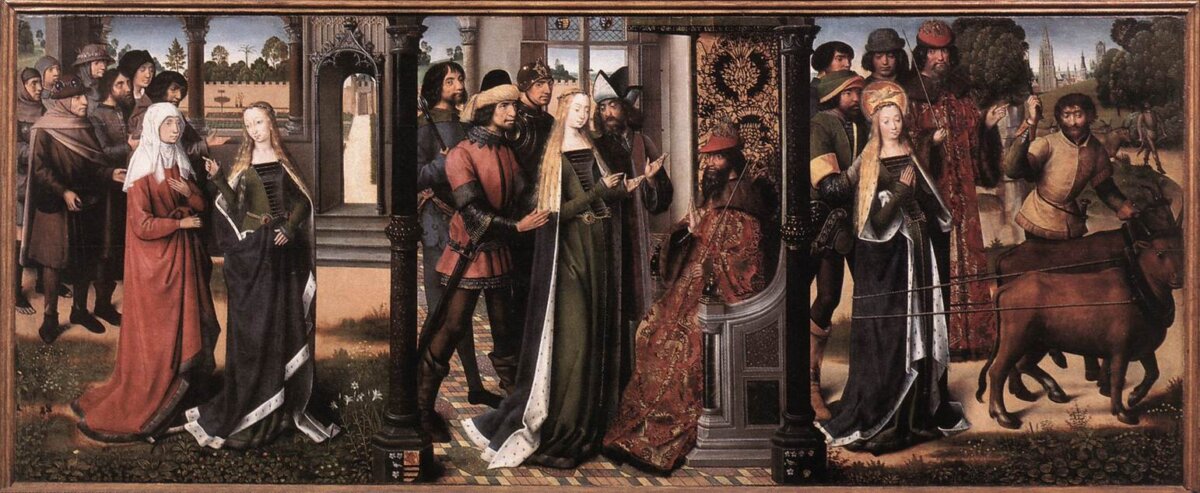
Many families throughout Europe, and perhaps some religious families in the United States, are familiar with the tradition of celebrating St. Nicholas Day on Dec. 6. On the eve of Dec. 6, children place their shoes outside their door or by the fireplace at night and awaken to find them filled with treats.
The tradition makes sense. St. Nicholas is famous for his generosity and secret gift-giving. His story even inspired the custom of hanging stockings by the fire. According to legend, he tossed gold coins into the stockings of three girls whose father was too poor to pay their dowries.
Perhaps less well-known is the tradition surrounding St. Lucy’s feast day on Dec. 13. In northern Italy and in some Scandinavian countries, a lively tradition exists surrounding St. Lucy, or “Santa Lucia.”
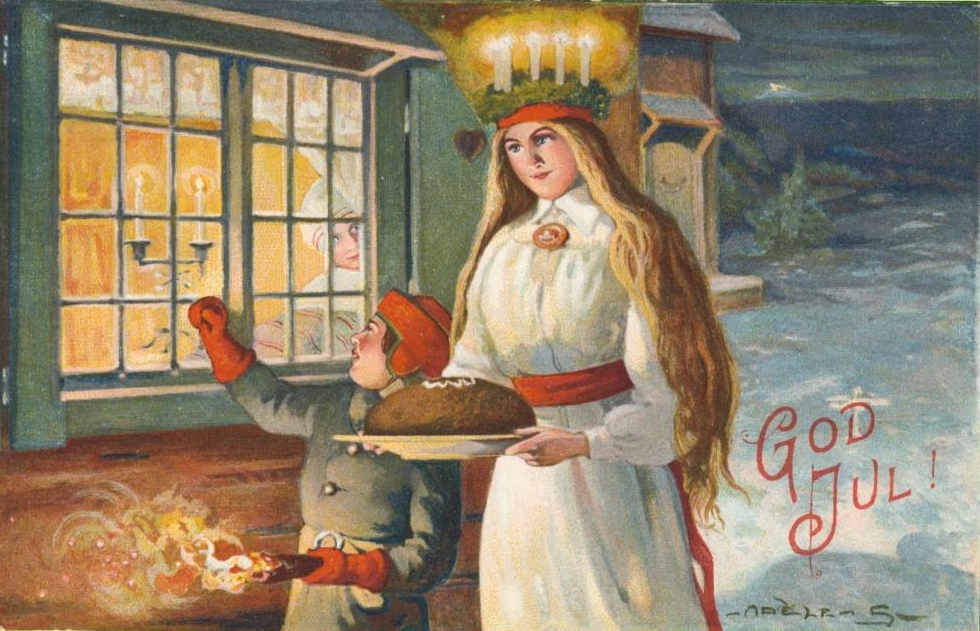
Children anticipate her arrival on Dec. 13 with as much excitement as other children have for the arrival of St. Nick. What is it about the young martyr that inspires this celebration of her as a counterpart to St. Nick?
Early Christian
Very little is known definitively about St. Lucy. She was an early Christian martyr who lived in Syracuse, Sicily. At a young age, she made a vow of virginity to dedicate her life to God. A suitor complained to the Roman authorities about her faith, and she was executed in A.D. 304 during the reign of Emperor Diocletian.
Over time, in Italian culture, St. Lucy has been transformed from a saint in early Christianity to a character of folk legend. Legend maintains that, like St. Nick, she too was known for her generosity. It’s said that her rejected suitor became angry at her for giving away what he perceived to be the dowry that was owed to him.
St. Lucy’s feast day is primarily observed in northern Italy because, according to some accounts, the tradition originated when Brescia, Italy was struck by a severe famine. Some ladies from Cremona arranged for bags of grain to be left anonymously on the doorsteps of the afflicted families.
Since the distribution took place secretly on the night of Dec. 12, the act of generosity was attributed to St. Lucy.
Though she gives gifts like St. Nicholas, she also gives ash or coal to naughty children. Despite this less than congenial trait, St. Lucy is so beloved that poems and songs have been written about her.
Children write letters to St. Lucy just as they would to Santa Claus, telling her what presents they want. They give the letters to their parents to send to St. Lucy. In places like Bergamo, they bring them to churches such as the Madonna dello Spasimo church, where they place the letters beside a glass case containing a statue of St. Lucy.

In the days or weeks before Dec. 13, children are told that St. Lucy will be passing by on her donkey to see whether they have been naughty or nice. They know when she’s passing by because she rings a little bell before her, and leaves candies in her wake.
When they hear the bell, children will run to the window to catch a glimpse of St. Lucy and will find candies left on their windowsill. In some places, such as the village of Acqualunga, Italy, where I stayed for a time, a young woman will dress up as St. Lucy. She then rides through the village on her cart drawn by a donkey, giving candy to the children as a prelude to her visit a few days later.
A similar custom happens in Scandinavia. A young woman selected as St. Lucy wears a lighted wreath on her head, and leads singers throughout the night, handing out treats wherever she goes.
Cookies for St. Lucy
The night of the 12th, children prepare cookies and either water or wine for St. Lucy, and they leave carrots or hay for her donkey. Sometimes they’ll light a candle to place in the window to let St. Lucy know that children live there.
The children are told to go to sleep and stay in bed. If they awaken and happen to see St. Lucy, they are warned she’ll throw ash in their eyes that will prevent them from remembering her. On the morning of the 13th, they awaken and expect to find that St. Lucy has left them gifts (or coal, if they’ve been bad).
Having never celebrated St. Lucy’s Day myself, experiencing that tradition for the first time was one of the highlights of my stay in Brescia, Italy. As I was at the house of my friend in Acqualunga, she left the room for a time. Shortly thereafter I heard the sound of a small bell. I opened the door to the next room to find a trail of candies leading to a hat that I’d mentioned I wanted to buy.
I don’t know that I’d been particularly good, but one of my most cherished memories from my time there was of how good Santa Lucia was to me.
What arts and culture topics would you like us to cover? Please email ideas or feedback to features@epochtimes.nyc
