If your idea of a job is traveling for miles to a different place each week to work for two hours at minimal pay, using equipment you purchased with your last savings, you’re probably a musician.
You went to music school to learn how to play a violin or a bassoon and when you got out you discovered that the musical profession was flooded with violinists and had no need for bassoonists. Or maybe you’re a percussionist looking for a symphony orchestra that suddenly needs a pick-up triangle player for Brahms’s Fourth Symphony. Nobody in music school told you it would be like this. Nobody warned you that jobs would be few and competition steep.
Your instructors told you how to finger a difficult passage but not how to practice it to maximum effect, or that how you practice and play will depend heavily on your personality type and lifestyle choices.
Nobody bothered to answer the Big Question hanging out there: How do you get a job?
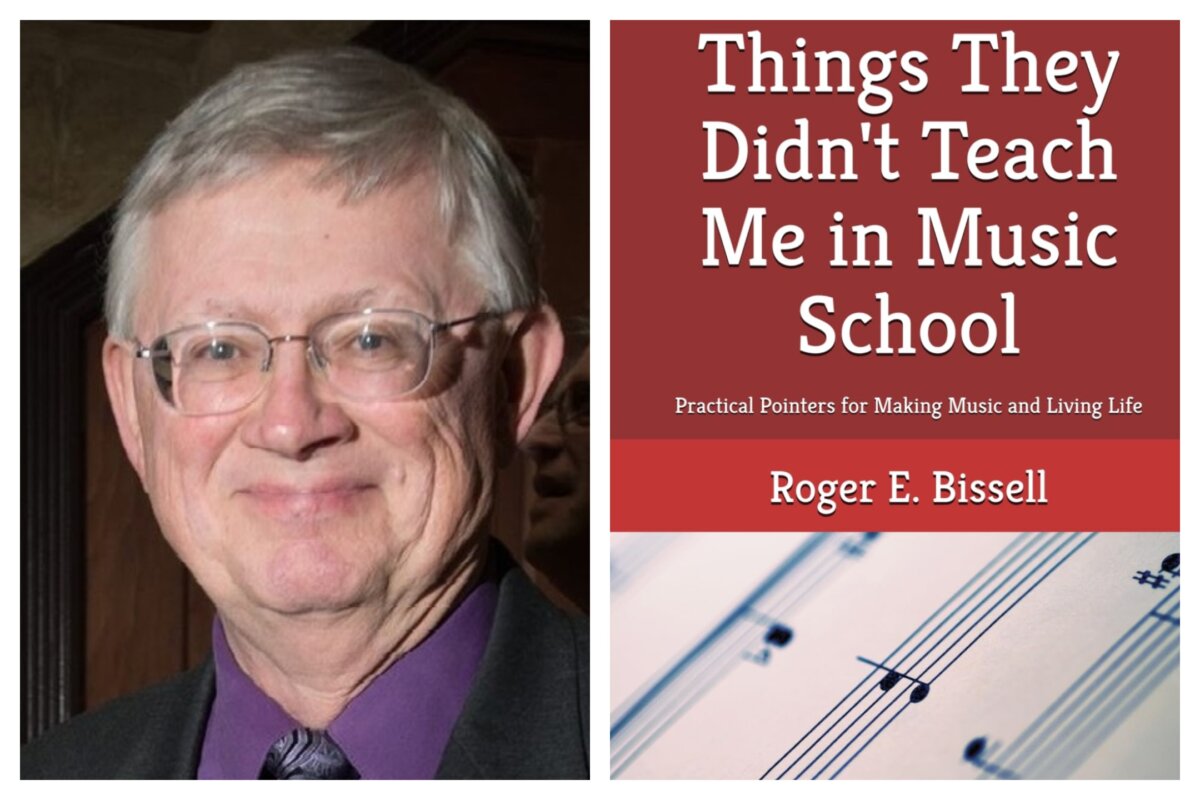
Roger Bissell tackled these unanswered questions decades before you arrived on the scene and has turned his answers into a flourishing career as a trombonist. His credits include a quarter century each in Nashville’s recording studios and at Anaheim’s Disneyland. He knows how to turn artistic ambition into practical results.

How to Survive as a Musician
After some early pages devoted to the particulars of brass playing, “Things They Didn’t Teach Me in Music School: Practical Pointers for Making Music and Living Life” turns to the basics: sight-reading, practice time, and memorization. These are the ABCs of a musician’s life, and they are fraught with more challenge than you might expect.
You must schedule time for practice and not fudge. When practicing, you mustn’t skip past demanding measures. “If you’re having trouble with a phrase or passage, fix it right away and ask for help if you need to.” Bissell wrote, adding parenthetically, “Pride goeth before a fall.”
All musicians know that it’s far too easy to become distracted during practice, but Bissell points to another villain: boredom.
When sight-reading is mastered and daily practice expunged of distraction and boredom, it’s time to find work. Unless you land a long-term position like Bissell’s Disneyland gig or a position in a symphony orchestra, that means knowing as much repertoire as possible.
Music today isn’t limited to one or two genres: It’s a continuing unfolding of styles. Bissell wrote:
“Broaden your musical talents, abilities, and knowledge to give yourself the best shot at economic survival. … Broaden your familiarity of musical styles: Learn the characteristic features of classical, jazz, pop, rock, country, etc. (and) learn how to fake solo and ensemble parts in Dixieland, be-bop, jazz-rock, disco.”
You might nail a gig playing live Dixieland one night and a studio job playing a John Williams-like movie soundtrack the next afternoon. You will need to shift sensibilities and the contrasting elements of articulation, phrasing, and sound production that typify those two.
Bissell listed a multitude of playing opportunities: symphony orchestras, opera, ballet, Broadway musicals, military service bands, studio recordings, circuses, rodeos, ice shows, club dates and music festivals and state fairs, among others. Curiously, he doesn’t mention religious services, which employ thousands of musicians across the country.
Bissell dealt with these and other common-sense issues thoroughly.
Added Help
The author isn’t only an accomplished musician but is also a critical thinker who has contributed to the Journal of Ayn Rand Studies and other publications. He knows that personality plays a large role in a musician’s life, so he devoted space to how different personalities on the Myers-Briggs spectrum would likely approach music-making.
Bissell also knows it’s not enough to want to get a job and make some money. Some parting advice from his book:
“Avoid making respect, money, prestige or security your primary motivation. You may think that they should be forthcoming as soon as you have established and proven yourself. Think again. … These extrinsic motivations are a sure path to disappointment and heartbreak when they fail to produce the results you pine for.
“Instead, if you conscientiously focus on relentlessly improving yourself, you will have the satisfaction of knowing that you are doing what you are truly meant to do and are doing it as well as possible.”
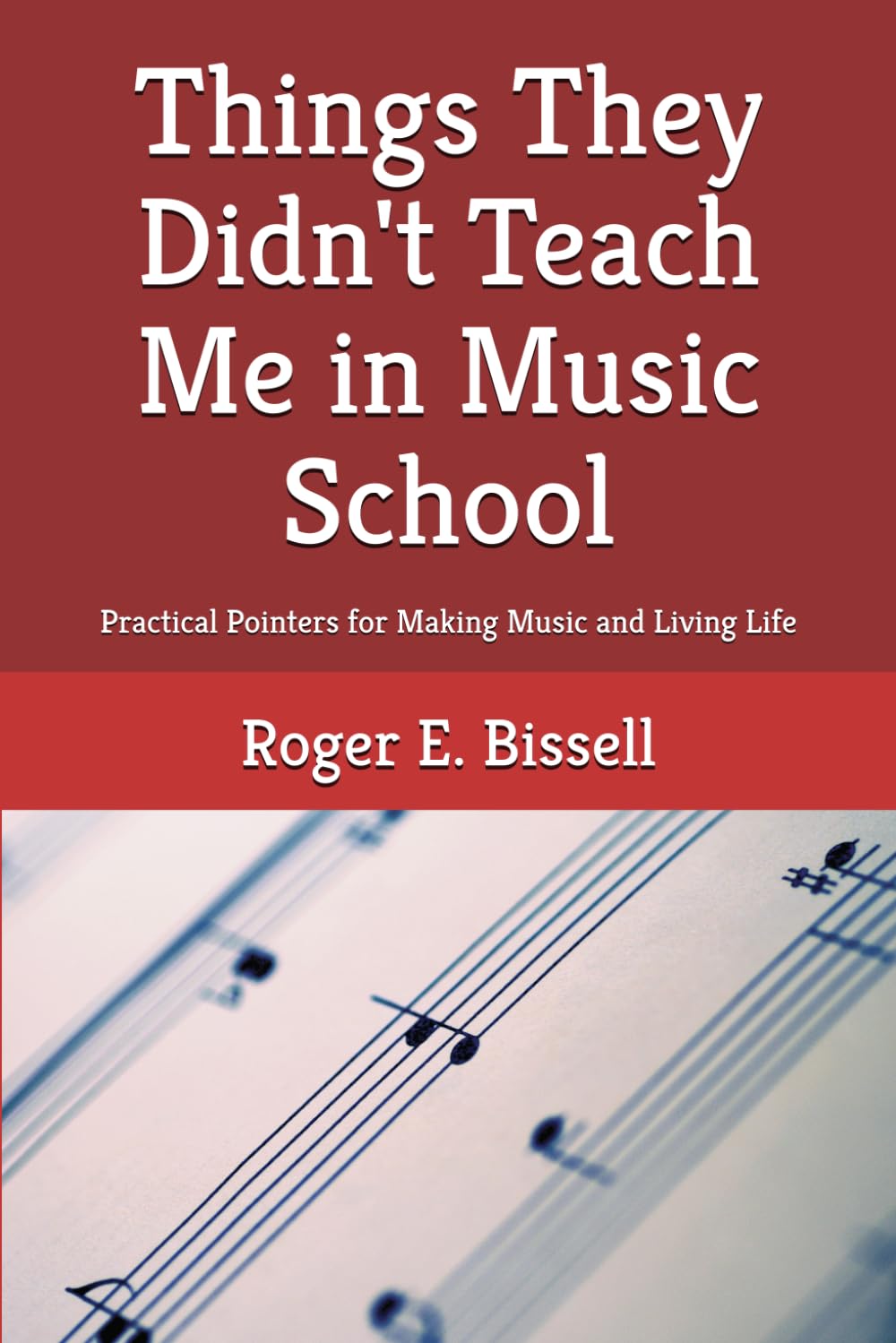
‘Things They Didn’t Teach Me in Music School: Practical Pointers for Making Music and Living Life’
By Roger E. Bissell
Independently published: Dec. 20, 2024
Paperback, 142 pages
What arts and culture topics would you like us to cover? Please email ideas or feedback to features@epochtimes.nyc