



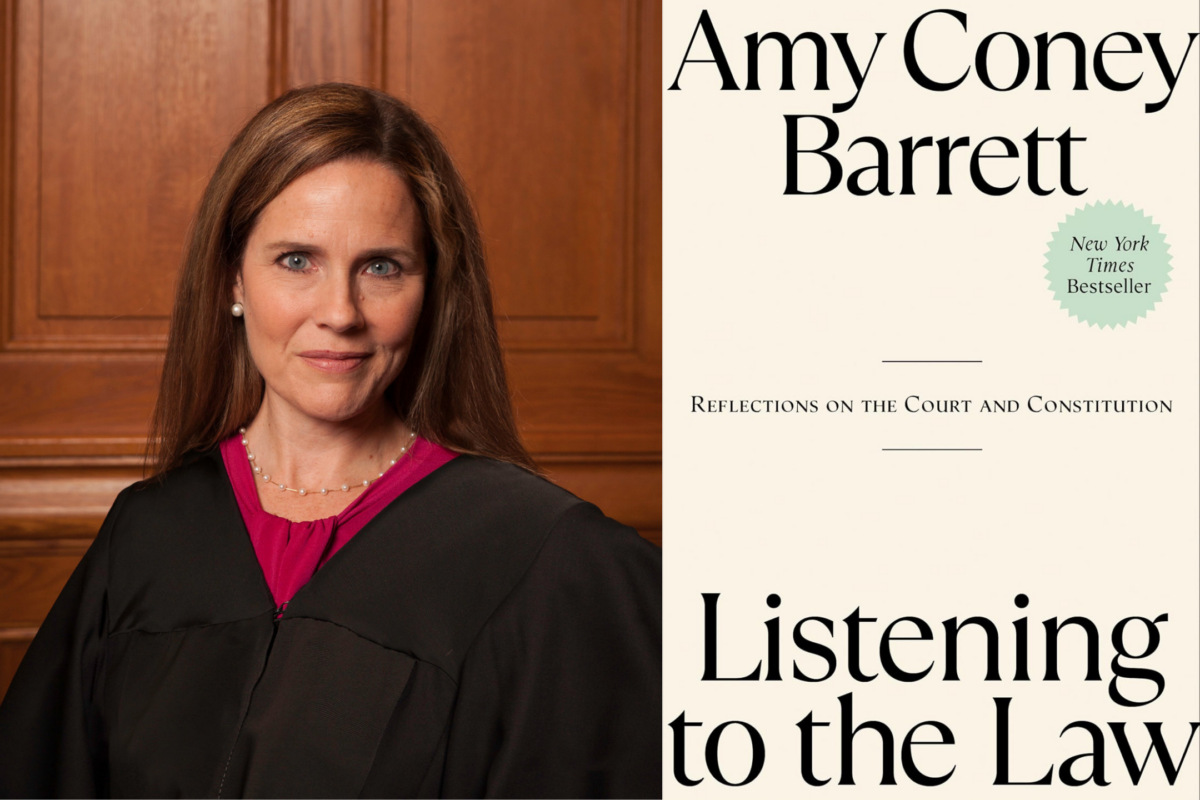
Benjamin Franklin was asked the question, “Well, Doctor, what have we got, a republic or a monarchy?” Franklin replied, “A republic, if you can keep it.” Many Americans’ inability to name even the third branch of government, let alone understand its purpose, doesn’t bode well for freedom. But Supreme Court Justice Amy Coney Barrett’s new book, “Listening to the Law: Reflections on the Court and Constitution,” can help.
Barrett set out to write a book about the Supreme Court seen through the lens of her own experience. She has done so beautifully.
The Supreme Court’s fundamental role is to interpret and uphold the U.S. Constitution, serving as the ultimate authority on its meaning. While the Constitution guarantees Americans’ rights on paper, this would mean nothing without independent courts to protect them.
But the Constitution isn’t a straitjacket; the United States wouldn’t exist centuries later if it were. The Constitution doesn’t consist exclusively, or even mostly, of hard-and-fast rules. It employs somewhat flexible standards. The Constitution’s brevity leaves most matters to be worked out through the democratic process.
 U.S. Supreme Court Justice Amy Coney Barrett in 2018. (ZI Jony/CC BY 4.0)
A Reactive Institution
There are no age, education, or work requirements for a Supreme Court Justice. One doesn’t even have to be a U.S. citizen. There is only one rule. The President chooses nominees to the Supreme Court, then a simple majority of the 100 members of the U.S. Senate must approve (confirm) the nominee.
The court’s docket shows that it is a reactive institution: meaning it can only resolve disputes that litigants choose to bring to the court. Justice Barrett wrote that the Supreme Court acts apolitically, with reasoned and objective analysis. She added that Supreme Court decisions are produced by “legal analysis and not just knee-jerk policy preferences.”
Justice Barrett compared the justices of the Supreme Court with the biblical King Solomon, who stood out because his wisdom was flawless. She wrote that “Solomon’s wisdom came from within,” rather than from other sources. Therefore, King Solomon’s authority was “bounded by nothing more than his own judgment.”
Justice Barrett noted that judges in the United States are different. American judges are constrained by law adopted through the democratic process set by the American people, both in the Constitution and legislation. Therefore, it’s essential that when judges are chosen, they declare their commitment to abide by the Constitution and the statues passed by the American people.
While Supreme Court justices come with different opinions, there is much collegiality among them. I assumed the members of the two political parties wouldn’t work well together. But this doesn’t seem to be true. Justice Barrett wrote that the justices debate but never forget to respect one another. She gave ample examples to back up this statement.
Coming to Decisions
The U.S. Constitution guides American government and society, but interpreting a document written in the 18th century can be challenging. It often sparks intense debate. Justice Barrett clearly explained the two different approaches to rendering a verdict.
The textualist approach requires determining what a debated rule meant to people at the time it was passed. In contrast, living constitutionalism views the Constitution as a dynamic document whose meaning can adapt to changing circumstances, values, and needs without formal amendment. Different approaches to constitutional interpretation help explain why interpretation of the same Constitution can lead to vastly different legal outcomes.
The justices give oral arguments in about 70 to 80 cases each year. These allow the justices to highlight the most important points in their decisions. As a bonus, Justice Barrett shared her thoughts about how oral arguments have undergone significant changes over the years.
Finally, the actual court cases scattered throughout the book held my attention. From Arellano v. McDonough, where the Court examined a statute denying disability benefits to a veteran who had missed a filing deadline, to Biden v. Nebraska, about student loan forgiveness, to Dobbs v. Jackson Women’s Health Organization, about abortion, and many other cases, this insider look at the Supreme Court cannot be beaten.
If you are interested in increasing your understanding of the Supreme Court, this is certainly the right choice.
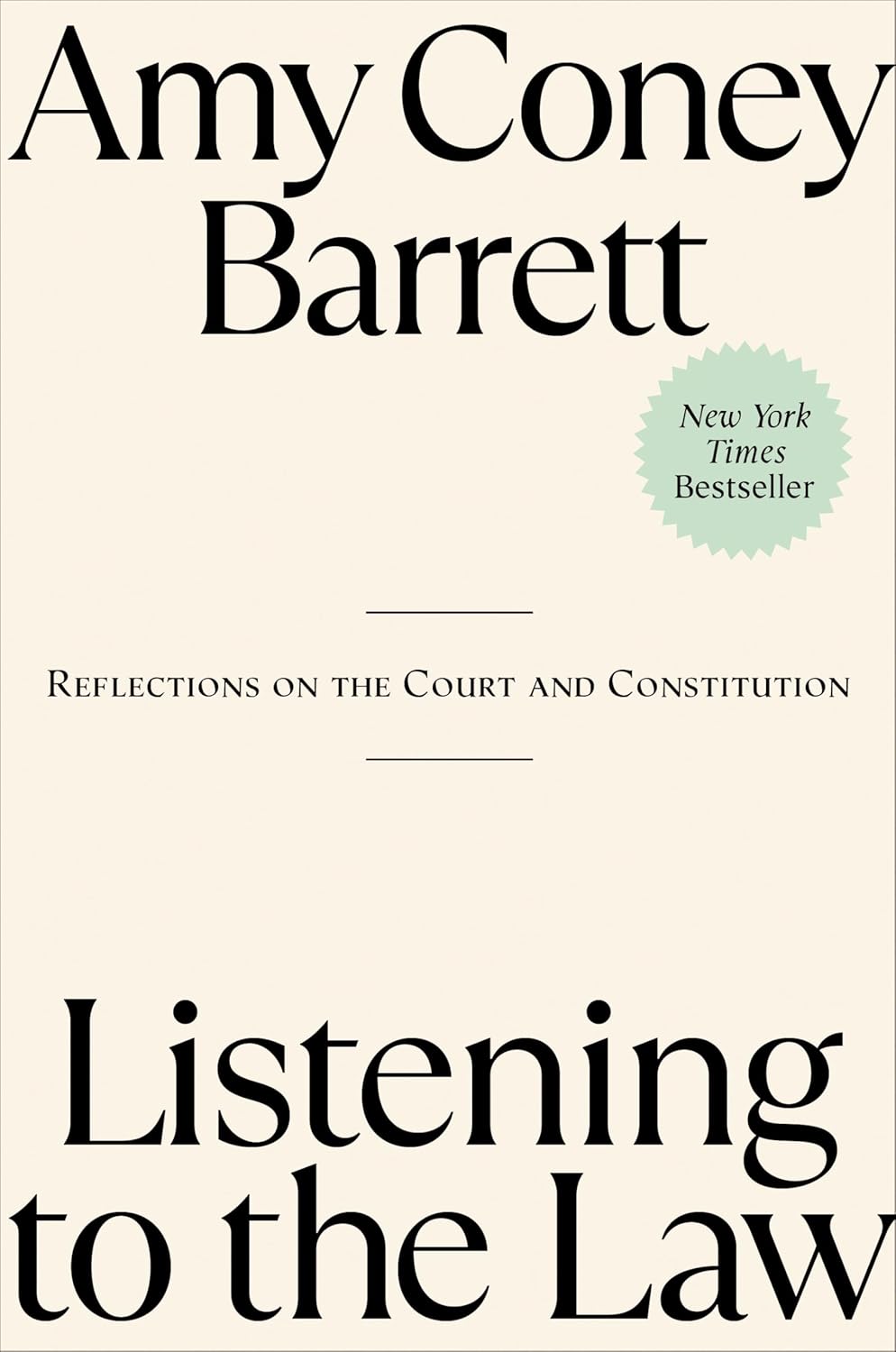
‘Listening to the Law: Reflections on the Court and Constitution’
by Amy Coney Barrett
Sentinel, Sept. 9, 2025
Hardcover: 336 pages
What arts and culture topics would you like us to cover? Please email ideas or feedback to features@epochtimes.nyc
